A practical Sierra Rec guide to hiking Bumpass Hell, with Lake Helen, boardwalks, hydrothermal safety, when to go, what to expect, and why this is one of Lassen’s signature experiences.
There are places in Lassen Volcanic National Park that feel strange, and then there is Bumpass Hell — the kind of place that makes you feel like you’ve wandered into another world. The hike starts near Lake Helen on the main park highway, where the water can glow sapphire blue on a summer day, then leads into the park’s largest and most popular hydrothermal area. What waits below is a 16-acre basin of mud pots, boiling pools, steam vents, mineral colors, boardwalks, sulfur smells, and volcanic energy. It’s only about 3 miles round trip, but Bumpass Hell feels like one of the most memorable walks in California’s mountain parks.
On my last visit, I started at Lake Helen — one of the bluest mountain lakes I have ever swum in — and ended the day walking above steaming vents and bubbling mud. It felt like moving from sapphire water into the living heart of the volcano
Quick Trail Facts
- Trail: Bumpass Hell Trail
- Park: Lassen Volcanic National Park
- Distance: about 3 miles round trip from the park highway
- Start: Bumpass Hell parking area near Lake Helen
- Best season: usually summer into fall, depending on snow and trail access
- Highlight: boardwalk through Lassen’s largest hydrothermal basin
- Difficulty: moderate for most hikers, with elevation and sun exposure
- Safety: stay on the trail and boardwalk at all times
NPS lists the Bumpass Hell Trail as a 3-mile round trip from the park highway and notes that the trail drops roughly 300 feet into the basin, where the boardwalk gives close views of hydrothermal features.
Why Bumpass Hell Belongs on Your Lassen Itinerary
Bumpass Hell is one of the easiest truly unique experiences in Lassen Volcanic National Park. The hike is short enough for most park visitors to consider, but the payoff feels far bigger than the mileage suggests. From the trailhead near Lake Helen, the route climbs gently before dropping into a steaming basin that feels completely different from the alpine lakes, forested slopes, and volcanic ridgelines around it.
What makes Bumpass Hell so memorable is that the landscape feels alive. Mud pots bubble. Steam rises from vents. Boiling pools shift and hiss. Mineral-stained ground creates rings of color across the basin, leaving behind patterns shaped by sulfur, erosion, heat, water, and volcanic mud. It is one of the clearest reminders in Lassen that you are not simply hiking across old mountain terrain — you are walking through an active volcanic landscape.
Bumpass Hell is not just visually strange — it is scientifically important. The National Park Service notes that researchers from NASA’s Ames Research Center and astrobiology student interns have studied Lassen’s thermal features and microbial populations as extreme-environment analogs for Mars. In other words, the same steaming, acidic, mineral-rich places that make visitors stop and stare are also useful to scientists asking whether microbial life could have existed in similar hydrothermal systems on another planet.
The boardwalk through the basin is there for a reason. This is not ordinary ground. The crust around hydrothermal areas can be thin, unstable, and dangerous, which makes staying on the designated trail and boardwalk essential. From that safe path, visitors can still get remarkably close to the sights, sounds, smells, and colors that make Bumpass Hell one of the park’s signature stops.
It also fits beautifully into a larger Lassen day. Bumpass Hell pairs naturally with Lake Helen, Emerald Lake, Lassen Peak views, Sulphur Works, and some of the best visual angles toward Brokeoff Mountain. For many first-time visitors, this area becomes the centerpiece of the park: sapphire water, volcanic steam, high-elevation hiking, mineral color, and mountain views all packed into one section of the main park highway.
That is why Bumpass Hell belongs on the itinerary. It gives visitors a direct encounter with the forces that make Lassen different from every other national park in California’s mountain country.
That gives Bumpass Hell a rare combination: it is accessible enough for a short national park hike, dramatic enough to become the centerpiece of a Lassen day, and strange enough that scientists have looked to it for clues about life beyond Earth. Pair it with Lake Helen, Emerald Lake, Lassen Peak views, Sulphur Works, Brokeoff Mountain, and a clear night sky, and this short hike becomes one of the best introductions to what makes Lassen different.
Start at Lake Helen

One of the best parts of hiking to Bumpass Hell is where the experience begins.
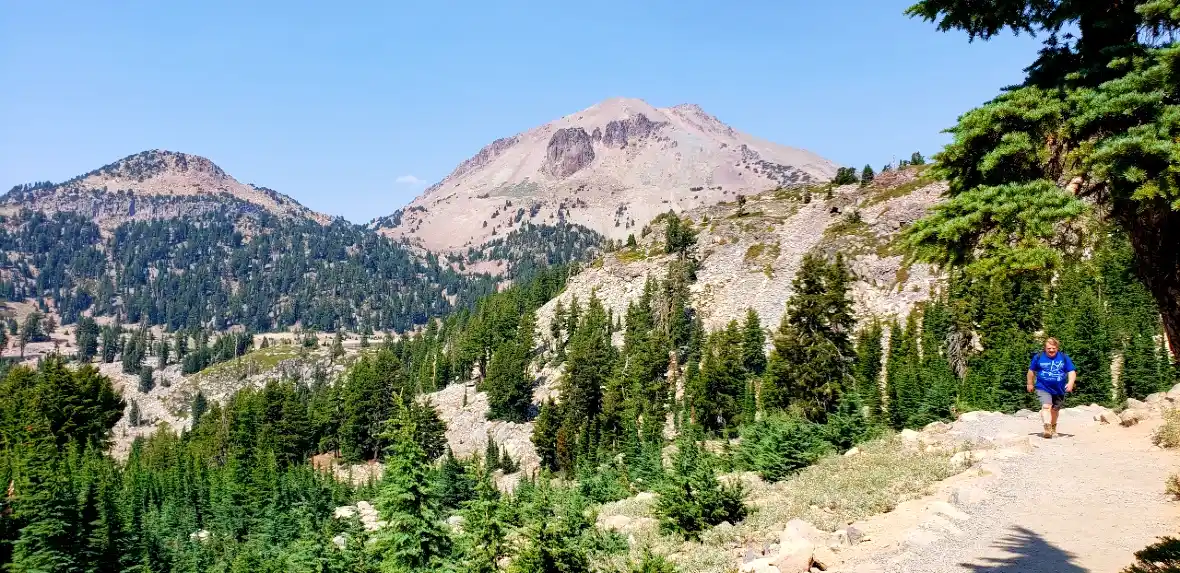
The trailhead sits near Lake Helen, one of the most striking high-elevation lakes in Lassen Volcanic National Park. On a clear summer day, the water can glow a deep sapphire blue, with Lassen Peak rising above the scene and snow often lingering on the surrounding slopes well into the season. It is one of those places where the park feels cold, clean, alpine, and almost peaceful.
That contrast is what makes this hike so memorable.
Before you step into a steaming basin of mud pots, boiling pools, sulfur smells, and mineral-stained ground, you begin beside blue water and mountain views. Lake Helen gives you the “sapphire” side of Lassen. Bumpass Hell gives you the heat, steam, and volcanic energy. Together, they show the two extremes that make this park so different.
On my last visit, I spent part of the day around Lake Helen before hiking into Bumpass Hell. After hiking waterfalls and smaller trails earlier in the day, the lake became the perfect mid-day pause. The color of the water was unlike almost any mountain lake I have experienced in the Sierra region — brilliant, clear, cold, and almost impossible not to stare into.
For visitors, Lake Helen is more than a pretty roadside stop. It is a natural place to slow down, take photos, eat lunch, watch hikers moving across the slopes below Lassen Peak, and get your bearings before starting the Bumpass Hell Trail. On warm days, some visitors linger near the shore, but remember that this is high-elevation water and conditions can change quickly. Even in summer, the lake can be shockingly cold.
If you are building a Lassen day around Bumpass Hell, give Lake Helen time. Don’t treat it as just the parking area. Stand by the water. Look toward Lassen Peak. Notice the snow, the color, the elevation, and the quiet. Then start the trail toward Bumpass Hell and watch how quickly the park changes from sapphire blue to steam, sulfur, and volcanic earth.
The Hike to Bumpass Hell
The hike to Bumpass Hell is short, but it should not be dismissed as just a quick walk from the parking area. This is a high-elevation trail in an exposed volcanic landscape, and even though the mileage is approachable, the setting makes it feel much bigger than the numbers suggest.
From the trailhead near Lake Helen, the route begins with a gradual climb across open slopes with wide views of Lassen’s rugged terrain. Depending on the season, you may see lingering snowfields, volcanic ridges, recovering burn areas, and broad views toward Brokeoff Mountain and the surrounding high country. This is one of the places where Lassen’s contrasts are easy to see: alpine water behind you, volcanic earth beneath your feet, and steam waiting below.
The trail is generally easy to moderate for most visitors, but elevation, sun exposure, snow patches, and the return climb can all add effort. The route eventually drops toward the hydrothermal basin, where the smell of sulfur and the sight of rising steam begin to announce that you are entering a very different part of the park.
One of the best moments on the hike comes before you reach the boardwalk. From above the basin, you can look down into Bumpass Hell and see steam vents, mineral-stained ground, and the boardwalk winding through the volcanic landscape below. Some visitors pause here and turn around, especially if the heat or sulfur smell is strong, but the full experience is worth the descent if conditions allow.
Once you drop into the basin, the trail changes from a scenic mountain hike into something much more unusual. You are no longer just looking at Lassen’s volcanic story from a distance. You are walking into it.
Walking the Boardwalk Through Bumpass Hell
Dropping into Bumpass Hell changes the entire feel of the hike. We recommend slowing down on the boardwalk and staring a bit. The mud changes on every burp.
From above, the basin looks strange and colorful. From the boardwalk, it feels alive. Steam rises from vents. Mud pots bubble and plop. Boiling pools shift in the light. Mineral-stained ground spreads across the basin in rings of white, yellow, rust, gray, green, and blue. The air smells of sulfur, and the sound of steam escaping from the earth reminds you that this is not just scenery — it is an active hydrothermal landscape.
The boardwalk is what allows visitors to experience Bumpass Hell up close. In some places, you are only a short distance from steaming vents, bubbling mud, and boiling water. That closeness is part of what makes the experience so memorable, but it is also why staying on the designated path is so important. The ground around hydrothermal features can be thin, unstable, and dangerously hot.
Take your time in the basin. Watch how the colors change from one pool to another. Notice the mineral rings around the edges of the mud pots and vents. Look for the way water, heat, sulfur, volcanic mud, and erosion leave their marks across the landscape. Every feature seems to tell part of the same story: Lassen is not finished becoming what it is.
For me, the boardwalk was the moment Bumpass Hell stopped feeling like a destination and started feeling like an encounter. Even after years of hiking mountain lakes, peaks, waterfalls, and forests, this basin was so unique. It was strange, beautiful, harsh, colorful, and slightly unsettling all at once — the kind of place that makes even a grown adult feel like a kid seeing the earth do something completely unexpected.
That is the real reward of Bumpass Hell. The hike gets you there, but the boardwalk is where you understand why this short trail is one of Lassen’s signature experiences.
Safety in Hydrothermal Areas
Bumpass Hell is one of the most memorable places in Lassen Volcanic National Park, but it is also one of the places where visitors need to pay attention. The boardwalk is not just there for convenience. It is there because the ground around hydrothermal features can be unstable, thin, and dangerously hot.
Stay on the marked trail and boardwalk at all times. Do not step onto the mineral crust, walk around barriers, or try to get closer to a steam vent, mud pot, or boiling pool for a photo. What looks like solid ground may be fragile surface crust above hot water or steam.
This is especially important with kids. Bumpass Hell is an incredible place for families because it feels so unusual, but children should stay close and understand before entering the basin that this is not a place to wander, run, or test the ground.
The same goes for photography. The colors, steam, and mineral patterns are tempting, but no photo is worth leaving the path. The designated boardwalk gives you excellent views of the basin while keeping visitors away from the most dangerous ground.
Treat Bumpass Hell with respect and it becomes one of the best experiences in the park. Ignore the boardwalk and it can become dangerous very quickly. This is active volcanic terrain, and the safest way to experience it is from the path built for that purpose. And for those wanting a little more there are safe trail experience to the North East of the boardwalk that give you a different elevated perspective of the basin.

When to Hike Bumpass Hell
Bumpass Hell has a much shorter hiking season than many first-time Lassen visitors expect.
This is a high-elevation trail in one of the snowiest national parks in California, and normal walk-in access is usually limited to the heart of summer and early fall. Even when other parts of Lassen begin to open, the Bumpass Hell Trail can remain closed because of lingering snow, unstable slopes, and winter hazards that last well into the season.
For most visitors, the best window to hike Bumpass Hell is late summer into fall, when the park highway is open, the trail has been cleared, and the boardwalk through the basin is accessible. July, August, September, and early October are generally the months to watch, but the exact timing changes year to year depending on snowpack, spring weather, trail conditions, and park management decisions.
Early summer can be tricky. The road through the park may open before the Bumpass Hell Trail is ready, and snow can still cover sections of the route near Lake Helen and the basin. If Bumpass Hell is high on your Lassen list, do not assume a June visit will work. Check current trail conditions before building your whole itinerary around it.
Winter and spring are a different story. While Lassen is a beautiful snowshoeing and cross-country skiing destination, Bumpass Hell should not be treated as a normal winter objective. The summer trail crosses steep, hazardous terrain, and the National Park Service warns that the route is not safe for oversnow travel. For most winter visitors, better options are found near the southwest entrance, Sulphur Works, Manzanita Lake, or designated winter recreation areas.
Fall may be the most underrated time to hike Bumpass Hell. If the trail is still open, the crowds are often lighter, temperatures are cooler, and the volcanic basin can feel even more dramatic under lower autumn light. Just remember that Lassen changes quickly. Snow, ice, cold mornings, and early storms can arrive sooner than expected.
The best advice is simple: plan Bumpass Hell as a summer-to-early-fall hike, then confirm conditions before you go. If it is open, make it a priority. If it is closed, choose another Lassen experience rather than forcing the route.

How to Pair Bumpass Hell with a Lassen Day
Bumpass Hell is worth planning around, but it works best when it becomes part of a larger Lassen day instead of the only stop on your itinerary.
The easiest pairing is Lake Helen. Since the Bumpass Hell trailhead sits near the lake, give yourself time before or after the hike to enjoy the water, the views toward Lassen Peak, and the alpine setting that makes this section of the park so striking. Lake Helen is the calm, sapphire-blue side of the experience. Bumpass Hell is the steam, sulfur, and volcanic energy.
Emerald Lake is another easy addition along the main park highway. It does not require the same time commitment as a full hike, but it adds another layer of high-elevation color and scenery to the day. Together, Lake Helen, Emerald Lake, and Bumpass Hell make this part of the park one of the most visually memorable stretches of Lassen Volcanic National Park.
Sulphur Works also pairs naturally with Bumpass Hell, especially if you are entering or leaving through the southwest side of the park. It is one of the easiest hydrothermal stops in Lassen and gives visitors a quick look at steam vents and volcanic activity close to the road. If Bumpass Hell is the full immersion, Sulphur Works is the easy preview or final reminder that this landscape is still active.
For hikers with more energy, Kings Creek Falls can turn the day into a stronger hiking itinerary. Bumpass Hell gives you the volcanic basin. Kings Creek Falls gives you moving water, forest, meadow, and a waterfall finish. Doing both in one day is not necessary for everyone, but if you start early and conditions are good, it can create one of the better full-day hiking combinations in the park.
Even if you do not climb Lassen Peak, the Bumpass Hell area gives you some of the best ways to understand its presence. From Lake Helen, the highway, and nearby viewpoints, Lassen Peak dominates the scene. Brokeoff Mountain also shows beautifully from parts of this region, giving the day a wider volcanic backdrop.
A simple first-time Lassen day could look like this: start near the southwest entrance, stop at Sulphur Works, continue to Lake Helen, hike Bumpass Hell, pause at Emerald Lake, and then decide whether your energy allows for Kings Creek Falls or a slower evening near Manzanita Lake, Lake Almanor, or your basecamp outside the park.
If you are staying near the south entrance, places like St. Bernard Lodge, Mill Creek Resort, or Highlands Ranch make Bumpass Hell an easy centerpiece for the day. If you are camping in the park, build your route around where you are staying and how much driving you want to do after the hike. Lassen looks small on a map, but the winding road, elevation, trail time, and scenic stops can fill a day quickly.

Where to Stay or Camp Near Bumpass Hell
For many Lassen trips, camping should be the first lodging option to consider. This is a park where staying close to the landscape changes the experience. Early mornings, evening light, quiet roads, and quick access to trailheads all matter here.
Inside the park, campgrounds are spread across different regions, and each one creates a different kind of trip. Manzanita Lake is one of the most accessible and popular choices, especially for visitors entering from the northwest side of the park. Summit Lake puts you closer to the middle of the park road and can work well for visitors who want to split time between the main highway, lakes, and hiking routes. Warner Valley and Juniper Lake offer quieter, more remote-feeling access when conditions allow.
Personally, if I were building a Lassen camping trip around exploration, I would look hard at Butte Lake. It puts you near Cinder Cone, the Painted Dunes, lava beds, and one of the most visually distinct corners of the park. It is not the most convenient campground for hiking Bumpass Hell, but it may be one of the best choices for experiencing the broader volcanic personality of Lassen.
RV travelers and tent campers should also look beyond the park boundary, especially if sites inside the park are booked or if you want more services. The Chester and Lake Almanor area can work well for families, longer stays, and trips that combine Lassen with lake time, food, supplies, and a more relaxed basecamp. Around Lake Almanor, cabin stays and lakefront rentals can also turn a Lassen hiking trip into a more comfortable mountain getaway.
Near the south entrance, St. Bernard Lodge remains one of our favorite places to stay when visiting Lassen. It has the kind of roadside mountain-lodge feel that fits the region, and its location works especially well for visitors using the southwest entrance, Sulphur Works, Lake Helen, Bumpass Hell, and the main park highway. Mill Creek Resort and Highlands Ranch are also strong options on this side of the park.
If you prefer cabins and lake access, the west shore of Lake Almanor is worth considering. We have especially enjoyed the Prattville Lakefront Cabin area on the west shore, where you can pair park days with quiet time by the water.
On the north side of the park, lodging and camping options are more limited and spread out, but they can make sense if your trip is focused on Manzanita Lake, the northwest entrance, Highway 44, or a broader Northern California road trip. Hotels and cabins outside the north entrance can offer more comfort than camping while still keeping you close enough for early starts in the park.
The main thing to remember is that Lassen does not have one obvious “village” where everyone stays. Your best basecamp depends on your route. Choose the south side for Bumpass Hell, Sulphur Works, Lake Helen, and southwest entrance access. Choose Manzanita or the north side for lake views, camping, and the northwest entrance. Choose Chester or Lake Almanor if you want services, family comfort, lake time, and a broader regional stay. Choose Butte Lake if you want to lean into the volcanic backcountry feel of Cinder Cone and the Painted Dunes.
Wherever you stay, check current campground status, road access, and reservation details before you go. Lassen’s campgrounds and access roads are highly seasonal, and snow, fire recovery, maintenance, and weather can all affect what is open.
Related Sierra Rec Guides
Continue planning your Lassen trip with these Sierra Rec guides and stories:
- Explore Lassen Volcanic National Park
- Lassen Volcanic National Park 1-Day Itinerary
- Kings Creek Falls — Lassen Volcanic National Park
- What to Do at Lassen Volcanic National Park in April and May
- A New Year’s Snowshoe Adventure at Lassen Volcanic National Park
- Northern California’s Hidden Gem: St. Bernard’s Lodge in Chester
- Sun-Dappled Days and Starry Nights: A Summer Escape to Lake Almanor
- Explore Plumas and Lassen Counties