Why Yosemite Valley Still Matters
Let’s be honest—when most people think of Yosemite National Park, they’re picturing Yosemite Valley.
It’s Tunnel View at sunrise. Standing in the meadow below Yosemite Falls. Watching climbers trace impossible lines up El Capitan. These are the images that define the park, and for good reason.
Yosemite Valley is hard to comprehend until you’re in it. The scale doesn’t translate in photos. Granite walls rise thousands of feet in every direction, wrapping the valley floor in a way that feels both open and protected at the same time. It’s a landscape shaped by ice and time, where the Merced River quietly threads its way through the middle of something that feels much bigger than a valley.
Driving through Yosemite Valley can feel disorienting in the best way. Every turn, every pullout, every stop along the road offers another view worth slowing down for. You’ll find yourself circling back, chasing light, trying to take it in from one more angle.
But Yosemite Valley isn’t just scenery—it’s a living place.

This is where the stories of Yosemite are still being made. From the early days of conservation and photography to the climbing culture that continues today, the valley has always been at the center of it all. It’s also a dynamic environment—shaped by seasonal floods, shifting river channels, and an ecosystem that continues to evolve alongside the millions of people who visit each year.
And that’s the reality of Yosemite Valley today—it’s busy.
Staying in Yosemite Valley offers the most convenience, but sites fill quickly—especially in peak season. If you’re planning to camp, check out our Yosemite National Park Camping Guide for campground options, booking tips, and alternatives outside the valley.
Trails and viewpoints draw crowds, especially during peak season. For many visitors, this is their first experience in the Sierra, and that energy shows up everywhere—from the boardwalks to the shuttle stops to the iconic viewpoints.
But that doesn’t take away from what Yosemite Valley is.
It just means you need to approach it with intention.
This guide is built to help you do exactly that—highlighting the best places, views, and experiences for a classic first or second visit, while also helping you slow down and experience the valley in a way that feels more personal.
From the energy of Curry Village to the quiet corners near the river, from the legacy of the Ansel Adams Gallery to the towering walls of El Capitan, and the reflections at Mirror Lake, Yosemite Valley still delivers something that’s hard to find anywhere else.
You just have to know how to experience it.
Yosemite Valley at a Glance
If it’s your first time visiting Yosemite, this is where you’ll likely start—and for good reason. Yosemite Valley delivers the iconic views, easy access, and memorable first impressions that define the park.
But it’s not for everyone, and it’s not the only way to experience Yosemite.
Here’s a quick breakdown to help you decide if Yosemite Valley is the right fit for your trip:
Best For
- First-time visitors to Yosemite
- Families and short trips (1–2 days)
- Scenic viewpoints and iconic photography
- Easy to moderate hikes with high reward
Time Needed
- Half Day: Quick drive-through with stops at major viewpoints
- 1 Day: Valley highlights + 1–2 short hikes
- 2 Days: Slower pace with time for early morning or evening exploration
Crowd Level
- High year-round, especially:
- Spring (waterfall season)
- Summer (peak travel months)
- Weekends and holidays
Expect:
- Full parking lots by mid-morning
- Busy trails near major attractions
- Shuttle congestion during peak hours
Best Time to Visit
- Spring (April–June): Peak waterfalls, flowing rivers, vibrant meadows
- Fall (October–November): Fewer crowds, cooler temperatures, quieter experience
- Winter: Peaceful and scenic, but limited access and snow conditions
Skip Yosemite Valley If You’re Looking For
- Solitude and quiet hiking
- Remote backcountry experiences
- Alpine lakes and high-elevation scenery
Instead, consider:
- Tuolumne Meadows for alpine landscapes
- Hetch Hetchy for early-season hiking and fewer crowds
A Sierra Rec Tip
Yosemite Valley is at its best early in the morning and late in the evening. Midday crowds can change the experience quickly, but with a little planning, you can still find quiet moments—especially along the river and on lesser-used sections of the Valley Loop Trail.
Iconic Yosemite Valley Stops
(But done the Sierra Rec way—not a generic list)
Iconic Yosemite Valley Stops (Where Most People Start)
There’s no way around it—Yosemite Valley is home to some of the most recognizable landscapes in the world. And for a first-time visit, these are the places that define the experience.
The key isn’t just seeing them—it’s knowing how to move through them without getting stuck in the crowds or rushing past what makes them special.
Here are the core stops that most visitors build their day around:
Tunnel View
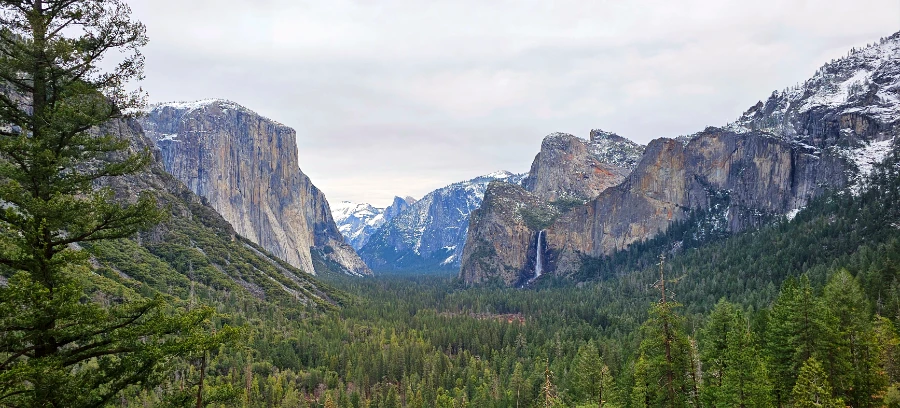
If you’ve seen a photo of Yosemite, it was probably taken here.
This is your first real look into Yosemite Valley if you are driving in from the South Entrance —a wide, open view of El Capitan, Half Dome, and Bridalveil Fall all in one frame. It’s one of the best introductions to the scale of the park. If you are driving in from the North Entrance a stop on North rim is available a few cars at a time, but most travel to the valley and then back up to Tunnel view from Bridal Veil Falls. And if you are traveling up the Valley from Merced turn at Bridal Veil as well.
Sierra Rec Tip:
Stop here early in the morning or later in the evening. Midday tends to be crowded and flat in terms of lighting.
Yosemite Falls

One of the tallest waterfalls in North America, and easily one of the most accessible.
You can view it from multiple spots throughout the valley, but the short walk to Lower Yosemite Falls gets you up close to the base. A shuttle stop trailhead so just hope on the shuttle from where you park.
Best Time: Spring and early summer when water flow is strongest
What to Expect: Crowds—but also one of the most impressive sights in the park.
Sierra Rec Tip: Most People get off the bus and turn slight left to walk down the Lower Yosemite Fall Loop trail, for a less crowded experience go right and follow loop towards the falls on the opposite side of the river bed to a great photo location that gives you a view of both falls and less people. (Early in season this side may be closed from Frazzle Ice or flooding)
El Capitan

Even if you’re not a climber, standing below El Capitan is something you don’t forget.
It’s not just the height—it’s the sheer vertical face that makes it hard to process in person. If you take the time to sit and watch, you’ll often spot climbers making their way up the wall. Shuttle stops at EL Cap meadow are a great evening or sunrise adventure because you have the best chance to catch climbers or see the light impact the face.
Sierra Rec Tip:
Bring binoculars or use your phone zoom—you’ll start to notice movement on the wall. Secondary view location is to take the next stop after the meadow at stop 9 near the bridge, walk along the river West and get great photos of bridge and EL CAP. Also a great spot to start hike of Valley loop trail if you are up for the hike.
Bridalveil Fall
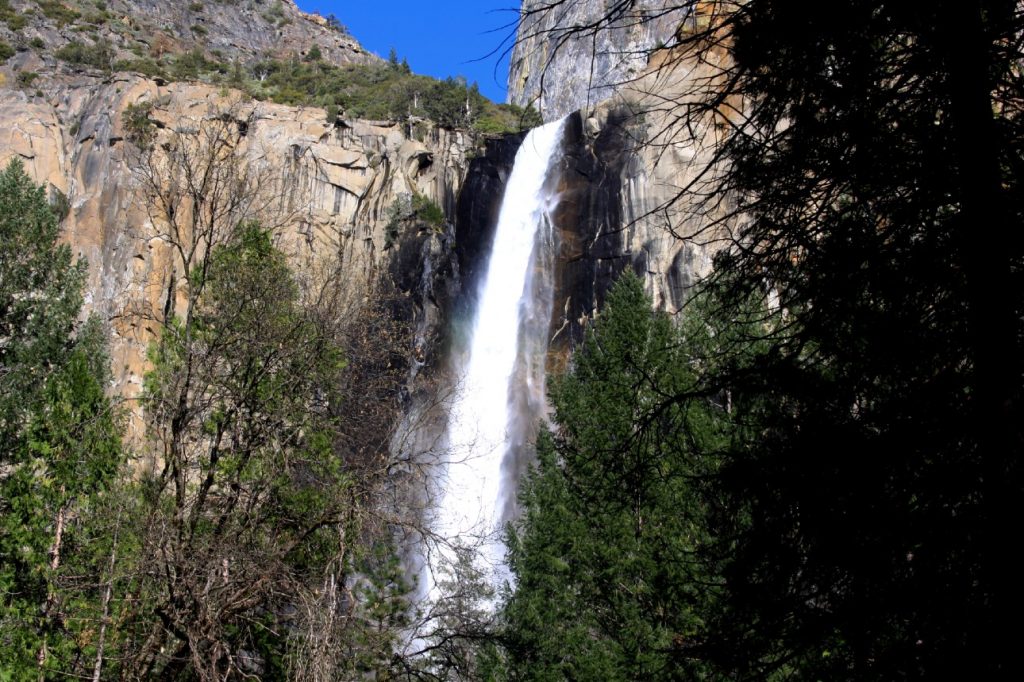
One of the first waterfalls you’ll encounter entering the valley, and one of the easiest to access. bridal Veil falls is the only Yosemite Valley Waterfall that runs year round. The new Bridal Veil Fall Viewing Deck is a great place to sit for a bit, but to truly experience ethe fall you must enter the splash zone in spring. A magical experience to get soaked by waterfall mist.
A short walk takes you to the base, where wind can shift the mist in every direction—especially in spring. Bridal Veil creek is also a great place to photograph and see Dogwoods at bloom in spring.
Quick Stop: Easy, short, and worth it even on a tight schedule. WE recommend the parking area for your stop, although in heavy summer season parking along the road is common. The Shuttle does not go to Bridal Veil falls. If you take the shuttle to Cathedral Beach Stop 10 you can hike on the Valley Loop extension about 2.5 miles to bridal Veil falls one way.
👉 Discover more on Bridal Veil Trail Review
Mirror Lake
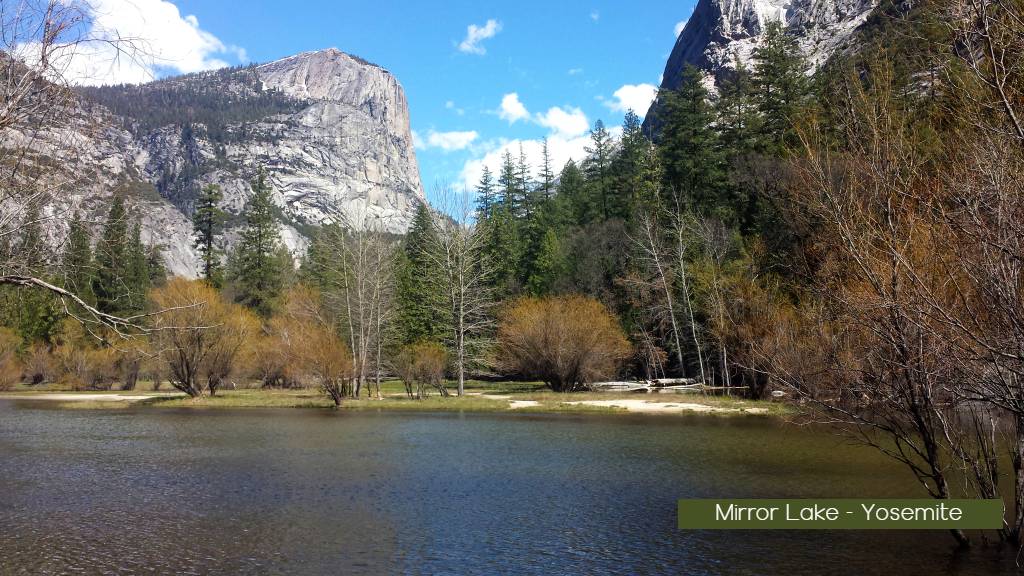
This is one of those places that changes with the seasons—and with the time of day.
At the right moment, you’ll get reflections of Half Dome across calm water. Later in the season, it becomes more of a meadow, but still offers a quieter escape from the main valley loop.
👉 Discover more on Mirror Lake in our Mirror Lake Guide
Yosemite Meadows & River Stops
Some of the best moments in Yosemite Valley don’t come from the major stops—they happen in between.
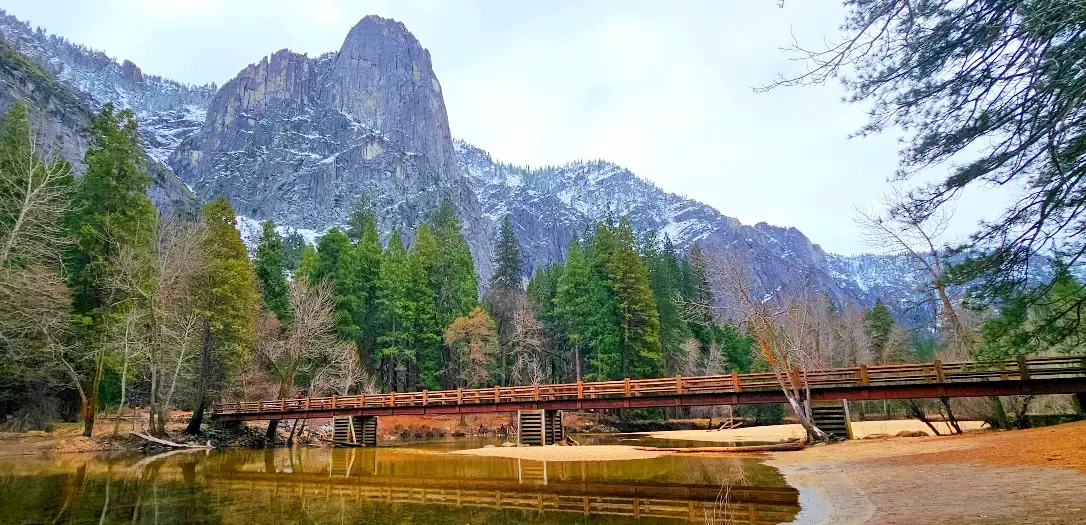
Pullouts along the road, quiet sections of the Merced River, and open meadow views give you space to slow down and take it all in without the same level of crowding. Parking areas at Cathedral Beach, Yosemite Falls Parking or Curry Village probably the best locations, but road side stops to walk the boardwalk to the river are a great location for a first experience in Yosemite to see wildlife, waterfalls, granite walls and a scenic river.
Sierra Rec Tip:
Don’t just follow the main stops—take time to explore the spaces between them. I love to walk from Curry Village over to Yosemite Falls, following trails through the meadow and along the river to experience the best of Yosemite Valley.
Yosemite Valley Base Areas & Cultural Stops (Where You Slow Down)
It’s easy to overlook these places on your first trip to Yosemite Valley.
Most visitors come in focused on waterfalls and granite—moving quickly from one iconic stop to the next, trying to take it all in. I did the same thing on my early visits, barely slowing down long enough to notice what was happening in between.
But over time, these became some of my favorite moments in the valley.
Sitting out front at Curry Village in the evening, watching the light fade off the cliffs. Stepping into the Ansel Adams Gallery, picking out a postcard, and mailing it to myself just to get that Yosemite postmark. Walking over to the chapel in the early morning, when the valley is still quiet and the light is just starting to reach the trees.
These places don’t hit you all at once like Yosemite Falls or El Capitan. They’re slower. More personal. And in a lot of ways, they’re what make the valley feel like more than just a place you pass through.
Curry Village

If Yosemite Valley has a central gathering place, this is it.
Curry Village is where a lot of the valley’s energy lives—lodging, food, people coming and going from hikes, and that constant backdrop of granite rising above camp.
It’s also one of the best places to just sit for a while. Grab a coffee, find a spot outside, and take in the surroundings without rushing to the next stop.
👉 This is also the starting point for the Mist Trail, making it a natural base for a full day in the valley.
Yosemite Village
This is the main hub for services in Yosemite Valley.
You’ll find:
- Visitor Center
- Food options
- Shuttle connections
- Access to nearby walks and viewpoints
It’s not the most scenic part of the valley, but it’s functional—and most visitors will pass through here at some point during their trip.
The Ahwahnee Hotel

Even if you’re not staying here, it’s worth stepping inside.
The Ahwahnee is one of the most iconic lodges in the National Park system, with architecture and design that reflect the surrounding landscape. The main hall alone is worth the visit—especially if you’re looking for a quieter, more reflective Yosemite experience.
Ansel Adams Gallery
This is one of those stops that connects you to Yosemite in a different way.
The gallery tells the story of Yosemite through photography—past and present—and gives you a sense of how this landscape has been seen, interpreted, and shared over time.
And if you’re like me, it’s also a place to grab a postcard and send it home—something about that Yosemite postmark makes it feel like part of the trip.
Yosemite Chapel
Small, quiet, and easy to miss.
The Yosemite Chapel sits tucked away in the valley, and early in the morning it offers one of the more peaceful moments you’ll find here. It’s a simple place, but one that adds a sense of history and stillness to an otherwise busy landscape.
A Sierra Rec Perspective
If Yosemite Valley feels overwhelming at first, this is where you reset.
These base areas and cultural stops give you a chance to slow down, take a breath, and experience the valley at a different pace. They’re not the headline attractions—but they’re often the places you remember most.
Best Hikes in Yosemite Valley
Hiking in Yosemite Valley isn’t just about covering miles—it’s about how you experience the landscape.
Some hikes put you right into the power of the waterfalls. Others climb you out of the valley for perspective. And a few let you slow down and see Yosemite in a way most visitors miss entirely.
These are the hikes that define a Yosemite Valley experience.
The Mist Trail Experience

This is one of the most iconic hikes in Yosemite—and one of the most memorable.
Starting near Curry Village, the Mist Trail climbs alongside the Merced River, bringing you face-to-face with Vernal Fall and, if you continue, Nevada Fall. In peak season, you’ll feel the mist on your face as you climb the stone steps—something that turns this hike into a full sensory experience.
This isn’t just a trail—it’s an introduction to Yosemite’s raw power. But this trail is not for the faint at heart, not only will it make every muscle engage and later hurt, the climb up the wall at Vernal Falls will test your nerves as will the view down the waterfall at Nevada Falls if you shall decide to take in the full loop.
What to Expect: The crowds on this hike are nothing short of a New York City Metro Sidewalk at times. You are going to need to bring your crowd filters and best attitude. You should expect to drink a lot of water and spend the better part of a half day plus for this hike.
Sierra Rec Tip:
Go early (Sunrise). The Mist Trail gets crowded quickly, and the experience is completely different when you have space to move and take it in. Go straight up to Nevada Falls then loop back via the JMT, cutting back down to Clarks Point for in our opinion the best Vernal Falls picture Location). If climbing down the steep steps of Vernal is not for you, it will mean a climb back up to the JMT to finish the loop.
Yosemite Falls Trail Experience
If you want to feel the scale of Yosemite Valley, this is the hike.
The Yosemite Falls Trail is a steady, demanding climb that gains elevation quickly, but every turn opens up bigger views back down into the valley. In spring, the sound of the falls follows you the entire way.
It’s not an easy hike—but it’s one that gives you a true sense of how massive this landscape really is.
What to Expect:
- Steep switchbacks
- Big elevation gain
- Expansive valley views
The Four Mile Trail Experience

This is your path from Yosemite Valley to the rim and Glacier Point.
The Four Mile Trail climbs from the valley floor all the way to Glacier Point, gradually revealing views of El Capitan, Yosemite Falls, Half Dome and Many West Side features often missed by visitors as you gain elevation.
It’s one of the best ways to connect two completely different Yosemite experiences—the valley below and the open viewpoints above. The switch backs are gradual and steady. Taking you along ridgelines, forest and massive old growth tree sections.
Sierra Rec Tip:
If you’re not up for the full climb, hiking partway still gives you incredible views with fewer people.
The Valley Loop Trail (A Hidden Yosemite Experience)
This is one of the most overlooked hikes in Yosemite Valley—and one of the most rewarding.
A long-time ranger once told me that the Valley Loop Trail is the most authentic way to experience Yosemite, and it stuck with me. Instead of chasing viewpoints, you move through the valley itself—along the river, through the trees, and past quiet meadow sections that most visitors never see.
It’s flexible, easy to break into sections, and gives you a more organic, less crowded perspective of Yosemite.
👉 (Perfect place to link your Valley Loop Trail post)
Why it stands out:
- Less crowded than major trails
- Up-close views of the valley environment
- Ideal for slower, more reflective hiking
A Sierra Rec Perspective
If it’s your first visit, it’s easy to focus on the big-name hikes—and you should experience at least one of them.
But don’t overlook the quieter options.
Some of the best moments in Yosemite Valley come when you step away from the main routes, slow your pace, and let the landscape unfold around you instead of chasing the next destination.
How to Experience Yosemite Valley Differently (Avoid the Crowds)
The key to Yosemite Valley is timing.
Early morning—or later in the evening after about 6pm—changes everything. The same places that feel crowded and chaotic midday can feel calm, quiet, and almost personal when the light is low and the pace slows down.
There are a few great ways to experience the valley differently. Renting a bike at Curry Village or rafting the Merced River both give you a slower, more immersive way to move through the landscape.
But for most of us, Yosemite is experienced on foot.
And that’s where small decisions make a big difference.
Using the shuttle to move quickly across the busy parts of the valley—and then walking beyond the main stops—is often the best way to find space. A willingness to go just a little farther than the average visitor opens up a completely different version of Yosemite Valley.
Quiet Routes & Underrated Experiences
Some of the best moments in Yosemite Valley don’t come from the main destinations—they come from how you move between them.
One of my favorite stretches is following the Valley Loop Trail from Lower Yosemite Falls out toward Mirror Lake. Instead of bouncing between crowded stops, you move through the valley itself—along the river, through the trees, and into quieter sections that most people skip.
Another overlooked area is the meadow between Housekeeping Camp and Curry Village. There’s a small pullout near the bridge that lets you step right into the heart of the meadow. In the right light, it’s one of the more peaceful and scenic spots in the valley—and it rarely gets the same attention as the major viewpoints.
On the west end of the valley, you can take the shuttle out toward El Capitan and start walking from there. Following the Valley Loop Trail toward Cathedral Beach and continuing toward the Four Mile Trail area eventually brings you into the Swinging Bridge picnic area.
This is one of those “in-between” routes that most visitors miss—but it offers a quieter, more open way to experience the valley.
Cross the bridge, continue walking, and you can make your way back toward Yosemite Falls with a completely different perspective than the typical stop-and-go route.
Use the Shuttle Strategically
The Yosemite shuttle system isn’t just for convenience—it’s a tool.
Instead of driving and fighting for parking at every stop, use the shuttle to:
- Skip the busiest areas
- Access less crowded trail segments
- Create one-way walking routes through the valley
👉 This is one of the easiest ways to turn a crowded day into a more relaxed experience.
A Different Way to See Yosemite
One of the more fun ways to experience Yosemite Valley—especially if you’re staying overnight—is to start at the Ansel Adams Gallery.
Spend some time looking through the photography, then pick out a location that stands out to you. If you have the time, go find that same spot in the valley and see it for yourself.
It’s a simple idea, but it connects you to the landscape in a different way—and gives you a purpose beyond just checking off stops.
A Sierra Rec Perspective
Yosemite Valley doesn’t have to feel crowded.
Most people follow the same path, at the same time, in the same direction. The moment you step outside of that pattern—even just a little—you start to see a different side of the park.
Slow down. Walk farther. Pay attention to the spaces between the main stops.
That’s where Yosemite Valley starts to feel real.
Where to Go Next in Yosemite National Park
Yosemite Valley is where most trips begin—but it doesn’t have to be where they end.
If you’ve spent time here, you’ve already experienced the scale, the waterfalls, and the iconic views that define Yosemite. But the park is much bigger than the valley floor, and some of the most memorable experiences happen beyond it.
Where you go next depends on what kind of trip you’re looking for.
If You Want the Classic Sierra Experience
Head to Tuolumne Meadows and the surrounding high country.
Out Tuolumne Meadows Travel Guide is a great place to start
This is where Yosemite starts to feel more like the Sierra—open granite landscapes, alpine lakes, and trailheads that lead deeper into the backcountry. It’s quieter, higher in elevation, and a completely different experience from the valley.
How you get into the park—and which entrance you choose—can shape your entire experience. If you’re still planning your route, our Yosemite Travel Routes guide breaks down the best ways to enter the park from major cities and regions.
👉 Best for: Hiking, backpacking, and getting away from crowds
If You Want the Best Views and incredible experiences.
Make your way up to Glacier Point and the South Rim.
From here, you’re looking down into Yosemite Valley instead of up at it. The perspective shift alone makes it worth the trip, and short hikes like Taft Point and Sentinel Dome offer some of the most dramatic viewpoints in the park.
👉 Best for: Sunset views, photography, and short hikes with big payoff
Sierra Rec Tip:
If you are not motivated by elevation gain, then we recommend paying the shuttle fee for a ride to Glacier point, then hike down Four Mile trail ( instead of hiking up) back to the valley floor when ready. A 2+ hour hike down but the shuttle will stop and pick you up at the trailhead and the views and experience are hard to put in words. The visuals are incredible and downward makes the hike pretty easy for most.
If You Want a Quieter Yosemite Experience
Explore Hetch Hetchy.

Often overlooked, this area offers some of the best early-season hiking in Yosemite, with fewer crowds and a more relaxed pace. Trails to Wapama Falls and Rancheria Falls give you a waterfall experience without the congestion of the valley.
👉 Best for: Spring hiking and avoiding peak crowds
If You’re Planning a Multi-Day Trip
Use Yosemite Valley as your starting point—but build your trip around a combination of regions.
A well-balanced Yosemite trip might look like:
- Day 1: Yosemite Valley highlights
- Day 2: Glacier Point and short hikes
- Day 3: Tuolumne Meadows or Tioga Pass
👉 This approach gives you a much more complete experience of the park.
A Sierra Rec Perspective
The biggest mistake most visitors make is trying to do everything in Yosemite Valley.
The better approach is to let the valley introduce you to the park—then use that experience to guide where you go next.
That’s when Yosemite starts to open up.
Yosemite Valley FAQ
Is Yosemite Valley worth visiting?
Yes—especially for a first visit.
Yosemite Valley is where you experience the scale of the park for the first time. Landmarks like Yosemite Falls, El Capitan, and Tunnel View are all concentrated here, making it the most efficient way to see Yosemite’s most iconic scenery.
That said, it’s also the most crowded part of the park. Many visitors use Yosemite Valley as a starting point, then explore areas like Tuolumne Meadows or Hetch Hetchy for a quieter experience.
How many days do you need in Yosemite Valley?
Most visitors need 1–2 days.
- 1 Day: Enough time to see the major highlights and do a short hike
- 2 Days: Allows for a slower pace, early morning or evening exploration, and one longer hike
If you have more time, it’s better spent exploring other regions of Yosemite beyond the valley.
When is the best time to visit Yosemite Valley?
The best time depends on what you want to experience:
- Spring (April–June): Peak waterfalls and flowing rivers
- Summer (July–September): Full access, but heavy crowds
- Fall (October–November): Fewer people, quieter trails
- Winter: Scenic and peaceful, but limited access
For most visitors, late spring or fall offers the best balance of conditions and crowd levels.
Is Yosemite Valley crowded?
Yes—Yosemite Valley is the busiest area in the park.
Expect:
- Full parking lots by mid-morning
- Crowds at major viewpoints and trailheads
- Shuttle congestion during peak hours
To avoid the crowds:
- Visit early in the morning or after 6pm
- Use the shuttle instead of driving
- Explore trails like the Valley Loop Trail instead of only major stops
What are the easiest hikes in Yosemite Valley?
Some of the best easy hikes include:
- Lower Yosemite Falls
- Mirror Lake
- Valley Loop Trail (flexible and less crowded)
These hikes offer great scenery without major elevation gain and are ideal for first-time visitors.
Do you need a reservation to visit Yosemite Valley?
Yosemite reservation requirements change seasonally.
In peak months, Yosemite National Park may require:
- Entry reservations
- Timed entry permits
Outside of those periods, reservations may not be required—but parking and access can still be limited.
👉 Always check the official park website before your trip for current requirements.
Where should you stay when visiting Yosemite Valley?
Staying inside the valley offers the most convenience, but it fills up quickly.
Options include:
- Curry Village
- The Ahwahnee Hotel
- Yosemite Valley Lodge
If those are full, consider staying outside the valley in areas like Wawona or nearby gateway towns and driving in early.
What’s the best way to get around Yosemite Valley?
The shuttle system is often the easiest way to move around.
- Avoids parking issues
- Connects major trailheads and viewpoints
- Allows for one-way walking routes
Driving is possible, but expect delays and limited parking during peak times.
Can you visit Yosemite Valley without hiking?
Yes.
Many of Yosemite Valley’s best views are accessible with short walks or from roadside pullouts. You can experience waterfalls, granite walls, and meadows without committing to long hikes.
That said, even short walks make a big difference in how much you experience.
What should you not miss in Yosemite Valley?
If it’s your first visit, don’t miss:
- Tunnel View
- Yosemite Falls
- El Capitan
- Bridalveil Fall
- Mirror Lake
These stops give you a well-rounded introduction to Yosemite Valley in a single day.