What Makes Kings Canyon National Park Unique
Kings Canyon doesn’t reveal itself all at once.
Unlike Sequoia, where the experience begins quickly in the Giant Forest, Kings Canyon unfolds slowly—mile by mile—as you move deeper into the landscape.
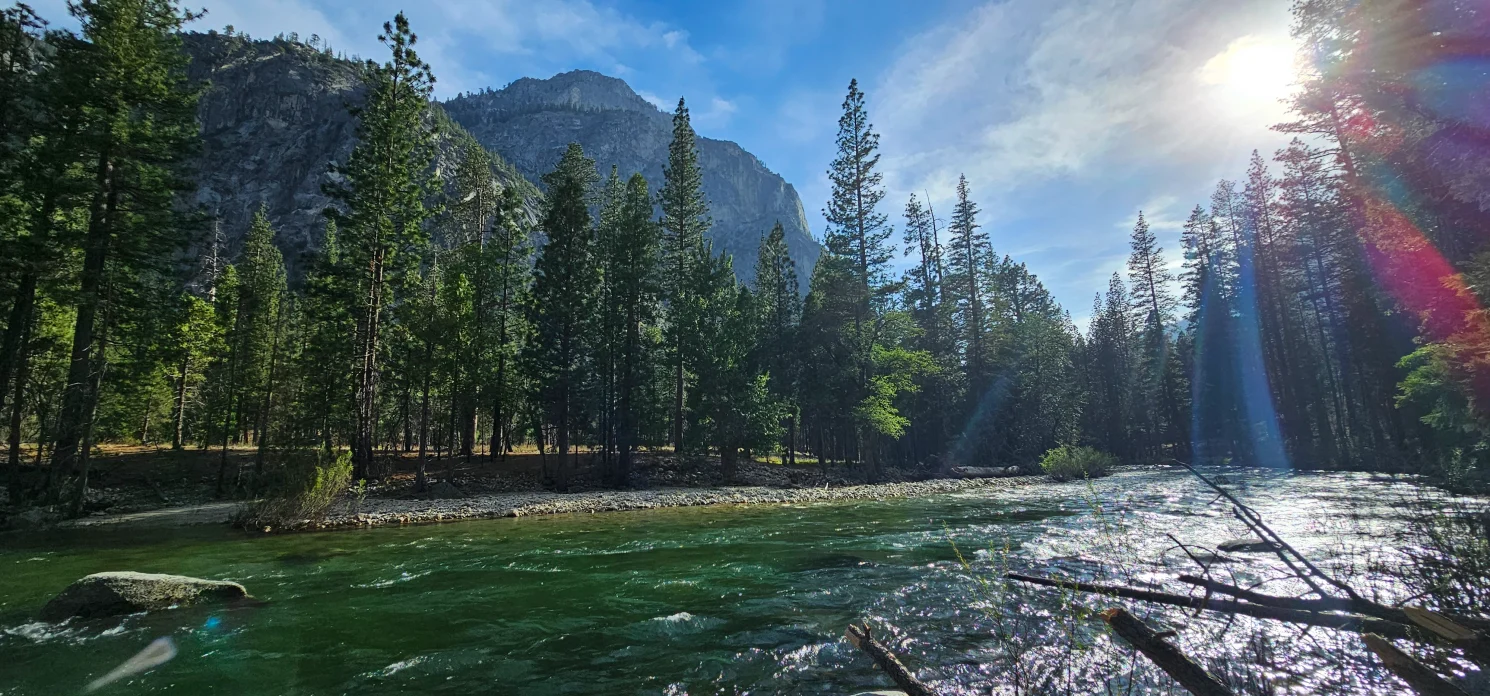
The drive into the canyon is part of the experience. Along the Kings Canyon Scenic Byway, the terrain shifts dramatically. Forest gives way to granite walls, the road narrows, and the Kings River begins to guide the journey.
By the time you reach Cedar Grove, you’re no longer just visiting a park—you’re inside it.
Beyond the deep canyon walls and roaring rivers of Kings Canyon National Park lies an entire network of Sierra Nevada parks and wilderness regions waiting to be explored. Discover more iconic mountain destinations in our complete National Parks guide.

Into the Canyon
The heart of Kings Canyon lies deep along the river corridor.
Here, the scale becomes clear:
- sheer granite cliffs rising thousands of feet
- the Kings River cutting through the canyon floor
- waterfalls and side canyons feeding into the main valley
Places like Zumwalt Meadow and Roaring River Falls offer some of the most accessible ways to experience this landscape—but it’s the space between them that makes the canyon memorable.
A Quieter Side of the Sierra
Kings Canyon is often paired with Sequoia National Park—but it feels completely different.
- fewer crowds
- longer distances
- slower pace
This is where the Sierra begins to feel bigger and less structured. It’s not about checking off stops—it’s about moving through the landscape and letting it unfold.
Gateway to the High Sierra
Beyond Roads End, the canyon becomes something else entirely.
Trailheads here lead deep into the Sierra:
- toward alpine basins
- across high passes
- into long backcountry routes
This is where Kings Canyon transitions from a scenic destination into a true wilderness experience.
👉 We break down these routes in our Kings Canyon backpacking guide
The First Glimpse Beyond
My first introduction to Kings Canyon National Park didn’t come deep in the canyon—it came at the edge of it.
At Grant Grove, the experience feels familiar. Towering trees, quiet campsites, a sense of being settled into the forest. It’s beautiful, comfortable, and easy to understand.
But it also hides something.
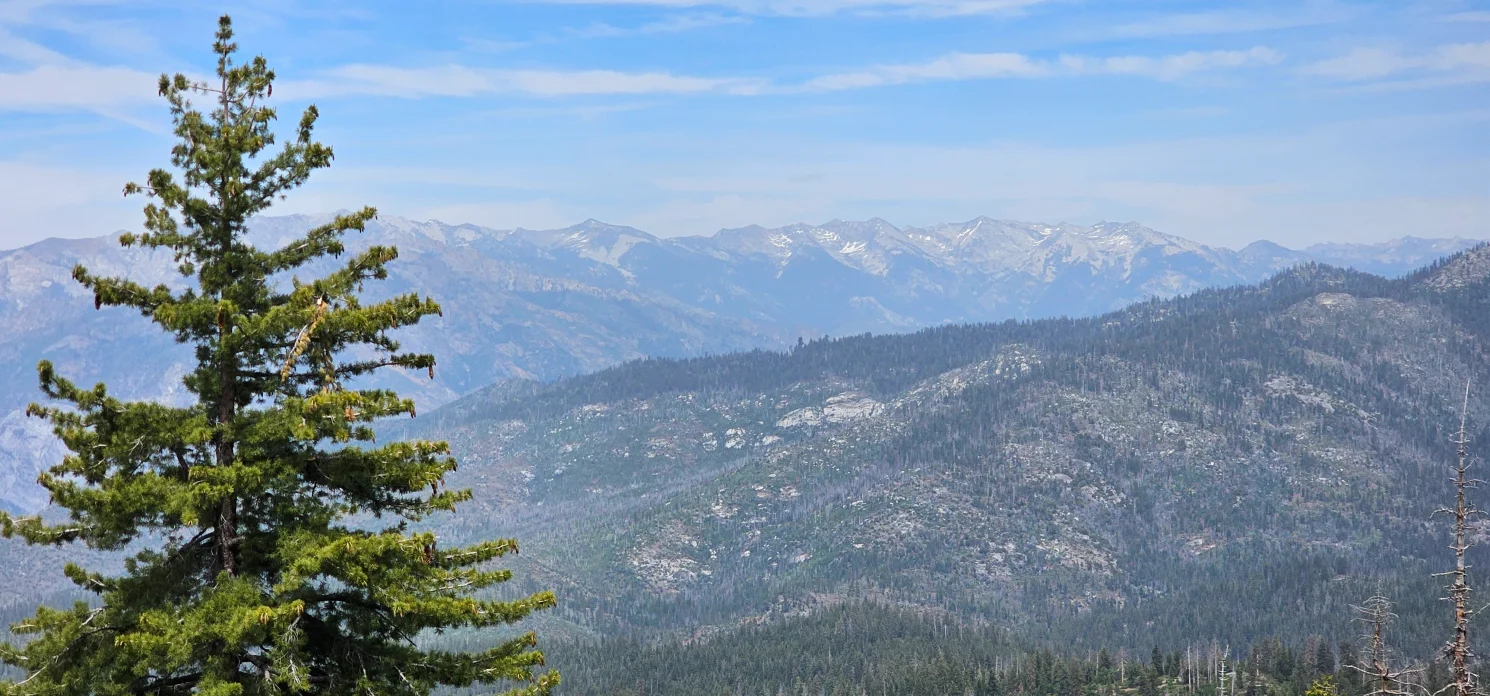
It wasn’t until I stood at Panoramic Point that everything shifted. Looking out across the Sierra, the scale finally revealed itself—layer after layer of peaks stretching into the distance. I remember standing there as an old-timer pointed across the skyline, naming peaks like the North Palisade, tracing the range with the kind of familiarity that only comes from years out there.
Then he pointed north and said something that stuck with me:
“That area… that’s the last true wilderness of the Sierra. So few people have ever been in there.”
He paused for a second, then added:
“It’s hard country. You earn it.”
That perspective changed everything.
The next day, driving deeper into the canyon and following the Kings River as it carved its way through granite walls, I couldn’t shake that thought—that the water moving beside me was coming from places most people will never see.
Kings Canyon isn’t just what you visit.
It’s what lies beyond what you can see from the road.
What Makes Kings Canyon National Park Unique
Kings Canyon doesn’t reveal itself all at once—and that’s what makes it different.
From the surface, it can feel familiar. Sequoia groves near Grant Grove, quiet forest roads, scenic overlooks. But as you move deeper, the landscape begins to open in a way that’s hard to fully grasp until you experience it.
This is a park built on depth.
A Canyon Shaped by Water and Time
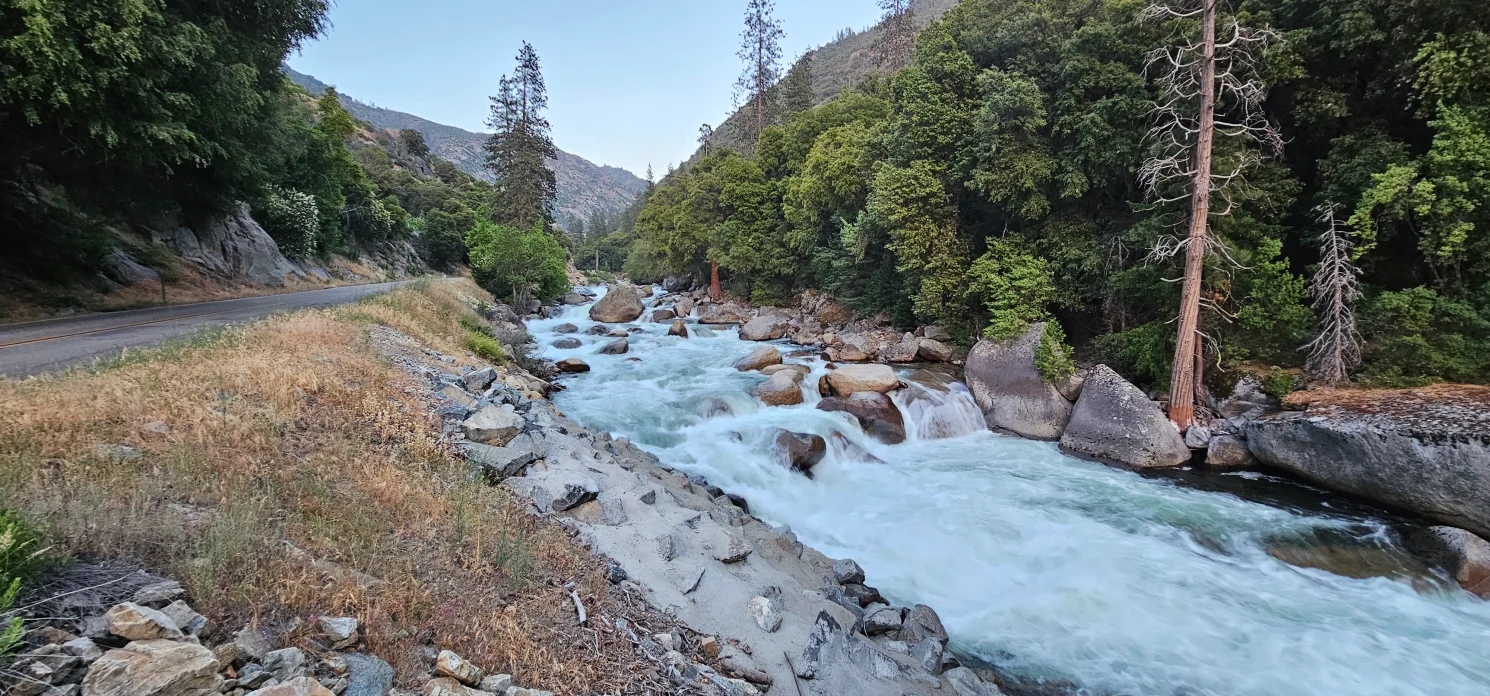
At its core, Kings Canyon is defined by the Kings River.
Flowing out of the High Sierra, the river has carved one of the deepest canyons in North America—cutting through granite walls, shaping meadows, and creating the landscapes you move through today.
As you follow the canyon deeper along the Kings Canyon Scenic Byway, the change is constant:
- forest transitions to exposed granite
- narrow roads hug canyon walls
- waterfalls and side creeks feed into the river
It’s not just a destination—it’s a progression.
The Space Between the Stops
There are iconic places here—Zumwalt Meadow, Roaring River Falls, Junction View—but what makes Kings Canyon memorable isn’t just those locations.
It’s the space between them.
It’s the feeling of moving through a landscape that isn’t trying to entertain you. There are long stretches of road, quiet pullouts, and moments where the only thing you hear is the river moving through the canyon below.
That space is what gives Kings Canyon its character.
A Different Kind of Sierra Experience
While nearby Sequoia National Park draws visitors in quickly, Kings Canyon asks for more time.
- distances are longer
- access is more limited
- the experience unfolds more slowly
And that’s exactly why it stands out.
This is where the Sierra begins to feel less like a park and more like a landscape you move through.
Gateway to the True Wilderness
Beyond Roads End, the canyon becomes something else entirely.
Trailheads here lead into remote basins, high passes, and long routes that stretch deep into the Sierra Nevada. This is the beginning of the terrain you heard about at Panoramic Point—the places that feel distant, quiet, and largely untouched.
👉 We break down these routes and how to approach them in our Kings Canyon backpacking guide
Top Things to Do in Kings Canyon National Park
Kings Canyon isn’t a place you check off—it’s a place you move through.
The experience begins the moment you leave Grant Grove and start down the Kings Canyon Scenic Byway. From there, the landscape unfolds mile by mile, each stop building on the last.
The Drive Into the Canyon
If you do one thing in Kings Canyon—drive it.
The route from Grant Grove down to Cedar Grove is one of the most dramatic transitions in the Sierra:
- forested highlands give way to granite canyon walls
- the road narrows and winds along cliffs
- the Kings River begins to guide the experience
👉 This isn’t just transportation—it’s the main event.
Must-Stop Moments Along the Way
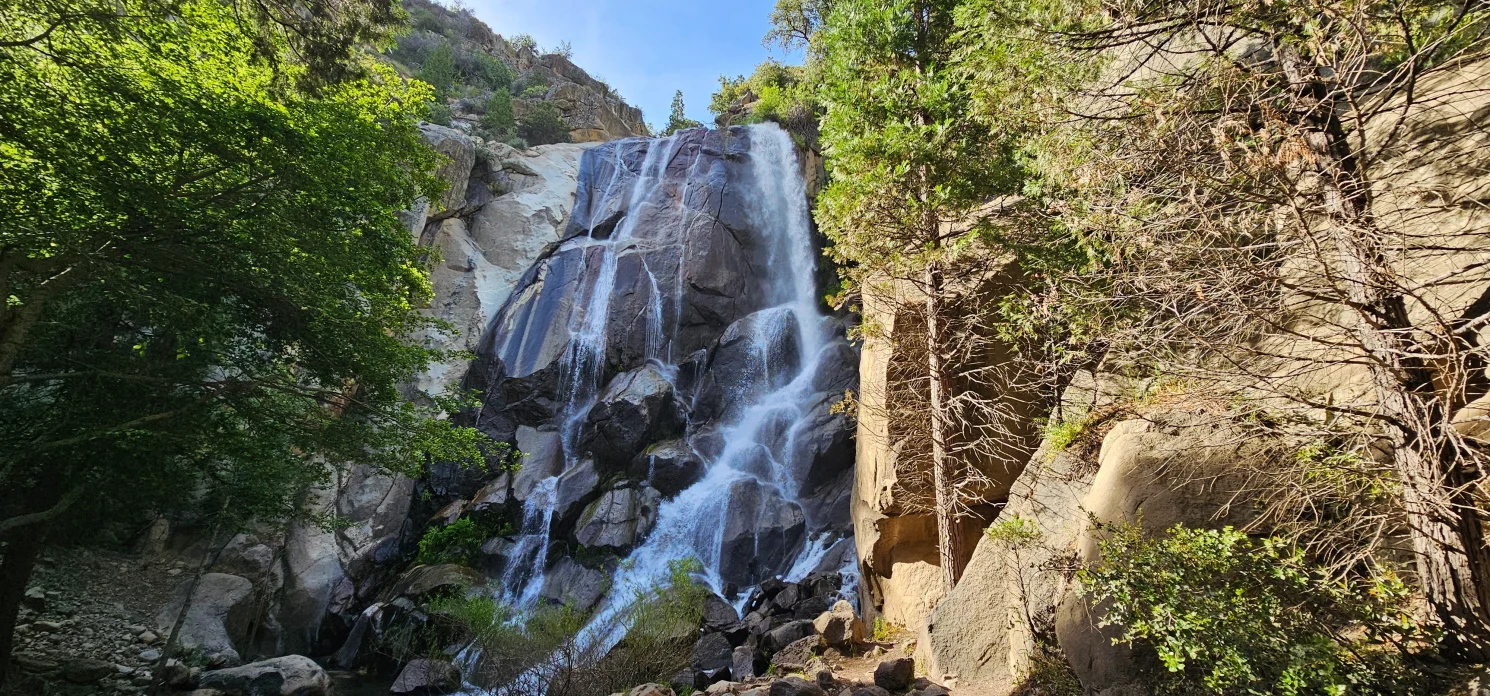
Grizzly Falls
A quick roadside stop that feels anything but small. Grizzly Falls drops straight down a granite wall into a shaded grove—cool, loud, and refreshing on a hot day.
Roaring River Falls
One of the most powerful short walks in the park. A short paved path leads you to a narrow granite chute where water explodes through the canyon.
Kings River Views
There are countless pullouts along the road—but don’t rush past them.
Stop. Watch the river. Follow it with your eyes as it moves through the canyon. This is the force that shaped everything around you.
Into Cedar Grove
At the bottom of the canyon, Cedar Grove feels like a completely different world.
- towering granite walls
- river access
- deeper trail connections
- quieter, slower pace
👉 This is where most visitors realize Kings Canyon is something more than a scenic drive.
Zumwalt Meadow
One of the best easy walks in the park.
A short loop trail winds through meadow, forest, and river views—surrounded by massive granite walls. In spring and early summer, this area comes alive with water, movement, and color.
Step Onto the Trail
Kings Canyon rewards those who get out of the car—even if it’s just for a short distance.
Rae Lakes Loop (First Section)
Even walking a short stretch of the Rae Lakes Loop from Roads End gives you a sense of where the trail is heading:
- deeper into the canyon
- toward high alpine terrain
- into one of the Sierra’s most iconic backpacking routes
👉 You don’t have to do the full loop to feel it.
Walk Along the Kings River
Some of the best moments here aren’t named trails.
Follow a path along the river. Sit on a rock. Listen to the water. This is where the scale of the canyon starts to settle in.
Explore the Upper Park
Before descending into the canyon, don’t overlook the upper elevations.
Grant Grove
Stand beneath the General Grant Tree—the “Nation’s Christmas Tree”—and explore the quieter groves nearby.
Panoramic Point
One of the most important viewpoints in the park.
This is where you begin to understand the scale of the Sierra—and where many visitors first realize just how much lies beyond what they can see.
Unique Experiences
Cave Exploration
For a completely different perspective, explore underground at Boyden Cave (just outside the park boundary). Guided tours take you into marble caverns carved by water over time.
Horseback Riding
Guided rides from Grant Grove and Cedar Grove offer a different way to experience the landscape—slower, quieter, and connected to the park’s history.
Camping in the Canyon
Spending a night in Kings Canyon changes everything.
- early morning light on granite walls
- quiet evenings along the river
- access to trails before the day crowds arrive
👉 We break down the best spots in our Kings Canyon camping guide
Plan Your Route
The best way to experience Kings Canyon is to combine:
- the full scenic drive
- a few key stops
- time on a trail or along the river
👉 Build your trip with our Kings Canyon itinerary guide
Best Time to Visit Kings Canyon National Park
Kings Canyon is one of the most seasonal destinations in the Sierra—and timing your visit can completely change your experience.
More than almost any other park, access here is everything.
Late Spring to Early Summer (May–June)
This is one of the most unique—and often overlooked—times to visit Kings Canyon National Park.
As the Kings Canyon Scenic Byway begins to open, the canyon starts to reveal itself after winter.
- rivers are running high
- waterfalls are at peak flow
- snow may still linger at higher elevations
- crowds are still relatively light
This is also when you can experience something rare—driving into the canyon just as it’s waking up for the season.
Campgrounds and services may still be limited early on, but for those willing to work around that, it can be one of the most rewarding times to visit.
Summer (July–August)
Summer is when Kings Canyon is fully open and most accessible.
- full road access to Cedar Grove
- all campgrounds and services typically open
- long days for exploring
This is the easiest time to visit—but also the busiest, especially on weekends.
👉 The key here is pacing:
- start early
- take your time through the canyon
- stay later into the evening when the crowds thin out
Late Summer to Fall (September–October)
This is one of the best times to experience Kings Canyon.
- fewer visitors
- cooler temperatures
- quieter trails
- steady river flow
The canyon begins to feel more remote again, and the experience shifts back toward that slower, more immersive pace.
For many visitors, this is the sweet spot.
Winter (November–April)
Winter limits access significantly.
- the road into Cedar Grove is typically closed
- most of the canyon is inaccessible by vehicle
- access is focused around Grant Grove
However, what remains open offers a completely different experience:
- snow-covered sequoia groves
- quiet forest landscapes
- opportunities for snowshoeing
👉 Just know that the full Kings Canyon experience—the drive, the river, the depth of the canyon—waits for the warmer months.
Timing Your Visit
In Kings Canyon, when you go matters just as much as where you go.
- early season = powerful water, fewer crowds
- peak summer = full access, more visitors
- fall = quiet, balanced, and often ideal
👉 If you can, aim for that early-season window just after the road opens—or the quieter stretch of early fall.
Backpacking in Kings Canyon National Park

Kings Canyon is where the Sierra stops feeling like a destination and starts feeling like a commitment.
Beyond Roads End, the trail system opens into some of the most talked-about—and most respected—backpacking routes in California. This is where the scale you saw from Panoramic Point becomes something you move through, step by step.
Iconic Routes in Kings Canyon
Rae Lakes Loop
The Rae Lakes Loop is the signature backpacking route in Kings Canyon National Park—and for good reason.
This multi-day loop takes you:
- deep into the canyon from Roads End
- over high passes like Glen Pass
- through alpine lakes, granite basins, and classic Sierra terrain
It’s one of the most well-known backpacking routes in the range, but it’s also a serious undertaking:
- elevation gain
- distance
- permits required
👉 This is not a casual trip—it’s a full Sierra experience. Listen to Rae Lakes Loop Tips from Author Rob Scott on this episode of Sierra Rec Now Podcast
Roads End to Paradise Valley
For those looking for a shorter introduction into the canyon, the trail from Roads End into Paradise Valley offers a more approachable option.
- follows the Kings River
- stays lower in elevation
- provides access to backcountry camps without committing to a full loop
👉 A great stepping stone into Kings Canyon backpacking.
Bubbs Creek & East Side Connections
Some of the most powerful routes in Kings Canyon don’t start in the park—they come into it.
From the east side of the Sierra, trails from areas like Onion Valley connect through passes and drop into Kings Canyon via Bubbs Creek.
These routes:
- cross high alpine terrain
- connect with the John Muir Trail
- lead toward places like Mount Whitney
👉 This is where Kings Canyon becomes part of the broader Sierra network.
Your Route: Silliman Pass to Lost Lake
One of the more approachable ways into Kings Canyon’s backcountry comes from the Sequoia side.
Crossing over Silliman Pass toward Lost Lake introduces you to:
- elevation change
- remote terrain
- the transition between parks
It’s a great example of how these landscapes connect—and a reminder that Kings Canyon often reveals itself through routes that begin elsewhere.
A Different Kind of Commitment
Backpacking in Kings Canyon isn’t just about distance—it’s about mindset.
- routes are longer
- terrain is more committing
- exits are limited
But that’s also what makes it special.
This is the “hard country” you heard about—the kind of place that isn’t experienced quickly. It’s earned over miles, elevation, and time spent moving through the landscape.
Planning Your Trip
If you’re new to Kings Canyon backpacking:
- start with shorter routes like Paradise Valley or Silliman Pass connections
- understand elevation and water access
- plan permits carefully
If you’re experienced:
- Kings Canyon connects to some of the most iconic routes in the Sierra
- multi-day traverses here offer a deeper level of immersion than most places in California
👉 We break down routes, permits, and planning strategies in our Kings Canyon backpacking guide
Camping & Where to Stay in Kings Canyon National Park
Camping in Kings Canyon isn’t just an option—it’s part of the experience.
This is one of the few places in California where you can still feel like you’ve found your own space, whether that’s a developed campground deep in the canyon or a quieter site tucked into nearby forest land.
Camping in Kings Canyon
Camping here is as iconic as the canyon itself.
Inside the park, campgrounds like those near Grant Grove and Cedar Grove provide access to the main corridors of the park—but some of the most memorable experiences come from going just a little beyond that.
Along the surrounding Sequoia National Forest, you’ll find:
- quieter campgrounds
- dispersed camping opportunities
- less structured, more flexible experiences
👉 This mix of developed and more remote camping is part of what makes Kings Canyon feel different from other parks.
Spending a night here changes everything:
- early morning light on granite walls
- quiet evenings along the Kings River
- access to trails before the day visitors arrive
👉 We break down specific campground options and strategies in our Kings Canyon camping guide
Where to Stay in Kings Canyon
Lodging in Kings Canyon is limited—but that’s part of its appeal.
Where you stay depends on how deep into the park you want to go.
Grant Grove Area (Upper Park Basecamp)
This is the most accessible and year-round lodging area in the park.
- John Muir Lodge
A comfortable, modern lodge located in Grant Grove Village, within walking distance of the General Grant Tree. Offers easy access and a central location. - Grant Grove Cabins
A more rustic option ranging from timber cabins to tent cabins, offering a closer connection to the forest.
👉 Best for:
- first-time visitors
- easy access to the upper park
- year-round stays
Cedar Grove (Deep Canyon Experience)
Staying in Cedar Grove puts you in the heart of Kings Canyon.
- Cedar Grove Lodge
Located along the river deep in the canyon, this seasonal lodge (typically late spring through fall) offers a simple but immersive stay surrounded by granite walls and flowing water.
👉 Best for:
- experiencing the canyon fully
- early access to trails and river areas
- quieter evenings away from the upper park
Between Sequoia & Kings Canyon (Flexible Basecamp)
Between the two parks, a few unique lodges offer a different style of stay:
- Montecito Sequoia Lodge
- Stony Creek Lodge
👉 Best for:
- multi-park trips
- families
- flexible access to both Sequoia and Kings Canyon
How to Choose Your Basecamp
Your experience in Kings Canyon changes depending on where you stay:
- Short visit: stay in Grant Grove
- Full canyon experience: stay in Cedar Grove
- Multi-park trip: stay between Sequoia & Kings Canyon
- More solitude: look toward National Forest camping options
👉 For booking details and expanded options, see our Where to Stay Near Kings Canyon National Park guide
Plan Ahead
Lodging and camping availability in Kings Canyon is limited—and seasonal access plays a big role.
- Cedar Grove lodging typically opens late spring
- campgrounds fill quickly in summer
- early-season visits may have fewer services but more solitude
👉 Plan ahead and build flexibility into your trip.
How to Experience Kings Canyon National Park Differently
I loved my visit to Kings Canyon National Park.
I can see why John Muir believed this place rivaled Yosemite. It’s not as immediate, not as polished—but in many ways, that’s exactly the point.
The beauty here takes a little more time.
Let the Canyon Unfold
Don’t rush this park.
Drive the canyon slowly. Stop more than you think you need to. Walk short sections of trail, even if you’re not planning a full hike. Some of the best moments here happen between destinations—along the river, at a quiet pullout, or in the stillness of a place that isn’t marked on a map.
Find Your Way to the River
The Kings River is the thread that ties everything together.
At Roads End and through places like Zumwalt Meadow, the canyon comes alive. The water moves through the landscape with a kind of energy that’s hard to ignore—shaping everything around it and quietly pulling you into the experience.
For me, those moments along the river were what stayed.
Take in the Bigger Picture
Before heading down into the canyon, take time to stand at Panoramic Point.
The view stretches across the Sierra in a way that rivals places like Moro Rock—but with far fewer people and a very different feel.
It’s one of the best places to understand just how much lies beyond what you can see.
Go a Little Further
Kings Canyon rewards curiosity.
- walk a little farther down the trail
- follow the river just a bit longer
- explore beyond the main stops
You don’t have to go deep into the backcountry to feel it—but the farther you go, the more the experience shifts.
A Different Kind of Sierra Experience
Kings Canyon isn’t a place you check off in a day.
It’s a place that invites you to slow down, to explore without a plan, and to experience the Sierra in a way that feels a little less structured—and a little more real.
That’s what makes it special.