Lassen Volcanic National Park – A Landscape in Motion
There are places in the Sierra that feel familiar—and then there’s Lassen Volcanic National Park.
This is a place that feels alive. Steam rises from the earth. Mud pots bubble. Snow lingers well into summer. And across the landscape, you can see the natural forces that shaped it still at work. Lassen isn’t just another mountain park—it’s one of the few places in the world where you can experience all four types of volcanoes in a single region. From the slopes of Lassen Peak to the geothermal basins of Bumpass Hell, this is a landscape defined by change.
And that sense of change is even more visible today. After the 2021 Dixie Fire, parts of the park are still in transition. What you’ll see now isn’t just recovery—it’s renewal. Meadows are re-emerging, wildlife is returning, and the landscape is shifting into its next chapter. In a single drive through the parks main highway you will experience Volcanic remnants, the wild and free effects of rushing water and erosion, the abundant life cycle of meadows, the recovery of a forest after devastating fires, colors in water and soil that seem unreal and the attempts of man to study and control one of nature most instable environments.
Start Here: Planning Your Lassen Visit
Lassen Volcanic National Park changes dramatically by season, entrance, elevation, and road access. Before you build your trip, start with three questions: When are you going? How much time do you have? And which side of the park are you using?
Best first visit: July through September, when the main park road, high-elevation trails, lakes, and geothermal areas are most likely to be accessible.
Best short trip: Drive the Lassen Volcanic National Park Highway, stop at Lake Helen and Emerald Lake, explore Sulphur Works, and hike Bumpass Hell if the trail is open.
Best full-day route: Start early at Manzanita Lake or the north entrance, travel the main park road, choose one major hike such as Bumpass Hell, Lassen Peak, or Kings Creek Falls, and leave time for scenic stops.
Best weekend plan: Spend one day on the main park road and a second day exploring a quieter area such as Butte Lake, Cinder Cone, Warner Valley, Summit Lake, or the Lake Almanor side of the region.
Best winter access: The southwest entrance near the Kohm Yah-mah-nee Visitor Center, where winter visitors can snowshoe, sled, ski, or explore lower-access areas when the main park road is closed.
Best basecamp choice: Stay near the south entrance for quick access to Sulphur Works, Bumpass Hell, winter routes, at a place like St. Bernard Lodge. Stay near the north entrance for Manzanita Lake, Loomis Museum, camping, and classic Lassen Peak views, these choices are a bit more limited and remote. Choose Chester or Lake Almanor if you want more services, food, lodging, and a broader weekend basecamp.
Don’t miss: Bumpass Hell, Lassen Peak, Manzanita Lake, Lake Helen, Kings Creek Falls, Cinder Cone, Painted Dunes, Sulphur Works, and the Devastated Area, and the Warner Valley.
Check before you go: Lassen is highly seasonal. Road openings, trail access, snow conditions, campground availability, smoke, fire recovery, and weather can all change the trip quickly.
Lassen Volcanic National Park offers one of the most unique volcanic landscapes near the Sierra , but it’s only one part of California’s incredible mountain park system. Explore more Sierra national parks and outdoor destinations in our complete regional guide.
If you’re planning a broader Northern California or Sierra trip, start with our Sierra Nevada trip planning guide and pair Lassen with nearby destinations like Yosemite National Park or Lassen Volcanic National Park’s neighboring regions.
This guide will help you explore Lassen beyond the main stops—whether you’re here for a summer road trip, a high-country hike, or a winter snow adventure.

What Makes Lassen Volcanic National Park Unique
Lassen isn’t defined by one landmark—it’s defined by what’s happening beneath the surface.
This is one of the few places in the world where you can experience all four types of volcanoes in a single region: shield, composite, cinder cone, and plug dome. That means the landscape here isn’t just dramatic—it’s constantly evolving.
The most visible expression of that is in the park’s geothermal areas. Places like Bumpass Hell feel almost otherworldly, with boiling mud pots, steaming vents, and the smell of sulfur rising from the ground. It’s a reminder that the earth here is still very much alive.
But Lassen isn’t just about volcanic activity—it’s about contrast.
Within a single day, you can move from high alpine lakes like Lake Helen to forested meadows, burned landscapes recovering from the Dixie Fire, and wide-open volcanic fields like the Painted Dunes and Cinder Cone area.
That transition is part of what makes this park so interesting to explore. It doesn’t feel static—it feels like a landscape in motion.
If you’re planning your visit, we break down the best routes and stops in our Top Things to Do in Lassen Volcanic National Park guide.

Top Things to Do in Lassen Volcanic National Park
Lassen Volcanic National Park isn’t a single destination—it’s a collection of landscapes shaped by fire, ice, and time. The key to experiencing it well is knowing where to go and how to connect those places into a full day—or a full trip.
Here are some of the best places to start:
Bumpass Hell
The park’s most famous geothermal area, Bumpass Hell is a must-see. Boardwalk trails wind through bubbling mud pots, steaming vents, and vividly colored mineral deposits. It’s one of the most unique environments in the entire Sierra.
👉 Trail details: Bumpass Hell Trail Guide
Field story: Sapphire to Hell — Lake Helen to Bumpass Hell
Lassen Peak
At the heart of the park, Lassen Peak is one of the largest plug dome volcanoes in the world. The hike to the summit is challenging but rewarding, offering sweeping views across Northern California.
👉 Plan your hike: Lassen Peak Trail Guide
👉 Plan Additional Hikes in the Park: Lassen Volcanic National Park Trails Guide
Manzanita Lake
One of the most accessible and scenic areas in the park, Manzanita Lake offers calm water, fishing, camping, and incredible reflections of Lassen Peak at sunrise and sunset.
👉 Explore more: Manzanita Lake Guide

Kings Creek Falls
A favorite among hikers, Kings Creek Falls combines forested trails with a dramatic waterfall finish. It’s one of the best short-to-moderate hikes in the park. Kings Creek Falls was impacted by the Dixie fire, but its recovery, creek and waterfall setting is still a beautiful hike.
Plan the hike: Kings Creek Falls — Lassen Volcanic National Park
Painted Dunes & Cinder Cone
This area feels completely different from the rest of the park. The Painted Dunes showcase vibrant volcanic colors, while Cinder Cone offers a unique hike through loose volcanic terrain to a stunning summit view.
👉 Route guide: Painted Dunes & Cinder Cone Guide
Emerald Lake & Lake Helen
Located along the main park road, these alpine lakes offer easy access to high-elevation scenery. Lake Helen often holds snow well into summer, adding to the contrast of the landscape.
👉 Quick stop guide: Lassen Scenic Stops Guide
Devastated Area
Shaped by Lassen’s 1915 eruption—and more recently impacted by the Dixie Fire—this area tells the story of destruction and recovery. It’s one of the best places to understand the park’s volcanic history.
👉 Learn more: Devastated Area Guide
Warner Valley & Drakesbad Area
A quieter corner of the park, Warner Valley offers geothermal features, meadows, and access to Drakesbad Guest Ranch. It’s a great option for those looking to explore beyond the main highway.
👉 Explore deeper: Warner Valley Guide
Summit Lake & Butte Lake
These areas offer a more relaxed and less crowded experience, with opportunities for camping, fishing, and exploring the park’s quieter landscapes.
👉 Trip planning: Best Lakes in Lassen Guide
Watch the Stars in the Dark Sky
Lassen Volcanic National Park is well known as a California Dark Sky Destination. Lassen is known for excellent night-sky viewing, and the park has been working toward Dark Sky Park designation. On clear nights, visitors who stay after dark can experience brilliant stars above the volcanic landscape. The brilliant lights shine bright from with in its volcanic landscapes and visitors to the park who stay afterhours can be treated to some California’s deepest star fields.
Plan a family night-sky trip: Plan a Family Adventure to Lassen Volcanic National Park to Watch the Stars
Plan Your Route
Lassen’s main highway connects many of these stops, but distances and elevation changes can make travel slower than expected.
Build your day: Lassen Volcanic National Park 1-Day Itinerary or book a stay and explore it in 2-day itinerary –

Best Time to Visit Lassen Volcanic National Park
Lassen is one of the most seasonal parks in the Sierra—and that’s part of what makes it so unique. The experience here changes dramatically throughout the year, from snow-covered backcountry in winter to fully accessible alpine terrain in summer.
Summer (July–September)
For a full Lassen experience, summer is the best time to visit.
This is when:
- the entire park road is open
- high-elevation trails are accessible
- geothermal areas like Bumpass Hell are fully open
- lakes, meadows, and viewpoints are all within reach
It’s the easiest time to explore everything Lassen has to offer—and the best season for first-time visitors.
Late Spring (May–June)
Late spring is one of the most underrated times to visit Lassen.
As the main park road begins to open, you can experience something rare—driving (or biking) through towering snowbanks while geothermal features begin to emerge. Places like Lake Helen may still be frozen and buried in snow, while lower elevations begin to come alive.
Traffic is lighter, the landscape feels raw and transitional, and it’s one of the most unique times to see the park.
Planning a shoulder-season trip? What to Do at Lassen Volcanic National Park in April and May
Fall (October–November)
Fall in Lassen is quieter, cooler, and often overlooked.
- fewer crowds
- clear night skies
- crisp hiking conditions
- seasonal color in higher elevations
It’s a great time for visitors looking for a more peaceful experience without the peak summer traffic.
Winter (December–April)
Winter transforms Lassen into a completely different park.
Snow blankets the landscape, and the main park road closes, shifting access to the southern areas near the Kohm Yah-mah-nee Visitor Center. From here, the park opens up to snowshoeing, sledding, and some of the best backcountry skiing in Northern California.
See Lassen in winter: A New Year’s Snowshoe Adventure at Lassen Volcanic National Park
⚠️ Avalanche conditions can be serious in certain areas, so preparation and awareness are key.
For those ready for it, winter in Lassen offers a quiet, expansive, and deeply rewarding experience.

A Landscape in Transition
Lassen is also a park in recovery.
After the 2021 Dixie Fire, parts of the landscape have changed—but not in the way you might expect. If you take the time to look beyond the charred trees, you’ll start to notice something else: new growth, returning wildlife, and meadows reclaiming space.
It’s a different kind of beauty—one that tells the story of resilience and change across the landscape.
Camping & Access in Lassen Volcanic National Park
Spending time in Lassen isn’t just about where you go—it’s about how long you stay. With limited lodging inside the park, camping becomes one of the best ways to experience the landscape fully.
Camping in Lassen Volcanic National Park
Lassen offers a range of campgrounds spread throughout the park, giving you access to different regions and elevations.
Popular campgrounds include:
- Manzanita Lake Campground
- Summit Lake Campground
- Butte Lake Campground
- Juniper Lake Campground
- Lost Creek Group Campground
Each area offers a slightly different experience—from lakeside camping to quieter, more remote settings.
⚠️ Availability can vary depending on seasonal access and ongoing recovery from the Dixie Fire, so it’s important to check conditions before your trip.
👉 Plan your stay: Complete Guide to Camping in Lassen Volcanic National Park
Where to Stay Near Lassen Volcanic National Park
Lassen isn’t a park with a central village or resort hub—and that’s part of what makes it special. Where you stay depends on how you plan to explore the park, and which entrance you’re using.
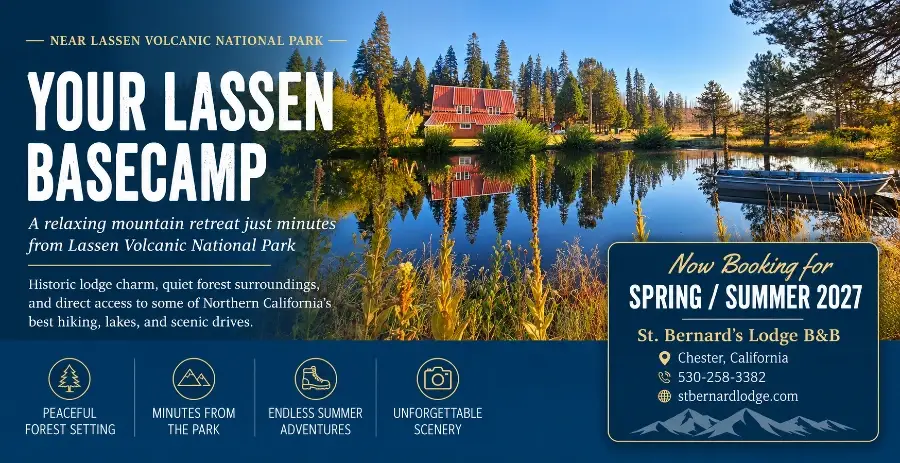
Instead of one central basecamp, Lassen is best experienced through regional stays along the Volcanic Legacy Scenic Highway. Discover The Relaxing Adventures of Lassen and St. Bernard Lodge.

South Entrance (Kohm Yah-mah-nee Area / Highway 36)
This is one of the best places to base yourself if you want quick access to the park and a quieter, more personal experience.
- St. Bernard Lodge
A long-time Sierra Rec favorite, this historic lodge offers a true mountain experience just minutes from the park. It’s one of the closest and most memorable places to stay near Lassen. Explore the stay: Northern California’s Hidden Gem: St. Bernard’s Lodge in Chester - Highlands Ranch Resort
- Mill Creek Resort
- Tall Timbers Bed & Breakfast
👉 This area is ideal for:
- first-time visitors
- couples
- easy park access
North Entrance (Manzanita Lake / Highway 44)
The north entrance provides quick access to some of Lassen’s most scenic areas, including Manzanita Lake and Lassen Peak views.
- Hat Creek Resort
- Living Springs Resort (Cabins & Camping Cabins)
👉 Best for:
- quick park access
- lake-focused trips
- sunrise/sunset photography
Chester & Lake Almanor (East Side Basecamp)
For a more developed basecamp with food, services, and lake access, Chester and the Lake Almanor region offer a great balance.
👉 Ideal for:
- families
- longer stays
- combining Lassen with lake recreation
Pair Lassen with lake time: Sun-Dappled Days and Starry Nights: A Summer Escape to Lake Almanor
Burney Falls & Highway 89 Corridor
Staying near Burney Falls adds another dimension to your trip.
👉 This route works well if you:
- are exploring Northern California
- want to combine waterfalls + Lassen
- are traveling the Volcanic Legacy Scenic Highway
Redding & Red Bluff (Loop Travelers)
If you’re building a loop trip through Northern California, towns like Redding and Red Bluff serve as larger hubs with more lodging and dining options.
👉 Best for:
- weekend loops
- road trip travelers
- broader Northern California itineraries
Plan Your Stay
Where you stay in Lassen shapes your experience more than almost any other park in California.
👉 For detailed recommendations, booking options, and trip strategies, explore our Where to Stay Near Lassen Volcanic National Park Guide.
Getting Around the Park
The Lassen Volcanic National Park Highway is the main route through the park, connecting many of the major trailheads, lakes, and geothermal areas.
Travel can take longer than expected due to:
- elevation changes
- winding roads
- seasonal closures
In late spring, this drive becomes one of the most unique experiences in the Sierra, as snowbanks line the road while volcanic features begin to re-emerge.
How to Experience Lassen Volcanic National Park Differently
Most visitors experience Lassen Volcanic National Park the same way—drive the main park road, stop at a few viewpoints, maybe hike Bumpass Hell, and call it a day.
And while that’s a great introduction, it only scratches the surface of what this park offers.
To really experience Lassen, you have to slow down.
Start early. The light across the volcanic landscape in the morning feels completely different—cooler, quieter, and more alive. Stay late if you can. As the sun drops, the crowds thin out, and places like Manzanita Lake or the slopes below Lassen Peak take on a completely different feel. And the Stars in the Park at night are incredible. This is one of the darkest places on earth so bring your night lenses
Don’t just stop at the main pullouts. Walk a little farther. Explore beyond the first boardwalk. Some of the best moments here happen just outside the most popular areas—on a quiet trail, along a lake edge, or in a stretch of forest that most people pass by.
And if you really want to see Lassen differently, come back in another season.
Visit in late spring when snow still lines the roads and geothermal features begin to re-emerge. Experience winter, when the park becomes a backcountry playground of snowshoeing and skiing. Each season reveals a different side of the same landscape.
👉 For quieter routes and lesser-known stops, Explore beyond the main road: Unveiling Widow Lake: A Day Hike Adventure in Lassen Volcanic National Park
Lassen isn’t a park you check off in a day. It’s a place you return to—because every visit feels a little different.