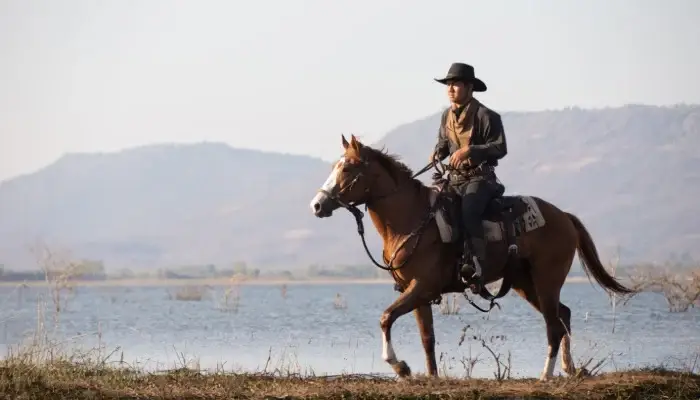
Want to go horseback riding in the Sierra Nevada, but aren’t sure if it’s allowed? Here’s what you need to know about horseback riding in the Sierra Nevada so you can plan the itinerary for your visit accordingly.
Can You Go Horseback Riding Here?
Yes, and there’s quite a bit of terrain to choose from.
The Sierra Nevada spans roughly 400 miles through eastern California, covering national forests, state parks, and national parks like Yosemite, Sequoia, and Kings Canyon. Horseback riding is permitted in most of these areas, either through guided outfitter tours or private stock use on designated trails.
If you’re booking a guided ride, outfitters operating inside national parks and forests are licensed and follow specific trail routes approved for equestrian use. That means the route is already sorted for you, and you just show up.
Are There Any Restrictions?
A few, depending on where you’re headed.
Inside national parks, you won’t be able to bring your own horse without a permit, and stock camping requires advance planning. Some trails are closed to horses entirely, especially in high-traffic areas or ecologically sensitive zones. Yosemite Valley, for example, limits equestrian access on certain paved paths and congested corridors.
National forests outside the park boundaries are generally more flexible. The Inyo, Sierra, and Stanislaus National Forests allow stock use on most backcountry trails, though group size and grazing rules apply.
There are also seasonal closures to consider. Many high-elevation trails don’t open until late spring or early summer once snow melts and the ground firms up enough to handle hoof traffic without erosion damage.
Check current conditions with the specific ranger district before your trip.
What to Wear on the Trail
When you’re horseback riding in the Sierra Nevada, make sure you wear the right gear! The Sierra Nevada is generally sunny but cold at elevation, so you’ll want to wear breathable layers you can adjust as temperatures shift through the day.
For the horseback riding itself, pick out a well-fitting pair of cowboy boots so your foot sits correctly off the stirrup, and your heel catches properly if you need to stop quickly.
You’ll also need sun protection if you’re riding at altitude. UV exposure increases the higher you go, so a wide-brimmed hat and sunscreen belong in your pack regardless of cloud cover.
Saddle Up and Hit the Trail
The Sierra Nevada is one of the most scenic places in the country to ride, and access is wide open once you know the rules. Check trail restrictions for your specific destination, book a licensed outfitter if you’re not bringing your own stock, and pack for the elevation. Get those details squared away and the only thing left is actually getting out there.