Kayak camping in the Sierra sounds dreamy until you realize how far you paddle from the car. In the Sierra, the weather and rugged conditions can often make your first experience a bit challenging. Many first-time kayak campers pack too much gear and still miss the essentials.
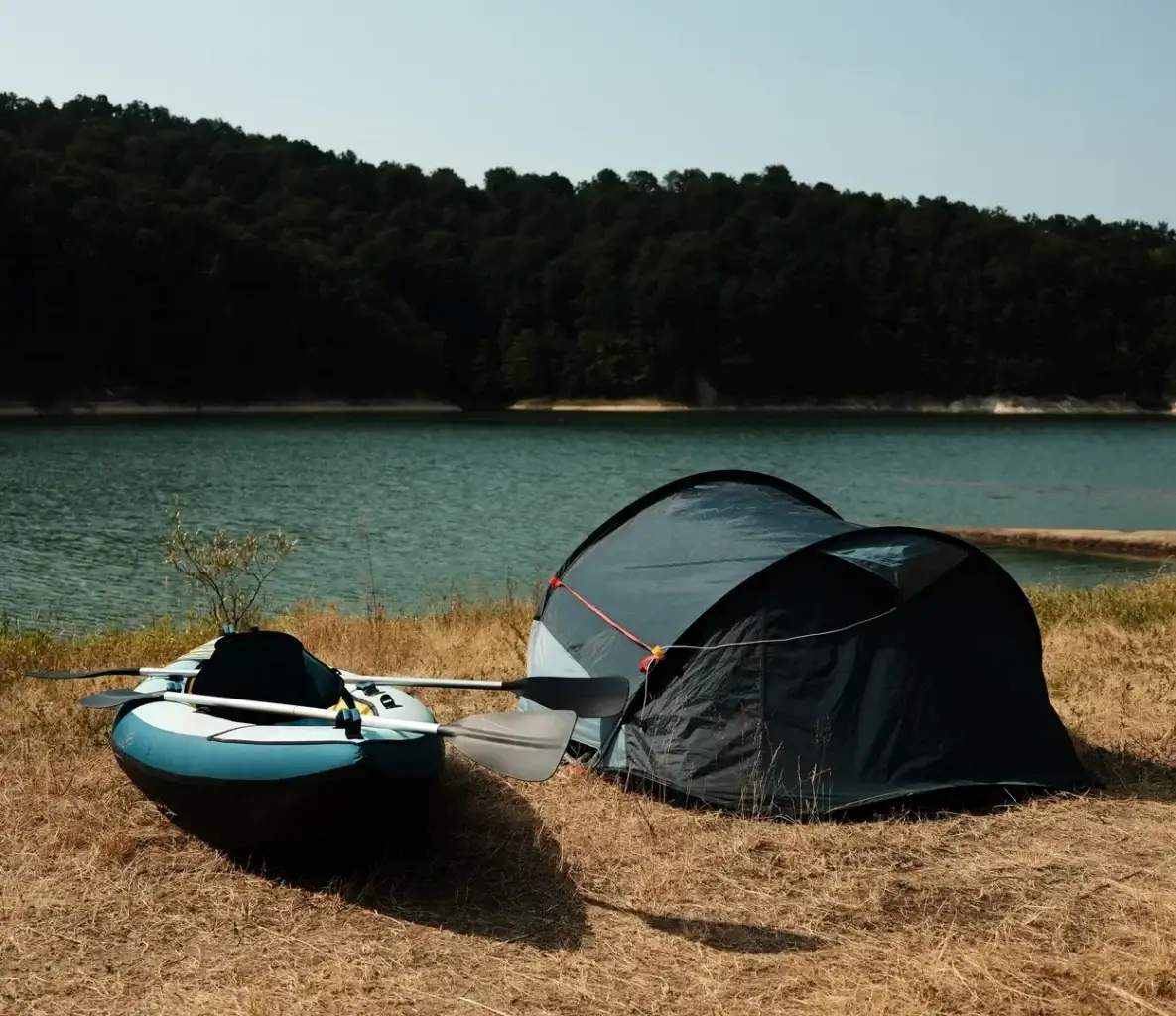
Because the element of getting wet is a very real part of the equation, paying attention to your attire, the type of bedding you choose to bring adn your water availability are certainly great places to start when making your plans. I recall a story a guest shared with me about kayak camping across Salt Springs Reservoir, how the wind nearly spoiled her trip, and how the late arrival across the lake led to undesirable camping conditions before reaching her favorite fishing holes in the Sierra.
You can avoid that mistake with a short, intentional checklist that fits the realities of Sierra travel and fun, family-friendly adventure.
This guide focuses on 5 items that experienced paddlers never leave behind.
1. Cold-Ready Sleep System
Mountain nights drop in temperature quickly, even in July. Beyond wearing the right layers that help you stay dry into the night. Choose a compact sleeping bag (Typically Synthetic Fill is best for dryness if it gets damp) rated at least 10 degrees lower than the forecast. Pair it with an insulated sleeping pad that resists punctures from granite and pine needles.
2. Shore-Friendly Footwear
Sierra shorelines mix slick granite slabs with soft, muddy edges. Flip-flops slide everywhere, and hiking boots soak fast. Bring water shoes or lightweight boots that drain well and grip rock.
3. Reliable Water Plan
Gravity and pump filters handle cold, high-elevation conditions well and keep the day moving when kids need water quickly. A squeeze-style filter works as a lightweight backup, while purification tablets make sense for emergencies when weight and space matter most.
Storage placement and balance matter as much as choosing the filter itself. Understanding how different kayak drive systems affect design and performance can make packing decisions easier and keep your kayak feeling predictable on the water.
4. Camp Kitchen That Matches the Environment
Open fires are often restricted in the Sierra. Here’s a simple kitchen setup that works well for kayak camping without overloading your boat:
- Single-burner backpacking stove: Boils water fast and saves fuel at elevation
- Lightweight pot with lid: Handles meals and hot drinks in one piece
- Bear-resistant food container: Required in many Sierra locations and critical for safety
- Reusable spork and insulated mug: Cuts bulk while staying practical
5. Navigation and Emergency Basics
Cell service disappears quickly in the mountains. Download offline maps and bring a paper backup. A small first aid kit, headlamp, and weatherproof layer should sit within arm’s reach, not buried under camping gear.
Kayaks give you a practical way to reach lakes and shorelines that feel remote without requiring extreme skills. The difference between a stressful outing and a repeatable adventure often comes down to preparation, so don’t forget to add these items to your kayak camping checklist before you launch. Adjust your setup as you gain experience and build confidence trip by trip. That steady approach opens the door to longer stays in the mountains you already love to explore.
Five Sierra Lakes to Explore via Kayak
These lakes stand out not just for scenery, but for how well they work for kayak camping—offering paddle-in access, usable shorelines, and the kind of quiet that makes an overnight feel like more than a quick escape.
Salt Springs Reservoir
Central Sierra | Near Highway 88
Salt Springs rewards commitment. Long paddles open access to remote stretches of shoreline, blue swimming pools, and productive fishing water that most visitors never reach. Weather windows matter here—winds can turn quickly—but when conditions align, this is one of the most memorable kayak camping experiences in the Sierra.
Bucks Lake
Northern Sierra | Near Quincy, CA
Bucks Lake combines easy access with real paddle-in camping potential. Its forested shoreline, multiple coves, and relatively protected waters make it a strong option for families and first-time kayak campers looking to build confidence without giving up scenery.

Caples Lake
High Sierra | Highway 88 corridor
Set high along Carson Pass, Caples Lake offers dramatic alpine views and straightforward kayak access. Camps are close enough to feel approachable, yet paddling allows you to escape roadside traffic and find quieter pockets of shoreline—especially early and late in the day.
Lake Thomas A Edison
Central Sierra | Kaiser Wilderness region
Big, wild, and deeply Sierra in character, Lake Thomas A. Edison feels like a true journey by kayak. Long arms of water, sweeping mountain backdrops, and remote-feeling camps make this a destination best suited for experienced paddlers planning multi-night trips.

Spicers Meadow Lake
Central Sierra | Near Highway 4
Spicers Meadow is smaller and calmer than many Sierra reservoirs, making it an excellent learning lake. Its high-country setting, quiet shoreline, and manageable scale are ideal for dialed-in overnight trips without committing to long crossings.
Smaller Lakes and Paddle Routes to Keep on Your Radar
Not every kayak camping trip needs big water. These options offer shorter paddles and easier logistics while still delivering a sense of exploration:
- Lake Tahoe – The Lake Tahoe Water Trail connects designated launch points and shoreline camps, offering structured kayak touring options when conditions are calm and well-planned.
- Union Valley Reservoir – A favorite for paddle-in dispersed camping, with long fingers of water that reward exploration away from busy launches.
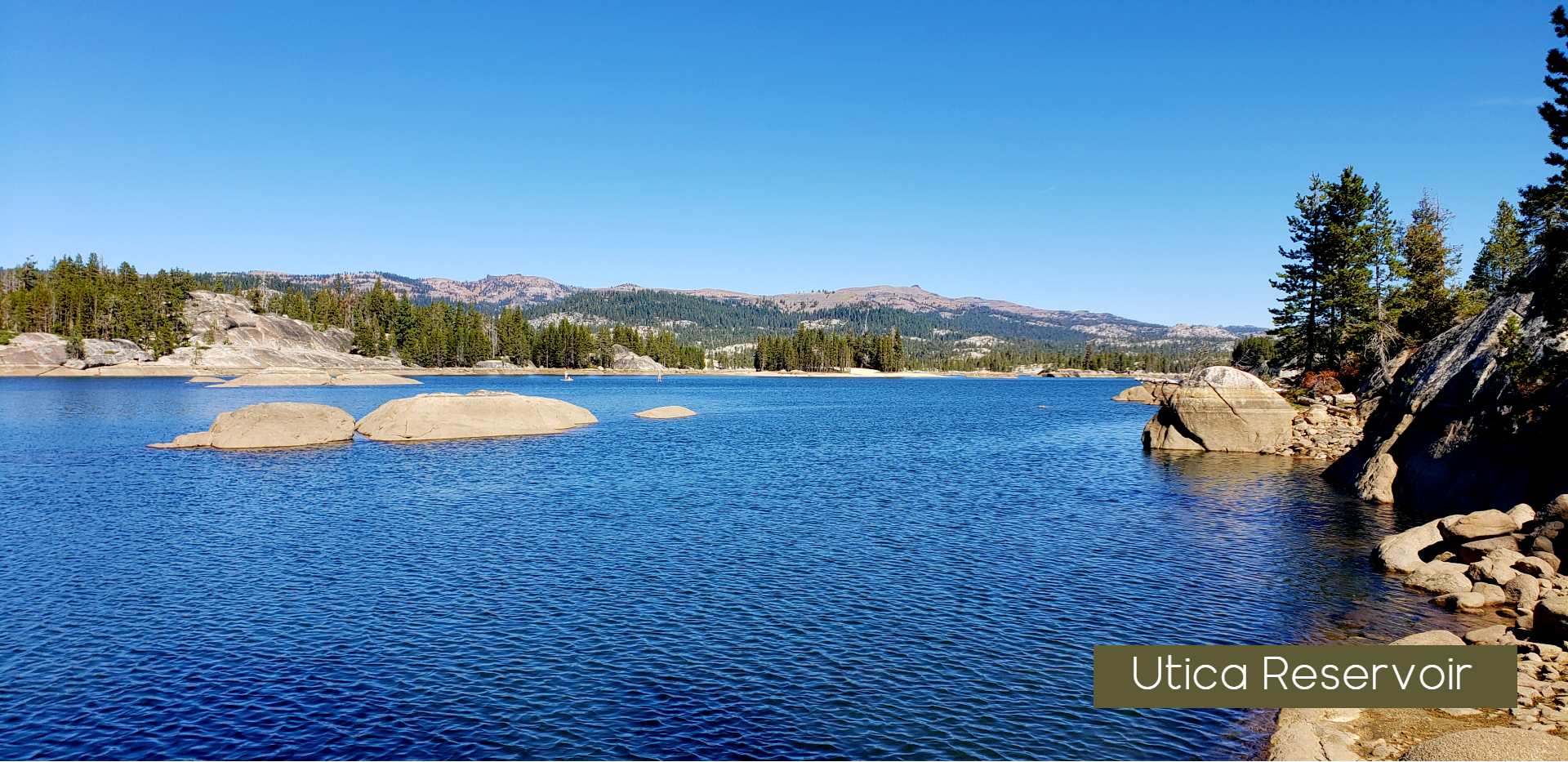
- Utica Reservoir – A smaller, quieter alternative near Highway 4, well-suited to relaxed overnight kayak trips and shoulder-season travel.
How to Use This List
For new Sierra travelers, the key difference between a good and frustrating kayak camping trip often comes down to scale and exposure. Start with lakes that match your experience level, learn how wind and weather shape your days, and work your way toward bigger crossings as confidence grows.
Each of these lakes offers a different way to arrive by water—and in the Sierra, how you arrive often defines the experience.