
Beyond Ranger Lake, a final push leads to one of the quietest and most memorable mornings in Sequoia National Park.
The Decision at Ranger Lake
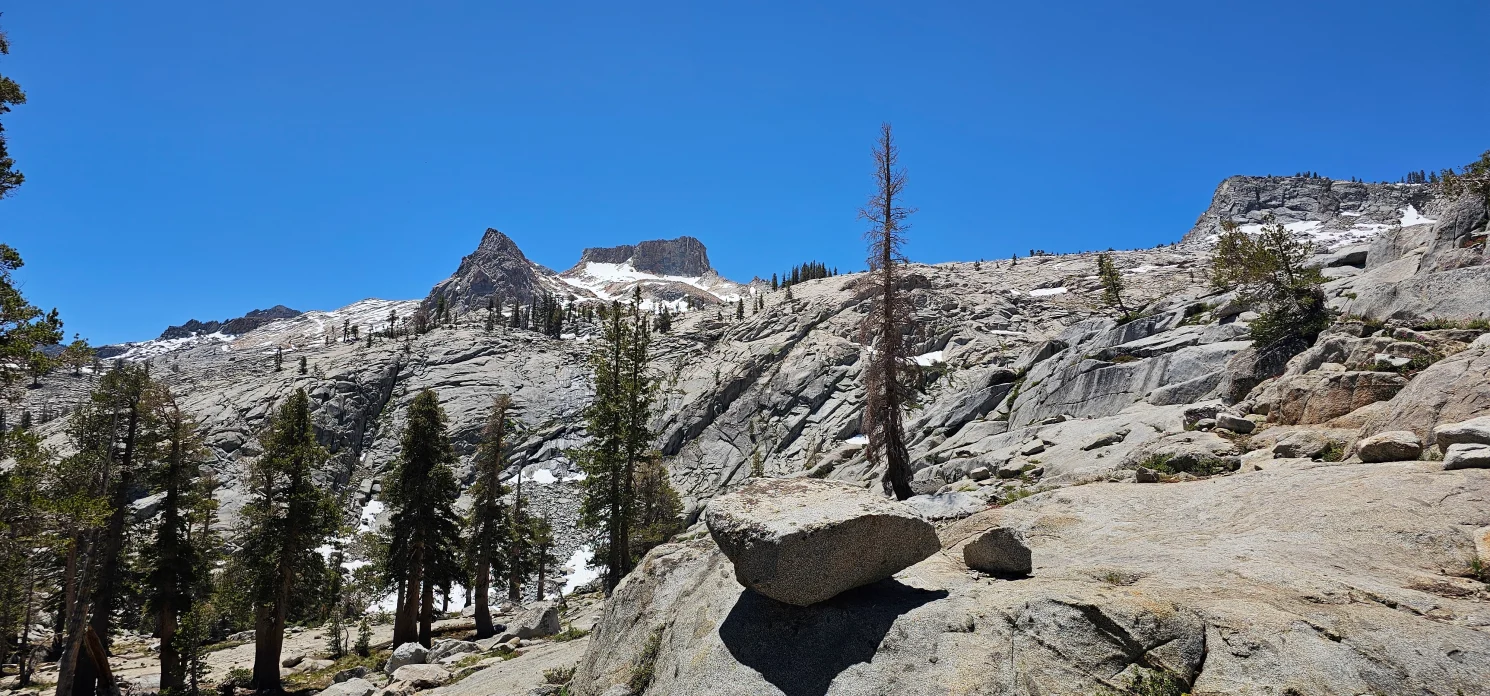
I was still standing in Ranger Lake, letting the cold do its thing, when I looked back up toward Silliman Pass.
Middle of the day now. Sun sitting right on it.
It would have been easy to call it right there. Dry off, find a camp spot, be done. Ranger Lake already felt like a pretty solid win.
But Lost Lake kept working its way back in.
We had seen it earlier from up on the ridge—just a quick look down into that basin. Forested, tucked in, kind of hidden unless you knew where to look. It looked exactly like people had described. Quiet. A little removed.
I remember standing up there thinking about what it might look like first thing in the morning.
That thought didn’t really go away.
So I walked back up from the water, still drying off, and told the group we were going to keep moving.
Another mile and a half. Maybe a little more with the climb.
Didn’t feel like a big decision at the time.
Those are usually the ones that matter.

The Push Beyond Ranger Lake
Day two packs are technically lighter.
They just don’t feel like it.
Not after the climb over Silliman Pass. Not with the sun fully on you and the air thinning out a bit above 10,000 feet. You could hear it in the group—not complaints, just that low-level awareness that there’s still trail left.
We left Ranger Lake and picked up the outlet trail back to the main route heading north.
Right away, the trail drops—stone steps, open granite. One of those sections that feels a little unfair, knowing you’re going to pay it back later.
A couple of deer moved off to the east as we came around a bend. Quick, quiet. Gone into the trees before you really had time to watch them.
There were pockets of shade here and there, and we started using all of them.
The trail leveled out for a stretch near a small meadow with water just off to the side. It had that look to it—green, quiet, a place you’d expect animals to move through more than people.
Then the forest started to shift.
More red fir. Taller trees. A little more space between them. The light changed, too—cooler, softer. You notice those things more when you’ve been out in the sun.
We came up on the trail split, and it would have been easy to walk right past it. The sign had been knocked partially out of view by a fallen tree when we were there. But the trail itself was still there if you slowed down and actually looked for it.
We paused for a minute, caught our breath, and then started up again.
It’s not a brutal climb. Just steady. The kind that reminds you you’re still working for it. A few sections where the trail disappears a bit under debris or light cover, nothing major—but enough to keep you paying attention.
At one point, one of our guys drifted off trail completely. We didn’t even realize it until he popped back up ahead of us, like nothing had happened.
That’s kind of how this section feels—loose, but manageable.
And then, gradually, it opened up.
The trees thinned out just enough, and you could see the ridge again—the same one we had been standing on earlier in the day, looking down.
That’s when it hit.
We were there.
And no one else was.
Arrival at Lost Lake
We dropped packs at the first camp spot we came across. Big enough for the group, bear lockers nearby. Good spot.
Didn’t take long to decide we’d come back to it.
But first—I wanted the lake.
Everyone kind of split off at that point. No discussion, just that quiet understanding that we’d all find our way down there in our own time.
The youngest in the group still had something left in the tank and headed off toward a granite slab on the north side. I watched him pick his way across it, jumping and balancing like it was nothing, until he found a spot out over the water.
I took the simple route.
Down through the brush, found a place to sit near the shoreline. Easy entry into the water. A couple of small boulders sitting just off shore.
Sat there for a minute.
The water didn’t have that clear, polished look Ranger Lake had. A little darker. Softer bottom. You could tell it was more of a forest lake.
Didn’t matter.
The lake sits in this bowl, mostly wrapped in trees, with that granite ridge rising up behind it. There’s deadfall scattered around from older red fir—gives it a rougher, more natural feel.
It just felt right.
I remember thinking about something I’d heard on a podcast—William Brewer and the early survey crews moving through the Sierra, camping in places like this. Standing there, it made sense. You could see how a place like this would stop you for a while.
I stepped in.
Cold.
Not shocking, just enough to remind you this water hasn’t been warm for very long. A quick swim was all it took.
Back on shore, I stretched out in the dirt and brush, letting the sun work back into me.
And then you notice it.
It’s quiet.
Not the obvious kind. The kind that shows up after you’ve been sitting still for a bit. Birds moving through the trees. A little bit of wind. Something shifting in the forest.
No people.
That’s when it really settles in.
A Sierra Morning at Lost Lake
Sometime early, before the sun came up, the light changed.
That soft gray that filters through the trees. I woke up, didn’t think about it too much, just got up, grabbed the camera, and headed back down to the lake.
No one else was up yet.
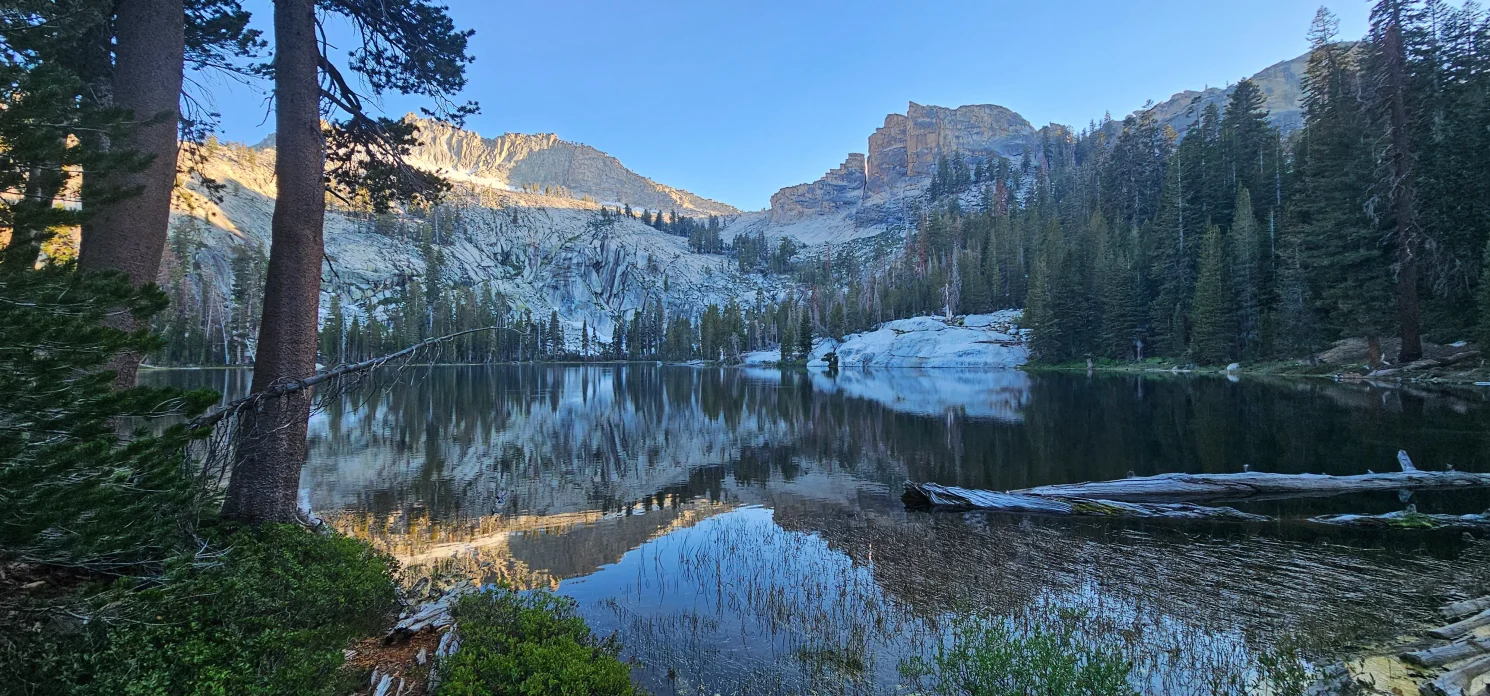
The lake was completely flat.
Perfect reflection. Trees, ridge, everything just sitting there like it hadn’t moved all night.
I stood there for a while before even pulling the camera out.
It’s hard to explain those mornings unless you’ve had one. Things just slow down. The air feels different. Even your own thoughts kind of settle.
That’s what I come out here for.
Then the light started to show.
Just a touch at first on the ridge. Then a little more. It builds slow. You don’t really notice how much it’s changed until you look back at where it started.
The granite catches it first. Then the trees. Then it spreads out across the water.
I started taking photos. A lot of them.
At some point you realize it’s not something you’re going to capture the way it actually feels, but you keep trying anyway.
It was one of those mornings.
The kind that doesn’t need anything else.
Leaving Lost Lake
By the time I made it back to camp, it was time to get moving.
Coffee first.
They were still asleep, so I made a little noise getting the stove going. Part of me wished they had seen the morning. Part of me was glad I had it to myself.
That’s not a bad trade.
Slowly the group started to come around. No rush. We didn’t have a huge day ahead, but we did have the climb back over Silliman Pass, and getting ahead of the heat mattered.
Still, it wasn’t easy to leave.
I would have taken another day there without thinking twice.
But that’s not always how these trips go.
We packed up.
Before heading out, I suggested we cut through the forest a bit on the way back instead of sticking exactly to the trail.
No hesitation from the group.
There was a different feel that morning. Lighter. Like everyone had gotten something out of that stop.
Lost Lake will do that.
The Kind of Place That Stays With You
I don’t know if I’ll make it back to Lost Lake.
There are too many places in the Sierra, and not enough time to get to all of them.
But I do know this.
That morning isn’t going anywhere.
I’ve been to a lot of alpine lakes. Had a lot of good days out here. Miles, climbs, all of it.
Most of it blends together over time.
Every once in a while, something sticks.
Lost Lake did.
It finds its way into that quieter part of you—the one that doesn’t rush, doesn’t need much, and somehow makes everything else feel a little less important.
That’s what I’ll remember.
Planning Your Trip
If you’re thinking about making the trip yourself, start here:
👉 [Link to your Silliman Pass Route Guide]
Regarding your comment about not knowing if you would see Lost Lake Again: I was last there in 1966 after my third year of college. I always dreamed about going back but life’s choices sent me a different direction. Your pictures are significantly better than what I took. Thanks for helping me visit it one more time.
Wow David. FIRST THANK YOU. You messave is landing hard. Im so happy to bring back good memories for you. Also veey aware of that hope of the return.
It is a special place.