Car camping in the Sierra is having a moment.
With lighter snowpack this year and more families looking for flexible ways to get outdoors, we’re seeing a real shift in how people approach camping across the Sierra Nevada. Campgrounds are often full. Permits can be competitive. And more and more people are looking at dispersed camping on BLM land, trailhead camping, and vehicle-based setups as a practical way to get outside.
This week on Sierra Rec Now, we sat down with Emma Susnik from Napier Outdoors — one of the original innovators behind truck tents and SUV tents — to talk about why vehicle camping is growing, what it looks like in 2026, and how families are using it to explore places like the Eastern Sierra, Death Valley, and beyond.
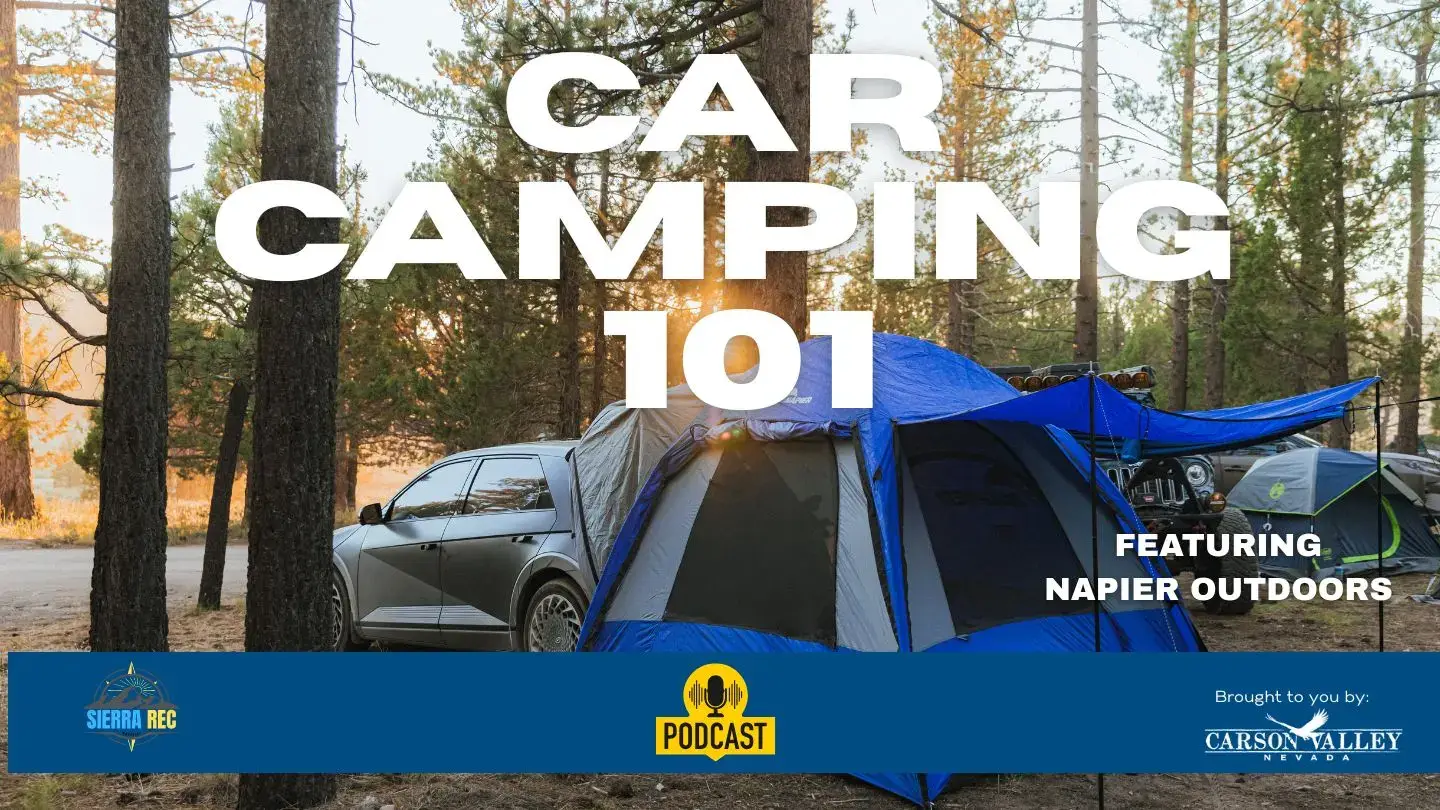
Sierra Rec Now Podcast: Car Camping & SUV Tents Explained
In our conversation, we covered everything from first-time campers to dispersed camping trends and how vehicle tents are changing access to the outdoors.
One of the biggest takeaways?
“We saw a huge surge of first-time campers… people that didn’t grow up camping, didn’t grow up doing that outdoor life, that really have taken to it.” – Emma Susnik Napier Outdoors
That surge hasn’t slowed down. If anything, it’s evolving.

Why Car Camping Is Growing Across the Sierra
Camping has always been part of my life. I grew up camping in the mountains, often wherever my dad was working as a logger. It wasn’t something we planned — it was just life.
But that’s not everyone’s story.
Over the last several years, more people are discovering camping for the first time. They’re not necessarily backpackers. They’re not necessarily experienced outdoorsmen. They’re families, couples, and individuals looking for an accessible way to experience the Sierra without needing a full backcountry skill set.
Vehicle camping — whether that’s sleeping in your truck bed, setting up an SUV tent, or building a simple car camping setup — lowers the barrier.
As Emma put it:
“It’s kind of the perfect blend between total roughing it and glamping.”
That balance is important.
You’re still outside. You’re still waking up to alpenglow and cold mountain air. But you have a little more shelter, a little more organization, and a little more flexibility.
Dispersed Camping in the Eastern Sierra & Beyond
One of the most interesting parts of our conversation focused on dispersed camping.
If you’ve spent time in places like Alpine County, the Bishop area, or the ridgelines between Mammoth and the White Mountains, you’ve seen it — vehicles tucked along Forest Service roads, overlooking open desert basins, or parked near high alpine lakes.
That’s where vehicle camping really shines.
As Emma explained:
“Wherever you can drive to, you can camp… your vehicle is making up for those gaps.”
In practical terms, that means:
- You don’t need a perfectly flat, manicured campground site.
- You can pull into BLM land or Forest Service areas (where permitted).
- You can set up near trailheads for early starts.
- You can explore shoulder season locations like Death Valley when temperatures are right.
In the Sierra, that flexibility matters.
From trailhead camping near Emigrant Wilderness to desert overlooks outside Bishop, vehicle camping opens access to places traditional campground-only setups can’t.
Car Camping 101: What You Actually Need
One of the best parts of the conversation was how simple it really is.
It’s easy to get caught up in gear. Projectors inside tents. Fully built-out overland rigs. Custom drawer systems.
But as we discussed on the show, it doesn’t need to be complicated.
At its core, car camping requires:
- A reliable shelter (ground tent, truck tent, or SUV tent)
- A comfortable sleeping system
- A simple cooking setup
- Water storage
- Basic Leave No Trace principles
That’s it.
You don’t need every accessory. You don’t need a fully built rig. You just need the willingness to go.
For our family this year, that means expanding beyond backpacking gear and experimenting with an SUV tent setup that gives us room for multi-generational trips — including introducing my grandson to camping in a safe, controlled way.
The Rise of Community in Camping
Another theme that stood out in our conversation was community.
Camping used to be something you learned from family or close friends. Today, it’s often learned online. Through YouTube. Through social media. Through shared experiences.
People aren’t just buying gear — they’re looking for connection.
That’s part of what’s driving the vehicle camping trend. It’s not just about sleeping off the ground or attaching a tent to your Jeep. It’s about flexibility, affordability, and shared adventure.
And here in the Sierra, that spirit has always been part of the culture.

Is Vehicle Camping Right for You?
If you’re someone who:
- Struggles to get campground reservations
- Wants flexibility in shoulder seasons
- Enjoys dispersed camping
- Wants easier trailhead access
- Is introducing kids or grandkids to the outdoors
- Or simply wants a simpler way to explore
Vehicle camping might be worth considering.
It doesn’t replace backpacking. It doesn’t replace traditional tent camping.
But it expands your options.
And in a place like the Sierra Nevada — where access, weather, and seasonality matter — options are valuable.
Listen to the Full Conversation
If you’d like to hear the full discussion, including insights on truck tents, SUV tent setups, first-time camper trends, and where this movement is headed next, you can listen to the full episode of Sierra Rec Now above or on your favorite Podcast channels:
We’ll also be field testing our SUV tent setup throughout the summer across the Sierra and Pacific Northwest — and sharing real-world stories along the way.
FAQ: Car Camping in the Sierra
Is dispersed camping legal in the Sierra?
In many areas managed by the U.S. Forest Service or BLM, dispersed camping is allowed outside of developed campgrounds. Always check local regulations and seasonal fire restrictions before setting up.
What is an SUV tent?
An SUV tent is a ground-based tent that attaches to the rear hatch of your vehicle, allowing access to your cargo area while providing expanded living space.
Can you detach an SUV tent from your vehicle?
Many models allow detachment so you can drive away and return without taking down the entire tent.
Where can you car camp near Yosemite?
Options vary by season and regulations. In addition to developed campgrounds, nearby National Forest lands may allow dispersed camping where permitted.
Car camping in the Sierra isn’t a trend for the sake of gear.
It’s about access.
It’s about flexibility.
And for many families, it’s about creating new outdoor traditions.
We’ll see you out there.

4.5