For years in the Sierra Nevada, a fleece this warm was a specialized piece of gear for me.
I might have carried one while snowshoeing, camping in colder conditions or heading into the mountains when the forecast clearly called for another layer. It was not something I automatically placed in my pack for every spring and summer hike.
Then I moved to Washington.
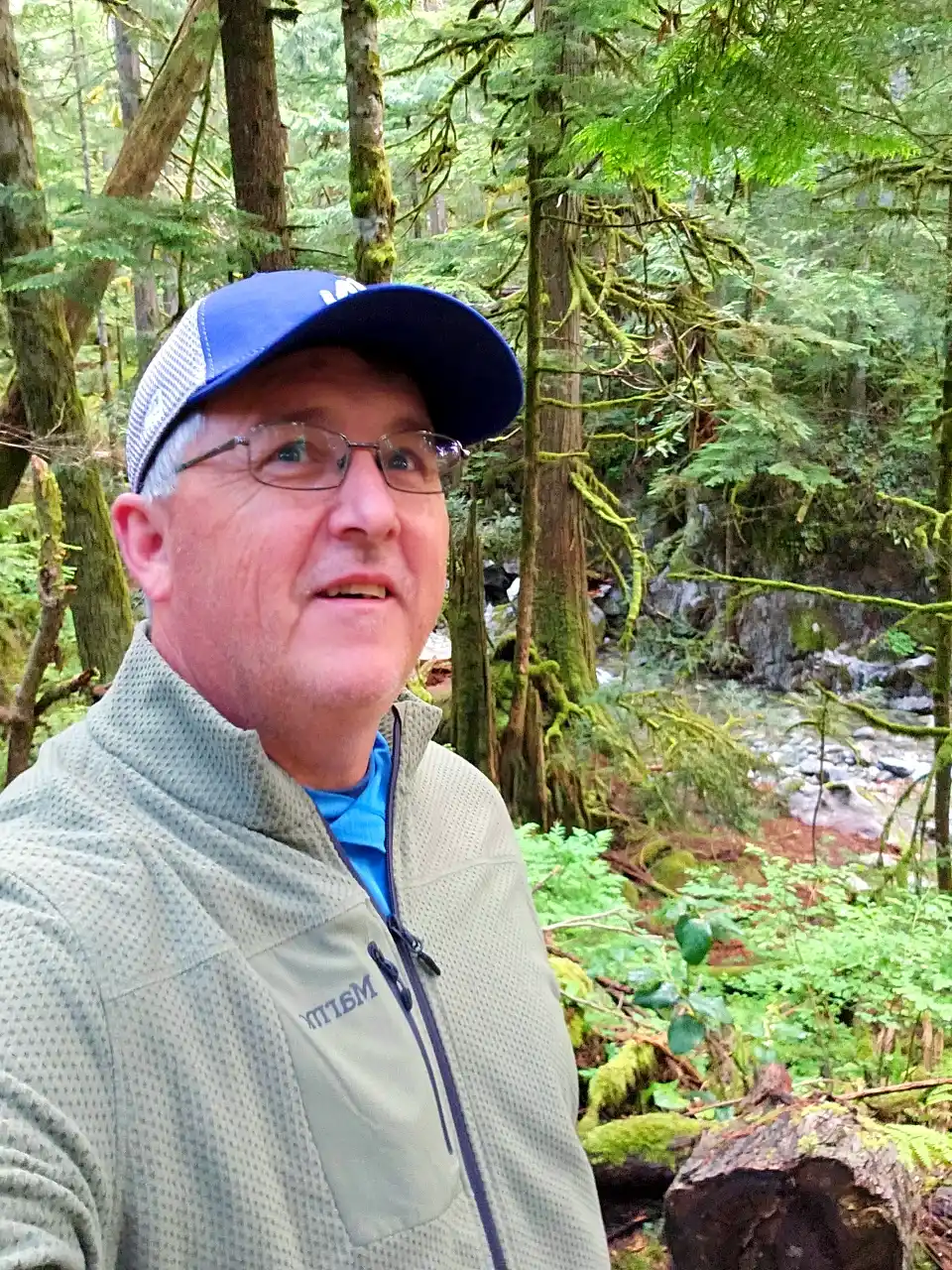
One rainy seven-mile hike through Blanchard State Forest was enough to begin changing how I think about layering. The trail to Lily and Lizard lakes was muddy, the rain was constant and the cool dampness seemed to settle into everything.
I was testing a pair of Marmot Trailway hiking pants that day, and they handled the rain and mud surprisingly well. But the larger lesson had less to do with the pants.
In the Pacific Northwest, carrying a fleece is not always about expecting cold temperatures. It is about being prepared for damp mornings, shaded forests, wind, changing weather and evenings that feel considerably cooler than the number on the forecast suggests.
Since that hike, the Marmot AirFleece Performance Full-Zip Jacket has gone into my pack for nearly every outing.
Sometimes I wear it for the first 30 minutes before my body warms up. Sometimes it stays in the pack for the entire hike. Other times I put it on during a cool section or late in the day and realize several hours later that I never took it off.
The AirFleece has become less of an occasional cold-weather jacket and more of an everyday Pacific Northwest tool.
Shop Marmot Sale! Savings Up to 25% OffMarmot AirFleece Jacket at a Glance
- Fabric: 100% recycled polyester jacquard fleece
- Fabric weight: 177 grams per square meter
- Jacket weight: 11 ounces
- Fit: Athletic
- Center-back length: 27.5 inches
- Construction: Checkerboard grid fleece
- Pockets: Two zippered hand pockets and one zippered chest pocket
- Additional feature: Integrated thumbholes
- Waterproof: No
- Windproof: No
- Color tested: Olive Grove
- Price at time of review: $145
- Best uses: Hiking, travel, camping and everyday layering
Why Grid Fleece Works
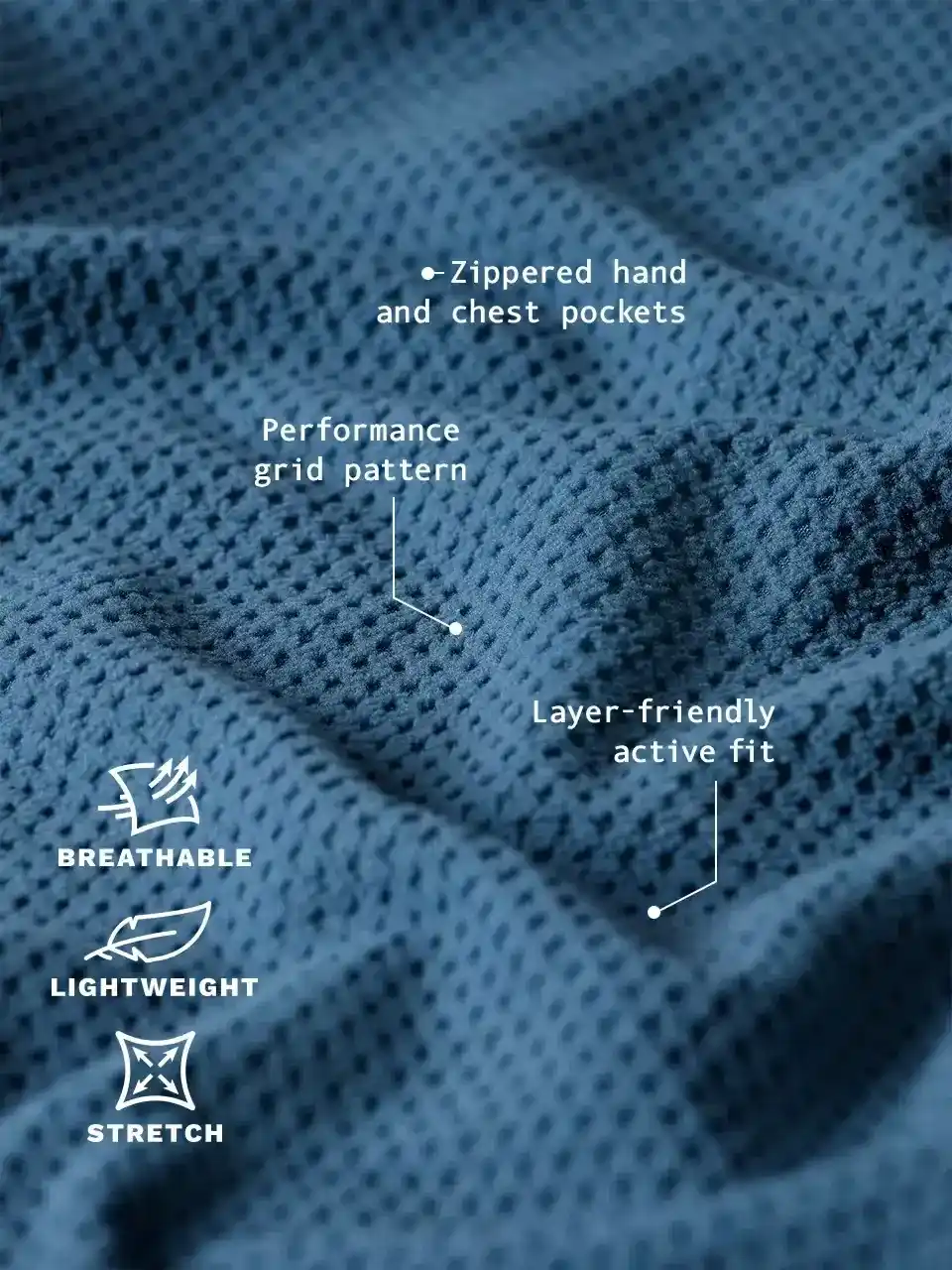
The AirFleece uses a checkerboard grid rather than a continuous layer of dense fleece.
The raised sections help retain warm air close to the body, while the channels between them allow heat and moisture to escape. The design reduces bulk and creates a layer that can provide warmth without feeling like a heavy traditional fleece jacket.
That balance is particularly useful during active outdoor days.
A conventional fleece may feel excellent in the parking lot but quickly become too warm once the trail begins climbing. A grid fleece is designed to operate across a wider range of activity levels, particularly when paired with the ventilation of a full-length zipper.
The AirFleece is still a warm layer, and I am a warm-bodied hiker. I am unlikely to wear it throughout a sustained climb unless conditions are genuinely cool. But it has been easy to manage: wear it at the trailhead, remove it when my body heats up and put it back on when the pace slows or the evening cools.
The PNW Changed My Layering System
The most important thing I have learned during my first spring and summer in Washington is that temperature alone does not describe how the day will feel.
There is often a cool dampness in the morning, particularly beneath the forest canopy. Even when the forecast looks comfortable, shaded trails can remain cool. Later in the day, a seemingly pleasant evening can quickly develop a chill once the sun drops behind the trees.
In the Sierra, I was accustomed to stronger daytime warmth and conditions that often felt drier. Unless I was hiking at elevation, camping overnight or traveling during a colder season, I did not automatically carry a substantial fleece.
Here, it has become standard equipment.
That does not mean I wear the AirFleece during every mile of every hike. Quite the opposite. Its value is that it is available when conditions shift.
On some outings, it stays on for only the first half hour. On others, I never use it. Then there are days when I pull it from the pack and keep wearing it through the afternoon and into the evening.
I no longer debate whether I will need it. I simply bring it.
Comfort and Fabric Feel
The AirFleece feels soft without having the clingy quality found in some fleece fabrics.
That is an important distinction. Some performance fleece grips the shirt underneath, creates static or feels awkward when layers move against each other. The AirFleece slides comfortably over a base layer and feels natural during everyday wear.
The interior grid is soft against the body, while the jacket remains structured enough to look good away from the trail.
This is another Marmot piece that transitions easily between outdoor use and normal life. I can wear it on a hike, around camp, into town or out for a burger and a beer without looking as though I am still dressed for an expedition.
It also works on days that mix several activities. I can wear it to church in the morning, place it in the Jeep afterward and pull it on later while exploring.
That versatility is a major part of why I keep choosing it.
Fit and Layering
Marmot describes the AirFleece as having an athletic fit designed to layer beneath a shell, backpack or harness.
That makes sense when wearing it as a technical midlayer. The jacket does not have the loose, bulky shape of an old-school fleece. It stays relatively close to the body, which helps it retain warmth and makes it easier to place a rain shell over it.
Larger hikers should pay attention to that athletic designation when selecting a size. A trim fit can work well as part of a layering system, but anyone who prefers a relaxed casual fit may want to compare the measurements carefully or try it on first.
The 27.5-inch center-back length provides useful coverage without creating excess fabric beneath a backpack hip belt. The full-length zipper also makes the jacket easier to put on, remove and ventilate than a pullover.
For a warm-bodied hiker like me, that zipper is essential. I can open the jacket as soon as I begin heating up rather than immediately stopping to remove the layer.
Thumbholes and Pocket Comfort
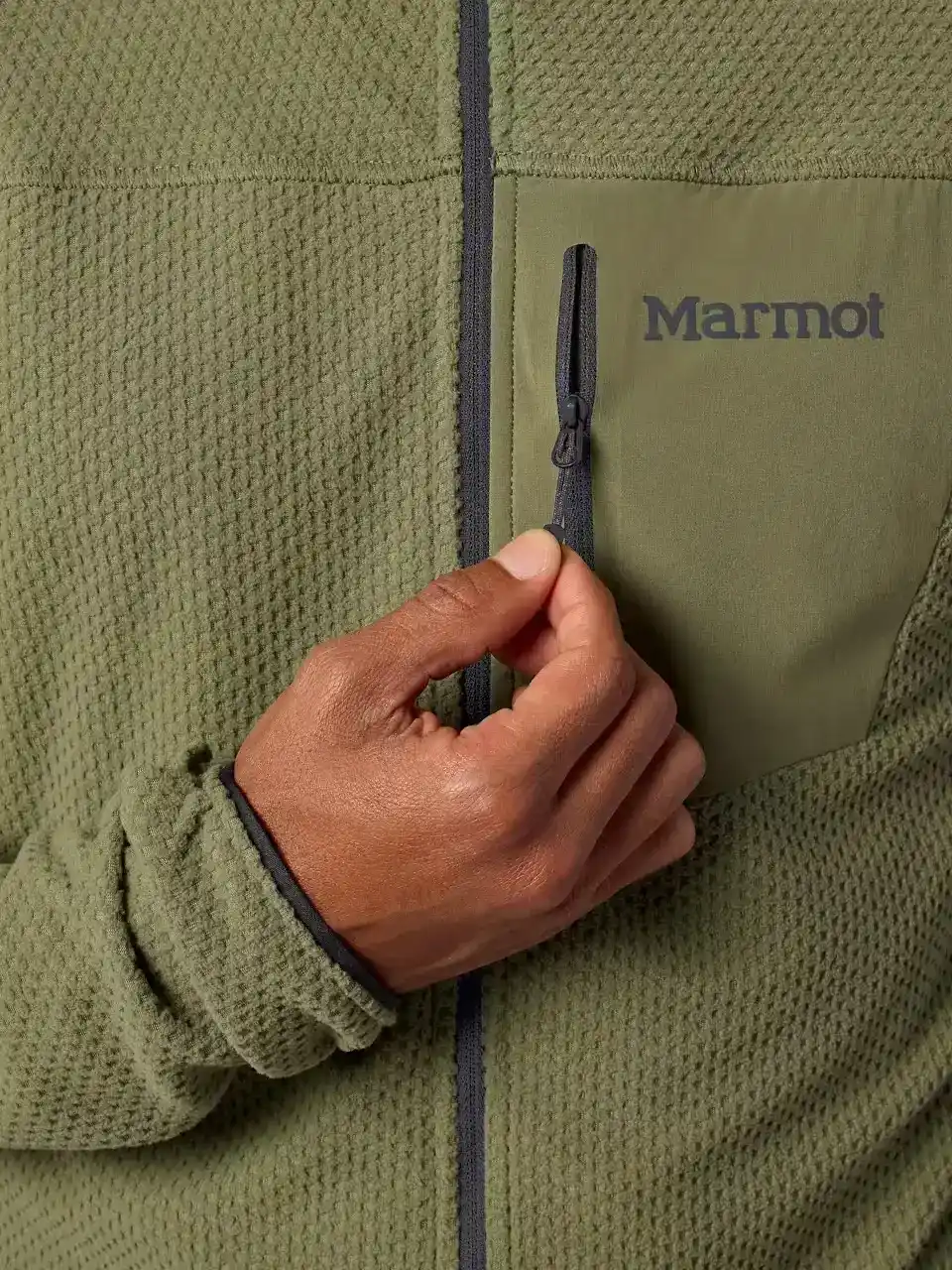
The thumbholes are a small but useful detail.
They keep the sleeves in place when adding another layer and provide a little extra coverage around the wrists when the air feels cold but gloves would be excessive. They are particularly welcome during cool starts and evenings around camp.
The zippered hand pockets have also been surprisingly comfortable. They provide a warm place for my hands while securely holding small items when I am walking around town or camp.
A zippered chest pocket adds accessible storage for a phone, snack or other small essential. Its placement should remain usable while wearing a backpack, although carrying a large or heavy item there may affect how the jacket sits beneath a shoulder strap.
The pocket arrangement is practical without making the AirFleece look overly technical.
Breathability and Temperature Regulation
Marmot promotes the checkerboard construction as a temperature-regulating design that combines warmth with airflow.
My experience supports the usefulness of that concept, with one personal limitation: I naturally run warm.
The AirFleece does a better job managing changing activity levels than a dense, heavy fleece, but no fabric can completely offset the amount of heat I generate during a climb. Once I am moving steadily uphill, I will eventually remove it.
That is not a failure of the jacket. It is part of knowing my body and using a layering system correctly.
For me, the AirFleece performs best during:
- Cool trail starts
- Low-intensity walking
- Shaded forest sections
- Rest stops
- Breezy viewpoints
- Evenings around camp
- Everyday use in cool or damp weather
Hikers who naturally run colder may be able to wear it through a much larger portion of the day.
What About Rain and Wind?
The AirFleece is neither waterproof nor windproof.
I have not yet worn it through the kind of sustained rain I experienced on the Blanchard State Forest hike, so I am not going to claim rain performance that I have not personally tested.
The recycled polyester fleece should dry more quickly than many natural fabrics, but this is still primarily an insulating and breathable midlayer—not a replacement for a rain jacket.
In a Pacific Northwest layering system, I would pair it with a waterproof shell when meaningful rain is expected. The fleece provides warmth and moisture management underneath, while the shell handles precipitation and wind.
That combination should be considerably more useful than expecting the AirFleece to perform both jobs.
Is It Packable?
At 11 ounces, the AirFleece is reasonably light for the warmth and comfort it provides, though it is not an ultralight emergency layer.
It takes up more room than the lightest synthetic midlayers, but it remains easy enough to carry in a daypack. Because I now use it regularly at trailheads, during rest stops and after hikes, the packed weight feels justified.
The calculation may be different for an ultralight backpacker counting every ounce. For everyday hiking and travel, however, I value the AirFleece’s comfort and versatility more than achieving the smallest possible packed size.
The Next Test: Yosemite in September
The AirFleece will travel with me to Yosemite in September, where it will face a very different environment.
I expect it may be too warm during much of the day. Sierra sunshine, exposed climbs and my naturally warm body could make the jacket unnecessary while I am moving.
The more interesting test will come during mornings and evenings.
September nights in the Sierra can be cool, particularly at elevation. The AirFleece may prove ideal for breaking camp, preparing breakfast, relaxing after the day’s mileage and waiting for the sun to warm the trail.
I will be evaluating whether its comfort and warmth justify carrying 11 ounces during a four-day backpacking trip. I will also watch how well it layers beneath a shell and whether the athletic fit remains comfortable beneath a loaded pack.
Washington has already made it an everyday layer. Yosemite will determine whether it also earns a permanent place in my Sierra backpacking system.
What I Like
Everyday Versatility
It works on the trail, around town, at camp and during ordinary daily life.
Comfortable Fabric
The grid fleece is soft without feeling clingy or excessively bulky.
Full-Zip Temperature Control
The zipper makes it easy to release heat as activity levels rise.
Useful Warmth
It provides the kind of morning and evening warmth that has become important during my first year in the PNW.
Comfortable Pockets
The zippered hand pockets are secure and unexpectedly pleasant for warming cold hands.
Thumbholes
They add wrist coverage and keep the sleeves positioned correctly beneath another layer.
Layer-Friendly Design
The athletic cut and grid construction allow the jacket to fit comfortably beneath a shell.
What Could Be Better
I do not have a significant construction or comfort complaint after my spring and summer use.
The primary limitation is situational: I run warm, so this will never be an all-day active layer for me in mild conditions. I frequently remove it once a climb begins.
The athletic fit also deserves attention from larger hikers or anyone who prefers a loose fleece. Its trim design supports layering but may require careful sizing.
Finally, it is not a rain jacket or wind shell. Pacific Northwest hikers should still carry appropriate weather protection.
Who Is the Marmot AirFleece Best For?
The AirFleece should work particularly well for:
- Hikers facing cool starts and changing conditions
- Pacific Northwest hikers building a dependable layering system
- Campers needing a comfortable morning and evening layer
- Travelers who want one jacket for outdoor and everyday use
- People who prefer a full zipper for temperature control
- Hikers who want warmth without the bulk of traditional fleece
- Colder-bodied hikers who wear fleece through much of the day
Warm-bodied hikers may use it more selectively, but that does not make it less useful. In my case, it has become the layer I carry consistently even when I am uncertain whether I will need it.
Trail-Tested Verdict
The Marmot AirFleece did not win me over through one dramatic trail test.
It earned its place slowly, hike after hike.
Sometimes I wear it for 30 minutes. Sometimes it stays packed. Sometimes I pull it on during a cool part of the day and realize hours later that I never took it off.
That pattern tells me more than a single memorable outing could.
The AirFleece is soft, comfortable and easy to layer. Its full zipper allows a warm-bodied hiker to regulate heat, while the grid construction provides useful warmth without the bulk of a traditional heavy fleece. The thumbholes and comfortable zippered pockets add practical details without making the jacket feel complicated.
Most importantly, moving to Washington has changed the role fleece plays in my outdoor system. What once felt like specialized Sierra winter gear has become something I carry on nearly every PNW hike.
The jacket does not always come out of the pack.
It always goes into it.
That may be the clearest recommendation I can give.
Disclosure: Marmot provided the AirFleece Performance Full-Zip Jacket to Sierra Rec Magazine for independent field testing. No payment was received, and Marmot did not review or influence this article. All opinions reflect my real-world experience.