My first real outing in the Marmot Trailway hiking pants began on a rainy spring morning near Bellingham, Washington.
We headed to Blanchard State Forest for a seven-mile loop connecting Lily and Lizard lakes. It is a classic Pacific Northwest hike: a casual forest climb, two hidden lakes and trails that remain in good condition even when spring rain turns sections of them into mud.
By the time I reached Lily Lake, the lower half of my new Dark Steel pants was nearly black with mud. Water covered the trail in places, the rain kept falling and the mess had worked its way halfway up my calves.
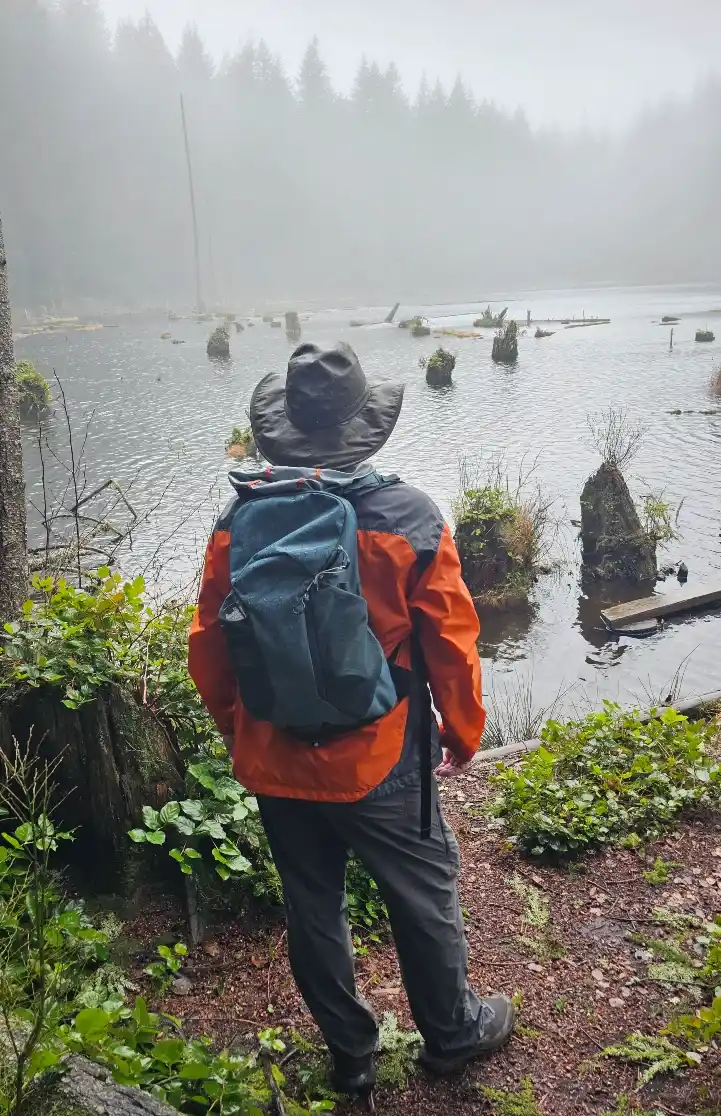
The pants looked terrible.
My legs, however, did not feel wet, and the Trailways remained comfortable for the entire hike.
When I arrived home later that afternoon, my wife took one look at me and said, “You can change in the garage.”
That was probably a fair request.
Fortunately, the mud washed out, the pants cleaned up well and they were ready for my next outdoor excursion. That first wet hike revealed much of what I have continued to like about the Marmot Trailway pants throughout my first spring and summer in the Pacific Northwest.
They are lightweight, comfortable and easy to move in. They handle unpredictable weather and muddy trails without looking or feeling like a heavy technical hiking pant.
More importantly, they are useful long after the hike ends.
Shop Marmot Sale! Savings Up to 25% Off
Marmot Trailway Hiking Pants at a Glance
- Fabric: 97% recycled nylon and 3% elastane
- Weight: 9 ounces
- Fit: Regular
- Inseam: Approximately 32 inches
- Sun protection: UPF 50+
- Weather protection: C0 durable water-repellent treatment
- Construction: Articulated knees and gusseted crotch
- Pockets: Two drop-in hand pockets, zippered thigh pocket and two back pockets
- Hem: Adjustable
- Color tested: Dark Steel
- Price at time of review: $95
- Best uses: Hiking, travel, camping and everyday outdoor wear
A Hiking Pant That Doesn’t Look Too Technical
My favorite thing about the Trailway may be that it does not look like a hardcore trail pant.
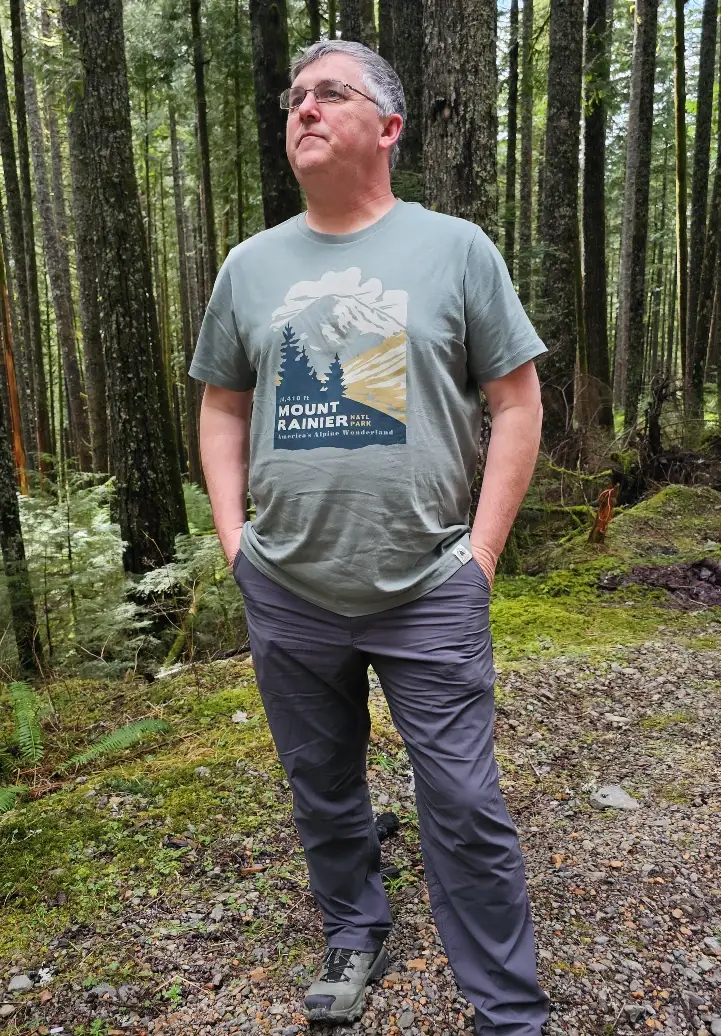
There is no overly aggressive cargo-pocket design or abundance of visible technical features. The Dark Steel color and regular fit allow the pants to blend easily into everyday life. I can wear them on a trail, into town, to church or out for a burger and a beer after a hike without feeling as though I forgot to change.
That versatility matters because many of my outdoor days do not fit neatly into one category.
A Sunday might begin at church, continue with an afternoon of exploring in the Jeep and finish with an unplanned walk or short hike. Other days start on the trail and end at a restaurant. I want clothing that works across the entire day rather than requiring a separate outfit for each stop.
The Trailways have become an easy choice for exactly those kinds of days.
Trail Comfort and Freedom of Movement
The Trailway is made from a lightweight double-weave fabric containing 97% recycled nylon and 3% elastane. That small amount of stretch makes a noticeable difference.
Combined with articulated knees and a gusseted crotch, the fabric moves naturally while climbing, stepping over logs and negotiating muddy sections of trail. I never felt as though the pants were pulling across my knees or restricting my stride during the Blanchard State Forest loop.
The fabric also has a soft, broken-in feel. Some durable hiking pants feel stiff or noisy until they have been worn and washed several times. The Trailways felt comfortable immediately.
At 9 ounces, they are also light enough for warm-weather hiking and backpacking without feeling fragile. I have worn them regularly throughout the spring and summer, both on trails and around town, and they have held up well so far.
Shop Marmot Sale! Savings Up to 25% OffHow the Trailway Pants Handled PNW Rain and Mud
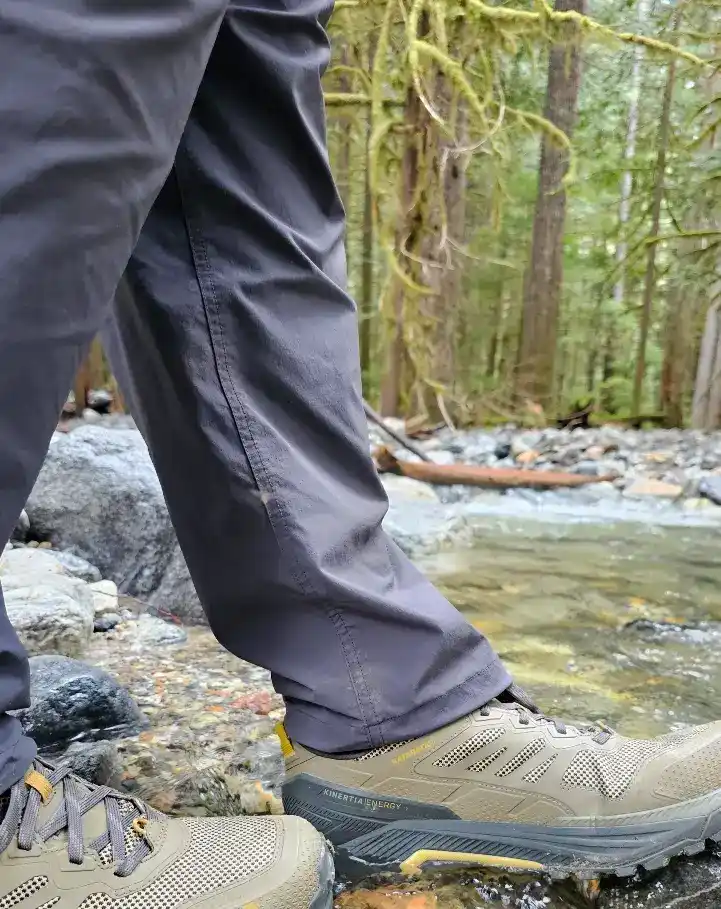
Marmot treats the Trailway fabric with a C0 durable water-repellent finish. This helps light rain and trail moisture bead and roll away from the surface rather than immediately soaking into the material.
The Blanchard State Forest hike gave that finish an honest first test.
These are not rain pants, and I would not substitute them for a waterproof shell during prolonged exposure or severe weather. On that seven-mile rainy hike, however, the Trailways did a good job managing the wet conditions. The exterior became muddy and visibly wet, but my legs never felt saturated.
Just as important, the fabric remained comfortable while wet. It did not become heavy, cling excessively to my legs or restrict movement.
The mud performance impressed me almost as much as the rain performance. By the time I reached home, the lower legs looked as though they might never be Dark Steel again. After washing, the grime released from the fabric and the pants returned to normal without any special treatment.
For Pacific Northwest hiking, that ability to get dirty, clean up and return quickly to the rotation is important. Spring trails here are not occasionally muddy. Mud is often simply part of the experience.
Fit and Waist Comfort for a Larger Hiker
For larger hikers, waistband comfort can determine whether a pair of pants becomes a favorite or stays in the closet.
The Trailway waistband has enough flexibility to remain comfortable during a full day of walking, driving, sitting and eating. It does not feel rigid when I bend or climb, and the stretch in the fabric accommodates normal movement without digging into my waist.
That daily comfort cannot be overstated.
There is, however, a tradeoff. After roughly a day to a day and a half of wear, the fabric and waistband begin to relax enough that I need a belt. Without one, the pants can start to sag.
This has not stopped me from wearing them, but it is worth noting—especially for someone planning to wear the same pants on consecutive days during a backpacking or travel itinerary. The slight stretch that makes them so comfortable also means the fit becomes a little looser with extended wear.
For me, the answer is simple: pack a belt.
Pocket Layout
The Trailway includes two standard drop-in hand pockets, a zippered thigh pocket and two rear pockets—one open and one zippered.
The layout provides enough storage without turning the pants into cargo pants. The zippered pockets are particularly useful when I want to secure a key, wallet or another small item during a hike or while traveling.
Because the pockets remain relatively low-profile, they do not detract from the pants’ everyday appearance. That supports the Trailway’s biggest strength: it works as an actual trail pant without advertising itself as one everywhere else.
UPF 50+ Protection
The Trailway fabric provides UPF 50+ sun protection.
That has obvious value on exposed summer trails, but it also makes the pants useful for travel days, camping and long afternoons when conditions shift between forest shade and direct sun.
Sun protection will become even more relevant when I take these pants back to Yosemite in September. Washington provided an excellent rain-and-mud test. The Sierra should provide a very different combination of sun exposure, dry trails, granite and extended backpacking use.
The Upcoming Yosemite Test
The Trailways have already earned a place on my September Yosemite trip.
I plan to wear them during a four-day backpacking route, where they will face a more demanding test than my spring and summer day hikes in Washington. I will be watching how they perform over consecutive days, particularly in the following areas:
- Comfort beneath a loaded backpack
- Interaction between the waistband and hip belt
- Stretch and sag after several days of wear
- Breathability during exposed climbs
- Drying time after sweat or creek crossings
- Abrasion resistance around granite and camp
- Odor and overall comfort without daily washing
I already know I will bring a belt. Beyond that, the Trailways appear well suited to the trip. They are light, comfortable and versatile enough to serve as my primary pants both on the trail and during the travel surrounding it.
I will update this review after Yosemite with the results.
What I Like
All-Day Comfort
The flexible fabric and forgiving waistband make these some of the easiest hiking pants in my closet to wear for an entire day.
Natural Movement
Stretch, articulated knees and a gusseted crotch provide comfortable mobility without making the pants feel excessively loose.
Real Versatility
They work on the trail, in town, at church, in the Jeep and at dinner. That is not marketing language in my case—it is how I have actually worn them.
Lightweight Construction
At approximately 9 ounces, they are light enough for warm-weather hiking and travel.
PNW Weather Performance
They handled steady rain and significant mud better than their casual appearance suggested.
Easy Cleanup
The Desert Khaki fabric looked nearly ruined after my first muddy hike but washed clean and returned quickly to regular use.
What Could Be Better
The Fit Relaxes With Extended Wear
After a day or more, the stretch becomes noticeable and the pants begin to sag without a belt.
They Are Water-Resistant, Not Waterproof
The DWR treatment performed well during my rainy trail test, but these should not be mistaken for dedicated rain pants.
One Inseam May Not Fit Everyone
Marmot lists the Trailway with an inseam of approximately 32 inches. More length options would help hikers at either end of the sizing range.
Who Are the Marmot Trailway Pants Best For?
The Trailways are a particularly good match for:
- Hikers who want one pair of pants for the trail and town
- Travelers building a smaller, more versatile wardrobe
- Campers dealing with changing weather
- Larger hikers who value stretch and waistband comfort
- Backpackers looking for lightweight sun protection
- Pacific Northwest hikers expecting mud and light rain
- Anyone who dislikes overly technical-looking hiking apparel
They may be less suitable for someone who wants a highly structured waistband, a waterproof outer layer or extensive cargo storage.
Trail-Tested Verdict
The Marmot Trailway hiking pants passed their first major test covered in Pacific Northwest mud.
They kept me comfortable through a rainy seven-mile loop, moved easily on the trail and cleaned up well enough to return immediately to everyday use. Since then, they have become more than hiking pants. I wear them around town, to church, while traveling and during everyday outdoor adventures.
That may be their strongest recommendation.
Plenty of hiking pants perform well for several hours on a trail. Fewer become the pair you keep reaching for when you are not entirely sure where the day will take you.
The Trailways have become that pair for me.
The waistband does relax after extended wear, and I expect to use a belt during my upcoming four-day Yosemite trip. That is a legitimate drawback, but it has not outweighed the comfort, mobility and versatility I get from the fabric.
Washington proved that the Trailways can handle rain and mud. Yosemite will determine how well they perform through multiple days of sun, granite and backpacking.
For now, they have earned a regular place in my closet—and a confirmed place in my September pack.
Disclosure: Marmot provided the Trailway hiking pants to Sierra Rec Magazine for independent field testing. No payment was received, and Marmot did not review or influence this article. All opinions are based on my real-world experience.