By Sierra Rec Magazine | Built Outside
There is something wonderfully simple about cooking an egg inside an orange over a campfire. Hollow out the orange, crack an egg inside, wrap it in foil, and let the heat of the coals do the work. It is the kind of backcountry trick that gets passed down from one generation to the next, often becoming more memorable than the trip itself.
For Scott Jensen, founder of Near Zero, it is also one of his earliest outdoor memories.
Growing up in Missouri, Scott remembers his father teaching him to camp alone when he was just eight years old. He would set up camp in the cornfields behind their home, build a small fire, and prepare his own meals. His dad would come out to check on him, making sure he was handling the fire safely and figuring things out for himself.
That early education in resourcefulness never really left him.
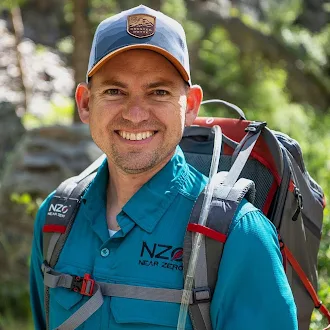
Our Guest
Scott Jensen grew up watching his dad Dean weigh every piece of gear before a trip, hike a mile from home just to test new equipment, and find something like peace out there on the trail.
When Dean passed away in June 2018, Scott turned that dream into a mission. Near Zero exists because of him — and for everyone who’s ever felt the pull of open space.
Today, Scott leads Near Zero, a backpacking gear company focused on making lightweight equipment more practical, affordable, and accessible. But as we discovered during our latest Built Outside conversation on Sierra Rec Now, the ideas behind his products began taking shape long before there was a company.
A 60-Pound Backpack and a Six-Year-Old Trail Partner
When Scott moved to Portland, Oregon, in 2008, he made a commitment to explore a new trail with his young son every month. For four years, they went camping or backpacking in the Pacific Northwest, rain or shine.
They weren’t doing it with expensive ultralight equipment.
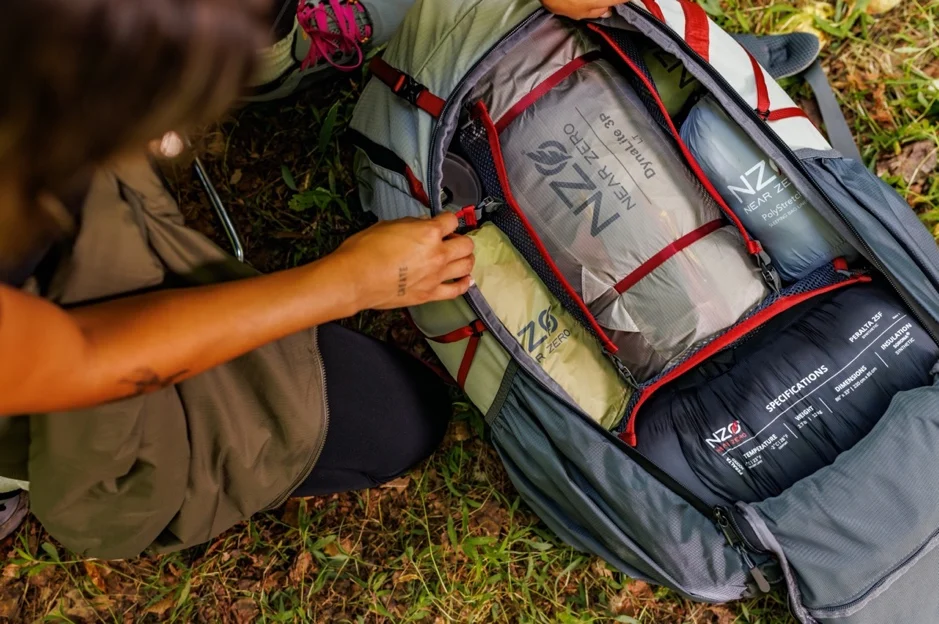
Scott remembers buying a used Gregory backpack and filling it with whatever gear he could afford from garage sales and secondhand shops. His first loaded pack weighed around 60 pounds. His six-year-old son carried another 12 to 15 pounds.
One of those early trips took them into Eagle Creek Canyon in the Columbia River Gorge, where Scott remembers arriving at camp with heavy equipment, including a bulky propane stove. Other backpackers were surprised by how much he had carried into the backcountry.
But those experiences were also an education.
Over time, Scott and his son visited gear sales, replaced individual items when they could afford to, and gradually reduced their pack weights. It wasn’t an overnight transformation. It was a process of learning what worked, what didn’t, and which improvements actually mattered.
Building a Company Around Real Backpacking Problems
Scott’s father was a dedicated ultralight backpacker, known for experimenting with gear and finding ways to carry less. The two had talked about starting an outdoor gear business together, combining his father’s experience with Scott’s professional background in sourcing, engineering, and international supply chains.
His father passed away unexpectedly before they could make that plan a reality.
Scott eventually moved forward with the idea, and the Dean backpack became a way to honor his father’s influence.
What makes Near Zero interesting is that Scott isn’t simply chasing the lowest possible number on a scale. He readily admits that he likes being prepared and carrying a few extra comforts.
That mindset shows up in his gear philosophy. He wants equipment to be lighter and more efficient, but he also wants it to be useful for the person carrying it.
During our conversation, Scott explained how Near Zero approaches backpacking as a complete system. The company offers individual products, ready-to-go equipment bundles, and a rental program for people who want to try backpacking before investing in their own setup.
You Don’t Have to Replace Everything
One of the more refreshing parts of our conversation came when I asked Scott what advice he gives someone who wants to start backpacking.
His first question is what equipment they already own.
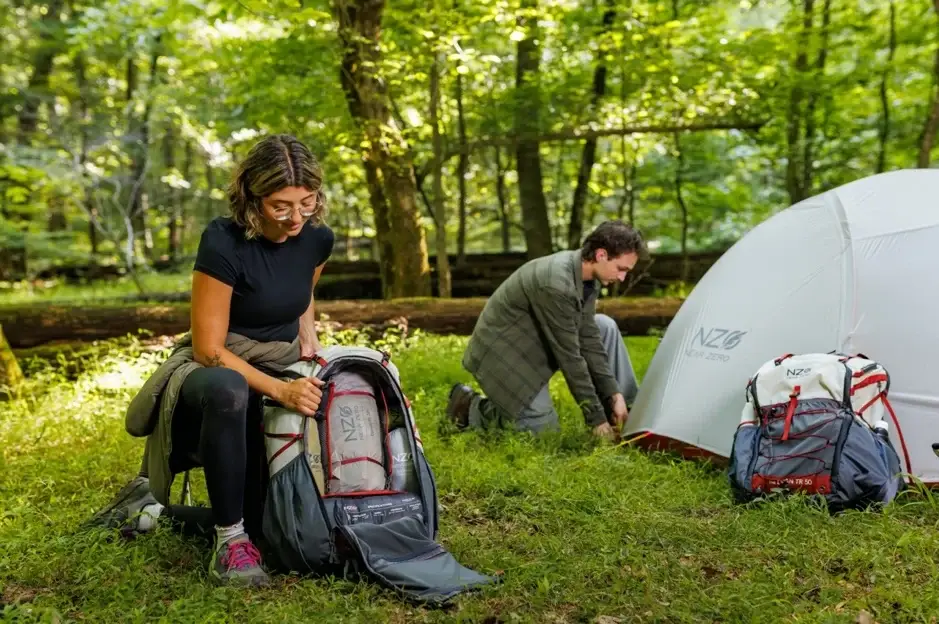
If someone has a comfortable Gregory or Kelty backpack, or a reliable MSR stove, Scott isn’t necessarily going to tell them to replace it. He would rather help them understand where an upgrade makes a meaningful difference.
That might mean choosing a smaller sleeping bag, replacing a heavy tent, or finding a chair that weighs considerably less than the one they have been carrying.
It’s practical advice, especially for people who are interested in backpacking but aren’t ready to spend thousands of dollars getting started.
We also talked about the trade-offs that come with hammock camping, the challenges of carrying bear canisters in the Sierra Nevada, and the engineering behind Near Zero’s Dean TR50 travel-ready backpack.
Scott demonstrated how he could fit a large BearVault inside the pack alongside other essential equipment. For anyone who has wrestled with a bear canister on a Sierra backpacking trip, that is the kind of detail worth paying attention to.
The Reason He Still Wants to Get Outside
For all the discussion about products, materials, and engineering, the conversation kept returning to family.
Scott now has five children. His oldest son, who started exploring Oregon’s trails with him at six years old, is grown. His youngest is ten and still eager to head out backpacking whenever his dad has the time.
Ironically, running an outdoor gear company has made it harder for Scott to spend as much time backpacking as he once did.
He’s trying to change that.
He recently mapped out a three-year plan to return to regular backpacking trips, with dozens of campouts and nights outdoors. Some of those adventures will take him back into the Grand Canyon, a place he has explored many times and still wants to experience in new ways.
That may be the most important part of Scott Jensen’s story.
The equipment matters. The engineering matters. Making backpacking more affordable matters. But somewhere behind every pack and every product improvement is a man who remembers what his father taught him and wants to keep sharing those experiences with his own children.
And that is a pretty good reason to keep building better outdoor gear.
Watch or listen: Join Charlie Pankey and Scott Jensen for the full conversation on Sierra Rec Now, part of our Built Outside series.
Explore the brand: Near Zero
Explore More of the Built Outside Series
Scott Jensen’s story is one of many we’ve discovered through Built Outside, a Sierra Rec Now series exploring the people whose lives outdoors inspired them to build something of their own. From Kurt Avery’s journey building Sawyer Products to Richard Campbell turning a lifetime of adventure into 10Adventures, these conversations reveal the experiences behind the businesses. You can also meet Deanna Ratnikova, who created GO Deck to help families discover adventures close to home, and Natalie Vereen-Davis, who turned her passion for family camping into CampingKiddos. Every guest brings a different perspective, but they share something important: the outdoors didn’t just become part of their lives. It helped shape what they built.