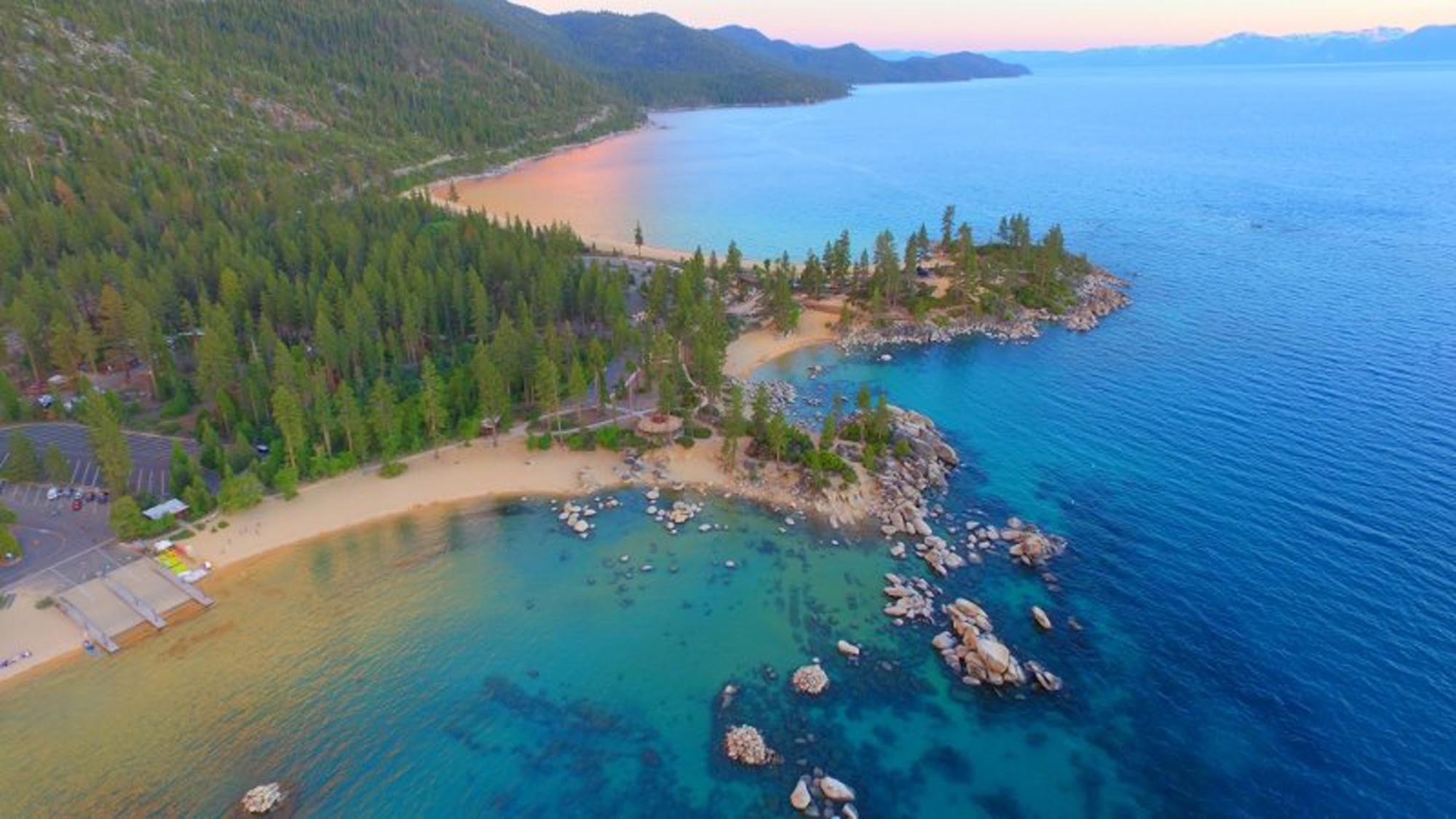
Look over the side of a kayak near Tahoe’s rocky shoreline and the water can seem almost unreal. Granite boulders sit below the surface in sharp detail, and on calm mornings the lake can look more like glass than water.
That clarity is one of Lake Tahoe’s defining features. It is also something scientists have measured for nearly six decades. Tahoe is still exceptionally clear, but the story is more complicated than simply calling it “crystal clear.”
For travelers, that makes the lake more interesting. The water you paddle, swim and look across is also a window into the health of the Tahoe Basin.
How Clear Is Lake Tahoe Right Now?
According to the UC Davis Tahoe Environmental Research Center’s 2025 clarity report, Lake Tahoe’s annual average clarity was 69.2 feet in 2025. That was deeper than the 62.3-foot average recorded in 2024, although researchers say the year-to-year change was not statistically different from recent years.
The longer pattern matters more. Clarity declined sharply through the late twentieth century and has been relatively stable, with plenty of annual variation, since the late 1990s.
So “How clear is Tahoe?” does not have one timeless number.
How Scientists Measure Tahoe’s Clarity
Tahoe’s best-known clarity measurement is surprisingly simple.
Researchers lower a 10-inch white Secchi disk into the lake and record the depth at which it disappears from view. Because the same basic method has been used for decades, scientists can compare conditions over time.
The current restoration reference is 97.4 feet, the average recorded between 1967 and 1971.
That figure is a long-term benchmark, not a promise that every beach or cove will be visible to exactly that depth. Near shore, what you see depends on local depth, light, wind, sediment, algae and viewing angle.
For visitors, the number is best treated as context rather than a visibility guarantee. A Secchi reading is a scientific measurement taken at monitoring stations, while the water beside a beach, marina or rocky cove can look different on the same day. That is why a calm paddle along Tahoe’s granite shoreline can feel even clearer than the annual figure suggests.
Why Does Lake Tahoe Look So Clear and Blue?
Clear and blue are related, but they are not the same thing.
Tahoe’s clarity is helped by relatively low levels of suspended sediment and algae. Fewer particles in the water mean less material blocking the view.
Its color is also about light. UC Davis educational material on Tahoe’s clarity and color explains that deeper water absorbs more of the longer wavelengths of visible light while shorter blue wavelengths are scattered back toward our eyes.
That is why Tahoe can shift from pale turquoise along a shallow granite shoreline to intense blue over deeper water.
Is Tahoe as Clear as It Used to Be?
Lake Tahoe is not as clear as it once was. The 2025 annual average of 69.2 feet remains well below the historic 97.4-foot reference.
What has changed is scientists’ understanding of why.
Tahoe clarity is shaped by several processes at once. Fine sediment can enter from the watershed and atmosphere. Nutrients influence biological growth, while algae and other microscopic particles can remain suspended in the water.
UC Davis’ latest State of the Lake research is paying particular attention to tiny suspended particles, including picoplankton and microscopic algae, because they may be playing an important role in summer clarity.
What visitors see at the surface is connected to processes happening throughout the lake and its watershed.
How Does Tahoe Compare With Other Clear U.S. Lakes?
Tahoe’s reputation naturally raises another question: how does it compare with other notably clear and clean lakes around the country?
There is no single national ranking that settles it. “Cleanest” can refer to clarity, nutrient levels, pollution indicators or broader water-quality measures.
For travelers curious about the wider picture, Wanderlust Craze’s comparison of clean U.S. lakes places Tahoe alongside Crater Lake, Lake Superior, Lake Chelan and other well-known lakes using more than appearance alone.
That distinction matters. Clear-looking water and overall water quality are related, but they are not interchangeable.
Why Tahoe Clarity Changes Through the Year
An annual average hides a seasonal story.
Recent UC Davis monitoring shows that summer clarity remains one of the more difficult parts of the restoration picture. Tiny particles and biological activity can become more important during warmer months.
Weather can change what visitors see as well. Wind can stir nearshore sediment, runoff can carry material into the lake, and calm conditions can make shallow water look extraordinarily transparent.
If you want to experience that shoreline perspective, Sierra Rec’s guide to stunning Sierra kayaking locations includes the Lake Tahoe Water Trail and several other clear-water paddling destinations.
How Visitors Can Help Keep Tahoe Clear
Tahoe’s clarity is not something visitors should take for granted.
One practical concern is the spread of aquatic invasive species. Keep Tahoe Blue recommends that boaters, paddlers and anglers clean, drain and dry their gear before moving between waterways.
For a day on the lake, that means removing mud and plant material from kayaks, paddleboards, inflatables, fishing equipment and water shoes, draining trapped water and allowing gear to dry fully.
On land, pack out litter, use established access routes where possible and avoid unnecessary disturbance along fragile shoreline areas.
If your trip includes time away from the water, Sierra Rec’s Lake Tahoe hiking and backpacking guide is a useful way to see the basin from the ridges and trails around it. The broader Lake Tahoe summer outdoor guide also brings together paddling, camping and seasonal recreation ideas.
The View Beneath the Surface
Lake Tahoe’s clarity is easy to admire and harder to explain in one number.
The lake remains exceptionally transparent, yet long-term monitoring shows how much has changed since the late 1960s. Scientists are still studying the fine particles, biological processes and seasonal patterns that shape what visitors see.
The next time you look over the side of a kayak and see granite boulders fading into the blue, you are looking at more than scenery. You are looking at a lake system that is still changing.