How Great Sierra Seasons Begin
I used to hear the phrase “conquering the Sierra” a lot.
Ten or twelve years ago, it felt like the right language. Bold. Ambitious. A way to measure progress by distance, elevation, and the number of new places stacked into a single season. I chased it hard. New lakes every weekend. New basins every year. I refused to do the same adventure twice because repetition felt like standing still.
What I didn’t realize at the time was that the Sierra doesn’t reward conquest — it rewards patience.

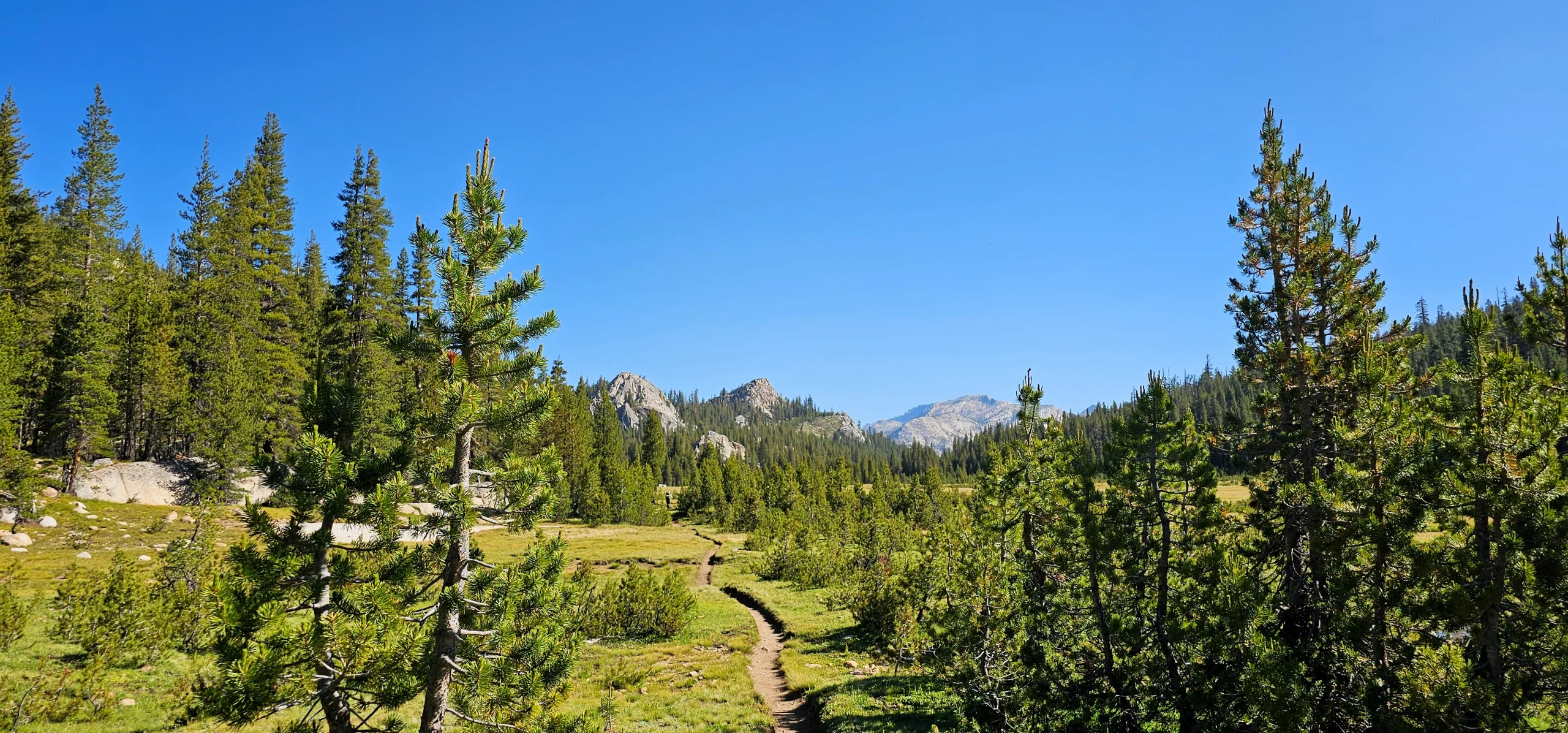
There are over 4,000 lakes scattered across the Sierra Nevada.
You will never see them all. And that’s the point.
And once you’ve tasted that, it stays with you. Not in a satisfying, finished way — but as a quiet, unfulfilled desire that carries from one year into the next, pulling you back with unfinished curiosity.
Learning to Slow Down Without Stopping
For the first five or six years, I chased more. More miles. More destinations. More firsts. I wanted to see everything, and I wanted to see it now.
Yet even back then, I’d occasionally repeat a trail — usually because it made seasonal sense. A familiar Saturday route. A trail I knew would be clear, safe, and worth the time. At the time, I told myself those repeats didn’t count.
What changed wasn’t a single trip, but a realization that came slowly: every trip is its own story, even when the landscape is familiar.
I saw it clearly when I returned to the Nelson Lake–Matthes Lake–Cathedral Lakes loop in Yosemite National Park with family. I’d walked those miles before. I knew the terrain, the light, the long views. But the people, the conversations, the pace — all of it was new.
The trail didn’t repeat itself. It revealed something different.
That understanding reshaped how I look at a Sierra year.
Returning With Intention
Now, I still study maps for new destinations. I still zoom into unfamiliar basins on satellite imagery. But experience has changed what I’m actually looking for.
Water pulls me first — lakes, rivers, valleys. Sometimes that means crossing a pass or skirting a peak, but the destination is rarely the summit. From there, I start building options: side trips, alternate routes, places where a day can stretch or shorten without forcing a decision.
A return to Green Creek last fall captures this perfectly. Same trail. Same season. Same joy. This time, I added two miles to a nearby lake I hadn’t visited before. That small change turned a familiar hike into a fresh experience.
A great trip doesn’t need to be bigger than the last one. It needs room to adapt.

Planning With People, Not Ego
As the years stack up, planning becomes less about proving something and more about responsibility.
Age, health, and family quietly change the way you evaluate risk. I don’t travel the way I did ten years ago — heading out alone at dawn, chasing daylight, letting curiosity outrun caution. I still adventure hard, but I plan better. I communicate clearly. I choose routes that challenge without gambling.
“Coming home is always the goal.”
That phrase sits at the center of how I plan now. When I’m solo, I’m cautious. When I’m with others, I surround myself with people who value judgment over bravado. Turning around isn’t failure — it’s part of the craft.
Just recently, snowshoeing alone in the Pacific Northwest, I hit a point where the trail disappeared into steep, icy terrain. The risk was real. I turned around, added miles, and returned safely. That decision didn’t diminish the day — it validated it.
Winter Is Where the Year Is Won
January and February are deceptively important months in the Sierra.
I’m still out enjoying winter — snowshoeing, walking quiet forests, feeling the calm that only snow brings. But at the same time, I’m building the rest of the year.
Maps cover the floor. Guidebooks stack up. Google Earth stays open. I spread out paper maps I’ve collected over decades and study regions as a whole — where I’ve been, what’s still unseen, and what’s realistic.
I start with simple math. Seven to ten miles a day. Two to three nights. Loop or out-and-back. Then I look for hazards: river crossings, steep slopes, exposed terrain. From there, logistics follow — towns, food stops, travel windows, permits.
Backpacking permits in the Sierra don’t reward last-minute decisions. January and February are when the work gets done. I plan in options, not absolutes. Three trailheads. Three start dates. Fixed location, flexible timing — or fixed timing, flexible routes.
That flexibility has earned me permits year after year, even in competitive systems like Yosemite.
Letting the Sierra Lead
Not every trip needs to be planned. Spontaneous day adventures remain the lifeblood of a mountain-centered life. Weather, time, and curiosity still guide many weekends.
But the larger journeys — the ones that define a season — benefit from intention.
There are over 4,000 lakes scattered across the Sierra Nevada. You will never see them all. And that’s the point.
Don’t fixate on the most important peak or the most traveled trail. There are hundreds — maybe thousands — of places that will become the best you’ve ever seen.
Pick a region. Slow down. Let the process work.
Before the trailhead, the year is already beginning