A New Reality in the Sierra Nevada.
Living and Camping in Wolf Country
In February of 2021 the second gray wolf on record was tracked passing the Lake Tahoe basin into Wilderness areas between Hwy 4 and 108 in the Central Sierra mountain region before stopping near Mono county. The Gray wolf is not new to California in the past 10 years as the Oregon’s Packs expanded into the Mt Shasta region forming a the Shasta pack and another group who have been videoed with pups two years running in the Lassen/Plumas national forest region to the north.
Successful Reintroduction of Gray Wolf Populations
The gray wolf is still a protected endanger spieces even though the reintroduction of the Gray wolf that started in the 1995 into the Frank Church Wilderness in Idaho has been considered extremely successful.
Following the reintroduction of 15 wolves into the Central Idaho wilderness in 1995, an additional 20 wolves were transplanted into Idaho from Canada. The U.S. Fish and Wildlife Service wanted to make sure they brought enough adult wolves into Central Idaho so they could pair up, set up territories and produce young on their own, restoring wolves to the Central Idaho ecosystem.
The experiment worked extremely well. The Central Idaho wolf population took off rapidly, just as transplanted wolves did in Yellowstone National Park. The Central Idaho wolf population grew quickly to the official recovery goal for Idaho – 10 breeding pairs or roughly 100+ wolves – in just three years.
In 1999 the first gray wolf from Idaho was found in Eastern Oregon after crossing he Columbia river. Although this wolf was captured and returned to Idaho, it was no long after before the wolf population raced across Oregon into Northeast Oregon near the Wallowa Mountains and the Eagle Cap Wilderness. In 2011, a lone wolf from the Imnaha Pack generated international headlines when he became the first in Western Oregon since 1947, and then the first in California in nearly a century.
A gray wolf named OR7 dispersed from the Imnaha pack in September 2011. OR7 left his natal pack in 2011. The dispersal of younger individuals from a pack is common. Dispersing wolves generally attempt to join other packs, carve out new territories within occupied habitat, or form their own pack in unoccupied habitat. On December 28 of 2011, he crossed into California northeast of Dorris, a small town in Siskiyou County. While visiting California, OR7 traveled in the southern Cascades, across portions of the Modoc Plateau, in the Lassen and Plumas National Forests, and as far south as Tehama, Shasta, and Butte counties.
Here to Stay in California
With the reoccurring event of territory exploration it seems obvious that the return of Wolf to the High Sierra Regions is highly likely, meaning opportunities for people to recreate in the same forests, meadows and trails as the Gray Wolf of California.
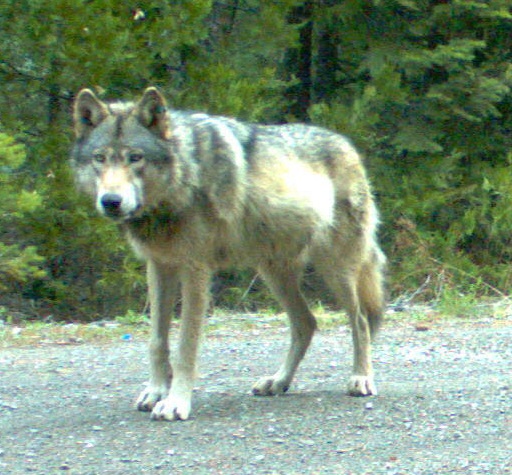
Living and Recreating with Wolf
Wolves historically occupied diverse habitats throughout North America, including forests, grasslands, deserts and tundra. In California, the current known suitable wolf habitat encompasses millions of acres of public and private forests, rangeland, and agricultural lands in the northern portion of the state.
Wolves are habitat “generalists,” meaning they can adapt to living in many kinds of habitat. They basically need two things to thrive: abundant prey and human tolerance.
Gray wolves are carnivores. Their primary prey sources are large native species, mainly elk and deer. Wolves will also consume other mammals, birds, and reptiles. They will opportunistically scavenge carrion, and may prey on large livestock under certain circumstances.

Human Safety
Wolves rarely pose a direct threat to human safety. Wild wolves generally fear and avoid people. It is important to know how to avoid contact with wild animals before entering their habitat. In the past 40 years, 18 reports of wolf aggression toward humans have been reported. Eleven of those reports involved wolves habituated to humans and six involved domestic dogs. In recent years there was one confirmed human mortality in Alaska by wolves.
Wolves can become habituated to humans in areas where they regularly encounter humans or human food. To avoid habituation, wolves, like all wildlife, should never be fed or approached. People should never approach, feed, or otherwise interact with a wolf.
Because wolves are widespread, thousands of people live, work and enjoy outdoor activities in wolf country. Wolves rarely act aggressively toward people, but there have been instances in Alaska and Canada where wolves have attacked people. The first case of wild healthy wolves killing a human in modern North America occurred in Saskatchewan in 2005; a second person was killed in 2010 in Alaska. Several other incidents of wolf aggression have resulted in serious injuries. Some people in recent years have even had worrisome encounters with wolves while in suburban settings.
Wilderness enjoyment
People enjoying wilderness activities must be aware that all large wild animals, including wolves, present some risk to human safety. When you go into the wilderness, which in many Sierra communities is just outside your back door, go prepared. It’s safer to travel with someone else rather than alone. In our urban environments we often don’t pay much attention to what goes on around us, but a key to safety in the wild is awareness. Develop a habit of scanning your surroundings, don’t become so focused on an activity that you put yourself at risk for a close encounter with a mountain lion, bear, or curious wolf. Naturally you should closely tend children and pets, maintain clean camps and do not store food where it is accessible to wild animals.
Hearing a howling wolf or seeing a traveling wolf pack can be an exhilarating wilderness experience and should be enjoyed, but everyone who leaves the beaten path behind must take on the responsibility to ensure their own safety.
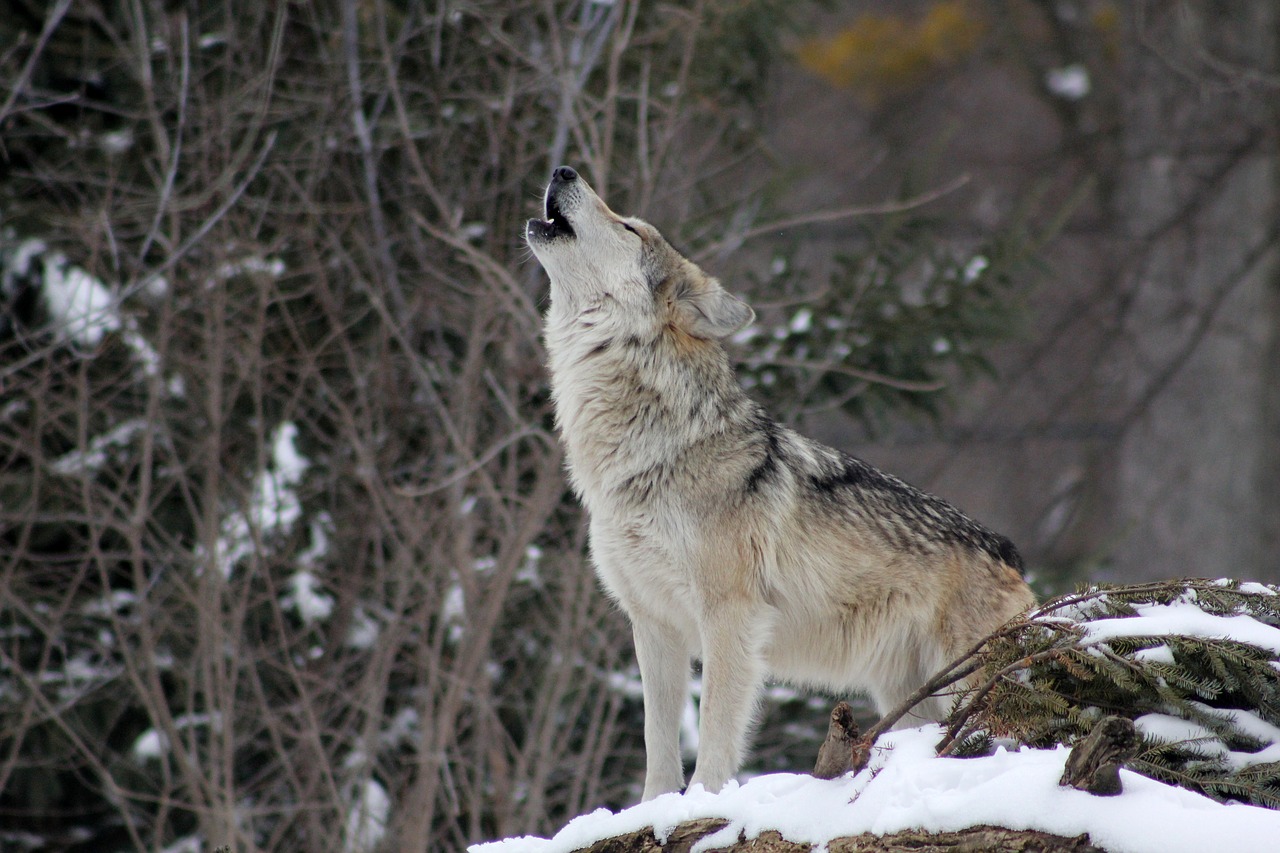
Safety in Wolf Country
If you encounter a wolf or pack of wolves at close range do not run or turn away. If you are approached, act aggressively and maintain eye contact if the wolf is looking at you. Aggressively use poles, pepper spray, rocks, limbs, noisemakers or other handy items to discourage wolves. Carrying a firearm is not a bad idea, but do so only if you are qualified and comfortable with the use of your firearm, and if you are in an area that allows firearms.
Don’t make your home or camp attractive to wolves, follow clean camping guidelines.
In the rare event that you do have an encounter with an aggressive wolf:
- Don’t run, but act aggressively stepping toward the wolf and yelling or clapping your hands if it tries to approach.
- Do not turn your back toward an aggressive wolf, but continue to stare directly at it. If you are with a companion and more than one wolf is present, place yourselves back to back and slowly move away from the wolves.
- Retreat slowly while facing the wolf and act aggressively.
- Stand your ground if a wolf attacks you and fight with any means possible (use sticks, rocks, ski poles, fishing rods or whatever you can find).
- Use air horns or other noisemakers.
- Use bear spray or firearms if necessary.
- Climb a tree if necessary; wolves cannot climb trees.
Recreating with Pets in Wolf Country
Wolves are by nature territorial and will defend their territories, especially against dogs and coyotes. They can view domestic dogs as competitors, territorial intruders, or prey. Dog owners must be aware of the potential risk to their dogs if they are in wolf habitat, especially when guarding or herding livestock, hunting, accompanying hikers or running. Take precautions to limit potential conflicts.
- Place a bell or beeping collar on dogs that roam
- Talk loudly to the dog and/or use whistles
- Control the dog so that it stays close to you; this should cause wolves to associate dogs with humans
- Place the dog on a leash if wolves or sign of wolves are seen
- Keep pets and their food indoors, especially at night
- Remember, it is illegal to shoot at or attempt to injure or kill a wolf even if it is attacking your dog
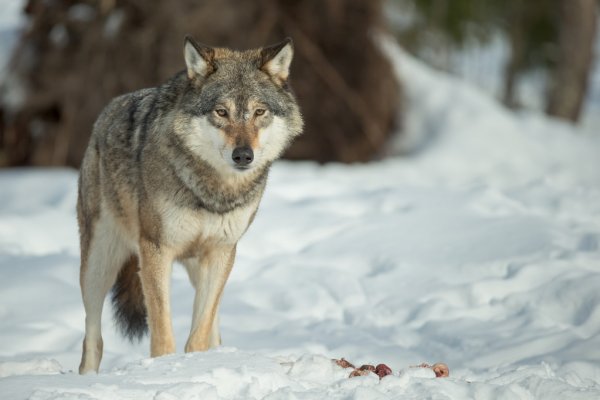
CALIFORNIA’S KNOWN WOLVES – PAST AND PRESENT
Wolf Packs –
Lassen Pack
The Lassen Pack is California’s second contemporary pack, and the only currently known wolf pack in the state. The wolves generally utilize a broad area of western Lassen and northernmost Plumas counties, and the pack’s home range is approximately 500+ mi2.
The pack has produced litters in 2017 (four pups), 2018 (five pups), 2019 (four pups), and 2020 (at least nine pups). The pup had two litters in 2020 – the original breeding female (LAS01F) had at least five pups, and a two-year old female (LAS09F) had at least four pups.
Genetic analysis indicated the original male was a 2014 offspring of southwestern Oregon’s Rogue Pack. While he sired the 2017-2019 litters, he has not been detected with the pack since spring 2019. A black-colored adult male began traveling with the pack as early as June 2019, and genetic analysis of pup scats showed the black wolf sired both 2020 litters.
He is not related to other known California wolves, and his origin is currently unknown. The pack’s original breeding female (LAS01F) is not related to known Oregon wolves and genetic analysis indicates she likely dispersed from some other part of the northern Rocky Mountain wolf population.
In late summer 2020, a satellite-collared yearling male wolf (LAS13M) dispersed from the pack. After traveling through northern Lassen and Modoc counties, LAS13M entered Oregon in early October and remained there through early January 2021. At the end of 2020, the pack was thought to consist of at least five wolves.
In September 2018, a yearling female from the pack was found dead, and the matter remains under investigation. Gray wolves are protected under California Endangered Species Act (CESA). CDFW reminds the public that killing a wolf is a potential crime and subject to serious penalties including imprisonment. CDFW takes very seriously any threats to this recovering wolf population and fully investigates any possible criminal activity.
Shasta Pack
The Shasta Pack was California’s first known contemporary pack and occupied a portion of eastern Siskiyou County. DNA indicated that both breeding wolves were from Oregon’s Imnaha pack (the pack that produced OR-7). The pair was first detected in early 2015 and five pups were identified that summer. The pack was regularly detected from August through November 2015 and consisted of a minimum of six wolves in late November 2015. The pack was observed feeding on a cattle calf carcass in mid-November 2015, and subsequent investigation determined the wolves had likely killed the calf.
The pack was not detected after November 2015, except for one yearling identified within the pack’s range in May 2016. The same animal, verified by DNA, was detected in northwestern Nevada in November 2016
Is the Sierra Pack next?
We do not know if the sierra will host a pack in the near future, it really come down to a reliable food source and human tolerance. They may face challenges from a region where game is not as easily found (No Elk in the Central Sierra), winter weather could drive them to the fringe of the mountains and with a surrounding cattle industry which enjoys the benefits of open range, we wonder how local management will react to the settling of a wolf pack in the region.
Livestock Interactions
Depredation investigations CDFW and USDA Wildlife Services (WS) staff investigated five suspected wolf depredations during the quarter. The results are as follows:
Date Determination Type Wolf/Pack Area County Investigators
8/17 Confirmed 1 cow, dead Lassen Lassen WS, CDFW
8/23 Confirmed 1 calf, dead Lassen Lassen WS, CDFW
8/28 Confirmed 1 calf, dead Lassen Plumas WS, CDFW
9/5 Confirmed 1 calf, dead Lassen Plumas WS, CDFW
9/15 Confirmed 1 calf, dead Lassen Lassen WS
The individual determination reports are available at www.wildlife.ca.gov/conservation/mammals/gray-wolf
CDFW continues to receive and investigate reports of wolf presence from many parts of California. Public reports are an important tool for us. Please report wolves or wolf sign on the CDFW Gray Wolf web page: www.wildlife.ca.gov/Conservation/Mammals/Gray-Wolf/SightingReport.
Any wolf that enters the state is protected under the federal Endangered Species Act. The federal act generally prohibits the harassment, harm, pursuit, hunting, shooting, wounding, killing, trapping, capture or collection of wolves in California, or the attempt to engage in any such conduct. Penalties include fines of at least $100,000 and imprisonment.
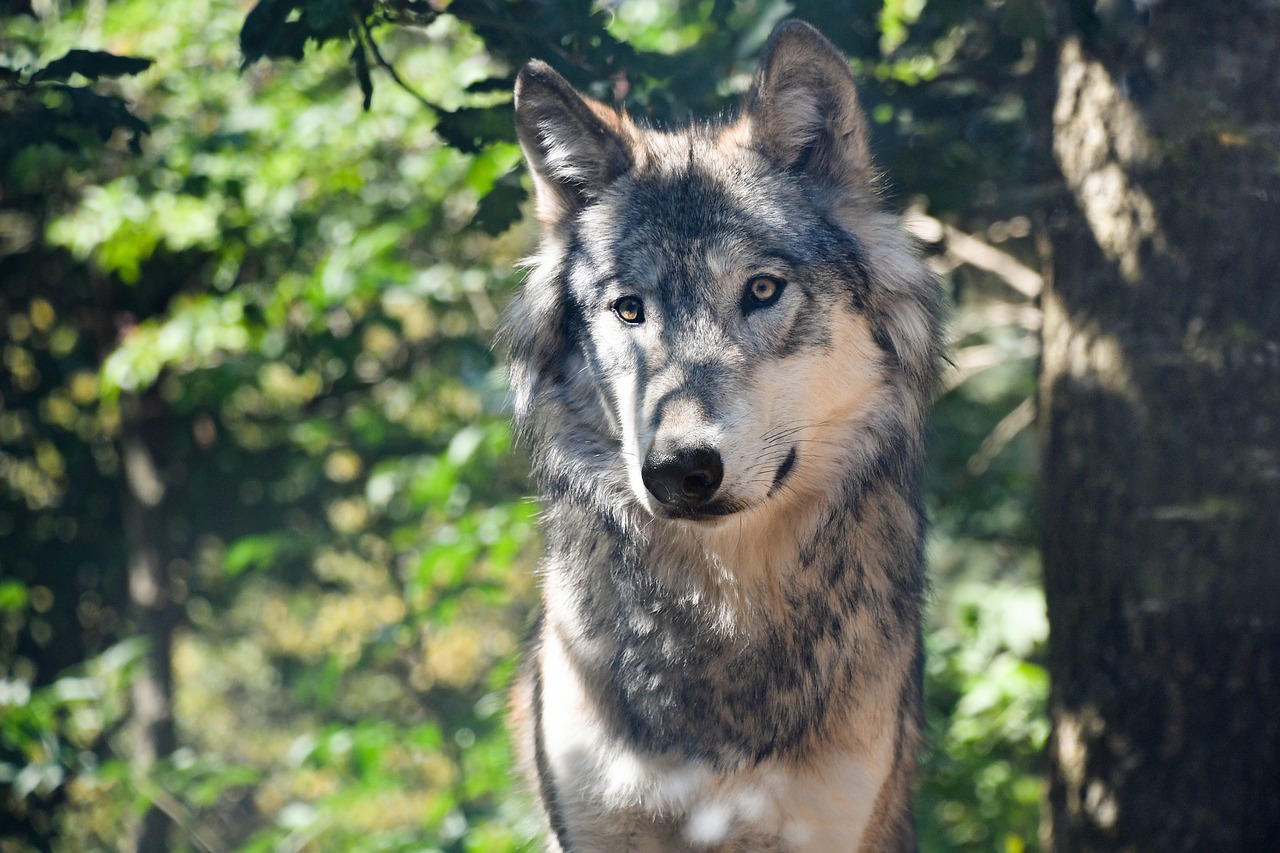
Sustainability of a Sierra Pack?
Other Predators
Wolves are known to kill and consume coyotes and several studies show that coyote populations decrease when wolves become reestablished in the same habitat. Wolves sometimes kill bears, particularly while bears are denned up in the winter, but it is unusual for wolves to eat bears. Wolf packs will occasionally kill mountain lions particularly when wolves take over the carcass of a mountain lion kill. Mountain lions and black bears are the only native predators in California capable of killing an adult wolf. In summary, wolves, bears and mountain lions are capable of, and do, kill each other. Although one species may consume another, they do not rely on these other large carnivores as prey.
Prey Species
One factor shown to limit wolf populations in other states is prey availability. Elk populations in states with wolves (Idaho, Montana, Wyoming) have mostly remained stable. In a few areas, impacts of wolf predation on specific elk populations have been substantial. Elk behavior has been documented to change when wolves are present. In Idaho, Montana and Wyoming there is little if any information to indicate deer populations have been significantly affected. Where deer and elk populations are low, and human activity and population density are high, wolf populations generally remain low.