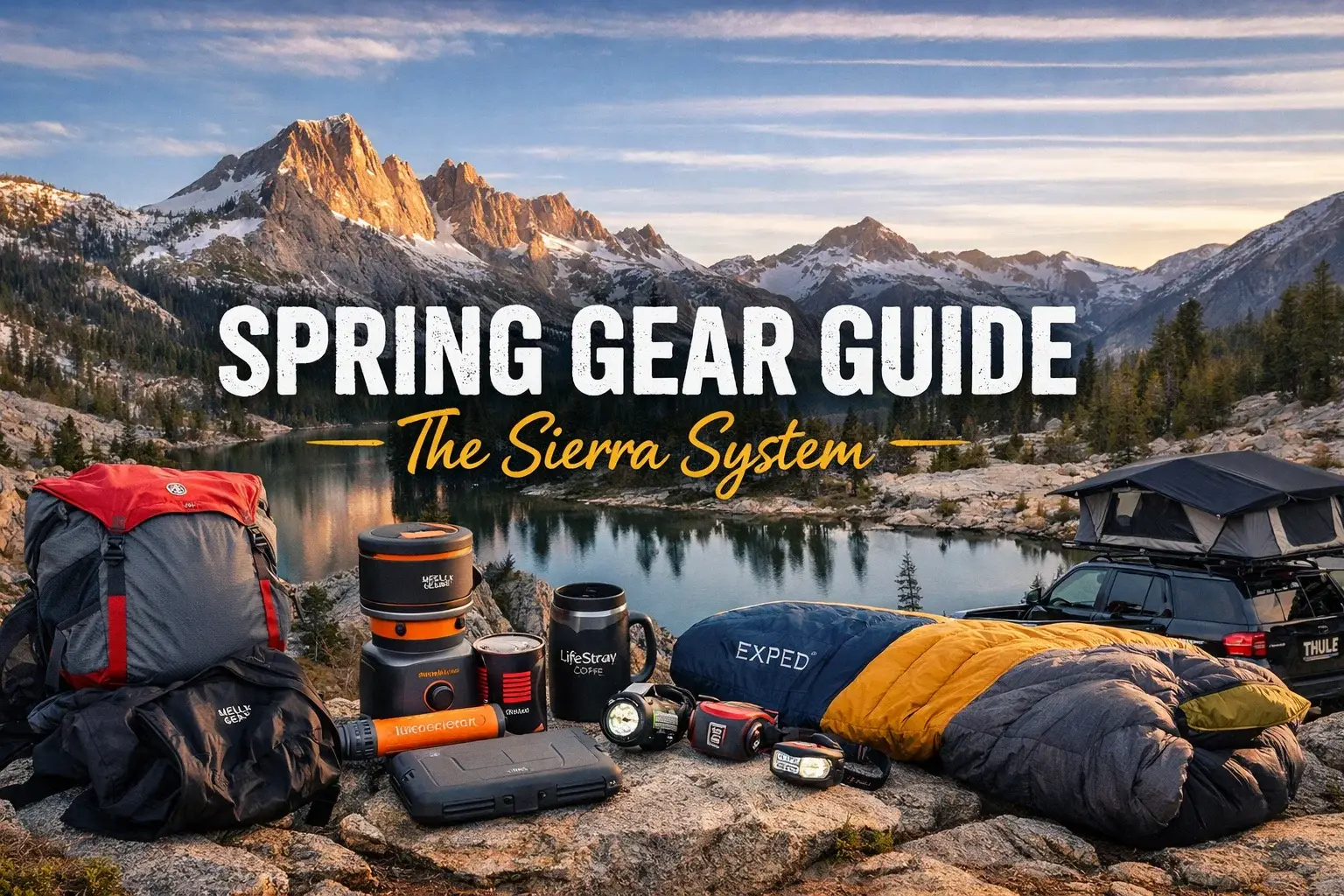
Spring in the Sierra isn’t predictable. One weekend you’re hiking dry granite above Hetch Hetchy, and the next you’re postholing through shaded snowfields above 7,000 feet. That variability is exactly why your gear matters—not as individual pieces, but as a system that adapts with you.
The Spring Gear Guide 2026 isn’t about ranking products or chasing trends. It’s about understanding what’s being built right now—and how it fits into the way we actually move through the mountains.
This guide takes that same philosophy and brings it into a real-world Sierra context—breaking down footwear, layering, sleep systems, and camp tools through the lens of how and where you’ll actually use them.
Because in the Sierra, gear doesn’t just perform—it shapes your experience.
Footwear That Matches the Terrain (Not the Hype)
Spring in the Sierra is rarely predictable, and your footwear needs to reflect that. You’re often moving between dry granite, muddy trail, lingering snow, and fast-moving water—all in the same day. The right shoe isn’t just about comfort—it’s about confidence across changing terrain.
Trail Runners Built for Movement

The La Sportiva Prodigio 2 and LOWA Skyterra feel like the kind of well-balanced, responsive trail shoes built for covering ground. These are the shoes you reach for when the goal is movement—long miles through Yosemite’s high country or sustained trail runs along the eastern rim of Lake Tahoe. They carry that blend of cushion, grip, and responsiveness that keeps your legs fresh while still feeling connected to the trail.
On the more water-ready side, the Astral TR1 Mesh 2.0 leans fully into what spring in the Sierra often throws at you—wet conditions. With its breathable, quick-draining design, it’s the kind of shoe that doesn’t make you think twice about creek crossings or saturated trails. This is a natural fit for early-season days in Desolation Wilderness, especially on climbs toward Gilmore Lake where snowmelt defines the trail.
Hiking Boots: Stability for Load and Distance
When the pack gets heavier and the terrain stretches out, boots still have a place in the Sierra.
The Oboz Katabatic LT and Sawtooth series offer the kind of stability and durability that make sense when you’re carrying weight or moving through uneven terrain. These are dependable options for longer days where comfort and structure matter more than speed.
From LOWA, the Innox GTX and Renegade EVO GTX Mid bring a more weather-ready approach, with waterproof protection that shines in snowmelt conditions and shoulder-season travel.
All four feel right at home on granite-heavy routes—whether you’re moving through Hoover Wilderness or climbing above Sabrina Lake toward the John Muir Trail. The real decision here comes down to GORE-TEX vs. breathability, and how each brand delivers on fit, support, and long-term comfort.
What I’ll be watching closely—and testing across several of these—is how well they transition from a wet Sierra spring into the dry, hot conditions of summer. Because in the Sierra, the best gear isn’t just good for one season—it carries you through the shift.
Hiking Shoes: Trail-First or Everyday Versatility?

There’s a growing middle ground between trail runners and boots, and this is where a lot of Sierra hikers are landing.
Brands like Danner, LOWA, SCARPA, Lems, Oboz, and Meindl are all building hiking shoes that blur the line between performance and everyday wear.
The question becomes:
Do you want a shoe that transitions from town to trail, or one that’s built specifically for the trail?
Danner’s Ground Control and Panorama models lean toward durability and structure, while brands like Lems bring a more minimalist, flexible feel. Oboz, LOWA, and Meindl continue to focus on fit and support, while SCARPA blends in technical performance DNA from their climbing and alpine lines.
This category is evolving quickly—and for many Sierra days, it might be the sweet spot.
Boots for Cold and Technical Conditions
Even in spring, parts of the Sierra still feel like winter.
Baffin continues to build systems designed for cold-weather environments, with insulated boots and hybrid camp slippers that are ideal for early-season trips where temperatures drop fast after sunset.
These aren’t everyday Sierra boots—but when you need them, you’re glad you brought them.
Climbing and Specialty Footwear
SCARPA’s Helix, Vapor V, and Ribelle series show that technical terrain still demands precision.

Even in spring, routes like Cathedral Peak or alpine scrambles above treeline require confidence on rock. This is where performance footwear becomes less about comfort—and more about trust.
Everyday + Recovery Footwear
Not every step in the Sierra happens on the trail.
Kizik hands-free shoes and Lems minimalist designs represent a growing category of recovery and lifestyle footwear built for time around camp, in town, or at the trailhead.
This matters more than you think.
The Sierra isn’t just about the hike—it’s about everything around it—the early mornings, the post-hike recovery, the time spent slowing down after a long day outside.
Sierra Insight
If there’s one takeaway for spring footwear, it’s this: don’t overcommit to one condition. The best shoes this time of year are the ones that can handle a little bit of everything—because in the Sierra, they will have to.
Packs, Storage, and the Art of Organization
Spring gear setups fail more often from disorganization than from lack of gear.
You can have the right layers, the right footwear, and the right plan—but if you’re digging through your pack at every stop or can’t find what you need when conditions shift, the whole experience starts to break down. Organization isn’t just convenience in the Sierra—it’s efficiency, safety, and flow.
Lightweight Packs and Day Systems
There’s a clear trend happening right now: packs are getting lighter, more streamlined, and increasingly built for movement.
Brands like Gossamer Gear, EXPED, and Eagle Creek are all pushing in this direction—less bulk, more intention.
The Gossamer Gear Vagabond and Vetta 20L are great examples of this shift. These are minimalist, efficient day systems built for:
- Day hikes out of basecamp
- Quick summit pushes
- Light overnights where speed and simplicity matter
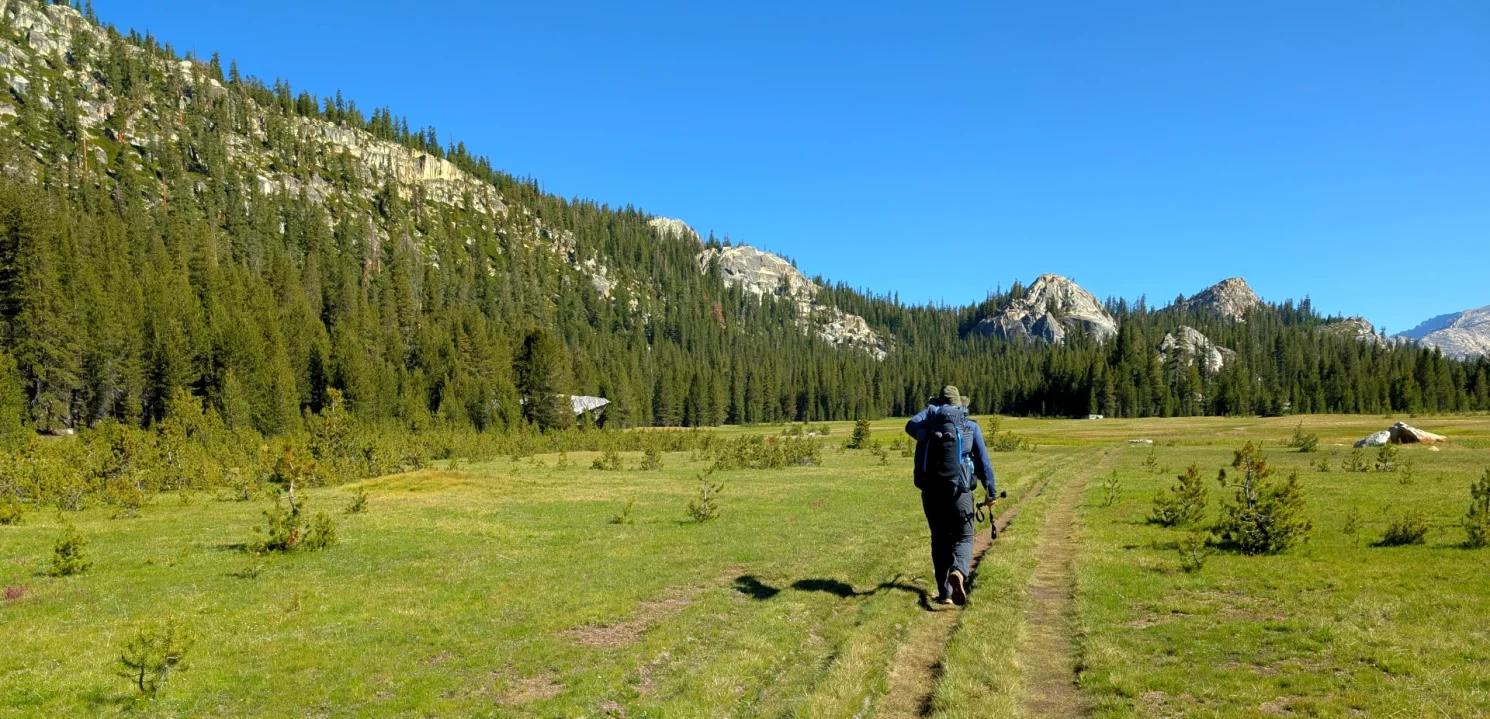
Last summer, we tested the Gossamer Gear 60L and came away impressed with how well it carried on trail—but noted that it wasn’t our favorite when it came to packing and organization at camp. What stands out this year is how much that gap is closing.
The newest generation of packs is solving those trade-offs:
- Smarter pocket layouts
- Better access points
- More adjustable waist and carry systems
You’re no longer choosing between lightweight and functional—you’re starting to get both.
Travel + Storage Systems
If packs are getting lighter, storage systems are going the opposite direction—in the best way possible.
They’re getting more organized, more intentional, and honestly… better looking.
The Eagle Creek Ranger Backpack (26L) and Gear Warrior XE 4-Wheel Carry-On blur the line between travel and adventure, making it easier to move from airport to trailhead without repacking your entire system.
Meanwhile, brands like Matador are dialing in the details:
- Gear cubes
- Waterproof dry bags
- Compact solutions like the Soap Bar Case
These are the pieces that bring structure to what used to feel like chaos.
This category is underrated. The difference between a smooth trip and a stressful one often comes down to how quickly you can find what you need—and how confidently you packed it in the first place.
Modular Systems and the Future of Sierra Travel
Then there’s the next evolution: modular gear systems.
Brands like RUX and Thule are redefining how we think about storage altogether.
The RUX 70L and 40L systems aren’t just containers—they’re adaptable gear platforms built for:
- Car camping setups
- Rafting trips
- Overlanding and multi-day basecamps
Whether you’re a multi-adventure traveler trying to clean up your gear space or someone looking for a system that keeps everything exactly where it belongs, these new designs are changing the game.
This is where Sierra travel is heading—toward systems that are:
- Flexible
- Modular
- Built to move with you across different types of trips
Sierra Insight
If there’s one shift happening in packs and storage right now, it’s this:
Packs are getting lighter and more movement-focused, while storage is becoming more dialed, structured, and intentional.
The combination of the two is what creates a seamless Sierra experience—one where you spend less time managing your gear and more time actually enjoying where you are.
Sleep Systems That Actually Let You Recover
If there’s one category that has seen real innovation, it’s sleep systems.
And in the Sierra, recovery equals performance.
Long days on trail, elevation gain, cold nights, and early starts all add up. If you’re not sleeping well, you feel it the next day—on your legs, in your energy, and in your ability to enjoy where you are.
The reality is, the battle for sleep and recovery in the backcountry is personal—and brands are finally starting to treat it that way.
Sleeping Pads and Real Comfort
The foundation of any sleep system starts with what you’re lying on.
The Sea to Summit Ultralight XR pad leans into weight savings and packability—ideal for those trying to keep their kit light without completely sacrificing comfort.
On the other end of the spectrum, EXPED continues to push what comfort can look like in the backcountry. The Ultra 6.5R and MegaMat systems bring insulation and cushion that make a real difference, especially in shoulder-season conditions.
The EXPED lineup stands out for:
- Cold spring nights in the 30–40°F range
- Car camping and truck-based setups
- Extended basecamp trips where recovery matters more than ounces
This is where you start to feel the shift—sleep systems aren’t just about getting through the night anymore, they’re about actually recovering.
Sleeping Bags: Warmth, Weight, and New Thinking
Sleeping bags are evolving just as quickly.
The Mountain Hardwear new Ghoul 20°F bag continues to hit that balance between lightweight performance and reliable warmth—ideal for Sierra backpacking where every ounce matters.
For wetter conditions, the Marmot New Wraptor brings a synthetic option that performs even when moisture becomes part of the equation.
And then there are systems like the EXPED Terra -18°C, which push deeper into cold-weather capability for those stretching into early-season or higher elevation trips.
But what stands out right now isn’t just temperature ratings—it’s design innovation.
From Marmot’s zipperless concepts to new insulation strategies across brands like Outdoor Vitals, companies are actively listening to what sleepers want:
- Less restriction
- More consistent warmth
- Better comfort throughout the night
Spring reality in the Sierra? You’re often colder than expected. Having a system that accounts for that—and adapts—is critical.
Tents and Shelter Systems: Your Backcountry Reset

Tents are no longer just shelters—they’re part of your recovery system.
The Outdoor Vitals Cirr Tent represents the push toward ultralight innovation, giving backpackers a way to move fast without sacrificing too much protection.
The Sea to Summit Telos Tent shifts the focus toward livability—more usable space, better ventilation, and a design that actually feels comfortable to spend time in.
Meanwhile, EXPED’s Cetus system leans into durability and performance for those pushing into more demanding conditions.
Across the board—from Mountain Hardwear to Marmot, Outdoor Vitals, and EXPED—there’s a clear evolution happening:
- Better airflow
- Smarter layouts
- More usable interior space
Because after a long Sierra day, your tent isn’t just where you sleep—it’s where you reset.
The Bigger Shift: Sleep Is Becoming a System
What’s happening across all of these categories is bigger than any one product.
Brands are recognizing that backcountry sleep isn’t one-size-fits-all. Whether you’re chasing:
- Lighter and warmer systems
- More comfort and space
- Or a better overall tent experience
…the innovation is finally catching up to the reality of what people actually need.
It might cost a bit more to build out a truly dialed sleep system—but the return is real.
Better sleep.
Better recovery.
Better days in the mountains.
Sierra Insight
If there’s one place not to cut corners, it’s your sleep system.
In the Sierra, a good night’s sleep doesn’t just make you comfortable—it sets the tone for everything that comes next.
Camp Kitchens and the Ritual of the Sierra Morning
There’s something about a Sierra morning—steam rising off a lake, the first light hitting granite—that makes your camp setup matter more.
You feel it before the day even begins.
Food and coffee might seem like luxury items when you’re putting in miles in the Sierra, but let’s be honest—this is where we pack our fears and indulge a little. It’s where the experience slows down, even if just for a few minutes.
And increasingly, this category is evolving to match that mindset.

Cooking Systems: Beyond the Boil
Jetboil changed the game years ago with fast, efficient boil systems that made backcountry cooking simple and reliable.
Now, they’re answering the critics.
The newest generation of Jetboil systems is moving beyond just boiling water and into full cooking capability—offering better flame control, more versatility, and a system that actually allows you to prepare real meals instead of just rehydrating them.
Better flame control equals better meals.
And better meals make a difference when you’re deep in the backcountry.
Coffee Systems: This One Matters
Then there’s coffee.
And if you’ve spent any time in the Sierra, you already know—this isn’t just about caffeine.
The Coulee Coffee EcoPour system is one of the most interesting additions to this year’s gear lineup, and it’s pushing backcountry coffee in a new direction.

We’ve talked about Coulee Coffee before, and how their pod system started to shift what was possible in the backcountry. But what stands out now is how they’re continuing to evolve—leaning into new technology while still delivering the kind of flavor you’d expect at home.
They’re not just simplifying coffee—they’re elevating it.
From custom brews to now even espresso-style options, Coulee is inviting you to bring your own coffee experience into the mountains.
If you love good coffee, this is one of those systems that changes your mornings—at home and in the backcountry.
The Sierra Ritual
In the Sierra, slowing down for a cup of coffee at sunrise might be the most important part of your day.
It’s the moment before the miles begin.
The reset after a long climb.
The quiet pause that reminds you why you’re out there in the first place.
Sierra Insight
You don’t need much to eat well in the backcountry—but what you bring shapes the experience.
And sometimes, the smallest “luxury” ends up being the most memorable part of the trip.
Layering Systems for a Changing Sierra
Spring is layering season.
In the Sierra, you can move from cold morning starts to warm midday sun and back into wind or snow within a few hours. What you wear isn’t just about comfort—it’s about adaptability.
And right now, outdoor apparel is going through an interesting shift.
The industry seems to be at a crossroads between improving its environmental footprint and pushing forward with creative, performance-driven designs for a modern outdoor consumer. You’re seeing brands come full circle—bringing back materials like hemp, reducing chemical use with PFA-free gear, and rethinking how products are built.
But in the Sierra, it still comes down to the basics:
movement, breathability, and function.
Outer Layers: Weather-Ready and Adaptable
Your outer layer is your first line of defense—and in spring, it needs to handle just about everything.
The Helly Hansen Odin Infinity Jacket and Outdoor Research Helium series represent two strong approaches to lightweight weather protection. Both are built to be:
- Packable
- Breathable
- Ready for sudden shifts in conditions
These are the pieces you throw on when the wind picks up on a ridge or when a passing storm rolls through in the afternoon.
Sun Protection: The Overlooked Essential

Spring sun at elevation is no joke.
Even with cooler temperatures, exposure adds up quickly—especially on snow or open granite.
The Outdoor Research Astroman collection and ActiveIce Sun Hoodies are built specifically for this kind of environment, offering:
- Lightweight coverage
- Breathability
- All-day comfort in exposed terrain
Protection matters, and this is one of the easiest ways to extend your time outside without wearing yourself down.
Everyday + Performance Apparel
This is where things get interesting.
Brands like Royal Robbins, Marmot, KUHL, and Paka are all approaching layering from slightly different angles—but with a shared focus on versatility.
- Royal Robbins’ hemp collection highlights sustainability and breathability
- Marmot’s PreCip Evo Pro continues to be a reliable rain protection staple
- KUHL layering systems lean into durability and performance
- Paka’s alpaca-based layers bring a unique blend of comfort, warmth, and natural materials
At the same time, brands like Outdoor Research, Marmot, and La Sportiva continue to refine fleece systems, rain shells, and mid-layers that are built specifically for movement in mountain environments.
This is a category we spent a lot of time exploring at OMA, and it’s clear there’s no shortage of innovation right now.
What We’re Watching (And Testing)
For us, this category is less about picking a single “best” layer and more about how systems come together.
We’re actively testing:
- Fleeces from Marmot
- Rain jackets from Outdoor Research and La Sportiva
- Hemp-based and natural fiber systems from brands like Royal Robbins and Astral
These are the pieces that will show up in our field-tested reviews later this year—because how they perform on trail matters more than how they look on paper.
The Bigger Shift: Function Meets Responsibility
Layering systems continue to evolve, and the direction is clear:
- More sustainable materials
- More multi-use functionality
- More thoughtful design
But at the end of the day, the Sierra doesn’t care about trends.
Your layers still need to move with you, breathe when you’re climbing, and protect you when conditions turn.
Sierra Insight
The best layering system isn’t the most technical—it’s the one you don’t have to think about.
Because when your gear works, your focus stays where it should be—on the trail, the views, and the experience unfolding around you.
Power, Light, and Staying Connected (When You Want To)
Spring trips in the Sierra often stretch longer than planned—and when they do, power management starts to matter.
Portable Power Systems
Brands like Nestout are building rugged, modular power banks and lighting systems that are designed for real outdoor use—not just backup battery life. Paired with GoSun’s solar setups, you start to extend your range off-grid, giving you more flexibility when trips evolve beyond the original plan.
Lighting
On the simpler side, the Nite Ize Radiant series delivers compact, reliable lighting for camp setups, late-night organization, or early alpine starts.
These tools aren’t just about convenience—they’re about flexibility. When weather shifts or plans change, having reliable power and light can make all the difference.
Water Filtration and Staying Safe
Water is abundant in the Sierra in spring—but that doesn’t mean it’s safe.
Filtration Systems
The LifeStraw Peak Series continues to offer lightweight, flexible filtration options, from bottles to gravity systems and full kits designed for different trip styles.
This is one of the simplest categories in your kit:
Don’t overcomplicate it—but don’t overlook it either.
Clean water is non-negotiable.
Tools, Accessories, and the “Small Things” That Matter Most
These are the pieces people forget—and then wish they hadn’t.
- Nite Ize Orange Screw anchors (a game-changer for windy camps)
- Nite Ize RunOff waterproof storage
- Nestout PUMP-1 compact air pump
They don’t make headlines, but they quietly solve problems—and often make the difference between a smooth trip and a frustrating one.
Camp Comfort and Lifestyle Gear
These are the pieces that turn a trip into an experience.
- Nomadix towels, ponchos, and camp chairs bring comfort and versatility to basecamp
- The DemerBox waterproof speaker system stands out as one of the more unique additions to this year’s lineup
Built inside a rugged, Pelican-style case, the DemerBox is designed to handle water, sand, and impact—making it a natural fit for lake days, rafting trips, and extended basecamp setups.
Sometimes it’s the small comforts that make the biggest memories.
Vehicle-Based Adventure and Expanding Your Range
More Sierra travelers are blending backpacking with car camping—and the gear is evolving to support it.

Tent Systems
- Napier SUV Tent with Screen Room
- Napier Rooftop Tent
- Thule Basin rooftop systems
These setups open up new ways to experience the mountains:
- Trailhead camping
- Storm-proof overnight options
- Multi-day exploration without constantly moving camp
This is a major shift—and one that’s making Sierra travel more accessible, flexible, and comfortable.
Cycling and Cross-Discipline Gear
The Sierra isn’t just hiking anymore.
Brands like POC and SIDI are helping expand what adventure looks like, with:
- POC helmets and sunglasses focused on safety and performance
- SIDI cycling shoes built for gravel, trail, and mixed terrain riding
We’re seeing more crossover between hiking, biking, and multi-sport travel—and the gear is following that trend.
The Big Shift: Gear Is Becoming a System
If there’s one takeaway from this entire guide, it’s this:
Gear is no longer about individual items—it’s about how everything works together.
- Footwear supports your movement
- Layers adapt to changing conditions
- Sleep systems restore your energy
- Storage keeps everything efficient
- Camp systems create comfort
This is how you move from simply having gear to actually building a Sierra system.
Conclusion: Take What Fits. Leave What Doesn’t.
The best part about where outdoor gear is right now?
You don’t need everything.
What you need is the right combination for how you explore.
Spring in the Sierra is about possibility—waterfalls at full force, trails opening up, and that first real feeling of the season ahead.
Build your system around that.
Take what fits. Leave what doesn’t.
And go explore.