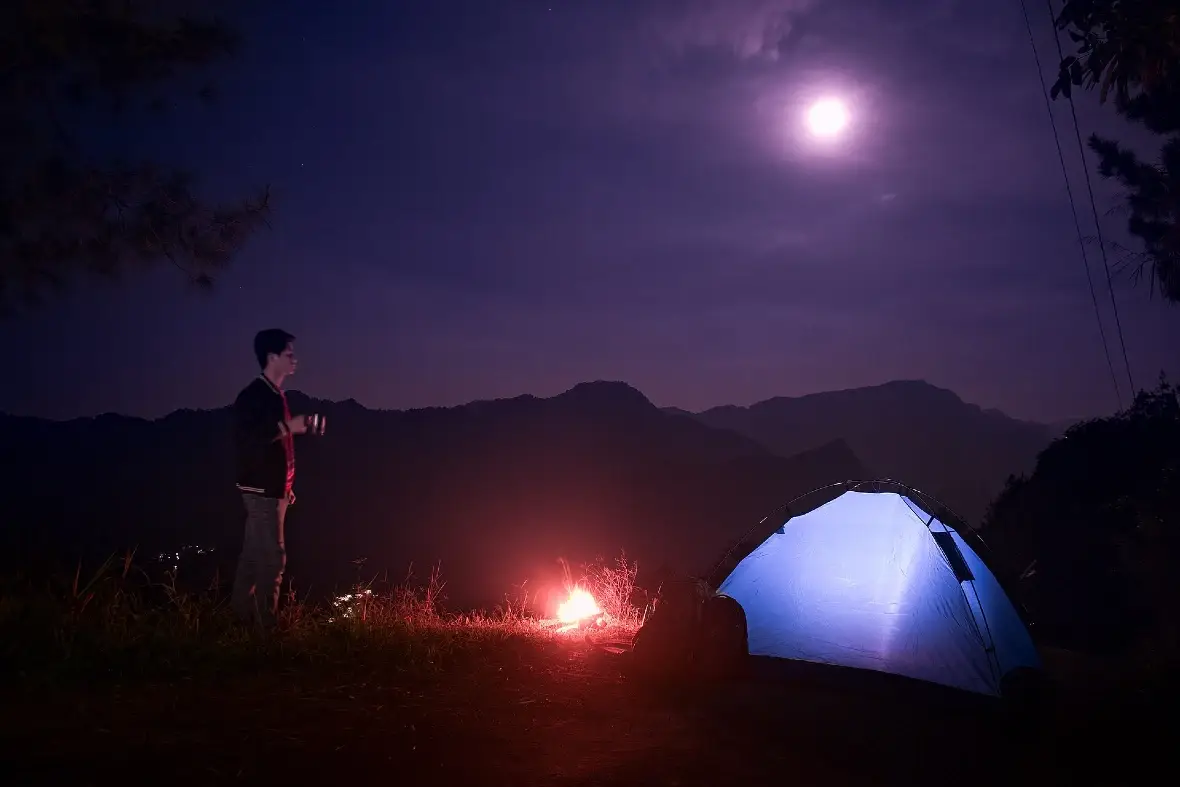
There’s something special about watching the Sierra Nevada change after sunset.
The crowds disappear, temperatures cool, and familiar trails take on an entirely different personality. Granite glows under moonlight, nighttime sounds replace daytime chatter, and it’s not uncommon to spot wildlife that remains hidden during daylight hours.
Night hiking can be an incredible experience, but it also requires a different mindset. Moving more deliberately, preparing the right gear, and understanding how darkness changes the trail are all part of staying safe while enjoying the experience.
Rethinking Your Pace and Navigation Tactics
The biggest adjustment for first-time night hikers is slowing down.
Even on familiar Sierra trails, rocks, roots, and uneven granite become much harder to judge after dark. A good rule of thumb is to reduce your pace by roughly 30 percent and stick to routes you’ve previously hiked during daylight.
Rather than relying on memory, use GPS navigation or topographic maps to confirm your location. Before leaving the trailhead, download offline maps since many mountain areas throughout the Sierra have little or no cell service.
The goal isn’t to hike faster — it’s to hike confidently.
Illumination Strategies: Headlamps vs. Advanced Optics
A dependable headlamp remains one of the most important pieces of night hiking equipment.
For most trail conditions, a headlamp producing between 200 and 350 lumens provides plenty of visibility without creating excessive glare or draining batteries unnecessarily. Reserve higher brightness settings for route finding or difficult terrain.
Many modern headlamps also include a red-light mode. Unlike bright white light, red light helps preserve your natural night vision while reading maps, checking gear, or moving through camp.
For hikers transitioning from casual trail walking to serious nocturnal wildlife observation, relying solely on a high-lumen headlamp is often limiting. Bright lights can disturb wildlife, alter animal behavior, and immediately reduce your own night vision. Instead, many experienced backcountry enthusiasts and guides choose to use professional night vision equipment to observe wildlife and navigate complex terrain with minimal disturbance to the surrounding environment.
Nocturnal Wildlife Protocol
Wildlife encounters are one of the highlights of hiking after dark, but they require extra awareness and respect.
Most Sierra wildlife prefers to avoid people. Observe animals from a distance and never approach them for a closer look.
If you unexpectedly encounter a predator on the trail, remain calm. Never run, as sudden movement can trigger a chase response. Instead, make yourself appear larger, speak in a firm voice, maintain visual awareness, and slowly back away while giving the animal plenty of room to leave the area.
Whenever possible, hike with a partner. Two hikers naturally create more noise, are easier for wildlife to detect, and reduce the chances of surprising an animal on the trail.
Essential Pre-Hike Checklist
Before beginning any evening hike, take a few minutes to prepare:
- Leave your planned route and expected return time with someone you trust.
- Carry extra batteries or a power bank, especially during colder months when battery life drops quickly.
- Dress in layers, as Sierra temperatures can fall rapidly after sunset—even during summer.
- Pack a basic first-aid kit, whistle, emergency blanket, extra water, and a small backup light source.
- Verify that your offline maps are downloaded and your headlamp is fully charged before leaving the trailhead.
Enjoy the Sierra After Dark
Night hiking offers a completely different perspective on the mountains. Familiar trails become quieter, stars become brighter, and the pace naturally slows down.
With thoughtful preparation, intentional use of your lighting, and respect for both the trail and the wildlife around you, hiking after dark can become one of the most rewarding ways to experience the Sierra Nevada.