A Trail Tested Gear Review by Sierra Rec Staff
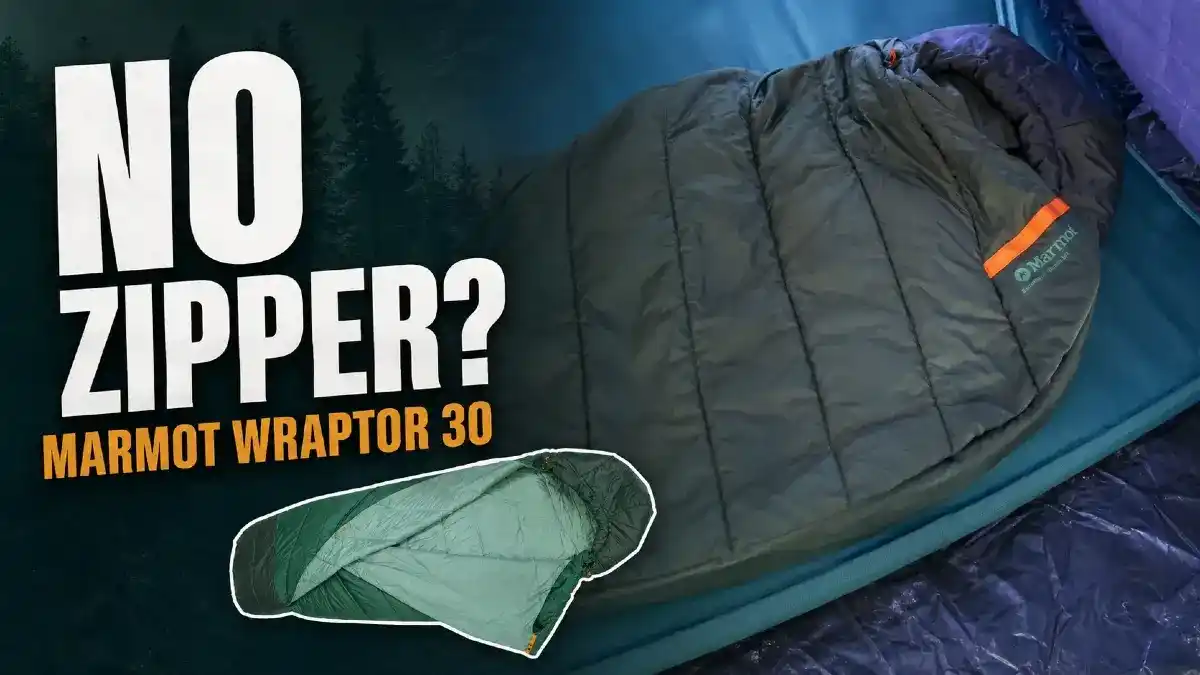
The Marmot Wraptor 30 promises to eliminate one of the most irritating parts of sleeping in a traditional mummy bag: the zipper.
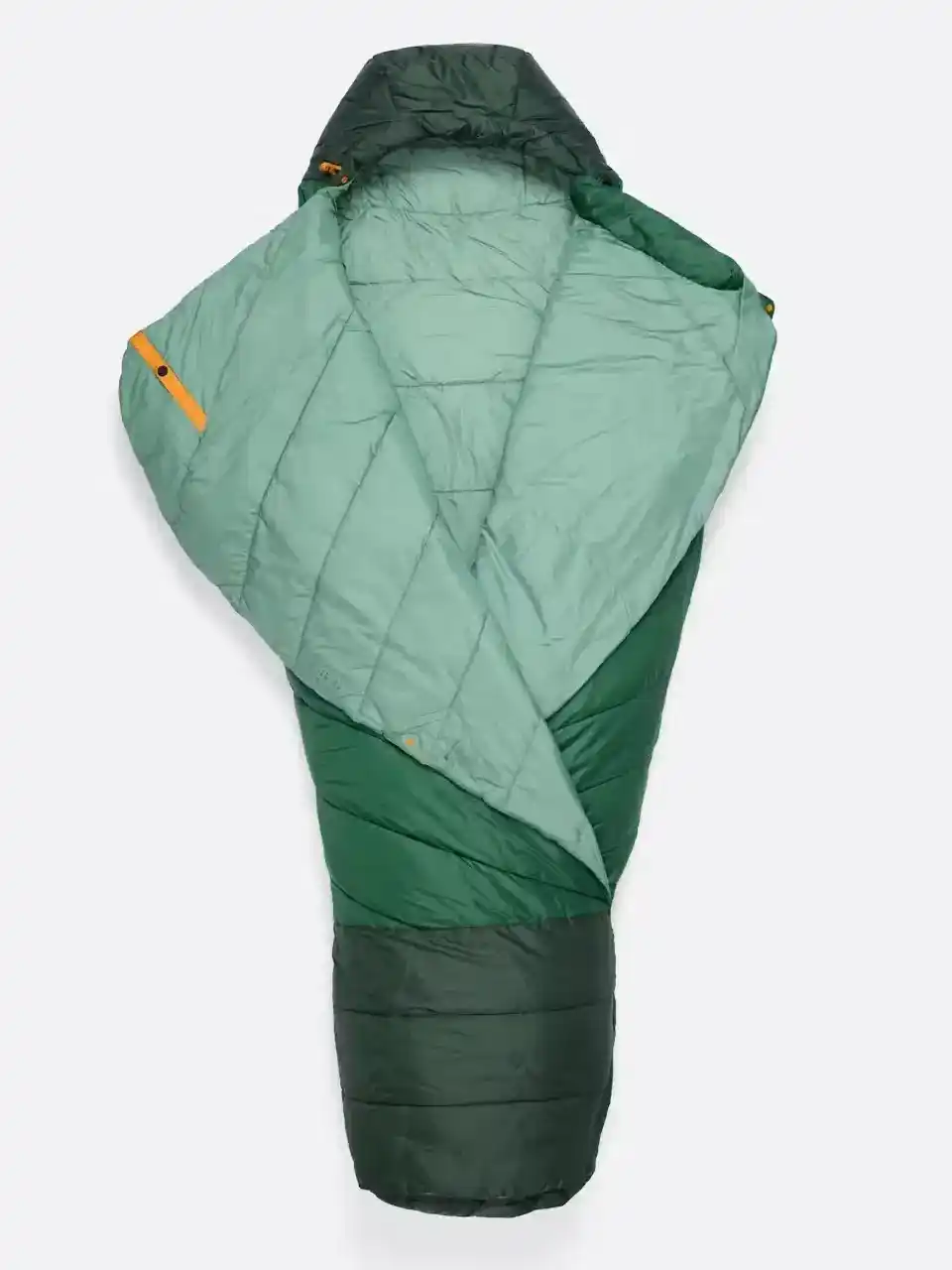
Instead of sealing you inside with a long side zipper, the Wraptor uses overlapping flaps, snaps and a low-profile magnetic closure to create a more adaptable sleeping system. The design is intended to offer the warmth of a mummy bag with some of the freedom and temperature control normally associated with a camping quilt.
As a longtime hammock camper and quilt user, that immediately caught my attention when I first saw the Wraptor at an Outdoor Media Summit event. I have occasionally wanted something warmer and more enclosed than my quilt, but I have never missed fighting with a sleeping-bag zipper in the middle of the night.
The Marmot Wraptor appeared to offer an interesting middle ground.
I chose the synthetic 30-degree version for tent camping, knowing I would pair it with an Exped sleeping pad. My first real test came during a three-night campout at Baker Lake in Washington’s North Cascades, with rain in the forecast, wind in the trees and cool nights ahead.
After three nights in it, I can say the Wraptor passed the field test. It kept me warm, eliminated the zipper battle and gave me more sleeping options than a traditional mummy bag.
It did not, however, replace the freedom of my quilt.
Marmot Wraptor 30 at a Glance
- Temperature rating: 30°F
- ISO tested comfort rating: 36°F
- ISO tested lower limit: 26°F
- Insulation: HL-ElixR Eco synthetic insulation
- Weight: 2 pounds, 10.8 ounces
- Shoulder girth: 60 inches
- Hip girth: 64.6 inches
- Footbox circumference: 53.5 inches
- Sizes: Short, Regular and Long
- Shell and lining: 100% recycled fabrics
- Included: Compression sack and storage bag
- Price at time of review: $199
- Best use: Tent camping, car camping and damp-weather trips
First Impressions
Pulling the Wraptor out of its compression sack, the quality felt consistent with what I have come to expect from Marmot.
The shell and lining have a soft, almost silky feel, while the insulation lofted nicely once the bag was laid across my Exped mattress. At 6 feet, 3 inches tall, I also appreciated having a long version that provided the length I needed without feeling as though my feet were pushing against the end.
The construction details are what distinguish this bag from a conventional mummy.
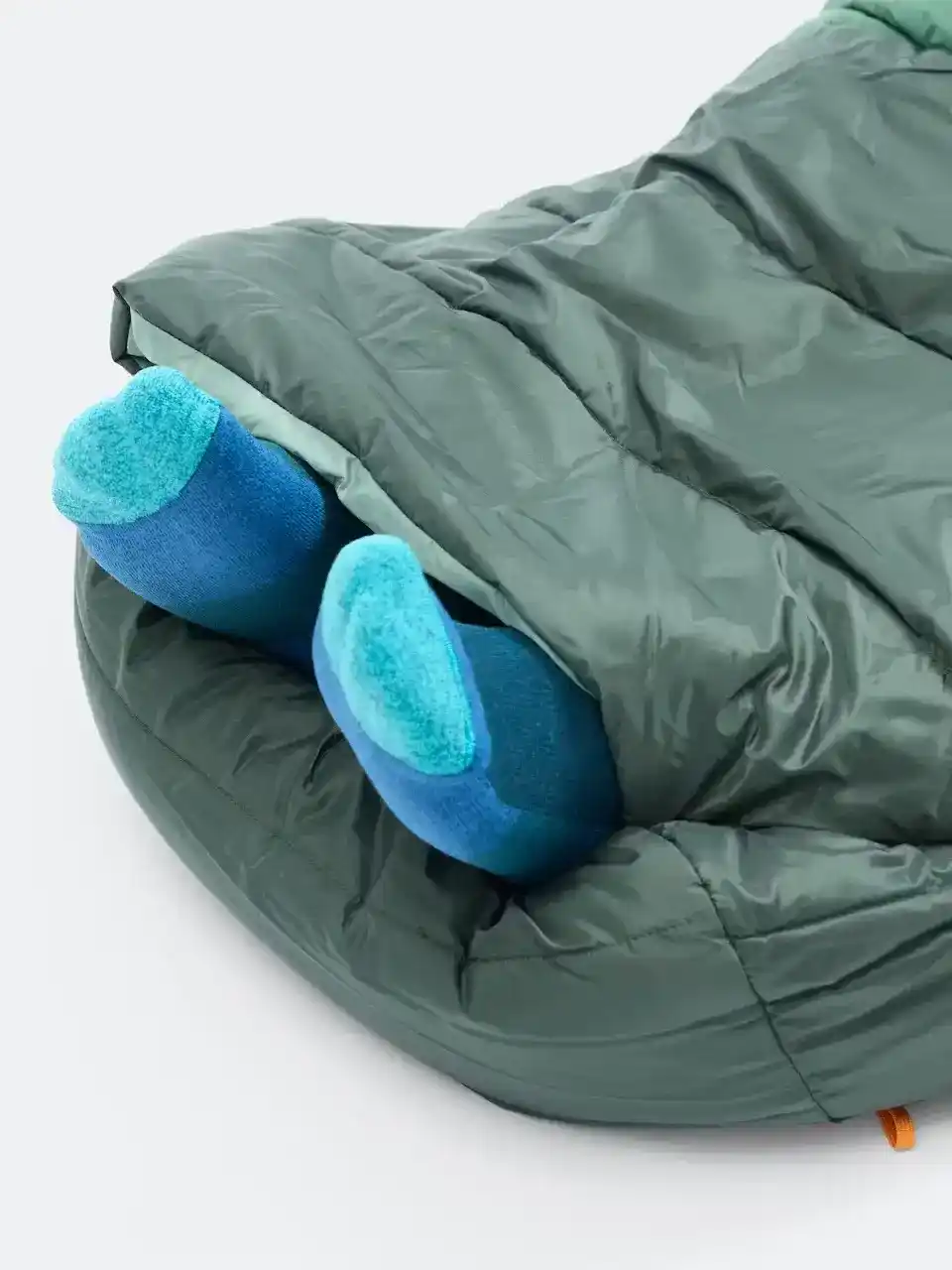
Overlapping upper flaps replace the zipper. A Fidlock magnetic closure near the shoulder and snaps around the hip help secure the bag around your body. Farther down, the enclosed footbox transitions into an envelope-style opening that allows you to vent your feet—or extend a leg when the bag becomes too warm.
There was no zipper to catch the fabric, no metal pull resting against my body and no late-night struggle to locate the slider.
For someone who moved away from traditional sleeping bags partly because of zipper frustration, that alone was exciting.
Sleeping in the Wraptor
Sliding into the bag on the first night was promising.
My legs settled comfortably into the lower portion, while the wraparound flaps gave my upper body more freedom than I normally experience in a mummy bag. The system was intuitive: climb in, pull the flaps across and adjust the coverage based on how much warmth you need.
The shoulder area was tighter than I had envisioned, however.
I am a larger camper with broad shoulders, and I filled nearly every inch of the Wraptor’s 60-inch shoulder girth. I had pictured the zipper-free construction feeling roomy and bed-like. Instead, it felt more like an adaptable mummy bag—less restrictive than the traditional version, but still noticeably shaped around the body.
That distinction matters.
Campers with smaller frames may find the fit generous. Larger or broad-shouldered sleepers should pay close attention to the listed dimensions and, if possible, climb inside one before purchasing.
The Foot Vent Is the Standout Feature
Within a few minutes of settling into the bag, I was already warm. Paired with an R-value 5 Exped pad, the Wraptor’s synthetic insulation created more warmth than I needed during portions of the night.
That gave me an immediate opportunity to test the envelope-style foot vent.
It works.
I could extend one leg through the opening without sitting up, reaching for a zipper or uncovering my entire upper body. My preferred position became sleeping on my side with one arm outside the upper wrap, the hood partially supporting my head and one leg extended through the lower opening.
That position was considerably more comfortable than anything I have experienced in a standard mummy bag.
For warm sleepers, side sleepers and anyone whose temperature fluctuates during the night, this ability to release heat without dismantling the entire sleep system is one of the Wraptor’s best features.
Warmth and Overnight Comfort
The Wraptor kept me comfortably warm throughout the Baker Lake trip. Its synthetic insulation also makes sense for the damp conditions commonly encountered in the Pacific Northwest.
Synthetic insulation is generally bulkier and heavier than comparable down, but it offers dependable performance when moisture and humidity become part of the trip. At Baker Lake, where rain and damp forest air were always possibilities, that reliability was more valuable to me than shaving every possible ounce.
With the Wraptor placed over an R-value 5 pad, I was almost too warm at times—even though this was the 30-degree model.
That does not mean every camper will have the same result or that the bag should be treated as warmer than its rating. Sleeping-bag comfort depends on the sleeper, clothing, shelter, humidity, wind exposure and the insulation underneath the bag. Marmot lists an ISO comfort rating of 36°F and a tested lower limit of 26°F.
My test confirmed that the bag could create a warm, comfortable sleeping environment in cool and damp forest conditions. It was not a controlled test of the bag at its temperature limit.
Where the Wraptor Fell Short for Me
The zipper-free design solved one of my biggest complaints about mummy bags, but it did not eliminate the other: limited legroom.
After years of sleeping under a quilt, I have grown accustomed to moving my legs freely. The Wraptor’s footbox extends higher than I prefer, keeping more of my lower body enclosed. Although the foot vent provides an excellent escape route for one leg, the overall lower section still feels like a sleeping bag.
The shoulder width was my other limitation.
The overlapping flaps gave me flexibility in how tightly I wrapped the bag, but the basic dimensions did not provide the spacious upper-body experience I had imagined. Again, this is partly a body-fit issue rather than a failure in the design. At 6 feet, 3 inches with broad shoulders, I am near the edge of what many standard sleeping systems accommodate comfortably.
For me, the Wraptor landed between two categories:
- More comfortable and adaptable than a conventional mummy bag
- Warmer and more enclosed than a quilt
- Not as unrestricted as my preferred quilt setup
That middle ground will be exactly what some campers are looking for. It simply did not become my new favorite sleeping system.
Wraptor vs. a Traditional Mummy Bag
The Wraptor is an easy winner for campers who dislike zippers but still want the familiar shape and heat retention of a sleeping bag.
The overlapping flaps allow you to regulate upper-body warmth without opening a long zipper. The foot vent provides another effective way to release heat, and the magnetic shoulder closure is easier to manage from inside the bag than many zipper systems.
Compared with a traditional mummy bag, the Wraptor offers:
- Easier entry and exit
- No snagged zipper
- Quieter nighttime adjustments
- Better options for extending an arm or leg
- More flexible temperature regulation
It retains, however, the enclosed lower-body shape that defines a mummy-style sleeping bag.
Wraptor vs. a Camping Quilt
A quilt still provides more freedom.
Most backpacking quilts eliminate the bottom insulation and rely on the sleeping pad to insulate you from the ground. That creates a lighter, more open system with greater room for knees, legs and position changes. It is one reason I have preferred quilts for years.
The tradeoff is draft management. A poorly secured quilt can allow cold air to enter when you roll over, and some sleepers never feel as comfortably enclosed beneath a quilt as they do inside a sleeping bag.
The Wraptor reduces that concern. Its lower section stays enclosed, while the upper flaps provide adjustable coverage. Campers interested in trying a quilt but nervous about drafts may find the Wraptor to be a useful bridge between the two systems.
How Your Sleeping Pad Changes the Experience
A sleeping bag is only one part of an effective sleeping system.
The insulation beneath you can be just as important as the insulation surrounding you. Once your body compresses the bottom of a sleeping bag, that insulation loses much of its ability to trap warm air. The sleeping pad becomes the primary barrier between you and the cold ground.
For this test, I paired the Wraptor with an Exped pad rated around R-5. That was a substantial amount of ground insulation for the conditions and contributed to how warm the overall system felt.
When planning your setup, consider the complete system:
Summer and Mild Conditions
A lower-R-value pad may provide enough ground insulation while allowing the Wraptor’s ventilation features to handle warmer nights.
Shoulder-Season Camping
A pad in the R-4 to R-5 range can create a significantly warmer system for cool spring and fall trips. Warm sleepers may use the upper flaps and foot vent frequently.
Cold Conditions Near the Bag’s Rating
Do not rely on the bag’s temperature number alone. Use an appropriately insulated pad, dry sleep clothing and a shelter that limits wind exposure. Also remember that the 30-degree label is not the same as Marmot’s listed 36-degree comfort rating.
The pad and bag should be evaluated as a system rather than as two unrelated pieces of gear.
Who Is the Marmot Wraptor 30 Best For?
The Wraptor should appeal most to:
- Campers who hate sleeping-bag zippers
- Restless sleepers who frequently adjust their coverage
- Side sleepers who want more flexibility than a mummy bag provides
- Warm sleepers who value easy foot and upper-body ventilation
- Campers moving from a sleeping bag toward a quilt-style system
- Tent and car campers expecting damp or humid conditions
- Campers who prefer synthetic insulation for its wet-weather reliability
It may be less appealing to:
- Broad-shouldered sleepers looking for a genuinely roomy bag
- Campers who need substantial freedom through the legs
- Experienced quilt users who prioritize an open sleeping position
- Ultralight backpackers focused primarily on reducing weight and packed volume
Trail-Tested Verdict
The Marmot Wraptor Synthetic 30 is an innovative sleeping bag that addresses several real problems.
The zipper-free closure is not a gimmick. It makes entering, exiting and adjusting the bag easier. The overlapping flaps provide useful control over upper-body coverage, and the foot vent became my favorite part of the design. Marmot’s materials and construction also gave the bag the comfortable, quality feel I expected.
Most importantly, it kept me warm through three nights of cool, damp camping at Baker Lake.
My limitations came down to fit and sleeping style. The shoulder area was tighter than I hoped for, and the higher footbox restricted more of my leg movement than I prefer after years of sleeping beneath a quilt.
My field-test grade is a solid pass.
I will keep the Wraptor in my gear collection, particularly for damp tent-camping trips when I want more enclosure and reliable synthetic insulation. But when comfort and freedom of movement are my highest priorities, I will probably still reach for my quilt first.
The Wraptor did not replace my preferred sleep system. It did show me that a sleeping bag can be warmer, quieter and much easier to live with when the zipper disappears.
Disclosure: Sierra Rec Magazine received this product for field testing. This review reflects our independent, real-world experience with the gear. Some links may be affiliate links, which may provide Sierra Rec Magazine with a small commission at no additional cost to the reader.