A Sierra Mindset Meets PNW Conditions
I’ll be honest—this is my first time wearing anything from Oboz.
And it didn’t happen in the Sierra.
It happened here in the Pacific Northwest, where “trail conditions” mean something completely different. Back in the Sierra Nevada, waterproof shoes were a seasonal tool—something you’d think about for early summer crossings or specific hikes like the push toward Susie and Gilmore Lakes in Desolation Wilderness.
Up here? It’s every step.
Mud, standing water, slick rock—it’s just part of the day.
So when I picked up the Katabatic RT Low GTX, this felt like the right place to figure out what a true waterproof trail shoe is supposed to do.
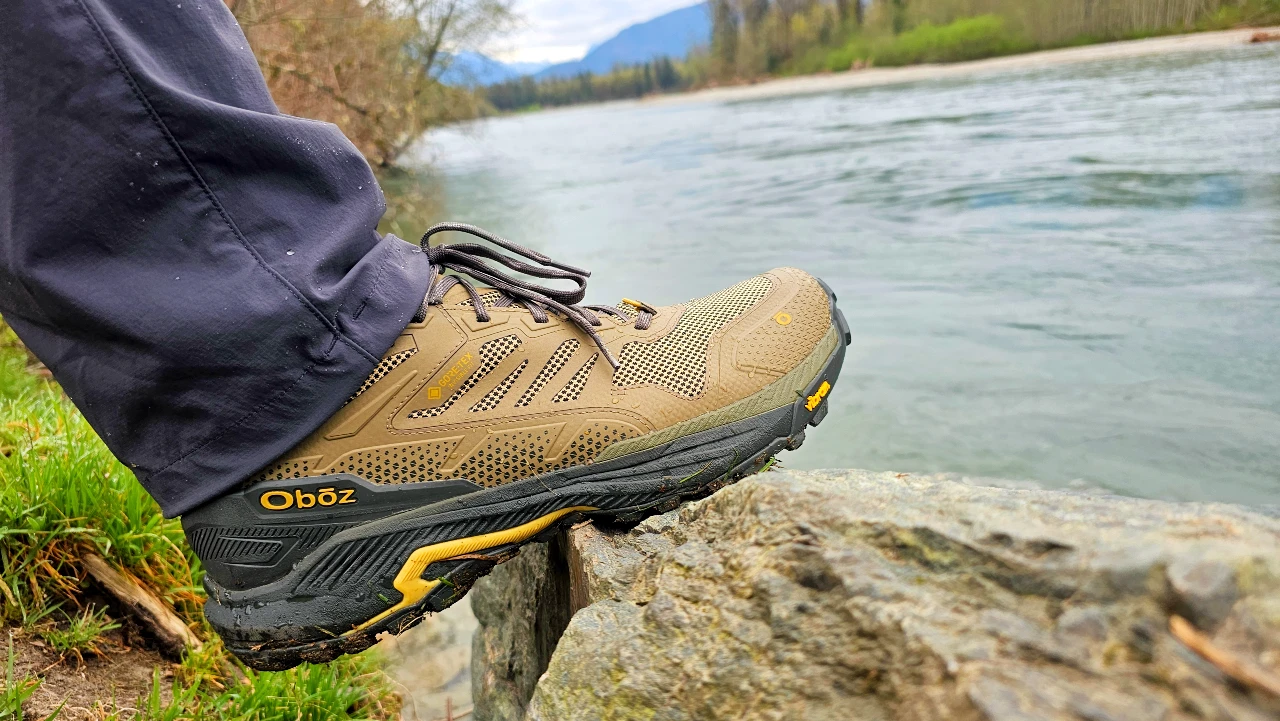
Quick Take
Best For: Wet trails, mixed terrain, fast-moving day hikes
What I Liked: Traction, waterproof performance, all-day comfort
What I Didn’t: Slight tightness in forefoot out of the box
Would I Bring It Again? Yes—especially in the PNW or shoulder seasons in the Sierra
Where I Tested It
- Diablo Lake, North Cascades National Park, Washington
- Waterfall pull-offs and wet trail systems outside North Cascades National Park
- Mixed terrain: mud, loose rock, wet gravel, shallow river crossings
First Impressions Out of the Box
Right away, the shoe looks the part.
You can see the sealed construction, and paired with the Vibram sole, it has that clean, ready-for-anything look without feeling bulky. Nothing overbuilt—just dialed.
First step in?
Comfortable, with one note: a little tight through the ball of the foot. Not a dealbreaker, and honestly pretty typical for a performance-oriented trail shoe. After a couple miles walking dirt and gravel trails around town, things started to settle in.
Good enough to take it straight into the mountains.
Performance in the Field
Traction (The First Thing You Notice)
Before I even tested the waterproofing, the traction stood out.
Wet rocks, slick dirt, loose trail—no hesitation. I hopped off trail to check out a waterfall and immediately trusted the grip. That’s usually where shoes get exposed, and the Katabatic handled it without a second thought.
The Vibram Megagrip setup does exactly what you want it to do here.
Off-Trail Stability
Things got more interesting around Diablo Lake.
I ended up off trail in a washed-out riverbed—loose rock, uneven footing, slick surfaces. The kind of place where a shoe either feels planted or sketchy real fast.
These stayed stable.
Not a heavy boot feel, but enough structure to move confidently without slowing down.
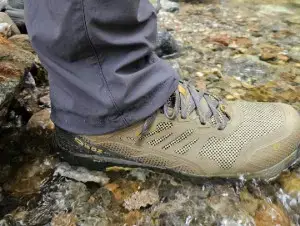
Waterproof Test (Real One)
Eventually, I hit what I was looking for—a river crossing.
About 8–10 feet across, 6–8 inches deep.
Perfect.
I stepped in expecting to find the weak point. And for the most part, it held up exactly as advertised. Water stayed out, feet stayed dry… until I found a deeper pocket and went over the top of the shoe.
Top of the sock got soaked—but here’s what stood out:
The shoe didn’t flood.
That matters more than people think.
All-Day Comfort
After about 6 miles of wet, muddy trail in steady rain, the Katabatic settled into what I’d call “forget they’re on your feet” territory.
No hotspots. No fatigue.
And at the end of the day, I pushed a fast 3-mile stretch chasing sunlight—moving quick, not thinking about footing—and the shoe handled the pace without any issue.
That’s where lightweight + support really comes together.
What Surprised Me
How well it balanced everything.
Waterproof shoes can feel heavy, stiff, or overbuilt. This didn’t. It felt more like a fast trail shoe that just happens to handle wet conditions.
That’s not easy to pull off.
Where It Falls Short
The only early note is the forefoot tightness out of the box.
If you’ve got a wider forefoot, this is something to pay attention to. It improved slightly with use, but it’s worth trying on before committing.
Sierra vs. Cascades: Why This Shoe Makes Sense Now
This is where things clicked for me.
In the Sierra, I don’t reach for waterproof shoes often. Most of the time, you’re dealing with dry trails, granite, and predictable conditions.
In the Cascades?
Completely different game.
- Constant moisture
- Muddy trails
- Frequent water crossings
- Slick surfaces
The Katabatic RT Low GTX feels built for this environment.
But it also opens up a new role in the Sierra—early season hikes, shoulder season trips, and anywhere water becomes part of the experience instead of an obstacle.
Who This Shoe Is For
Great Fit For:
- PNW hikers dealing with wet trails regularly
- Sierra hikers expanding into shoulder season trips
- Fast-moving day hikers who want waterproof protection without bulk
Not Ideal For:
- Ultralight purists counting every ounce
- Hot, dry summer-only Sierra hikers
Final Verdict
The Katabatic RT Low GTX isn’t trying to be everything—it’s built for movement in real trail conditions.
And in the Pacific Northwest, that means wet, uneven, unpredictable terrain.
After a full day of testing, this is a shoe I’ll keep reaching for when the forecast doesn’t matter—and the trail is going to be soaked either way.
Key Specs (Quick Look)
- Weight: 15.2 oz
- Heel Drop: 8mm
- Waterproofing: GORE-TEX Invisible Fit
- Outsole: Vibram Megagrip
- Cushioning: Oboz Kinertia
Explore More Gear + Plan Your Next Trip
→ Start here: Plan Your Sierra Nevada Trip
→ Explore more: Sierra Rec Gear Guide
→ Looking for early-season hikes? Check out our Shoulder Season Trail Picks