There are a few places in the Sierra where the road itself becomes the adventure.
Sonora Pass is one of them.
f you’re planning on driving Sonora Pass for the first time—or returning to experience it differently—this guide will walk you through what to expect, where to stop, and how to make the most of one of California’s most scenic mountain drives.
Rising to over 9,600 feet, Sonora Pass is one of the highest and steepest mountain crossings in California—and one of the most dynamic ways to experience the Sierra Nevada.
This isn’t a drive you rush through.
It’s a place where:
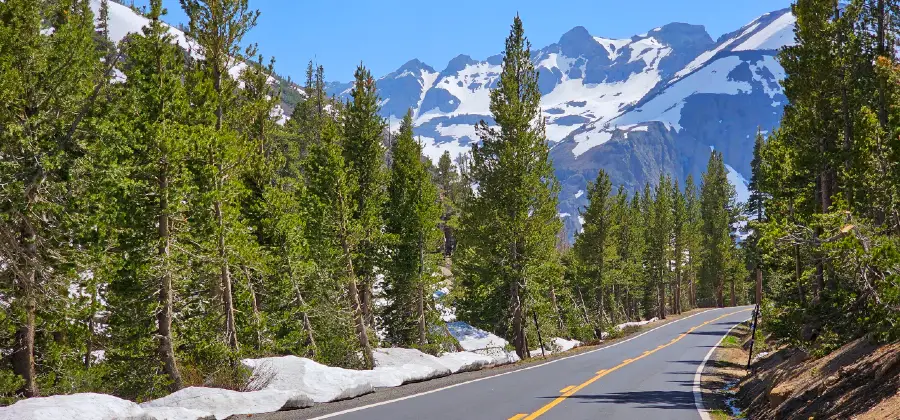
- Snow can line the road well into summer
- Waterfalls appear after every storm
- Meadows flood with spring runoff
- And every turn reveals something different
If you’ve never driven Sonora Pass, this guide will show you how to experience it the right way—from first-time visitors to seasoned Sierra explorers.
Why Sonora Pass Matters
Most people think of the Sierra in terms of destinations.
Yosemite. Lake Tahoe. Mammoth Lakes.
If you’re exploring the region, it’s worth taking time to explore Yosemite National Park and plan a few days around the lake or high country routes.
But the passes—these high mountain corridors—are what give us access to everything in between.
Sonora Pass is one of the most important of those corridors.
It connects:
- The Eastern Sierra near Bridgeport
- The Western Sierra foothills near Sonora
- And direct access into wilderness areas like Emigrant Wilderness, Carson-Iceberg Wilderness, and Hoover Wilderness, all offering incredible options for backpacking and day hiking.
It’s also one of the most dramatic drives in the region.
Steep grades. Narrow turns. High elevation.
This is the Sierra at full intensity.
At a Glance: Sonora Pass
- Elevation: 9,624 feet
- Highway: CA-108
- Open Season: Typically late spring through fall (weather dependent)
- Drive Time: ~2–3 hours end-to-end (without stops)
- Best Time to Visit: Late spring through early fall
👉 For current conditions, always check Caltrans before heading out.
Is Sonora Pass Open Right Now?
Sonora Pass is typically closed during the winter months due to heavy snow and usually reopens in late spring or early summer.
However, conditions can change quickly.
Even after opening, late-season storms can temporarily close the pass again, especially in May and early June. Snowfall, avalanche debris, and road safety conditions all play a role in whether the road remains open.
👉 The best way to check current conditions is through Caltrans road updates before you travel.
If you’re planning your trip, it’s always smart to stay flexible and have a backup route in mind.
The Sonora Pass Drive: What to Expect
Driving Sonora Pass isn’t like cruising over a typical highway.
It’s one of those drives where you start to realize pretty quickly… you’re not just trying to get somewhere—you’re in the middle of something.
It’s an experience that changes mile by mile.
East Side (Bridgeport to Summit)
Starting near Bridgeport, the landscape transitions quickly:
- High desert terrain
- Open meadows
- Gradual climb into alpine country
As you approach Leavitt Meadow, the scenery begins to open up. A Campground and wooden bridge over the river gives backcountry explorers access tot he Hoover wilderness and great fishing, backpacking and hiking destinations.
This is where many Sierra explorers slow down for the first time. Leavitt Meadows and Leavitt Meadows lookout as you start the climb are destinations that stop us on every trip.
Summit Zone (High Alpine Terrain)
Near the top of the pass:
- Snowbanks can linger into early summer
- Pull-offs may be limited in spring
- The Pacific Crest Trail crosses near the summit
- Off Road Explorers discover stunning lakes and out of this world vista views.
This is where Sonora Pass earns its reputation. Steep rugged mountain terrain, scrapped raw by weather and glacial decay.
The road steepens. The views expand. The Sierra feels big.
West Side (Summit to Pinecrest)
The descent into the western Sierra is one of the most dramatic sections of road in California. Deep canyons, wild rivers and sharp turns lead you through Kennedy Meadows and Donnell Reservoir fed by the stunning Middle Fork Stanislaus River.
Expect:
- Sharp grades (use lower gears)
- Narrow winding sections
- Waterfalls cascading beside the road in spring
As you drop lower, you’ll reach forested terrain and eventually the Pinecrest area.

Best Stops on Sonora Pass
These are the stops that define the experience.
Leavitt Meadow Overlook
One of the most underrated viewpoints in the Sierra. I still remember the first time I actually stopped here after driving past it more times than I’d like to admit. It changed the way I approached this entire pass.
From this overlook, you’ll see:
- A wide alpine meadow below with a flood plain view of the river
- Snow-covered peaks as far back as Northern Yosemite Boundary
- Seasonal waterfalls flowing from above missed on nearly every drive by.
👉 If you’ve driven past this before, you’re not alone. Many people miss it.
Leavitt Lake (Seasonal Access)
A rugged road leads toward Leavitt Lake.
In early season:
- The road may be partially snow-covered
- Hiking access is often possible before full vehicle access
This is a great early-season adventure if you’re prepared for mixed conditions.
Upper Pass Pull-Offs
Between Leavitt Meadow and the summit, keep your eyes open.
Some of the best experiences happen at unnamed stops:
- Small roadside waterfalls
- Snowmelt streams
- Scenic viewpoints without signs
👉 This is where slowing down matters.
Kennedy Meadows
Kennedy Meadows is one of the most popular access points on Sonora Pass.
Here you’ll find:
- Camping
- Fishing
- Access into Emigrant Wilderness
It’s also a great place to take a break, especially on longer drives.
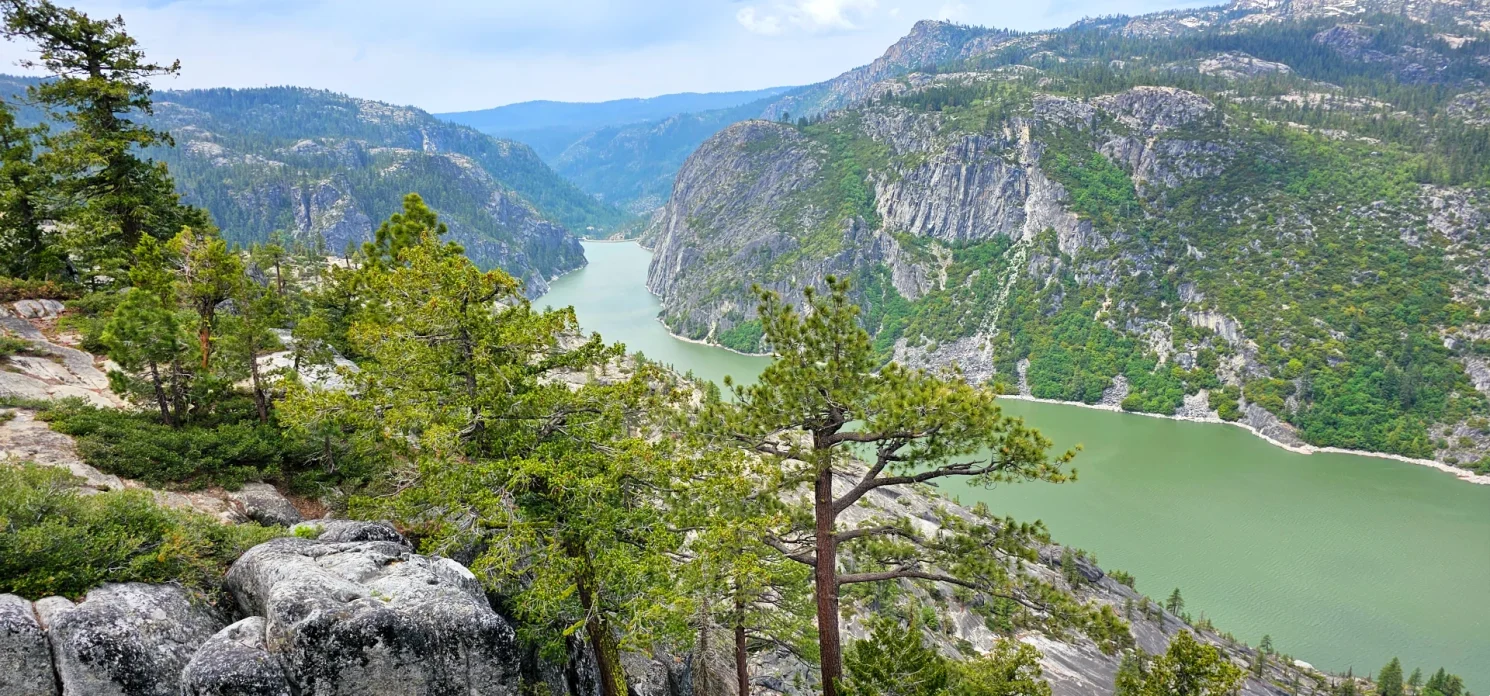
Donnell Reservoir Overlook
One of the most overlooked stops on the entire route.
The short paved walk leads to a viewpoint high above Donnell Reservoir.
In spring:
- Waterfalls cascade into the canyon
- Snow still lines the upper peaks
It’s a quick stop—and one of the best views on the drive.
How Long Does It Take to Drive Sonora Pass?
Driving Sonora Pass end-to-end typically takes around 2 to 3 hours without stops.
But that’s not how most people experience it.
If you’re planning to actually explore the pass—stopping at overlooks, walking short trails, and taking in the scenery—you’ll want to give yourself at least half a day.
Many visitors turn it into a full-day experience, especially in spring and early summer when waterfalls and snowpack create constantly changing views along the route.
How to Experience Sonora Pass Differently
Most people drive Sonora Pass like they’re trying to get somewhere.
I did too, at first.
I’d head over the pass with a plan—maybe trying to get to Pinecrest, maybe trying to get over to Bridgeport—and I’d tell myself I’d stop “next time.” Next pullout. Next waterfall. Next trip.
And somehow… I’d end up driving the whole thing and missing half of what makes this place special.
It took me a few trips to realize something simple:
Sonora Pass isn’t the road to somewhere else.
It is the experience.
Stop When It Feels Right
Not just at the obvious viewpoints.
Not just where there’s a sign or a parking lot.
Some of my favorite moments on Sonora Pass have come from those random, unplanned stops—the wide shoulder in the road where you hear water rushing but can’t quite see it yet… or that quick glimpse of a waterfall through the trees that makes you think, “Was that something?”
Pull over.
Walk a few steps.
More often than not, there’s something there worth seeing.
Step Off the Road (Just a Little)
You don’t need a full hike to experience the Sierra differently.
Sometimes it’s five minutes. Ten at most.
Step past the edge of the road, get away from the sound of cars, and everything changes.
The air feels quieter.
The water sounds louder.
The scale of the mountains starts to sink in.
I’ve had moments where I walked just far enough to sit on a rock above a creek, and it felt like I had the entire canyon to myself—even with cars passing just out of sight.
Let the Day Unfold
This is the hardest part for most people.
We plan our trips around getting somewhere—checking off stops, making sure we “see everything.”
But Sonora Pass doesn’t really work that way.
Some of the best days I’ve had up here were what we used to call “dink around days.”
No real plan. Just a direction.
We’d drive, stop, wander, maybe find a trail, maybe sit by a river longer than we expected. Eventually we’d end up somewhere like Bridgeport for a burger, or back down the hill as the light started to fade.
Those days never felt rushed.
They felt full.
If you take anything from this guide, let it be this:
Slow down.
Stop more than you think you should.
And give yourself just enough time to let Sonora Pass show you what makes it special.
Spring Travel on Sonora Pass (What Makes It Special)
Spring is one of the most unique times to visit.
But it comes with tradeoffs.
What You’ll Experience
- Peak waterfalls
- Snow alongside the road
- Fewer crowds
- Changing conditions
What to Watch For
- Limited pull-offs due to snow
- Wet or icy road sections
- Rapid weather changes
- Snowpack over moving water (use caution when walking)
👉 Learn more about timing your trip in our guide to plan your Sierra Nevada trip.
How Sonora Pass Compares to Other Sierra Passes
Each Sierra pass offers something different.
- Tioga Pass: Gateway to Yosemite’s high country
- Ebbetts Pass: Narrow, quiet, and remote
- Carson Pass: More accessible, year-round travel
Sonora Pass sits somewhere in between.
It’s:
- More rugged than Tioga
- More accessible than Ebbetts
- Less crowded than Yosemite routes
Nearby Adventures
Sonora Pass is just the beginning.
From here, you can explore:
- Emigrant Wilderness backpacking routes
- Hoover Wilderness day hikes
- Pinecrest Lake recreation
- Eastern Sierra access toward Bridgeport and Highway 395
👉 👉 Browse more Sierra road trip itineraries and start building your route through the region
Planning Your Trip
Before heading out:
- Check current road conditions
- Pack extra layers and gear
- Bring food and water
- Plan flexible timing
👉 👉 For a full breakdown, visit our guide on how to prepare for a Sierra trip
FAQ: Sonora Pass Travel Guide
Is Sonora Pass open year-round?
No. It typically closes in winter due to snow and reopens in late spring or early summer depending on conditions.
When does Sonora Pass usually open?
Sonora Pass typically opens between late May and early July depending on snowpack and road conditions. In lighter snow years, it may open earlier.
Is Sonora Pass safe to drive?
Yes—but it requires attention. Steep grades and sharp turns make it unsuitable for large trailers.
What is the best time to visit?
Late spring (for waterfalls and snow) or early fall (for color and quieter conditions).
Are there places to stop along the way?
Yes—but some are unmarked. Part of the experience is discovering your own stops.
Why Sonora Pass Is Worth the Drive
There are easier roads across the Sierra.
There are more famous destinations.
But there are very few places where the drive itself becomes the reason you go.
👉 Ready to explore more? Start planning your next trip with our complete Sierra Nevada travel planning guide
Sonora Pass is one of those places.
If you take your time…
If you stop when it matters…
If you let the day unfold instead of rushing through it…
You’ll understand why people keep coming back.
