Guide to Eldorado National Forest Lakes and Rivers
Discover Eldorado National Forest: A Haven for Water-Based Adventures
Rising up out of the Centra Valley lies the heart of the Sierra Nevada in California’s Eldorado National Forest a paradise for outdoor enthusiasts. With 888 lakes, reservoirs, and ponds, along with 2,853 miles of streams and rivers, this vast expanse offers unmatched opportunities for recreation, exploration, and relaxation. The forest its self is managed through a connected resource group of four ranger district: The Georgetown, Pacific, Placerville and Amador Districts help manage the land and provide access and guidance for all guests of these beautiful public lands.
Eldorado National forest also works in conjunction with the Lake Tahoe Basin Management team managing Desolation Wilderness. As well has oversight of the Mokelumne wilderness and Carson Pass areas off Hwy 88.
A Glimpse of the Aquatic Landscape
The forest’s lakes waterfalls and rivers are nourished by melting snow in the Sierra Nevada, creating a series of breathtaking alpine and subalpine environments.
These bodies of water serve as the lifeblood of the region, offering:
Fishing Opportunities: Abundant populations of rainbow, brown, and brook trout provide year-round fishing experiences in lakes and a seasonal bounty in rivers.
Boating Adventures: From paddling at serene locations like Woods and Wrights Lakes to sailing and water skiing at larger reservoirs like Silver and Union Valley, there’s something for every type of boater.
Riverside and Lakeside Camping: Over 55 Eldorado managed campgrounds provide perfect staging areas for adventures on water and land alike.
The Story of Lakes and Rivers in the Eldorado National Forest
Eldorado National Forest is renowned for its shimmering lakes and flowing rivers, but beneath their serene beauty lies a story of innovation, transformation, and conservation. These waters are not only recreational havens but also vital components of California’s water management history.
A Legacy of Engineering and Exploration
In the late 19th and early 20th centuries, California faced the challenge of managing its seasonal snowmelt to support burgeoning urban centers and agricultural valleys. Engineers and developers turned to the Sierra Nevada’s natural lakes, enhancing them with dams to create reliable reservoirs. Lakes like Union Valley and Ice House Reservoir, along with those in the Desolation Wilderness, became essential water sources.
These projects served dual purposes:
Hydroelectric Power: Reservoirs harnessed the region’s steep gradients and abundant snowmelt to generate clean energy, helping to power nearby towns and industrial activities.
Irrigation and Urban Supply: Dams ensured that water flowed consistently to California’s agricultural heartland and growing cities during the dry months.
While these lakes were initially engineered for utility, they soon became beloved destinations for fishing, boating, and hiking. Early sportsmen’s clubs advocated for fish stocking, transforming reservoirs into thriving recreational fisheries.
Recreation Amid Conservation Challenges
Today, the Eldorado National Forest’s lakes and rivers continue to attract visitors seeking adventure and tranquility. Whether kayaking on Caples Lake or fishing at Wrights Lake, these waters offer countless ways to connect with nature. Yet, the role of water resource management is inseparable from these experiences.
Stocking Programs and Their Legacy: Decades of trout stocking helped create thriving fishing communities, but the ecological impact became apparent over time. Introduced fish altered habitats, affecting native species like the yellow-legged frog.
Modern Conservation Efforts: In recent years, some lakes in the Desolation Wilderness have seen the removal of non-native fish to restore natural ecosystems. These efforts aim to protect sensitive species and balance human use with ecological health.
A Changing Climate, A Changing Forest
Climate change presents new challenges, reshaping water availability and ecosystem dynamics in the Sierra. Warmer temperatures, shifting snowpack patterns, and extreme weather events underscore the importance of careful water resource management.
In response, the Forest Service and conservationists are adopting adaptive strategies:
Monitoring and preserving habitats for endangered species.
Managing recreational use to minimize human impact.
Collaborating with state agencies to balance water storage needs with environmental sustainability.
Lakes and Rivers: Adventure and Resilience
Eldorado National Forest’s lakes and rivers embody the intersection of human ingenuity and nature’s resilience. They offer unparalleled opportunities for recreation—fishing, kayaking, hiking, and camping—while reminding us of our shared responsibility to care for these vital ecosystems.
When visitors paddle across a pristine alpine lake or hike alongside a rushing stream, they are partaking in a legacy that spans generations. The adventure and tranquility these waters provide are the result of a long history of engineering, ecological awareness, and a deep-seated love for the outdoors.
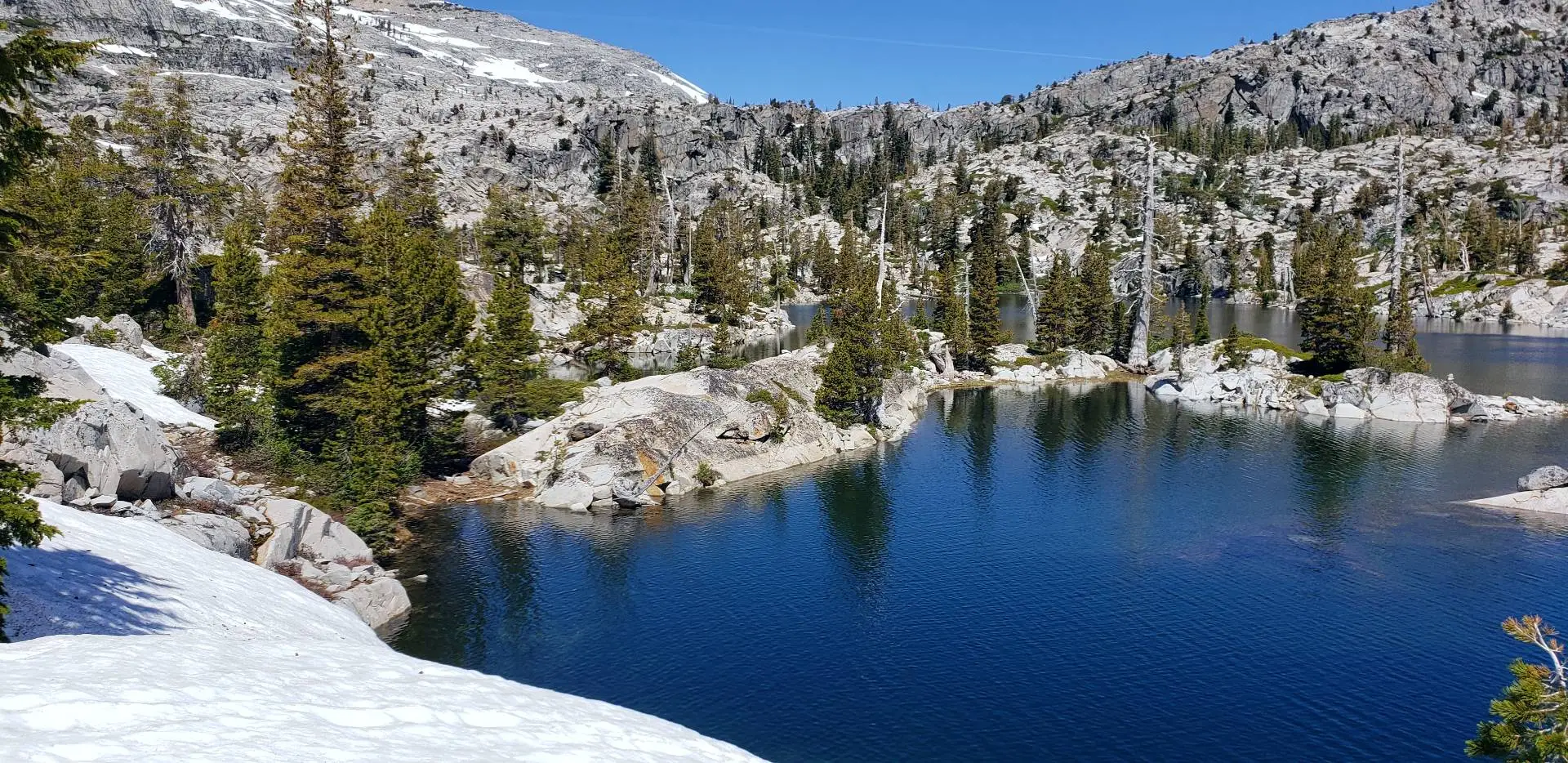
At the Western Edge of Ropi Lake a Granite outcropping separates Ropi from Toem Lake
Adventure Travel Routes
Eldorado National Forest’s easy accessibility via major routes makes it an ideal destination for day trips or longer stays:
Highway 50 Corridor: Connecting to iconic spots like Echo Lakes, Wrights Lake, and Desolation Wilderness on route to Lake Tahoe This 188 mile scenic drive from Folsom California to Lake Tahoe is a scenic overload along the American River. Highway 50 is the most used route in the Eldorado National Forest Corridor and is unchallenged in its incredible beauty along the American River and down into the Lake Tahoe Basin.
Highway 88 (Carson Pass): Offering access to Caples and Silver Lakes, along with the Mokelumne Wilderness boundary. Highway 88 is a hidden gem amoung scenic routes in the Sierra. This 73 mile cooridor connection Jackson California to The Carson Valley in Nevada, features scenic overlooks, The historic Kirkwood Mountain Resort and possibly some of the most overlook water recreation gems in the Sierra, Caples, Silver and Bear River reservoirs.
Crystal Basin Recreation Area: A hub for recreational activities centered around Union Valley Reservoir, Ice House Reservoir, and Loon Lake. Access via Ice House Road or route 36. The 33 mile route from Highway 50 to Loon Lake is a high Sierra treasure. Pristine Sugar and Jeffery pine forests, Rivers, waterfalls and lake access is un matched for those breaking away from the crowds on highway 50. A network of well maintained seasonal recreation routes allow visitors to discover camping, fishing, off roading, hunting, historic Sierra Hamlets & much more.
Desolation Wilderness
Lakes of the Desolation Wilderness
The Desolation Wilderness is a crown jewel of Eldorado National Forest, renowned for its granite landscapes and alpine lakes.
Lake Aloha: A sprawling alpine lake surrounded by rugged peaks.
Gilmore Lake: A serene spot popular with hikers.
Lake of the Woods: Accessible via the Pacific Crest Trail, this gem offers quiet beauty.
Rockbound Lake: Situated within the rugged granite landscapes of Desolation Wilderness, Rockbound Lake is a serene alpine destination. Its remote location and dramatic surroundings make it a favorite for experienced hikers seeking solitude. Accessed via the Rockbound Trail, the area is known for its crystal-clear waters and stunning views of surrounding peaks.
Rubicon Reservoir: A scenic reservoir along the Rubicon Trail, this lake combines recreational opportunities with breathtaking alpine scenery. Its proximity to major trails makes it an accessible yet peaceful spot for fishing or quiet reflection amid towering granite formations.
Twin Lake: Comprising two connected lakes, Twin Lake is a tranquil spot surrounded by dense forest and granite outcrops. It’s a popular destination for day hikers and overnight campers, offering excellent views and a chance to experience the wilderness close to the Wrights Lakes area.
Ropi Lake: Nestled in a secluded pocket of Desolation Wilderness, Ropi Lake is known for its rugged charm and pristine waters. Reached via moderate trails, it’s a perfect destination for adventurers seeking off-the-beaten-path tranquility and dramatic natural beauty.
The Velma Lakes (Upper, Middle, and Lower Velma Lakes): These three interconnected lakes are among the most visited in Desolation Wilderness, offering varying levels of accessibility. Lower Velma is a popular campsite near the Eagle Falls Trail, while Middle Velma provides more solitude. Upper Velma lies in a rugged alpine setting, ideal for seasoned hikers seeking a picturesque escape.
Permits are required for entry, ensuring these delicate ecosystems remain pristine. Please Visit the Eldorado National Forest office nearest you or the Lake Tahoe Basin Management group in South Lake Tahoe to learn more.
Mokelumne Wilderness Connections
Lakes within or near the Mokelumne Wilderness that fall under Eldorado National Forest include:
Silver Lake: A popular destination on the Highway 88 corridor, offering fishing, kayaking, and camping opportunities.
Bear River Reservoir: Known for its peaceful setting and recreational opportunities.
Blue Lakes: Located at the southern edge of the Mokelumne Wilderness, the Blue Lakes consist of Upper and Lower Blue Lake, surrounded by pine forests and dramatic ridges. They are easily accessible by car and popular for camping, fishing, and paddling. The area offers stunning vistas and serves as a gateway for hikers exploring deeper into the wilderness.
Emigrant Lake: A pristine alpine lake nestled high in the Mokelumne Wilderness, Emigrant Lake is a popular destination for hikers willing to take on its moderately challenging trail. The lake is surrounded by rugged peaks and wildflower-filled meadows, making it a scenic spot for solitude and reflection.
Winnemucca Lake: A short hike from Carson Pass, Winnemucca Lake is one of the most iconic destinations in the Mokelumne Wilderness. Known for its crystal-clear waters and panoramic views of the surrounding peaks, this lake is particularly stunning in late summer when wildflowers blanket the surrounding meadows.
Fourth of July Lake: Hidden in a tranquil valley near Carson Pass, Fourth of July Lake offers a serene getaway for hikers. The lake’s reflective waters are framed by forested slopes and dramatic granite cliffs, making it an excellent spot for overnight camping or a peaceful day hike.
Discover Meiss Country: A Hidden Gem in the Sierra Nevada
Located between Luther Pass and Echo Summit, Meiss Country is a spectacular region south of South Lake Tahoe that offers stunning alpine scenery, rich history, and a variety of outdoor recreation opportunities. Known for its rolling meadows, tranquil lakes, and sweeping vistas, this area is a favorite for hikers, backpackers, and those seeking solitude in nature.
Meiss Country is named after the Meiss family, who historically grazed cattle in this pristine area, contributing to its well-preserved landscape. Today, it is a prime destination for those wanting to explore a more rugged and secluded part of the Lake Tahoe Basin.
The terrain features a variety of hiking options, from the famous Meiss Meadows to the Meiss Lake area, offering access to the Pacific Crest Trail and the Desolation Wilderness. Visitors can enjoy peaceful walks through high-altitude meadows, see wildflowers in the spring, and marvel at the alpine lakes that dot the landscape.
For those wanting to dive deeper into the wonders of this area, we have created a detailed guide to Hiking Meiss Country in a previous article, which you can explore here.
Meiss Country remains one of the best-kept secrets in the Sierra, providing a balance of scenic beauty and outdoor adventure away from the hustle and bustle of more heavily trafficked areas. Whether you’re looking to hike, camp, or simply experience the tranquility of the Sierra Nevada, Meiss Country is an exceptional destination to explore
Plan Your Trip
Explore the natural beauty of Eldorado National Forest and immerse yourself in its endless opportunities for adventure. Whether you’re discovering hidden alpine lakes, fishing along the American River, or hiking to remote destinations, this forest is a haven for outdoor enthus