
When most people think of backpacking in the Sierra, they picture the big summer push: long days, dry boots, and miles of trail under a hot sun. But if you’ve ever shouldered a pack in September or October, you know the truth — fall is the Sierra’s quiet masterpiece. The bugs are gone, the crowds thin, and the whole range seems to glow from within as aspens and willows catch fire in yellow, orange, and red.

Fall hiking is about more than just cooler air and pretty colors. It’s about a shift in pace. The days are shorter, the nights colder, and the weather less predictable. But in that change lies the magic. A campfire feels better, a sleeping bag feels warmer, and when you walk through a canyon of aspens at their peak, you realize the whole trip is a reward in itself.
Here are five trails that capture the essence of fall in the Sierra Nevada — high alpine lakes, golden forests, and that sense of having the mountains to yourself.
Virginia Lakes to Green Creek via Summit Lake
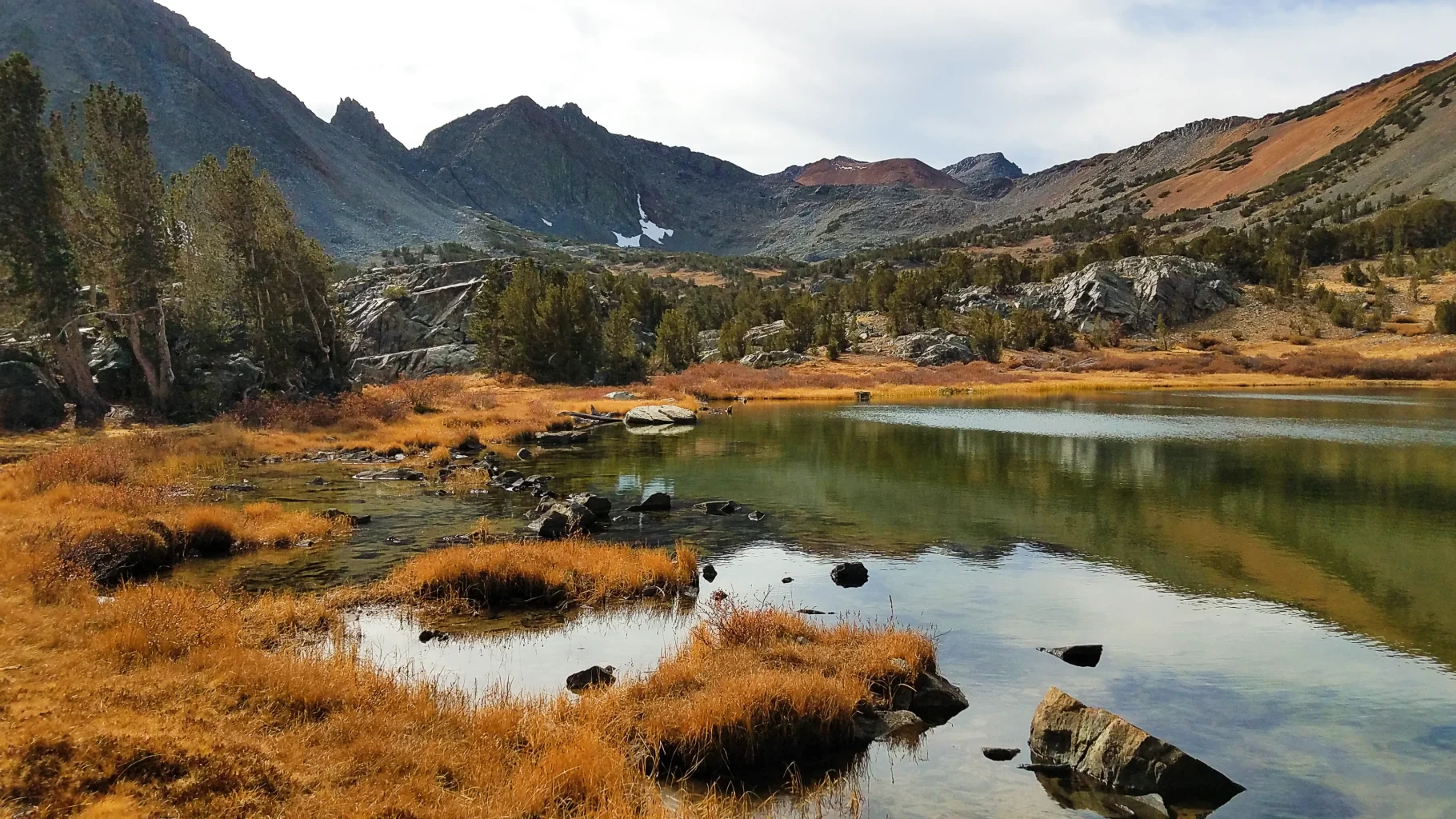
Virginia Lakes and Green Creek are each worthy destinations on their own. Virginia has that crisp alpine feel right from the trailhead — a string of lakes framed by towering granite and the kind of high-country winds that make you pull your jacket tighter. Green Creek, on the other hand, might just be one of the best aspen canyons in the entire Sierra. When it’s at its peak, the mountainsides glow so bright you feel like you’re walking through stained glass. Whole stretches of trail turn into golden tunnels where every gust of wind sends a swirl of leaves across your boots.
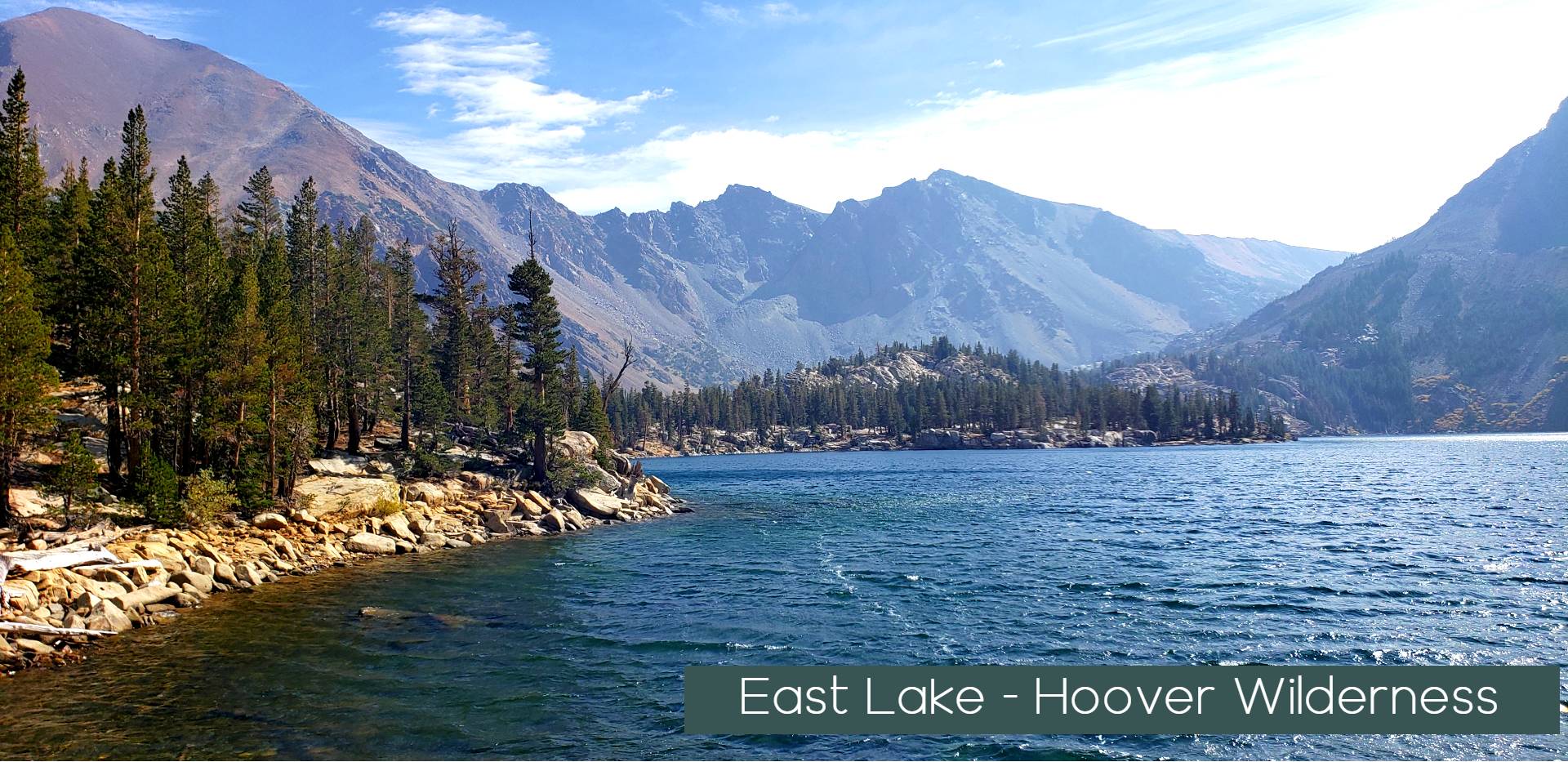

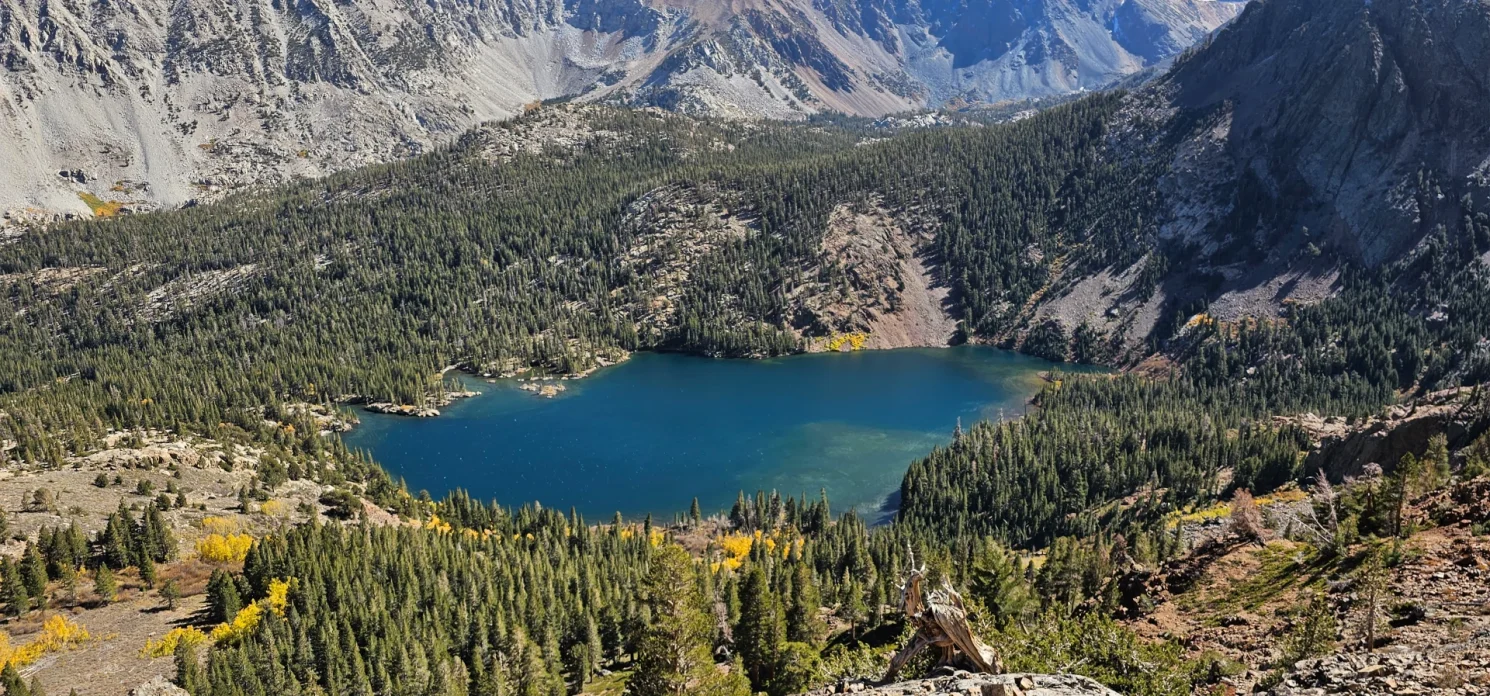

But combine the two, linking them over Summit Lake, and you’ve got one of the most memorable fall backpacking routes you’ll ever take. The high pass feels like something straight out of Tolkien — jagged peaks looming like fortresses, the wind howling across the ridge, the land raw and untamed. Drop down the other side and you’re not far from the Yosemite boundary, where you can slip into true seclusion. This is a trip that gives you everything: color, drama, solitude, and that feeling of stepping into another world.
Parker Lake (June Lake Loop)

On paper, Parker Lake looks like an easy day hike — a couple of miles, a gentle grade, nothing too intimidating. And that’s true. The trail follows Parker Creek, lined with aspens that light up in fall, and before you know it you’re standing at the edge of a beautiful alpine lake with sheer cliffs rising above it. That accessibility is why the trailhead parking lot is often busy, and why you’ll pass families, photographers, and casual hikers along the way.

But here’s the secret: throw on a pack, bring a tent, and stay the night. The transformation after sunset is remarkable. The crowds vanish, the canyon quiets, and Parker Lake becomes yours alone. I’ve sat on the west shore as the evening light slid up the canyon wall, aspens glowing in the last rays, and it felt like a private performance. A late swim is chilly but unforgettable, and if you’re lucky you’ll catch deer or other wildlife moving through at dusk.
For beginners, this is the perfect first backpacking trip — short, rewarding, and safe. For seasoned hikers, it’s a reminder that you don’t always need to go 20 miles to find magic. Sometimes it’s just two miles away.
Bishop Pass Trail (South Lake to Dusy Basin)
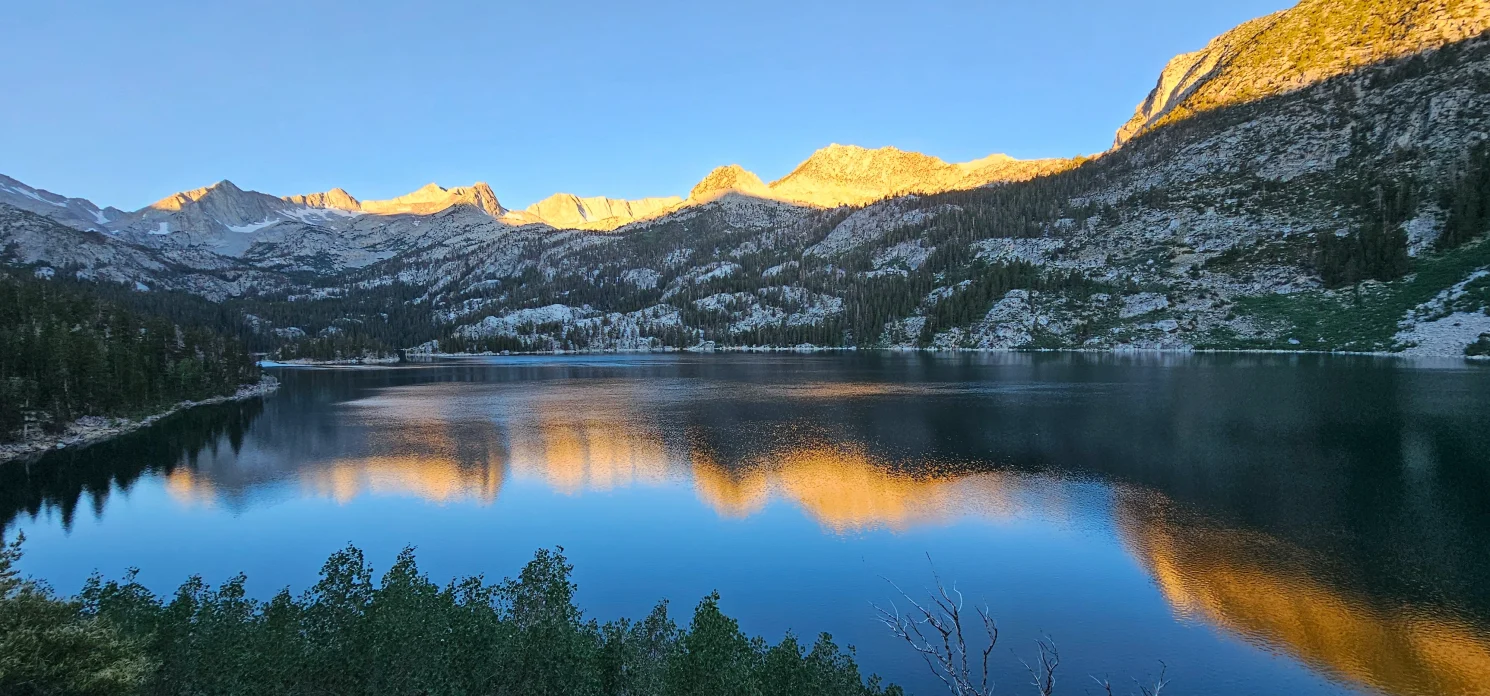
If color is what you’re chasing, you could stop halfway up the Bishop Pass Trail and call it a day. The aspen groves around South Lake and along the early miles are some of the most spectacular in the Eastern Sierra. Every bend in the trail seems to open into another glowing canyon, another patch of gold reflected in the creek.
But don’t stop there. Push higher and you’ll discover a string of lakes — Long Lake, Ruwau, Treasure Lakes — each more photogenic than the last. By the time you reach Bishop Pass, the trees have thinned but the reward is granite walls and water so clear it looks unreal. Step into Dusy Basin beyond and you’ll understand why backpackers fall in love with this route.
Yes, it’s a busy trailhead. You’ll meet plenty of people along the way. But the raw beauty here makes it easy to brush aside the traffic. When the sun sets, the granite itself seems to change color, taking on deep purple hues that only appear in the cool months. It’s a reminder that some places are so stunning they’re worth sharing, even in fall.
Desolation Wilderness Loop: Dicks Lake, Fontanillis, and the Velmas

Desolation has a reputation — and for good reason. It’s one of the most visited wilderness areas in the country, and in summer the trails can feel more like highways. But once the air cools and the first hints of snow dust the peaks, Desolation starts to live up to its name.
One of my favorite loops begins near Maggie’s Peak, climbing over the ridge and dropping into the basin that holds Dicks Lake, Fontanillis, and the Velmas. Dicks Lake can draw a crowd, but slip between Dicks and Fontanillis and you’ll find a sweet spot — quiet, scenic, and perfectly balanced between big granite walls and intimate lakeshore camps. Fontanillis, especially, is unforgettable in autumn, its waters mirroring the shifting colors of the season.
The catch here is weather. Early snow is a real possibility, and the nights bite hard. But if you’re prepared, you’ll find a version of Desolation that feels wild and empty, where the silence is as much a part of the trip as the scenery. Some places are simply worth the risk of sharing with others — and this loop is one of them.
Round Top and Fourth of July Lake (Mokelumne Wilderness, Alpine County)
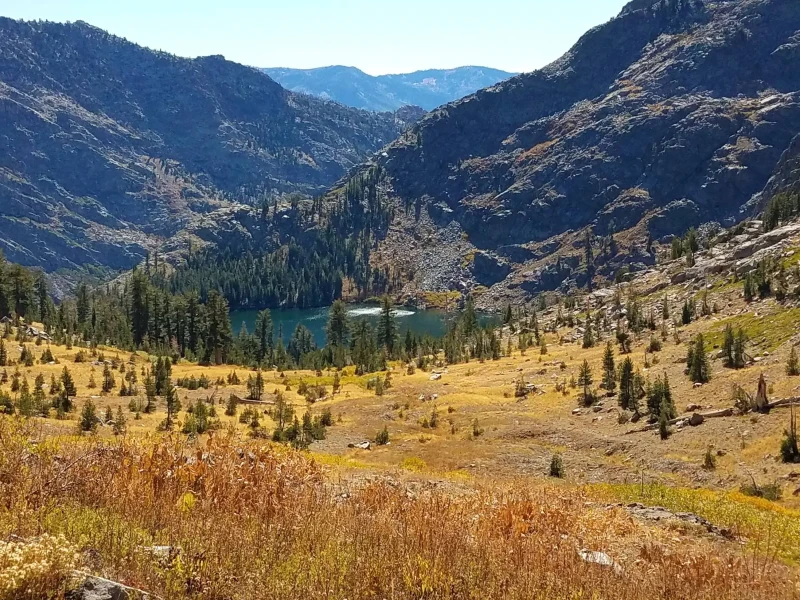
Not every fall backpack needs to be a grueling haul, and the Mokelumne Wilderness proves it. From Woods Lake or Carson Pass, you can reach Round Top Lake or Fourth of July Lake in just a few miles, but the scenery makes you feel like you’ve traveled much farther. The volcanic towers of Round Top dominate the skyline, while meadows and slopes burst with the colors of willow and low brush turning with the season.
This is shoulder-season backpacking at its best: crisp breezes that keep the climb comfortable, views stretching over Caples Lake and the Mokelumne peaks, and campsites where the night sky feels close enough to touch. The forest floor itself seems to take on autumn’s colors, every blade of grass and shrub joining the celebration.
One note of caution: this is also hunting country in the fall. Bring some bright clothing or gear, and stay alert. The wilderness here is wide and quiet, but you won’t always be the only one out enjoying it.
Wrapping It Up
Fall backpacking in the Sierra is about chasing color, yes, but it’s also about chasing a feeling. It’s the solitude of sitting beside a lake after everyone else has gone home. It’s the sound of wind rattling through aspen leaves. It’s waking up to frost on your tent and watching the first sunlight turn granite walls pink and gold.
Virginia Lakes, Parker Lake, Bishop Pass, Desolation, Round Top — each of these trails offers a different slice of that experience. Together they tell the story of a season that too many people overlook. For those who lace up their boots and head out anyway, fall in the Sierra is a reward that lingers long after the leaves have dropped.


