By Charlie Pankey | Sierra Rec Magazine – Summer Issue 2025
Where Legends Are Forged: The Allure of Sierra 14ers
In the shadow of granite giants and amid the wild symmetry of the Sierra crest, a legacy was carved not just in stone—but in story. For generations, the Sierra Nevada’s 14,000-foot peaks have beckoned explorers, anglers, naturalists, and soldiers alike to rise above the tree line and chase the summit sky.
It began with Clarence King in 1864. The famed geologist believed he had summited the tallest peak in the continental U.S. But in a twist worthy of mountain lore, he had instead climbed Mount Tyndall, a 14er just shy of his goal. It would take him nearly a decade to return and correct that historic misstep.

Meanwhile, in the summer of 1873, three anglers—Albert H. Johnson, Charles D. Begole, and John J. Lucas—approached the high country from the Kern River side. After summiting Mount Langley, they spotted a taller peak on the horizon. The next morning, they set off on foot and became the first confirmed party to reach the summit of Mount Whitney, via the rugged southwest face. On August 18, 1873, they built a stone monument and named it Fisherman’s Peak, forever marking their place in Sierra Nevada history.
Clarence King returned just weeks later, finally reaching the summit on September 19, and controversially claimed he found Indian relics atop the peak—a detail some believe was an attempt to challenge the anglers’ earlier ascent.
Then came John Muir. After his own climbing party failed to summit, Muir broke away and climbed solo from Independence, ascending via the North Fork of Lone Pine Creek and tackling what is now recognized as the Mountaineer’s Route. On October 21, 1873, Muir stood alone on the roof of California—his ascent echoing the same reverent awe he carried through the Yosemite high country.
In 1903, yet another chapter was written when Captain Charles Young, acting superintendent of Sequoia National Park, led the 9th U.S. Cavalry (Buffalo Soldiers) in building a trail from Crabtree Meadow to the summit of Mount Whitney. This trail would later become part of the John Muir Trail, and their legacy still supports summer visitors on their journey to the top.
Much of this early summit history—especially the detailed account of the 1873 ascent by Johnson, Begole, and Lucas—has been carefully documented by historian Mary Roser in her book Switchback Trails Across the Sierra. Her research preserves the stories of those who first dared to explore these alpine giants before maps were accurate, Mules were the preferred travel partner and trails existed.
Why We Climb
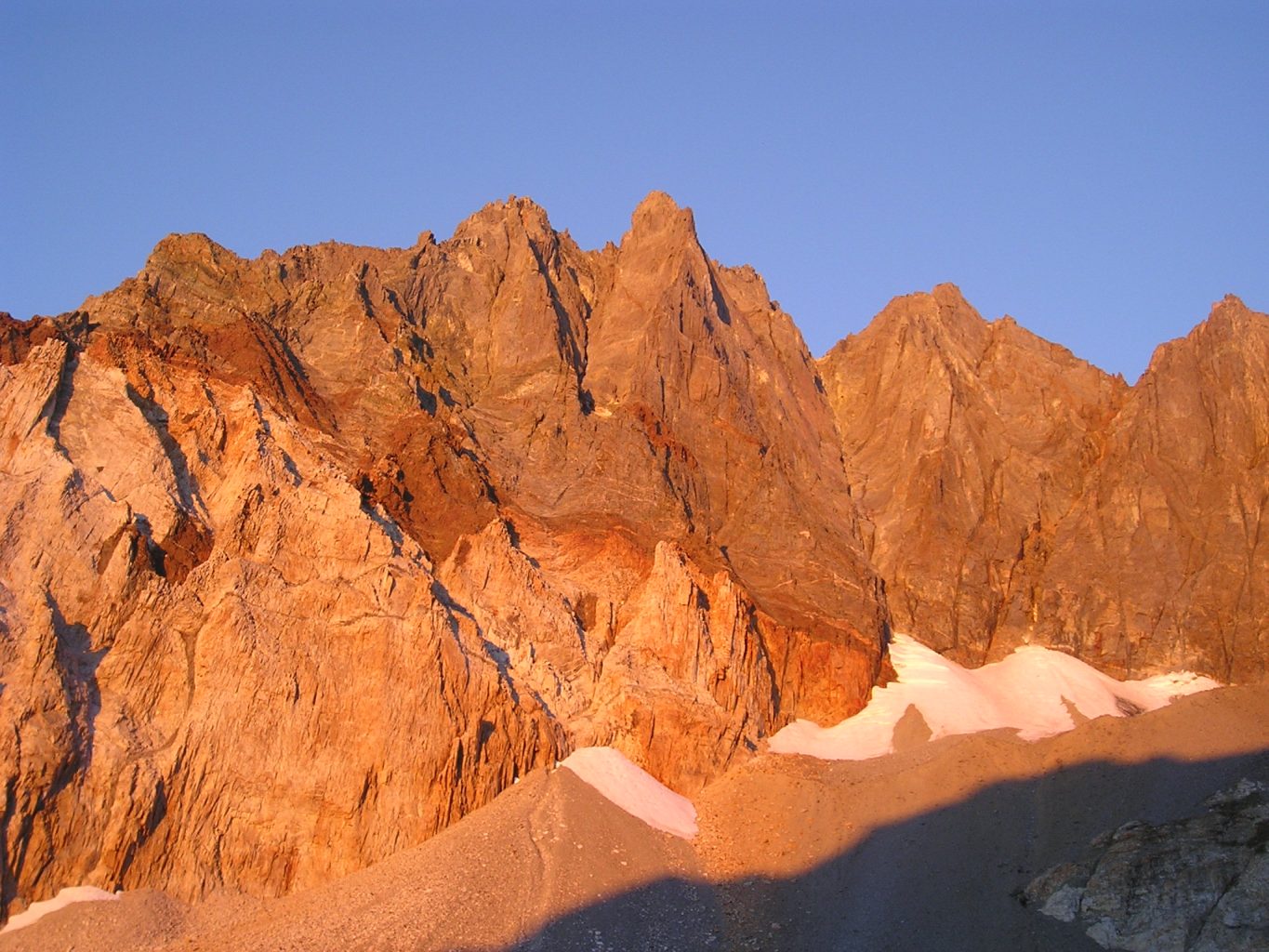
Ask any veteran Sierra peak-bagger and they’ll tell you: climbing a 14er calls to something deeper than elevation stats or personal records. It’s about chasing sunlight through granite corridors, sleeping beneath meteor showers, and tracing your bootprints over the same ridges that once puzzled surveyors and entranced poets.
It’s about standing where few have stood—and realizing how small you are in a vast, wild cathedral of stone and sky.
But that’s not the only truth.
Over the years, I’ve spoken with dozens who’ve made it to the summit of Mount Whitney, and nearly all of them speak of the struggle—the altitude, the cramps, the switchbacks that seem to never end. It’s rarely described as beautiful in the moment. Sometimes, it’s torture. I still remember a conversation with Withanee Milligan, co-author of Walk of Ages, who recounted how summiting Whitney nearly broke her—how it became the most grueling leg of her journey retracing her father’s footsteps from the summit all the way to Badwater Basin. For her, Whitney wasn’t a peak to celebrate. It was a wall to survive.
And maybe that’s the paradox.
Today, the Whitney experience can feel transactional—get the permit, chase the peak, check the box. Sometimes the soul gets lost in the logistics. But wasn’t that the same hunger that drove Clarence King? A need to map, to conquer, to prove? For him, the Sierra wasn’t just a range—it was a riddle to solve, a trophy to claim. He saw Whitney as a rival.
The rest of us? Maybe we just want to feel something true up there.
To say, “I did this.” To see the world from above the noise. And to remember, at least for a moment, that the best things in life often lie beyond exhaustion.
“We had no idea what we were in for and how hard it would be to travel up and back in one day. I thought this would be the best part—having a full belly and one big accomplishment under my belt. I’d drift off into the hardest sleep I’d ever had. Right? Instead, as soon as I lay down in my sleeping bag, my entire body started screaming at me. Every single thing hurt… I’ve never felt pain like that before The Walk, in which I felt it every single day.”
— Withanee Andersen, co-author of Walk of Ages
So whether you climb for a name on a summit log, or for something you can’t quite explain—you’re not alone. You’re part of a story that’s still being written, one summit at a time.
Top Sierra Nevada 14ers to Climb
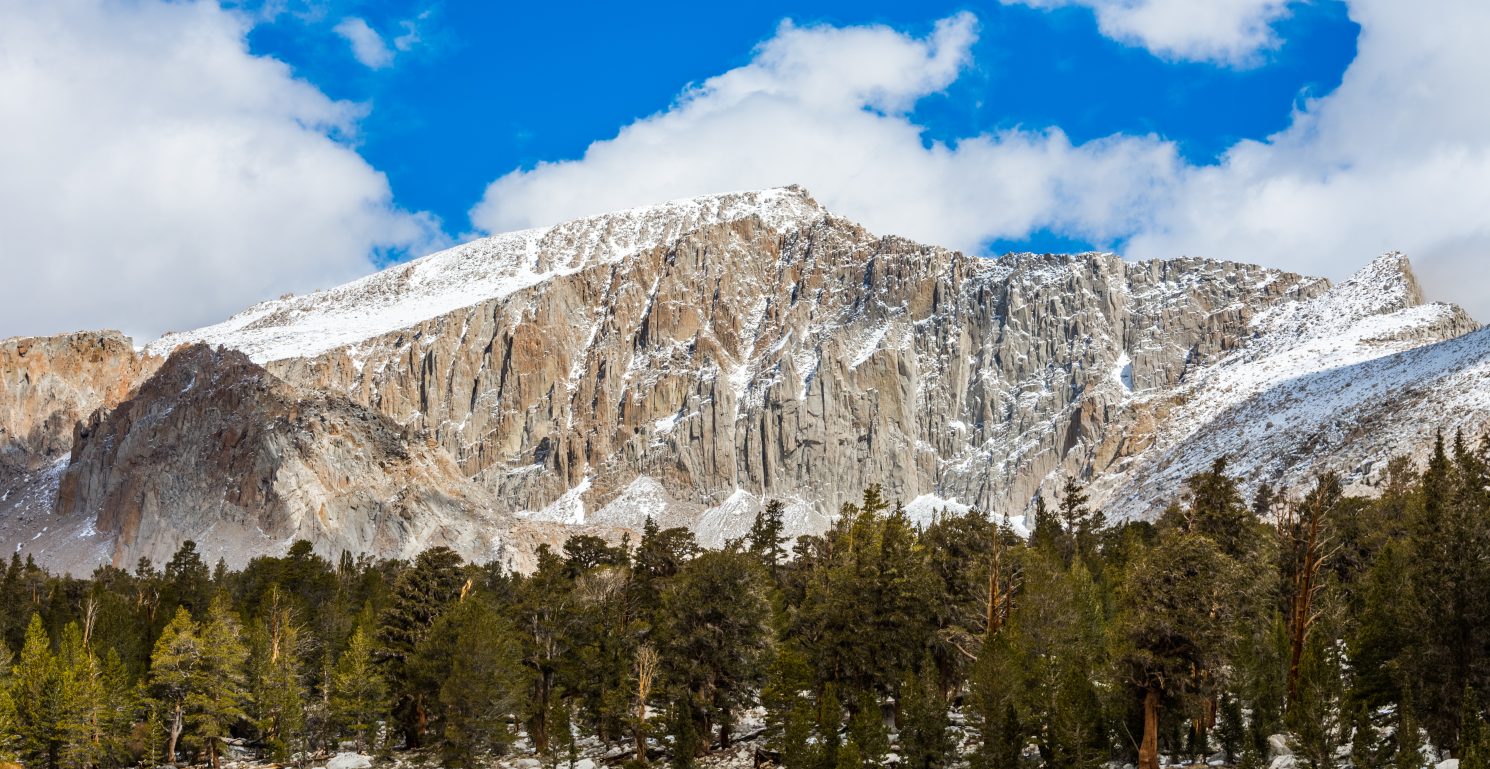
California has 15 recognized 14,000-foot peaks—all of them in the Sierra. Most are rugged, remote, and utterly unforgettable. Here are five to get you started:
🏔️ Mount Whitney (14,505 ft)
- Highest in the Lower 48
- Route: Whitney Trail (22 miles RT, Class 1)
- Permit: Required via lottery
- Why Go: Bucket-list views and rich history
🏔️ Mount Langley (14,032 ft)
- One of the most accessible 14ers
- Route: Cottonwood Lakes > New Army Pass (21 miles RT, Class 1-2)
- Permit: Yes
- Why Go: Wildflower meadows, alpine lakes, and fewer crowds
🧗 Thunderbolt Peak (14,009 ft)
- Most technical of the bunch
- Route: North Couloir (Class 5.9+)
- Permit: Yes
- Why Go: For experienced climbers with ropes and grit
🏔️ White Mountain Peak (14,252 ft)
- Easiest in terms of trail class
- Route: Barcroft Station (14 miles RT, Class 1)
- Permit: No
- Why Go: High-altitude practice with a wide open summit
🏔️ Split Mountain (14,064 ft)
- Remote and scenic
- Route: Red Lake Trail (15 miles RT, Class 2-3)
- Permit: Yes
- Why Go: Big views, big effort, big reward
Training: Elevate Your Body & Mind
Climbing a 14er is as much a mental challenge as it is physical. Here’s how to prepare:
- 🏃♂️ Cardio Base: Trail running or hiking with elevation 3–4x/week
- 🎒 Train with Weight: Hike with a 20–30 lb pack on moderate terrain
- 🧠 Acclimate: Spend nights above 8,000 feet before summit day
- 🧭 Navigation Skills: Learn to use GPS and map/compass
- ⛰️ Start Small: Practice on 10k–12k foot summits before your first 14er
Essential Gear Checklist
Whether you’re hiking the Whitney Trail or attempting a class 3 ridge, you’ll need the right gear:
Must-Haves
✅ Trekking Poles
✅ High-traction Hiking Boots
✅ Layered Clothing (base, puffy, rain shell)
✅ 3L+ Water System + Filter
✅ Sun Protection (hat, sunglasses, SPF)
✅ Snacks & High-Calorie Meals
✅ Headlamp & Extra Batteries
✅ First Aid Kit
✅ Emergency Blanket / GPS Beacon
✅ Bear Canister (overnight trips)
For Technical or Early-Season Routes
🧗 Ice Axe & Crampons
🪢 Rope, Harness, Helmet
🧤 Gloves, Gaiters, Crampons
Sierra 14ers At-a-Glance
| Peak | Elevation | Class | Trailhead | Permit |
|---|---|---|---|---|
| Mount Whitney | 14,505 ft | 1 | Whitney Portal | Yes |
| Mount Langley | 14,032 ft | 1-2 | Horseshoe Meadow | Yes |
| White Mountain | 14,252 ft | 1 | Barcroft Station | No |
| Thunderbolt Peak | 14,009 ft | 5 | Bishop Pass / Palisades | Yes |
| Split Mountain | 14,064 ft | 2-3 | Red Lake Trailhead | Yes |
First-Timer’s 3-Day Itinerary: Mount Langley
Day 1: Hike into Cottonwood Lakes, camp at Lake #3
Day 2: Pre-dawn summit push via New Army Pass, return to camp
Day 3: Hike out, reward yourself in Lone Pine
Final Word: Go Higher
To climb a 14er in the Sierra is to walk in the footsteps of legends—fishermen, poets, surveyors, and soldiers. It’s a journey measured not just in miles or elevation, but in the way your heart opens as you rise.
So lace your boots. Pack your courage. And go claim your place in the sky.
