Early in the year, I gave myself a goal that felt both ambitious and deeply personal: hike more than one hundred miles of Sierra Nevada backcountry as part of the Outdoor Vitals 100-Mile Challenge.
On paper, it sounded straightforward enough. I’ve come close to that kind of mileage in past seasons, but I never really counted, never set out with a number in mind. This time I wanted to see if I could do it with intention. Not to brag, not to check a box, but to test myself — to see what kind of strength and discovery might come from stringing together three big trips in one summer. At fifty-five, still only mildly in shape and carrying more weight than I’d like, the challenge felt like the right kind of stretch. It was also a quiet rehearsal, in a way, for something bigger I’ve been dreaming about: one long 100-mile trip in the future.

The first step came in July, when I secured a permit for a loop out of Tuolumne Meadows to the McCabe Lakes. That trip gave me both a head start on the miles and a taste of what I was really seeking this summer: off-trail discovery.
I’ve always been drawn to the spaces between the lines on the map. I grew up in the forest, following my dad through the Cascades while hunting, learning how to read terrain, how to read my map and a contour, how to keep a sense of direction when trails vanished. As an adult, that training never left me. I thrive off trail. I love the uncertainty of it, the need for patience, the surprises waiting in granite bowls and quiet meadows.

That McCabe trip gave me exactly that. The stretch between McCabe Lakes and Roosevelt Lake — five to seven miles of pure cross-country travel — turned out to be one of the most rewarding off-trail experiences I can remember. We stumbled into high alpine meadows at 10,000 feet where water bubbled straight from the ground. We climbed ridges that opened into sweeping views of Yosemite’s north country. And we ended the day at Roosevelt Lake, where soft blue water and absolute solitude reminded me why I chase these kinds of miles.
That trip opened the door. Suddenly, the hundred-mile challenge felt possible. I had the permits lined up, I had the routes sketched, and I had the spark to push deeper. Next came a venture into the Emigrant Wilderness — a trip that tested my outdoor mettle with heat, exhaustion, and terrain that was both easier and harder than I expected. And finally, a Labor Day weekend with my cousin took me through Yosemite again, this time on a creative route from Tuolumne Meadows down into the valley floor, threading through Matthes Basin and Echo Valley before descending into the chaos of Little Yosemite.
Part Two: Emigrant Wilderness – Granite, Grit, and Discovery
Pack Stations & History
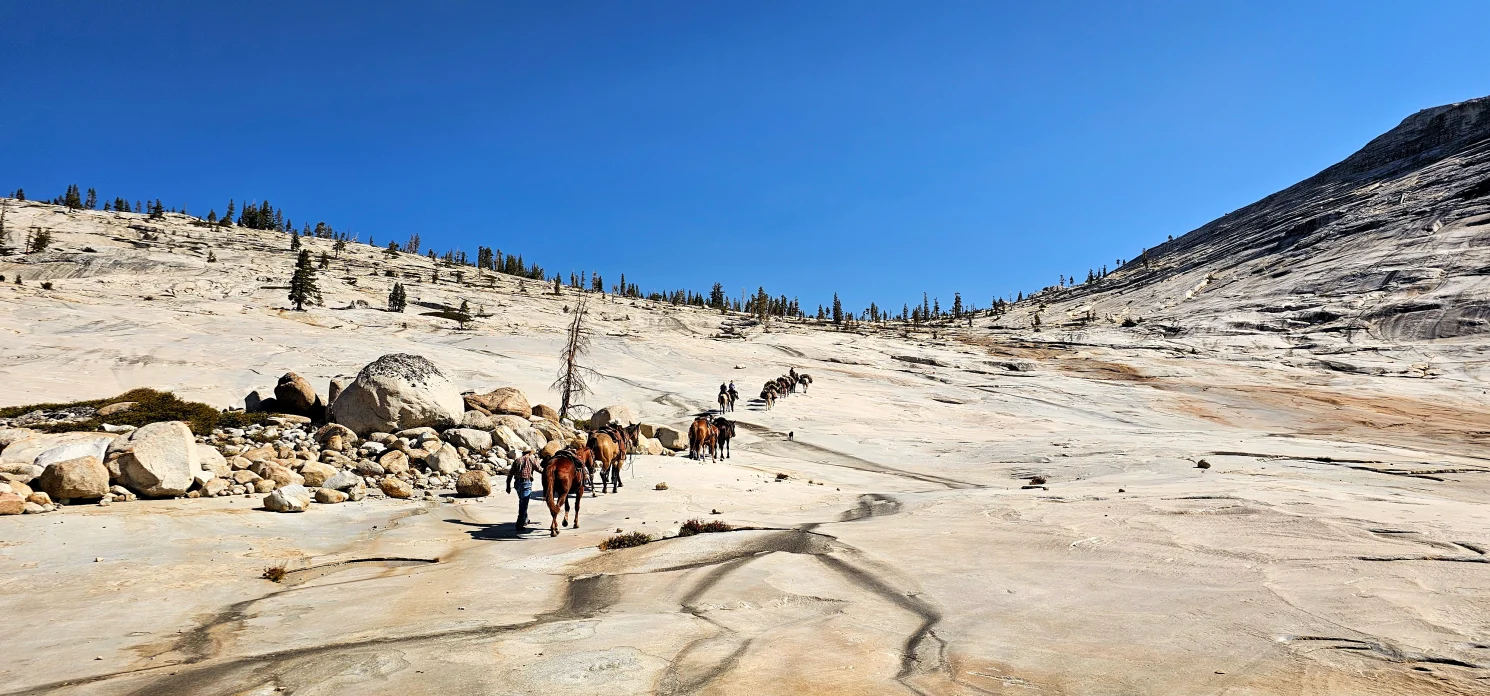
If McCabe opened the door, Emigrant Wilderness threw me into the deep end. I partnered with Aspen Meadows Pack Station, one of the historic outfits that have bridged civilization and wilderness for over a century.
Mules and horses once hauled supplies for ranchers, shepherds, and eventually recreationists. As Marye Roeser’s Switchback Trails Across the Sierra reminds us, pack stations are woven into the very DNA of Sierra exploration.
That legacy carried me up to Bucks Lake, where our journey truly began.
Yellowhammer & the Granite Lakes
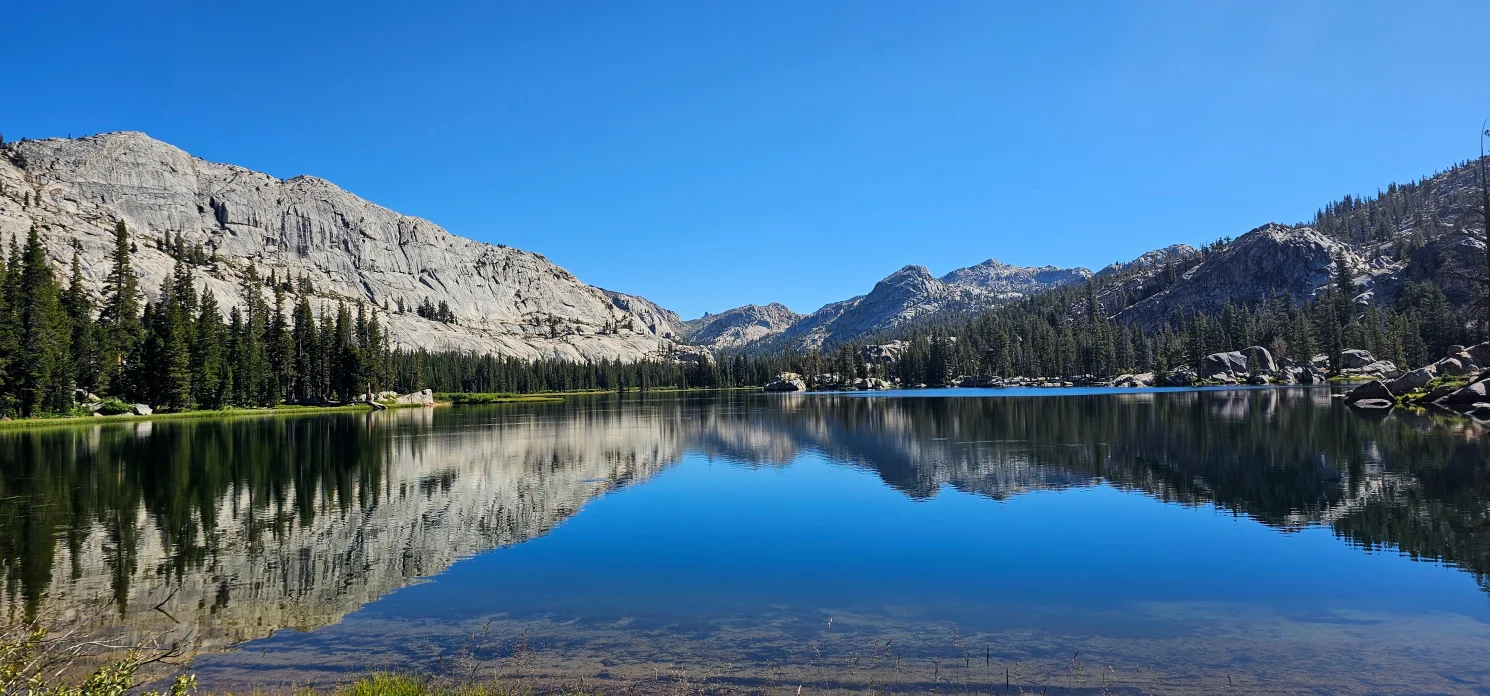
Four days. 35+ miles. Fifteen lakes.
Yellowhammer Lake was the emotional heart of this trip. Its rustic cabins and still waters felt like stepping into a different era. From there, we scrambled to Big Lake and Pingree Lake, watching horses climb granite ridges with the same determination as their riders.
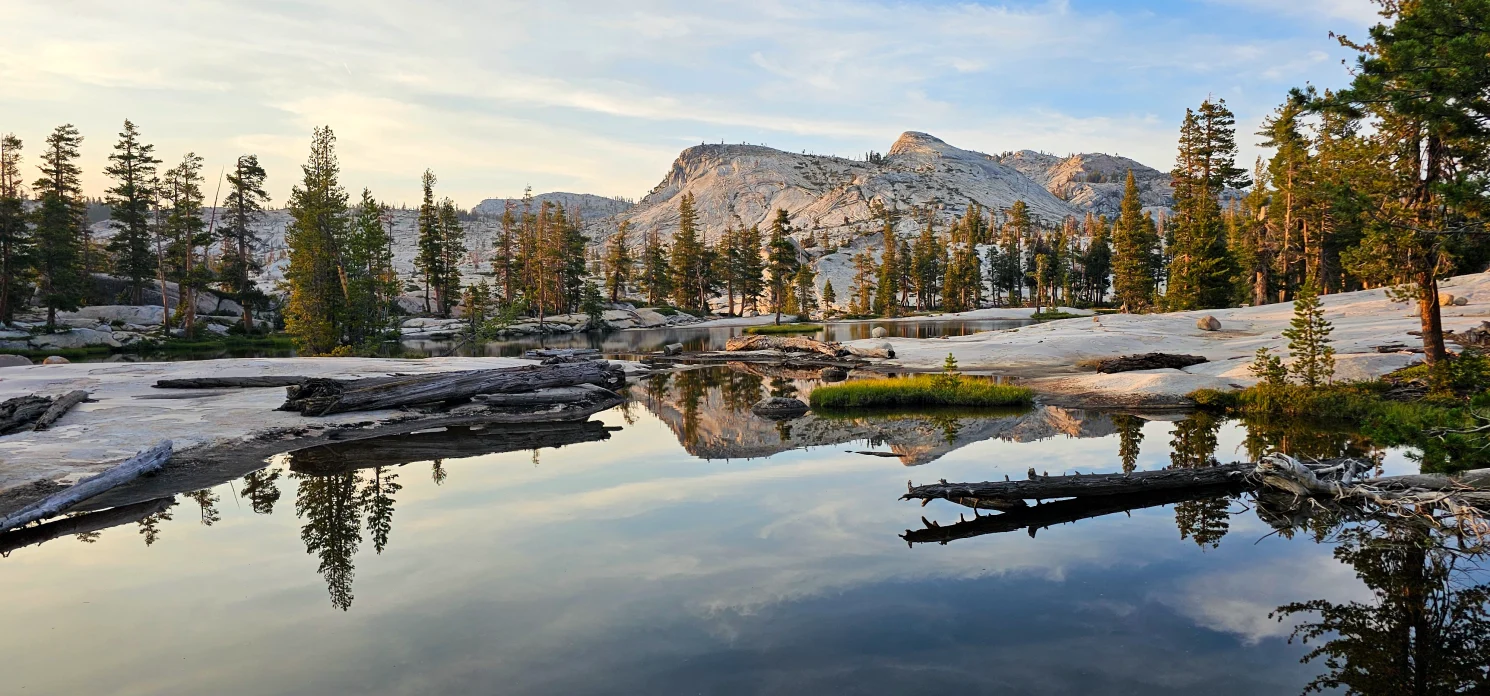


It was the Sierra as it’s always been: wild, humbling, yet full of human stories.
The Off-Trail Emigrant
But Emigrant doesn’t give itself up easily.
On the map, granite bowls look simple. On the ground, they collapse into cliffs, detours, and endless trial-and-error. From Karl’s and Leighton Lakes toward Five Acres Lake, I fought exhaustion and second-guessed every ridge.
“Granite doesn’t always tell its secrets. From afar, a slope looks smooth and direct, only to collapse into cliffs that stop you cold.”


The canyons south of Yellowhammer poured toward Cherry Creek and Yosemite’s boundary—scarred, raw, violent in their beauty. Yet when I crested a pass and a hidden basin sparkled below, it reminded me why I push into these places.
By the end, I left Emigrant blistered, humbled, and grateful. The wilderness had bent me—but in the best way possible.

Part Three: Yosemite – Family, Legacy, and the Finish
Labor Day weekend. The grand finale.
My cousin Jim, a decorated veteran and our family’s unofficial historian, flew in from Baltimore for his first Yosemite trip. A life long dream of his to hike in Yosemite National Park mixed with my constant drive to see new areas of the park, plus we had an old family photo album filled with images from the early 1920’s that we would love to re create for our generation. I made the plan to build a new Off trail route that would connect some of my favorite areas of the park in the Cathedral Range with the Merced routes into the valley for a three night four day pack trip ending with two days of tourism at Curry village base camp.

Into the High Country
We left Tuolumne Meadows, climbing again toward Elizabeth Lake before pushing into the Echo Creek basin. For Jim, the altitude was brutal, every step a constant reminder that hiking at sea level is a bit different than at 9,000 ft. For me, it was a chance to slow down and see Yosemite through his eyes, taking in spots again and listening to his enthusiasm of places that are so stunning, but now almost routine. This is going to be a magical trip for both of us.
Still day one traveling past Elizabeth lake and up into the back country of the Cathedral range was a mix of challenge and beauty that is not easily forgotten. Its the kind of first day experience that linger in your soul and burns in your psych for more. Our first night would be in solitude next to the meadows below Nelson Lake. Awaken mid night by a pack of coyotes out for an evening hunt. The Wilderness was showing up and this trip had just begun.
When we topped out above 10,000 feet the next morning and Jim saw Matthes Crest for the first time, his grin said it all. He had just climbed higher than he ever had before, and now he stood staring at one of Yosemite’s most iconic skylines. The pain, struggle and anguish of the first day and half swiped away with the euphoria of accomplishment, beauty and awe.
A swim in the cool waters of Matthes Lake sealed the memory before we turned south, off-trail, following Cathedral Fork Creek into new country for both of us.


Off-Trail Solitude
For nearly thirty hours, we saw no one. Just the wilderness breathing—coyotes calling through the night, creeks converging in hidden granite basins, trout flickering in still pools. We crossed open slabs, detoured around ridges, and finally descended into Echo Valley, where the raw backcountry slowly began to soften into the familiar pulse of Yosemite’s main trail network. Moving from the wide openness of Matthes Basin into the shaded folds of the Echo basin felt like stepping from one world into another.
Over the course of that second day, we dropped nearly 3,000 feet, trading high alpine air for the heavier breath of the forest. The terrain changed with every mile—smooth granite giving way to mossy ledges, cold streams spilling from above, then long ridgelines draped in ferns. By afternoon, the forest thickened with manzanita, the air turning hot and dry as we carried our adventure toward Echo Valley, just below Merced Lake.
The fatigue from day one melted into something different—a quiet determination, an eager sense of discovery. The miles were still long, the sun still fierce, but the rhythm of movement returned. The Sierra had shifted its mood, and we were learning to move with it.


Through Bunnell Canyon
Day three began with the sound of the Merced River waking up below camp—steady, patient, and full of purpose. From Echo Valley, the trail followed its flow downstream into Bunnell Canyon, a stretch of Yosemite that deserves far more attention than it gets. The canyon unfolds like a living museum of granite, where ancient slabs lean against one another, carved smooth by centuries of water and ice. Charred trunks from past fires stand like sentinels, reminders that this landscape endures through cycles of destruction and renewal.
For hours, we traced the Merced’s rhythm, climbing and descending its polished shelves, sometimes walking within a few feet of the current as it spilled through deep chutes and glassy pools. It’s a trail that never loses sight of the river—each bend revealing new cascades and wild gardens of fern and manzanita thriving along its edge. Near the canyon’s end, the water slows, spreading into a chain of emerald pools where the Merced pauses before plunging toward Nevada Fall. There we stopped—packs down, boots off—and waded in. The cold was sharp and exhilarating. Jim laughed, dunking his head beneath the current, while I leaned back against the granite, grateful for the moment.


That swim marked a shift in the trip. The pace softened, the miles relaxed. We took long breaks in shaded alcoves, watched sunlight skip across the river, and reached Little Yosemite Valley by midafternoon. It felt luxurious to arrive early—to claim camp, dry out gear, and simply sit.
Community in the Backcountry
By the time we reached Little Yosemite Valley, the solitude gave way to community. Campers, thru-hikers, Half Dome climbers—people from every corner of the world, buzzing with stories.
Jim thrived here. He chatted with strangers, swapped trail tales, and soaked up the camaraderie. For me, it was strange but comforting: proof that even in a crowded park, the wilderness connects us in surprising ways.


Legacy Made Real
Into Yosemite Valley
The next morning in Little Yosemite Valley felt different from nearly every other backcountry morning I’ve had. There was no rush, no pressure to chase miles or break camp before sunrise. We had all day to make our way down to the Valley, and reservations at Curry Village waiting by late afternoon. For once, we could linger.
We moved slow—coffee in hand, boots off, trading stories with the local ranger as she cleaned up camp before the next wave of hikers arrived. By the time we finally packed up around ten, most of the early risers had already vanished up the Half Dome Trail, leaving the camp quiet again for a moment. The morning air felt easy, unhurried, the way it does when you know the finish line is close but you’re not quite ready to cross it.
The descent began with pure Yosemite spectacle. As we rounded the bend above Nevada Fall, Jim stopped dead in his tracks. “That’s it,” he said, grinning like a kid. The power of the water, the vast granite walls, the mist shimmering in sunlight—it was everything he’d hoped Yosemite would be. For me, it was familiar ground, yet somehow seeing it through his eyes made it new again. We had spent three days in the quiet wild—hidden basins, off-trail granite, lonely rivers—and now, suddenly, we were walking through the world that made Yosemite famous. The John Muir Trail, lined with stone steps and echoing with voices from every corner of the world, dripping with beauty and legacy.
At Clark Point, we stopped to recreate a moment nearly a century in the making. Our relatives had once stood here, gazing out over Vernal falls. We didn’t have the photo album with us, but we remembered the image. As the camera shutters clicked and the laughter of the moment poured into story, the moment felt complete. Family, wilderness, and memory—all layered together in one frame.
From there, the trail wound steeply down past Vernal Fall, and the spell began to shift again. The crowds thickened, voices rose, and the raw wilderness energy gave way to the hum of Yosemite tourism. Beauty, even when shared by thousands, still stirs the soul—but it also reminds you how fragile these places are. By the time we reached the bridge below Vernal, our minds had already drifted toward pizza, showers, and a cold beer waiting at Curry Village.
That evening, we walked beneath the valley’s towering walls with tired legs and full hearts—no longer wilderness explorers, but tourists with a secret. We’d seen what most visitors never will: the quiet beyond the crowds, the miles that change you before you even realize it.


Reflections: What 100 Miles Taught Me
By the end, I had walked just over 100 miles of Sierra wilderness.
But the number mattered less than what it represented.
Discovery in the Emigrant, where granite humbled me and taught patience.
Legacy in Yosemite, where family history came full circle on a sunlit trail above the Merced.
Renewal at McCabe, where silence and solitude reminded me why I keep returning to these mountains.
I began this summer wondering if a 55-year-old, slightly overweight but stubbornly determined hiker could still chase big miles. The answer wasn’t just yes. It was yes—and more than I ever imagined.
The Sierra doesn’t hand out its secrets easily. You have to earn them. You have to sweat for them, wander off the map, and let the land set the pace. But if you do, it gives back something far greater than miles: perspective, memory, and meaning.
This summer, I didn’t just chase 100 miles.
I lived them—step by step, ridge by ridge—and found a deeper connection to the wild places that have always felt like home.
