

Death Valley conjures images of scorching heat and endless stretches of cracked earth, but in 2024 Death Valley is a new discovery, as Rain and Regional Snow packs over the past two years have transformed this wild scarred land into a must see experience in 2024. From The return of Lake Manly to the rain carved canyons Death Valley will be an adventure like no other this year. Still this park holds a surprising secret: a world of towering sand dunes and volcanic craters waiting to be explored. For adventurous travelers seeking to venture beyond the iconic vistas, Death Valley and the Eastern Sierra offer a unique opportunity to delve into a landscape sculpted by wind, fire, and time.
Dancing Dunes: A Desert Playground
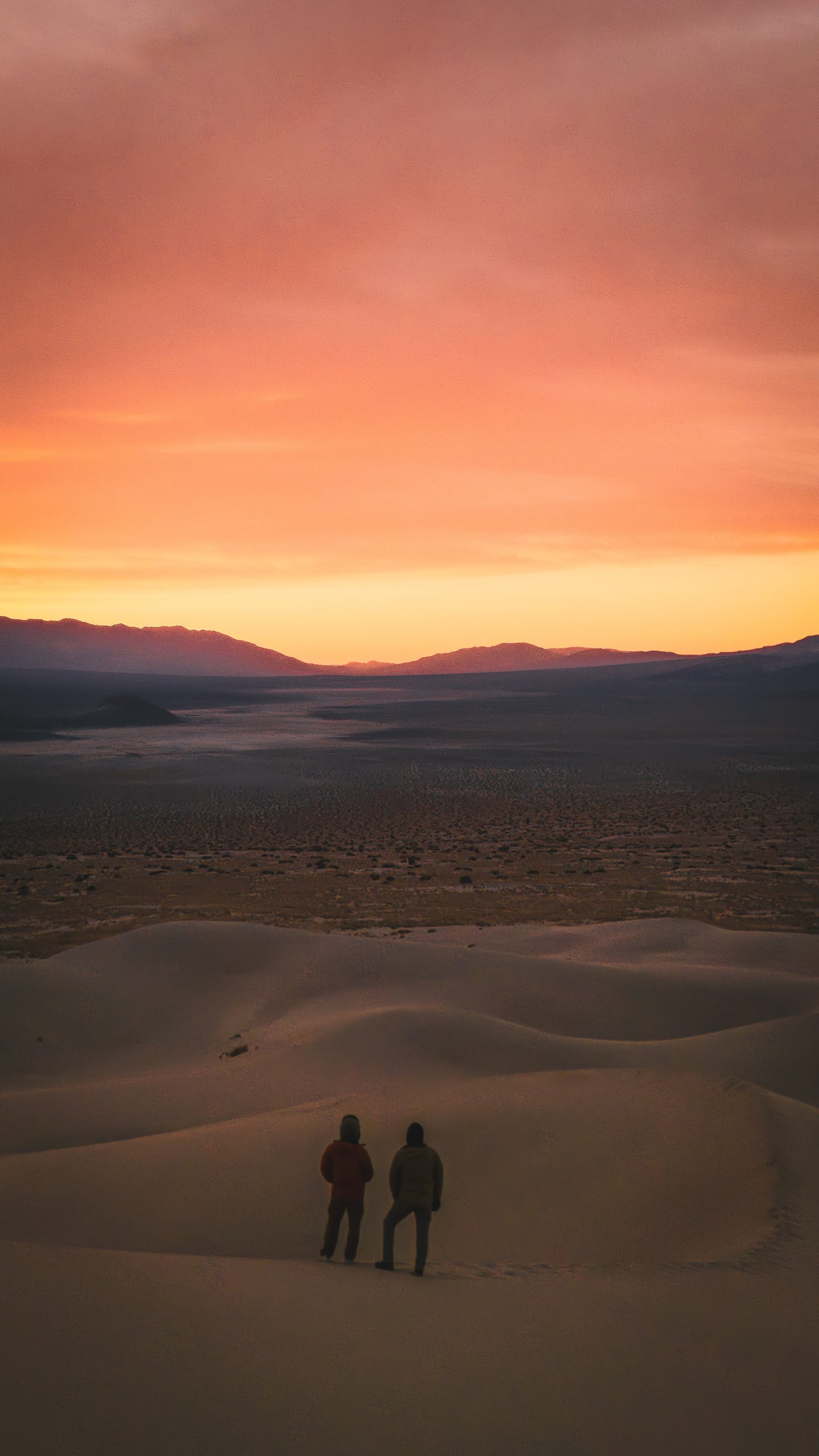
Death Valley’s sand dunes are like fragmented pieces of a golden sea, scattered across the valley floor. The Mesquite Flat Dunes, easily accessible near Stovepipe Wells, are a great starting point. Here, the wind whispers secrets through the rippling sands, and footprints disappear as quickly as they appear. Climb to the crest of a dune and be rewarded with a panoramic vista of the valley stretching out before you, a stark yet strangely beautiful contrast of color and texture. For the young (or young at heart) sandboarding is permitted on these dunes, offering a thrilling way to experience the desert’s playful side.
Venture further afield and discover the Saline Valley Dunes, gently rising from the edge of salt flats with the colossal Inyo Mountains as their backdrop. These remote dunes offer a sense of solitude, perfect for those seeking a tranquil desert experience.
Mesquite Flat Dunes
These dunes are the best known and easiest to visit in the national park. Located in central Death Valley near Stovepipe Wells, access is from Hwy. 190 or from the unpaved Sand Dunes Road. Although the highest dune rises only about 100 feet, the dunes actually cover a vast area. This dune field includes three types of dunes: crescent, linear, and star shaped. Polygon-cracked clay of an ancient lakebed forms the floor. Mesquite trees have created large hummocks that provide stable habitats for wildlife. Sand boarding is permitted on these dunes.
Eureka Dunes
Eureka Dunes are accessible by most standard vehicles via the Death Valley / Big Pine Road. From the Ubehebe Crater Road you must travel 44 miles of graded dirt to the dunes. From the town of Big Pine there are 28 miles of paved road and 21 miles of graded dirt to the dunes. The final 10 miles of both routes is the narrow South Eureka Road. During inclement weather, all access to Eureka Dunes can be closed or limited. No water or services are available along this route. Sand boarding is prohibited on these dunes. More…
Saline Valley Dunes
Gently rippling up from the edge of salt flats, these low dunes cover a large area, yet go unnoticed by most visitors to this remote valley. The Inyo Mountains tower nearly 10,000 feet above. The long, rough drive into Saline Valley limits casual visits, so come prepared. Winter snows and flash floods can temporarily limit access. Sand boarding is permitted on these dunes.
Panamint Dunes
Travelers crossing Panamint Valley on Hwy.190 may view these dunes as a distant, pale smudge to the north. Those wanting a closer look must drive 5 miles down the unmarked dirt road leading past Lake Hill, then hike cross-country 3 miles. The other dunes of Death Valley are all situated on flat valley floors, but these are perched on a slope. The view from the summit of these dunes reveals their star shape and an impressive view down the valley. Sand boarding is prohibited on these dunes.
Ibex Dunes
Visitors to Saratoga Springs may notice these dunes, but they are shielded from paved roads by rocky desert hills. Hike about one mile from the Saratoga Springs Road for access. An old talc mine at the base of the Saddle Peak Hills overlooks the dunes from the east. The Mojave fringe-toed lizard lives on these dunes. Sand boarding is prohibited on these dunes.

Craters of Fury: A Volcanic Legacy
Standing at the rim of Ubehebe Crater, peer down 600 feet into a vast expanse of ash and cinders, a silent testament to the power of volcanic forces. This dramatic crater, estimated to be between 2,000 and 7,000 years old, is the youngest and largest of several Maar volcanoes scattered across the Ubehebe Volcanic Field. Maar volcanoes are formed by violent steam explosions that occur when hot magma meets groundwater near the surface. The intense heat instantly vaporizes the water, causing a powerful eruption that blasts a crater into the earth’s crust.
Hike the rim trail for breathtaking views of the surrounding landscape, dotted with other, smaller craters. These celestial wounds in the earth offer a glimpse into the fiery underbelly of Death Valley’s past. Explore the colorful layers visible in the crater walls, each one a record of volcanic spewing and time’s relentless march. For a truly immersive experience, consider the challenging hike down into the crater itself. Just remember, the climb back up can be strenuous, especially in the desert heat. So come prepared with plenty of water and wear sturdy shoes with good traction on loose scree.
A Burst of Color: Spring Wildflowers
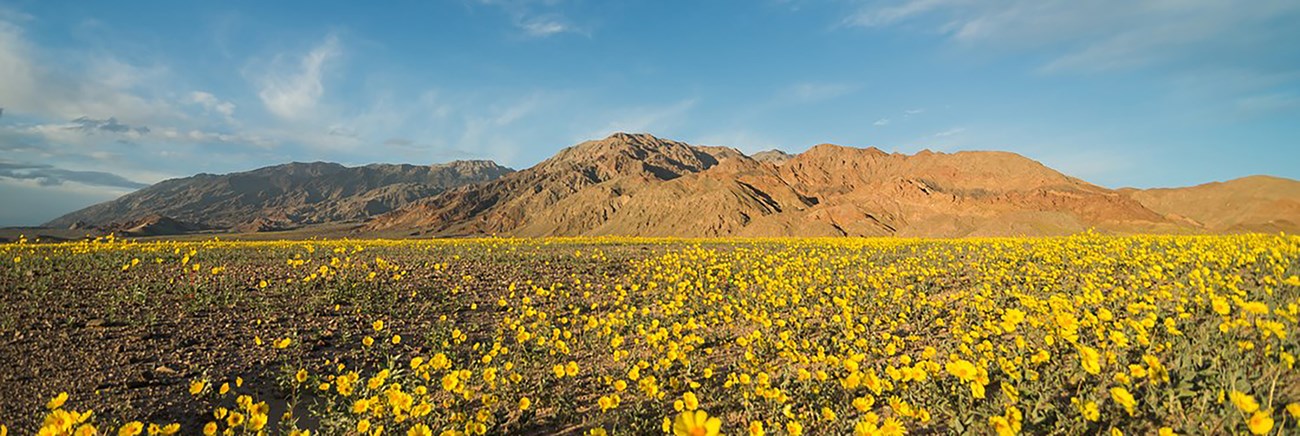
Death Valley’s springtime isn’t just about warm days and clear skies. With a little luck, you might witness a spectacular wildflower bloom, transforming the desert floor into a vibrant tapestry of color. While these “super blooms” only occur roughly once a decade (with the last ones in 2016, 2005, and 1998), even an average year offers a chance to spot a variety of desert wildflowers.
Predicting the Palette:
For the best chance of catching a wildflower show, aim for your visit sometime between late February and April, depending on the specific elevation. Keep an eye out for news reports mentioning above average rainfall and an El Niño weather pattern, which can significantly increase the likelihood of a vibrant bloom.
Desert Blooms Begin Low:
The floral display starts at the lower elevations, like Death Valley, and works its way up into the Eastern Sierra over the following weeks. So, if you miss the blooms in Death Valley, head towards the Eastern Sierra for a later wildflower season.
Where to See the Show:
- Death Valley National Park: The best wildflower viewing areas in Death Valley include Furnace Creek Wash, Badwater Basin near the Badwater Boardwalk, and Artist’s Drive. Death Valley National Park also has a wildflower hotline at 760-786-3856 that provides updates on current wildflower conditions.
- Eastern Sierra Nevada: As the spring progresses, the wildflower display moves up into the foothills and mountains of the Eastern Sierra. For a later season bloom, check out the Owens Valley, Alabama Hills, or Manzanar National Historic Site.
Respecting the Delicate Ecosystem:
Remember, these wildflowers are a vital part of the desert ecosystem. Never pick wildflowers within the National Park so they can reproduce and ensure future blooms.

Eastern Sierra Majesty: A Bonus Adventure
Eastern Sierra Nevada complements Death Valley’s stark beauty with a touch of alpine splendor. Crater Mountain, a volcanic peak rising from the Owens Valley, offers stunning panoramic views and a chance to encounter diverse wildlife, including majestic tule elk. For those seeking an off-road adventure, Olancha Dunes OHV Recreation Area provides a playground of rolling dunes, perfect for exploring by motorcycle or ATV.
Planning Your Adventure
Death Valley is a land of extremes. Be sure to plan your trip accordingly, bringing plenty of water, sun protection, and sturdy shoes. Check weather conditions before you go, especially if you’re planning to hike or explore remote areas.
Death Valley and the Eastern Sierra offer a captivating blend of otherworldly landscapes, each whispering tales of the earth’s dramatic history. So, lace up your boots, grab your sense of adventure, and get ready to discover a side of Death Valley that goes beyond the salt flats, with sand dunes to climb, craters to explore, and maybe, just maybe, a dazzling wildflower display to witness.