As snowmelt barrels out of the Sierra each spring and surges down into the valleys, something changes. The volume of the Sierra rises. Waterfalls roar, creeks swell, and the entire range hums a deeper, wilder tune. Spring runoff is a season I’ve always cherished — usually with boots on trail, hiking alongside a roaring river. But in April 2025, I found myself in a completely new rhythm.
This time, I wasn’t following the water from above. I was floating it.

Thanks to an invite from Tributary Whitewater, I joined their first run of the season on the East Fork of the Carson River — an experience I’ve long wanted to have, right here in my home range. And what unfolded over two days and 21 river miles was more than just a scenic float. It was a story of connection, of seeing familiar places with new eyes, and of families rediscovering wild joy, together.
A New Chapter with an Old Friend
Tributary Whitewater has been a fun media partner of Sierra Rec for a couple of years — regularly sending updates from the American and Yuba Rivers, where they’re best known for their fun, family-friendly trips. They’re based out of Lotus, CA, and operate across several classic whitewater zones in California and Oregon. But each spring, for a brief window, they guide a special trip close to my home — one of only two outfitters permitted to run the East Fork of the Carson River, from Markleeville to Gardnerville.

Despite our professional connection — and despite the fact that my own kids rafted the Yuba with them during the high-water year of 2023 — I had never personally experienced one of their trips. That changed after a conversation with owners Jeremiah and Eva on the Sierra Rec Now podcast in March. The passion they spoke with stuck with me. When they invited me to come see the East Fork through their eyes, I couldn’t say no.
The Put-In: Families, Gear, and First Currents
We met on a mild-weather Saturday at Carson River Resort, just outside Markleeville. My hiking buddy Tom joined me for the adventure, and together we met a crew of 20 — a spring break river family made up of 11 adults and 9 kids, all ages. The vibe was relaxed and excited. Eva got everyone outfitted with wetsuits and dry bags, walked us through what to expect, and prepped us for our overnight camp. All we needed to bring were our sleeping bags and whatever clothes we wanted for camp life.
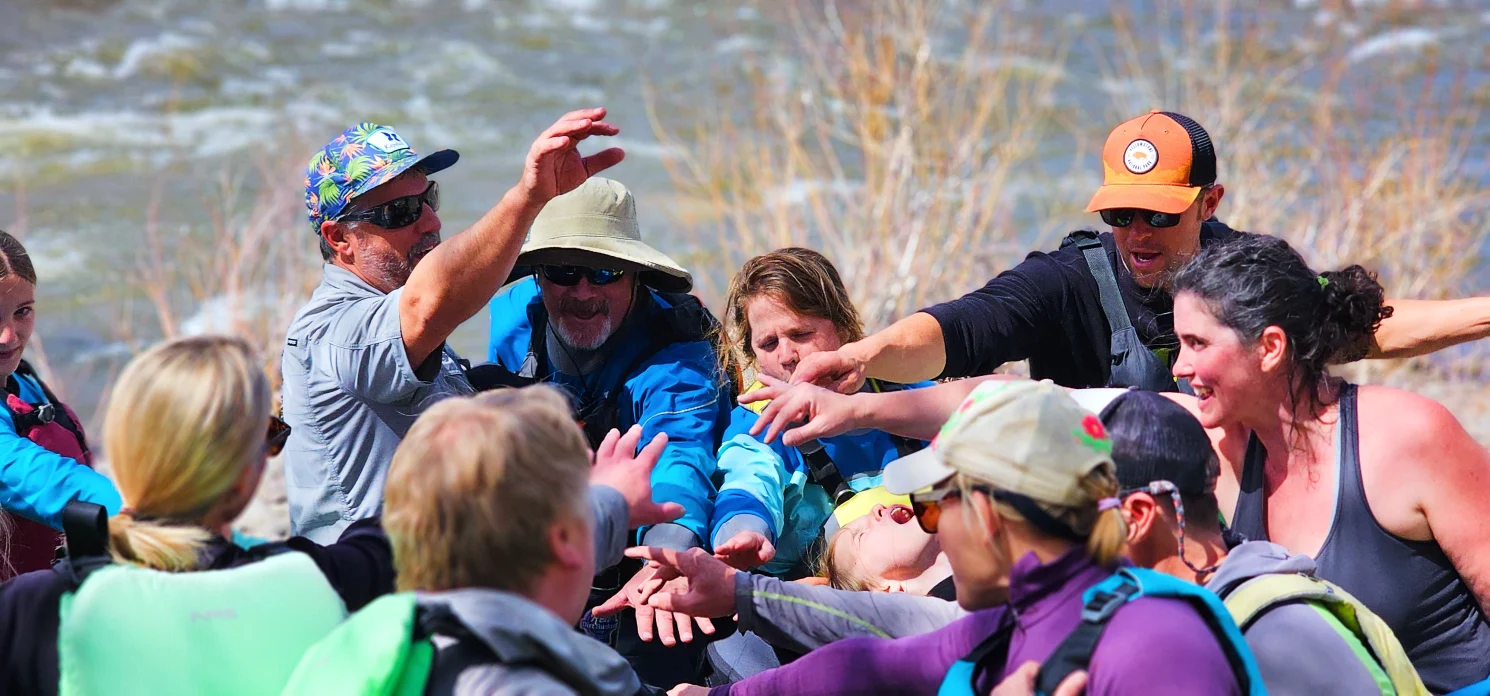
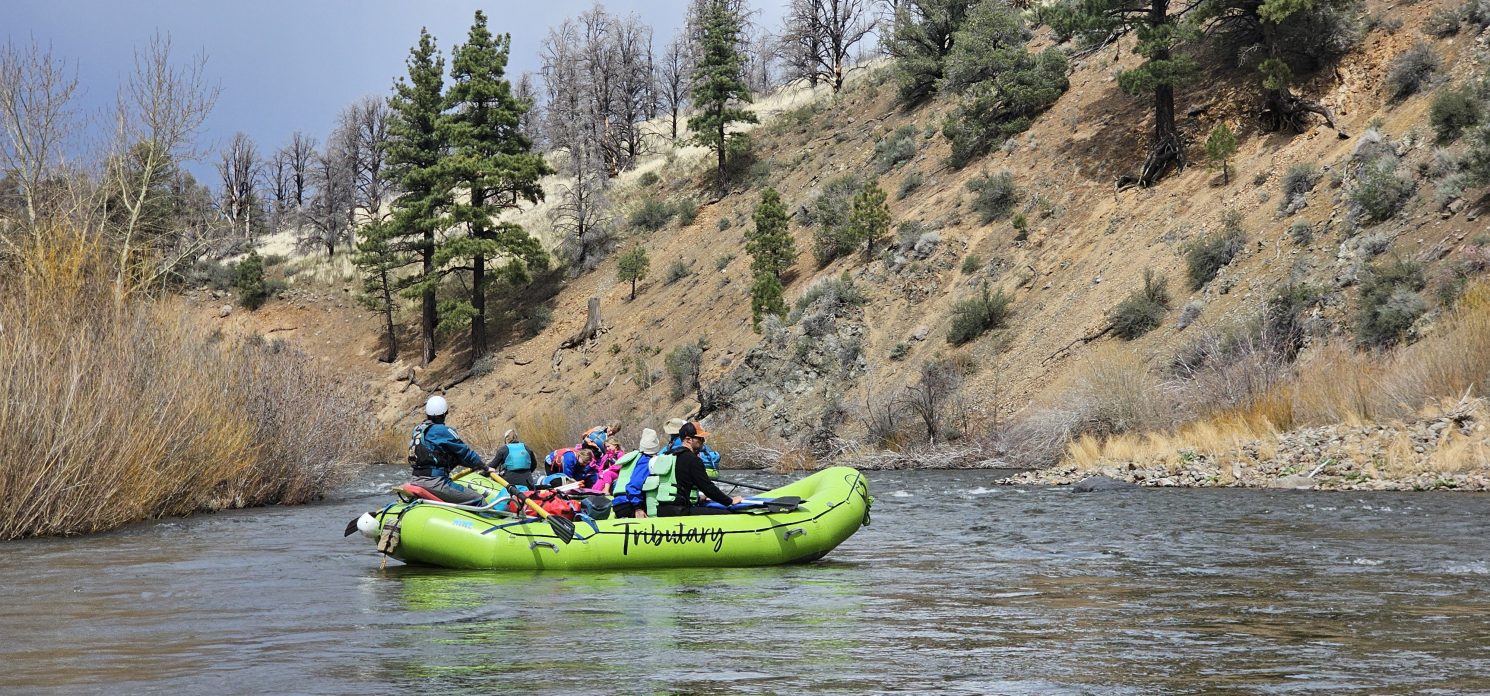
After the safety talk and some fun icebreaker games, we loaded gear onto the rafts, picked our crew, and shoved off — bound for the first major bend in the river: Hangman’s Bridge. Local legend and the guides both say this section gets casual floaters into trouble more than any other — but under the guidance of Tributary’s crew, our journey began smoothly and full of smiles.
Riding the East Fork: A New Perspective
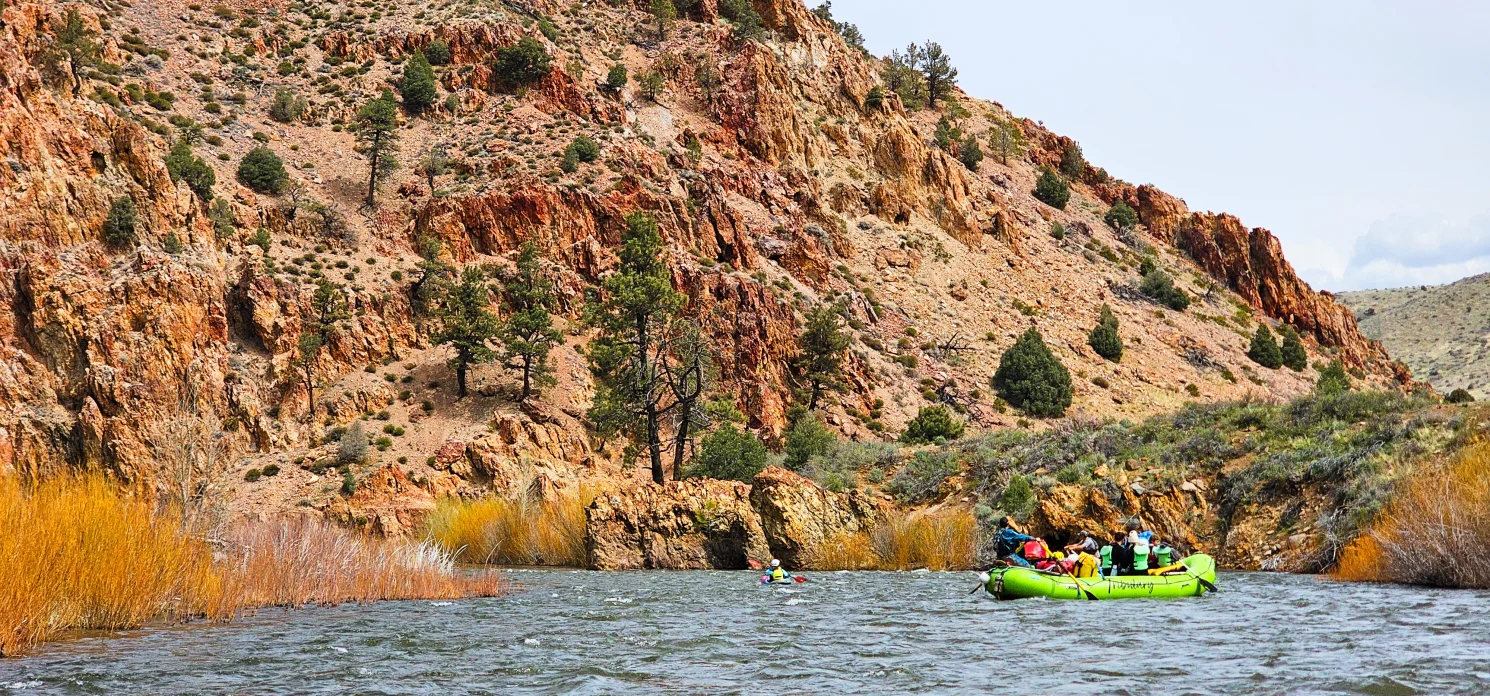
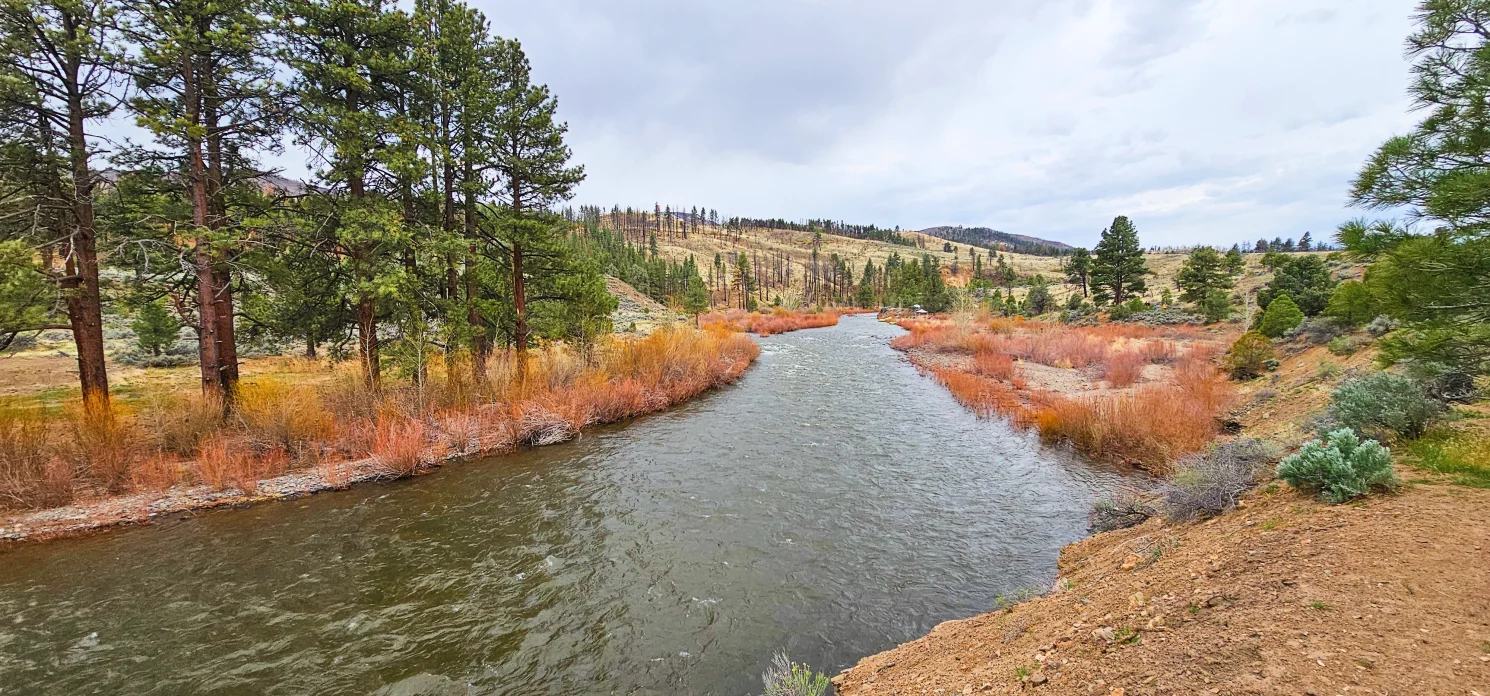
I’ve recreated all over the East Fork for years — swimming holes, scenic drives, early-fall hikes. But from the raft, the river felt like a brand-new place. Floating eye-level through this broad Alpine County valley, I saw volcanic ridgelines and forested hillsides I’d only ever passed by on Highway 89.
One memory stood out: drifting beneath a large volcanic overhang filled with swallow nests, the birds swirling in motion above us. Moments like that — quiet, wild, unscripted — defined this trip.

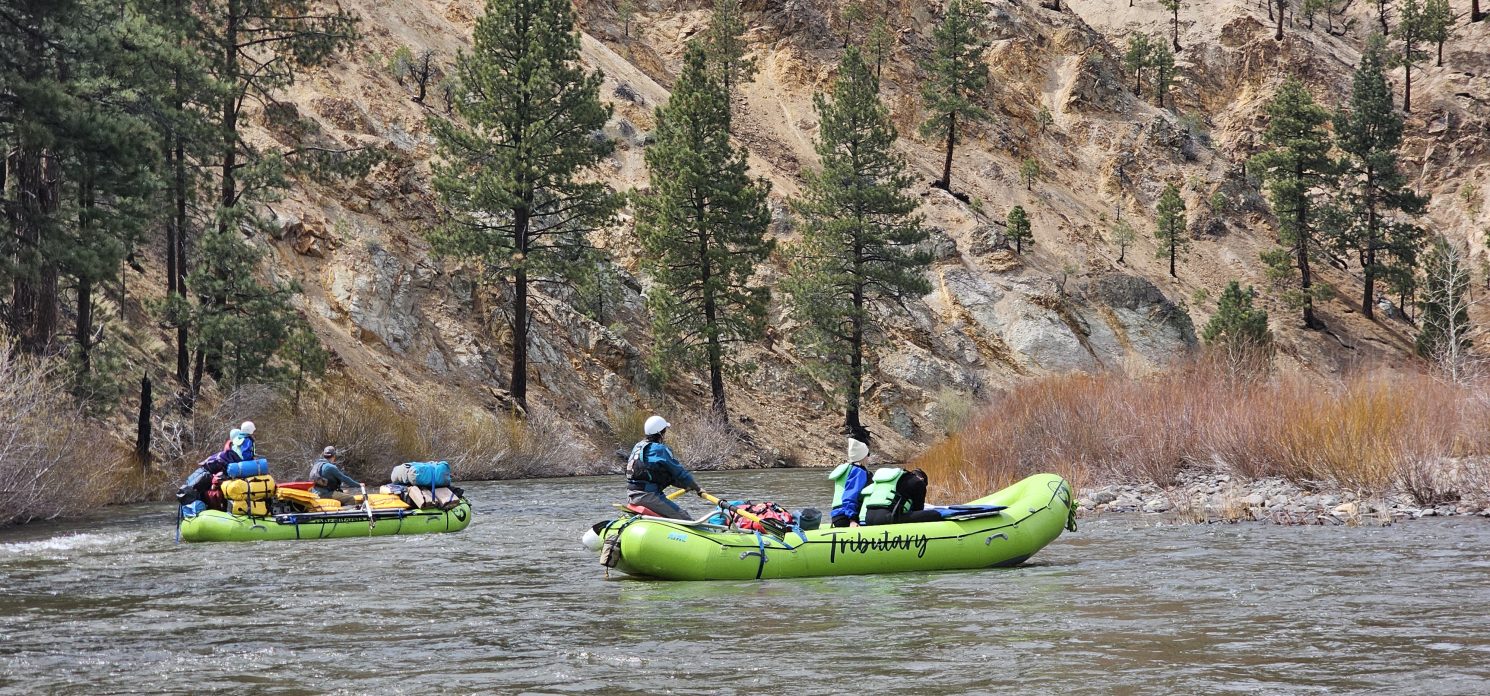
The East Fork isn’t a high-adrenaline river. It’s family-friendly whitewater: a blend of gentle ripples and steady flows, mixed with occasional Class II and Class III rapids. But what it lacks in thrill-seeking, it makes up for with immersion — the river flows through deep canyons and across dramatically changing rockscapes, keeping your eyes constantly up and outward.
River Lunch and Kids Gone Wild (in the Best Way)
After about seven miles of paddling — and passing through a burn-scarred section that whispered of past fire — we pulled ashore at a bend for lunch. Tributary set up a riverside spread of sandwiches, fruit, salads, chips — the kind of meal that tastes five stars after a morning on the water.
The kids, now fully bonded, exploded out of the boats. They ran hills, explored, played games, and turned the riverbank into a jungle gym. There’s something beautiful about how fast kids meet in nature. No introductions needed. Just curiosity and imagination.
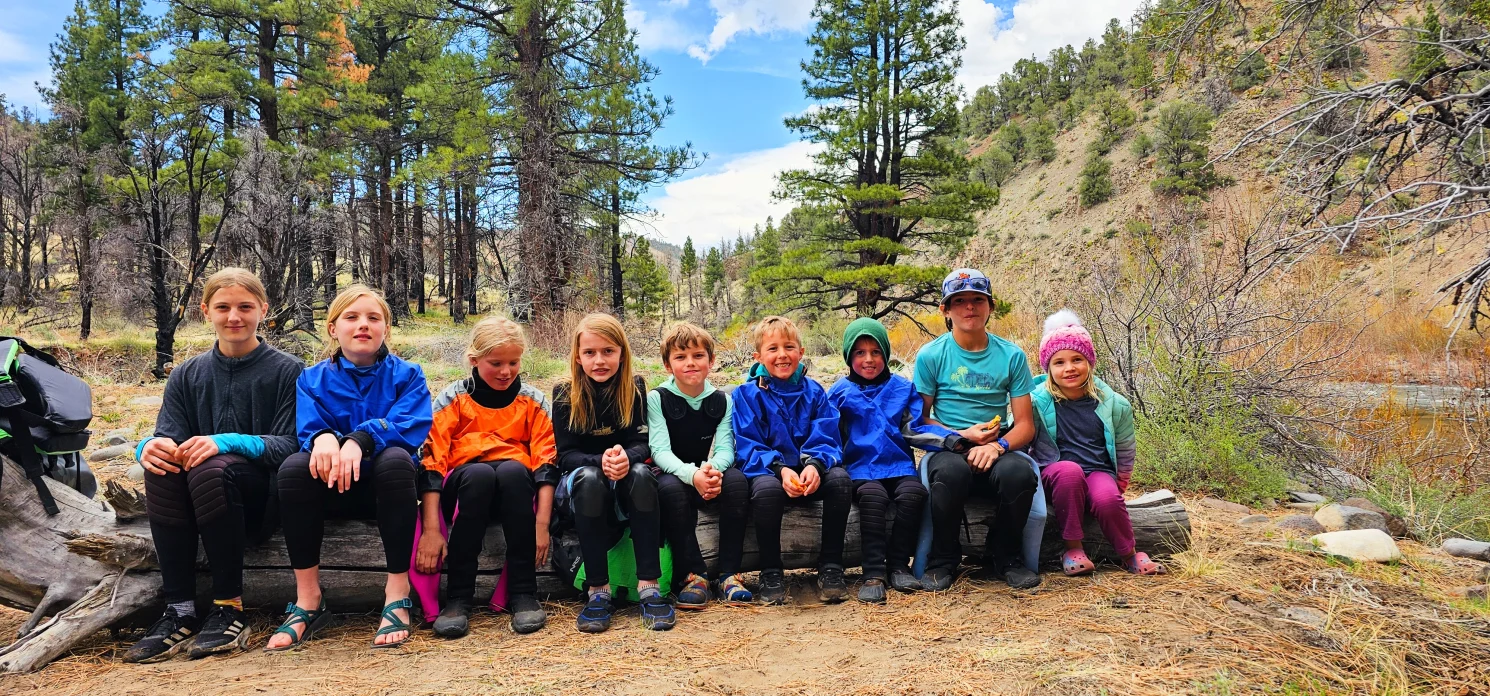
We all shared conversation, stretched out under the spring sun, and then packed up for the second leg of the day.
The Hot Springs and River Magic
As we left the burn scar behind, the river’s true scenic beauty emerged. Around the bend, we floated past one of the river’s hidden gems — the natural hot springs that bubble up just above the river line.
We hoped to camp near one of the tubs, but the first site was already taken. So, we navigated a small Class III section and scouted the next bar past the rapids — an open space perfect for a riverside overnight.
Setting up camp was a team effort. As gear came off the boats, our group shifted into a well-oiled community. Tents, cots, gear bags — everyone played a role. I picked a campsite on a small ridge above the fire pit, with a perfect view of the valley below. It was peaceful, expansive, and just far enough from the hustle to feel like my own slice of the Sierra.

Then, hot spring time.
The kids were already soaking by the time I arrived, laughter echoing up the river corridor. A few of us adults joined in — and as the sun settled over the range, I felt completely present. Riverside hot springs beneath the open sky? That’s the kind of Sierra moment that stays with you.
Fireside Stories and River Family Vibes
Dinner that night was surprisingly elegant. The guides laid out tables along the riverbank — complete with tablecloths and centerpieces. Spaghetti with sauces, salad, bread. Home-cooked comfort food under cottonwood trees.
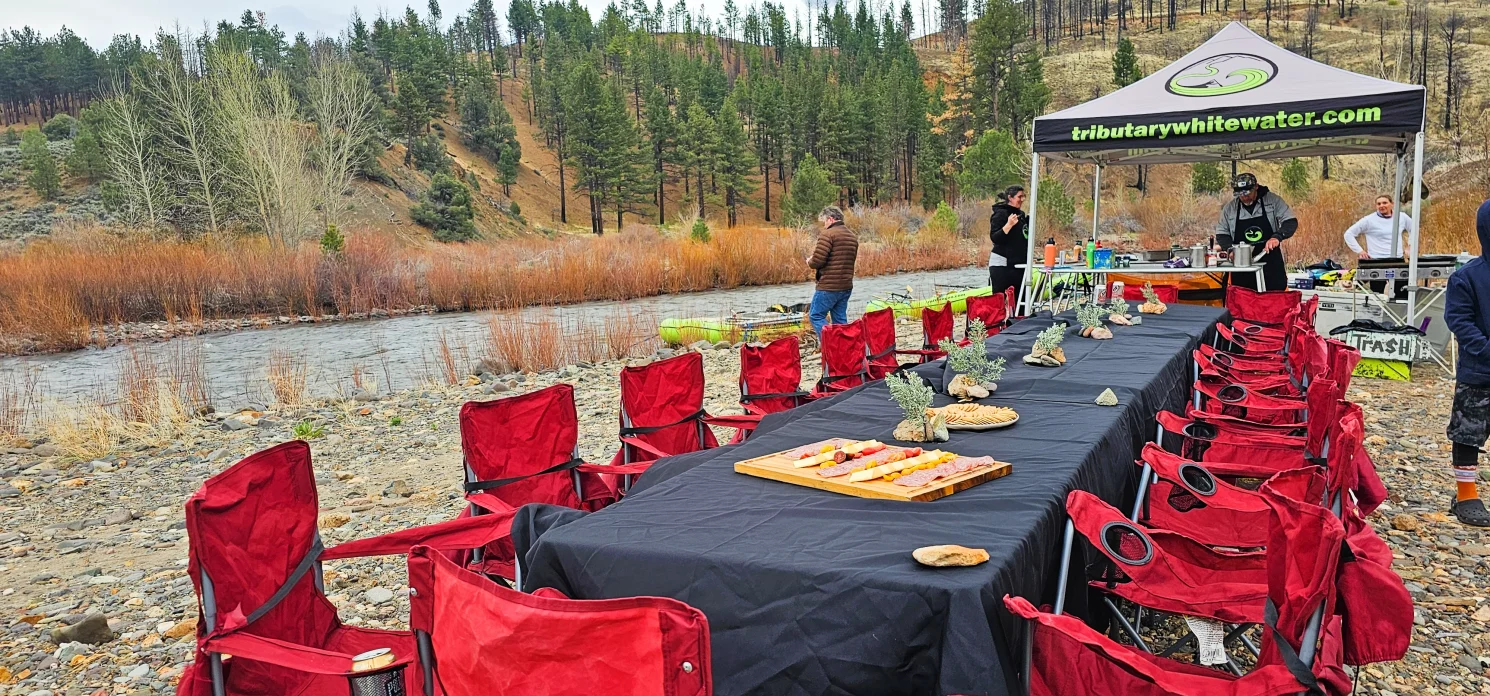
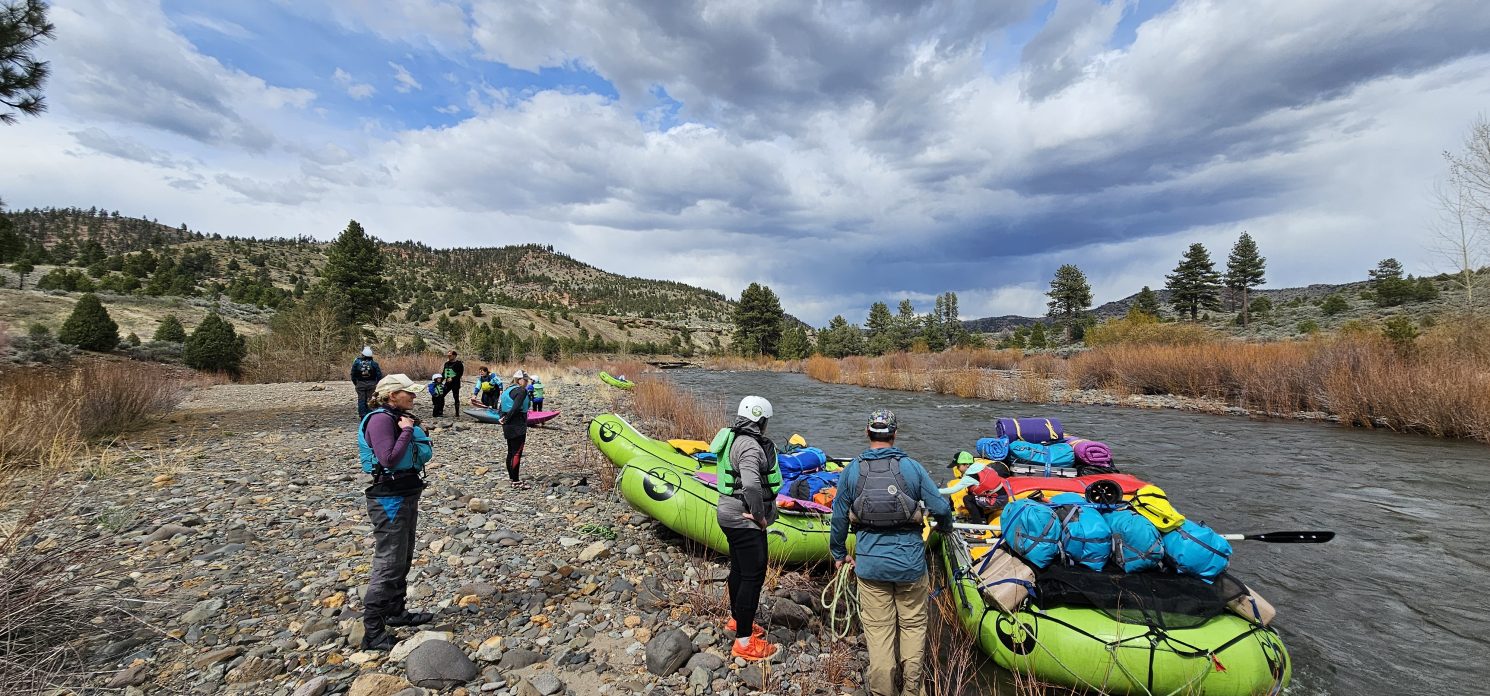
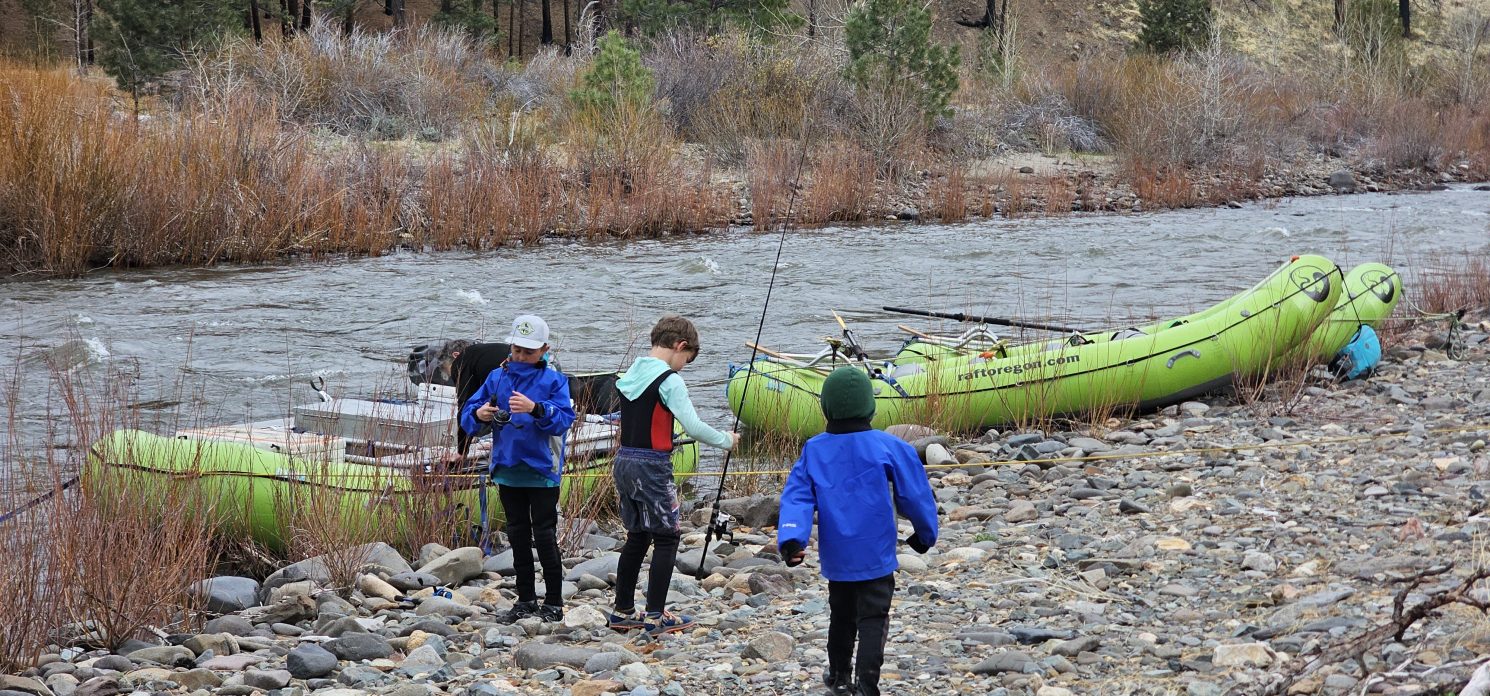


As we ate, families shared their favorite moments from the day. Kids chimed in. Laughter flowed like the river behind us. For Jeremiah and Eva, this had to be a rewarding moment — the kind that confirms their work isn’t just about running rivers. It’s about building something deeper.
After dinner, the kids gathered firewood and built a campfire (with some supervision, of course). The adults joined in, stories spun, marshmallows toasted. The kids played freely and fearlessly, their confidence growing with every step. It was wild — but safe wild. And as the fire burned low and the river hummed beside us, I found myself the last one awake, listening to water, watching flames fade.
Day Two: A Canyon Revealed
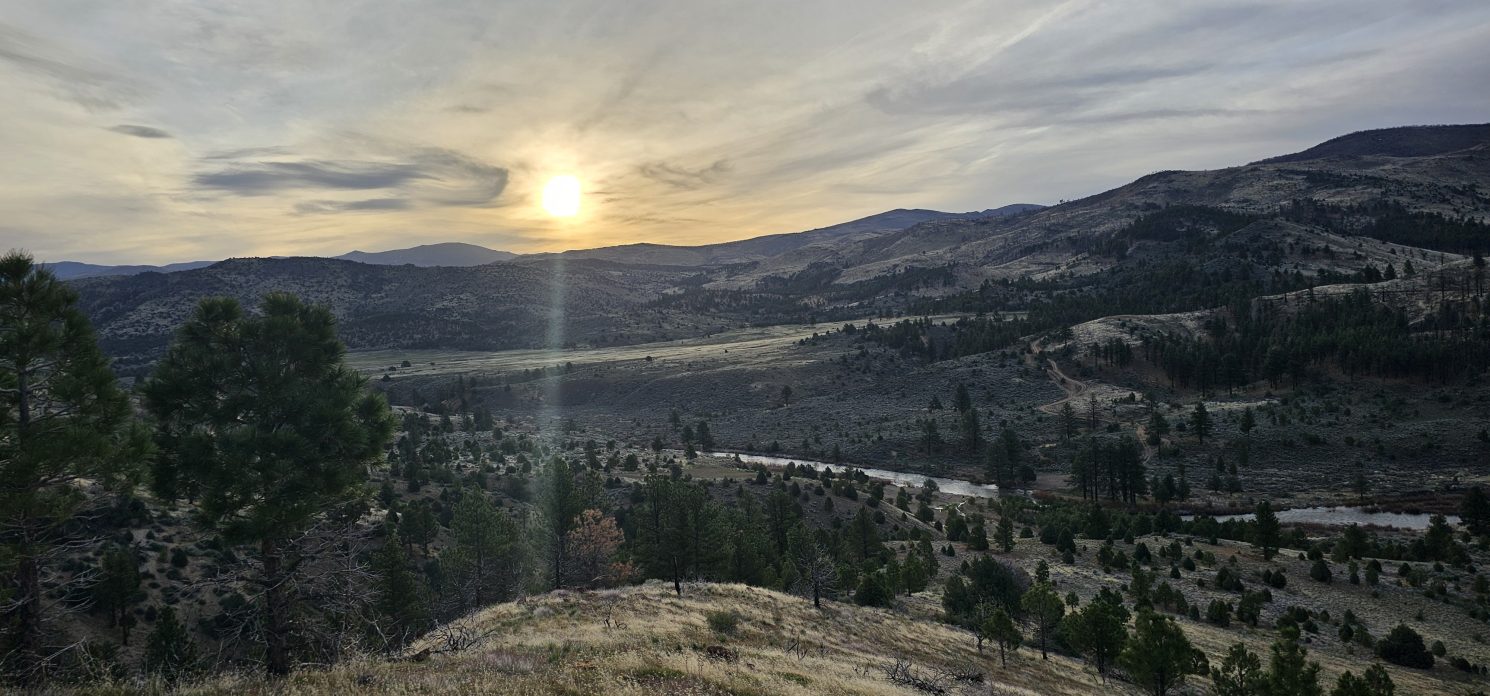
The next morning, I woke early for a solo hike above camp. Just a short climb brought a panoramic view of the canyon. I’ve lived in Carson Valley for 17 years — and yet, this side of the river was completely new to me. Seeing it from inside the canyon, with morning light on volcanic cliffs and cottonwoods, gave me a whole new appreciation for this stretch of the Sierra.
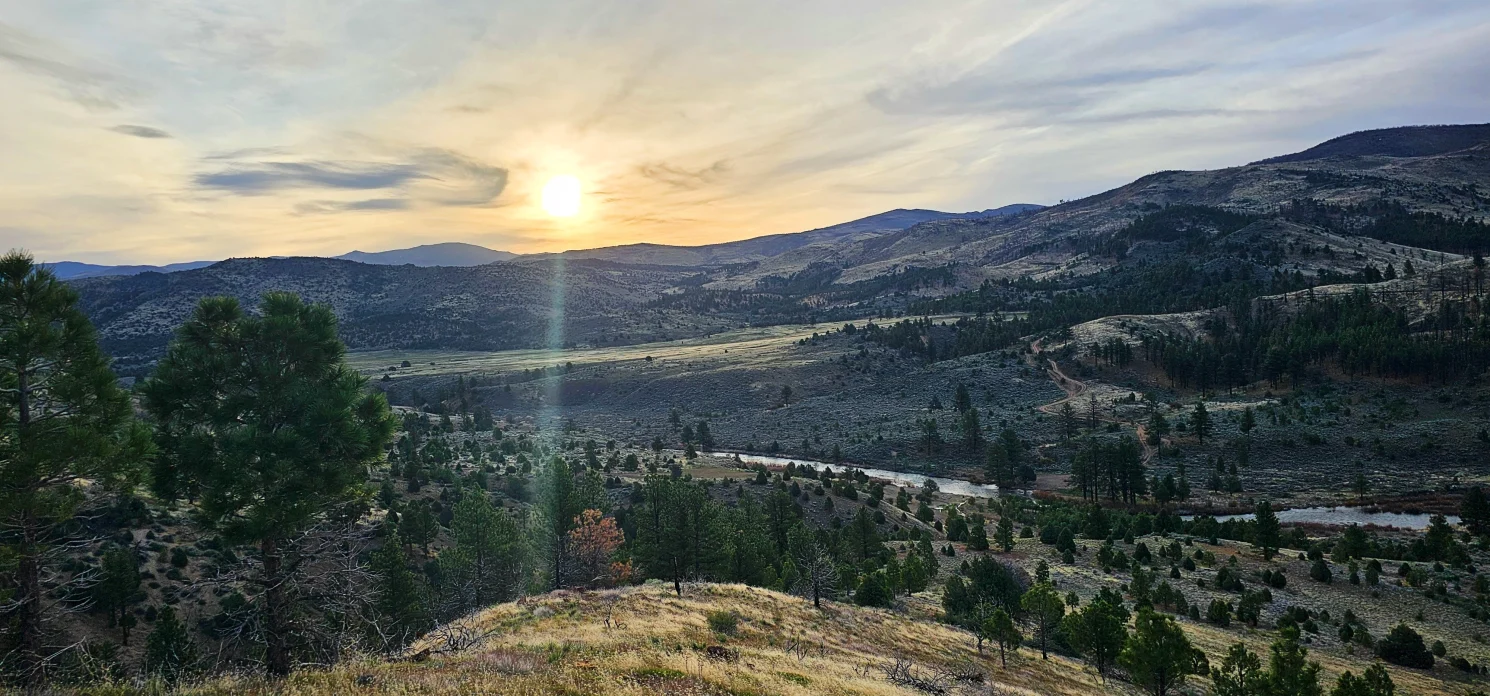
Back at camp, coffee was hot, breakfast was cooking — bacon, eggs, yogurt, fruit. No oatmeal packets here. Just the real deal. River life, at its best.
After breaking down camp and packing up, we launched for the final 10-mile float into Gardnerville. And while Day One was full of surprises, it was Day Two that completely won me over.
The colors of the canyon walls — red, tan, black volcanic soils — stood in sharp contrast to the vibrant greens of spring. Wildflowers bloomed. Old structures hinted at long-lost stories. The river here felt ancient, like a place you’d expect to find sacred rock art or hidden valleys never settled. Tom and I talked about how the Washoe people must have cherished this region. It’s easy to understand why.
Sheep Forts, River Kids, and the Final Stretch
Our final lunch stop was along a rock formation once used by sheep herders. Another meal, more laughs, and the sound of kids now fully at ease in their new river world.
One young family stood out — a mom and dad with two kids who never stopped smiling. Their youngest, maybe five years old, followed his big brother everywhere, full of joy and mud. Watching families like that thrive in wild spaces… it’s the kind of thing we need more of.
By the time we reached Gardnerville, our “river family” worked together seamlessly to unload boats, haul gear, and wrap up the journey. Jeremiah and Eva shared a few tips about their other upcoming adventures — including trips on the Rogue River in Oregon and the American River starting in May.
A New Way to Know a Place
As for Jeremiah and Eva — they’re not just guides. They’re hosts, storytellers, river stewards, and excellent company on and off the water. Their entire team brought humor, safety, and genuine hospitality into every part of the experience.
I’ve hiked, fished, swam, and driven along the East Fork of the Carson for years. But floating it like this — with strangers who became friends, with families who found joy and quiet in the current — changed something for me.
This river gave me a new story. One of reflection. One of connection. And one I’ll absolutely return to again.
Because sometimes, the best way to rediscover a place is to see it from the middle of the river.
