Witnessing the celestial spectacle of the Sierra night skies is an experience that transcends time and leaves an indelible mark on your soul. Picture this: cruising along the vast expanse of U.S. 50, from the Nevada border to Delta, Utah, under the spell of a pitch-black canvas illuminated solely by the brilliance of a myriad of stars. It was during my youthful escapade as a twenty-two-year-old Naval Aviator, traversing the country in a Navy-funded Corvette, that I stumbled upon this enchanting moment. The decision to pause in the profound darkness, shutting off the engine and embracing the solitude, was instinctive. As I stepped out into the ink-black night, the Milky Way unfolded before me in all its glory. With no artificial lights to disrupt the cosmic symphony, I found myself immersed in a sea of stars, each one telling a story of its own. At that bewitching hour, with no other soul in sight, I could perceive the constellations with such clarity that I dared to read the larger text within my trusty US road atlas by the starlight alone. This vivid memory, etched in the tapestry of my past, embodies the magic of Sierra night skies that goes beyond mere stargazing – it’s a journey into the heart of the cosmos, where every twinkle narrates a tale of wonder.
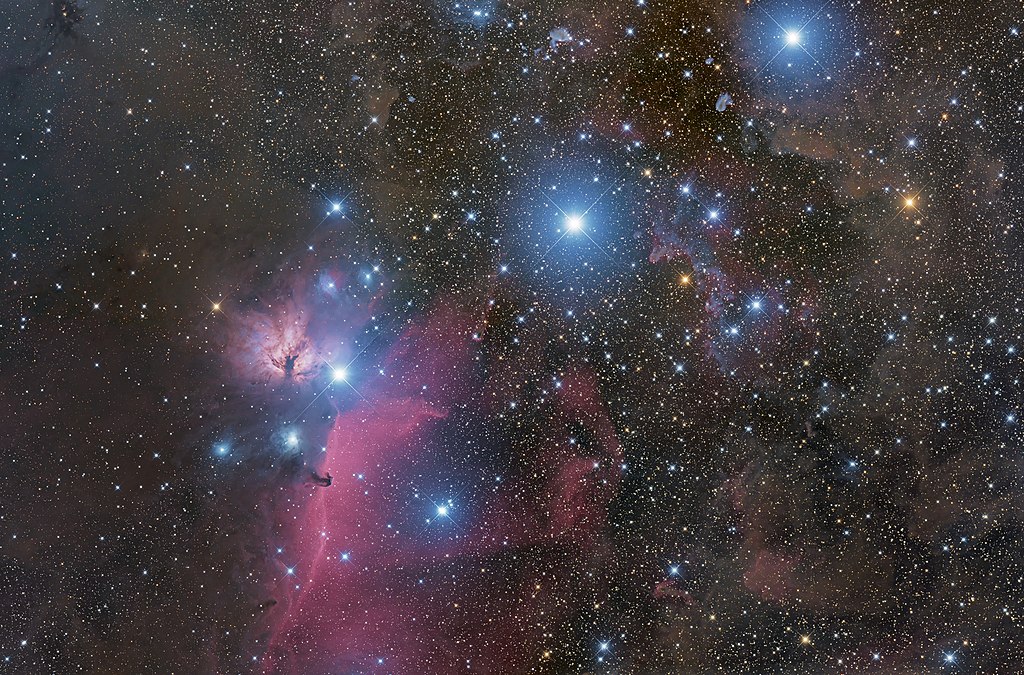
Just for fun: Our sun lies in the Orion Arm of the Milky Way. In northern-hemisphere winter the band of stars we see is looking through the Sagittarius Arm toward the galactic core (core-ward) and in northern-hemisphere summer, we look rim-ward through the Perseus Arm, out toward intergalactic space. For pictures and verbiage, see: Which spiral arm of the Milky Way holds our sun?
Yosemite Stary Evening
The uniqueness of my youthful experience was highlighted by a recent backpack camping trip into Yosemite National Park over the 4th of July. Don’t get me wrong, the stars were incredible. Nevertheless, one could not ignore the glow above the horizon in all directions. Few are those who can easily make it into Yosemite-type isolation from the lights of civilization, let alone a moonless night in western Utah.
Even if you are willing to put in the effort to get to such a place, where do you go? I was fortunate after watching 4th of July fireworks in Bridgeport, CA to have some great impromptu stargazing with my kids by spontaneously leaving NV338 to travel eastward for a ways down FR028 (a well defined dirt road leading to Hawthorne, NV). We spent a good 45 minutes just looking at the Milky Way,
identifying constellations, and finding planets. However, if you are inclined to a more dedicated trip with some more well defined parameters, then you might find some of the following options appealing.

The PARK TO PARK IN THE DARK ROUTE
Park to Park in the Dark is a designated route connecting Death Valley National Park and Great Basin National Park.
This 350ish mile stretch travels along NV 374, US 95, US 6, and US 6/50, taking travelers through a part of rural Nevada with a lot of character and history. You will travel through Beatty, Goldfield, Tonopah, Warm Springs, Currant, Ely, and Baker—none of which would look disfavorably were you to drop some tourist dollars there.
By day, Tonopah has a rich mining history, mining museum/park, sports the recently reopened Crescent Dunes Solar Thermal Plant, and perhaps most famously, is home to the fun/creepy Clown Motel.
Though most applicable for the cosmic theme of this article, The Clair Blackburn Memorial Stargazing Park.
Ely has a rich ranching history and offers a number of attractions to occupy your too-bright-to-see-stars hours: The Nevada Northern Railway Museum, East Ely Railroad Depot Museum, White Pine Public Museum, Ward Charcoal Ovens State Historic Park, or hunt for your own gemstones at Garnet Hill Recreation Area.
Beatty is home to a closed low-level radioactive waste repository (LLRW) if that’s your thing. You could even spend a night at the Atomic Inn (my young children were eager to give it a go).
Ending your trip with a drive down the “Extraterrestrial Highway” (NV 375) and subsequent alien abduction might be just the thing to wrap up your celestial experience.
I can, from experience, recommend a day trip to Lunar Crater National Landmark on US 6 between Warm Springs and Currant. Give some time if you plan to climb in (and out-the hard part) of the crater.
Friends of Nevada Wilderness has an extensive write-up concerning the evolution of the Park To Park In The Dark route, from idea to implementation, as well as links to pages detailing the characteristics of all the unique regions along the route.
What if we all made the darkness of the route so popular that we had the entire route packed headlight to taillight….wait….

Eastern Sierra Observatory Events
The Eastern Sierra Observatory in Bishop, CA holds a number of dark sky events throughout the year in the Eastern Sierra and southern California regions. At these events the Observatory makes available telescopes, lectures, and camping in the ever-present SHIFTPODs. Some events have yet to post ticket prices or dates so a call/text to the Observatory may be in order: 760-387-3005.
Eastern Sierra Dark Sky Festival
“Stargazing with GIANT telescopes, astronomy lectures, nighttime photo- graphy workshops, booths, food vendors, camping onsite in SHIFTPODs or your own RV/Van, giveaways, and…” <wait for it> “… more!”
The Eastern Sierra Dark Sky Festival is the probably the most applicable for Eastern Sierra residents who don’t want to travel overly far. However, the last event was in June and the next is in the planning stages. The web page has a “notification” button for those interested to receive timely updates.
California Dark Sky Festival
The California Dark Sky Festival is a bit further away from the Eastern Sierra region in California’s Panamint Valley (think outside the western edge of Death Valley), but has the advantage of still having openings for the event October 20th – 23rd, 2022. The attractions are largely the same as for the Eastern Sierra event, with the addition of: “Giveaways… Camping onsite in SHIFTPODS or your own tent/RV/etc… SOUNDBOKS Space Traveler Zone…”, the express promise of “Dark Skies…”, along with the ever-tantalizing “And More!”. Oh, and
Perseids Meteor Shower Party!
The Observatory is also having its The Inaugural Perseids Meteor Shower Party during August 11th – 14th, 2022 at the Great Basin Starcamp near Lovelock, Nevada. The same event perks as found in the Eastern Sierra and California festivals are advertized , however, they acknowledge that, this year, the Perseid Meteor Shower will occur during the full moon, so only the brightest shooting stars will be visible. Still, one can never get enough “and more!” or SHIFTPODs (sorry, they make a big deal about them, so I’m only following their lead…).
Great Basin Astronomy Festival
The Great Basin Astronomy Festival is a free (hey!…) dark sky event running September 22nd – 24th, 2022. The Lehman Caves Visitor Center is the hub from which all the events take place. Don’t want to drive all the way to Lehman Caves after all the fuel used to get to eastern Nevada?…A free bus ride between the Great Basin Visitor Center Baker, NV and the Lehman Caves Visitor Center will be available from 8 pm to 11 pm.
Events include telescope viewing, guest lectures, observatory tour, a constellation talk, photo workshop, and Art-In-The-Dark. <Sadly, no mention of SHIFTPODs or ‘and more’–apparently, one can stargaze without a SHIFTPOD…but…would you really want to?> The Observatory Tour, Art-In-The-Dark Program, and the Photo Workshop are space limited and require an advance e-mail registration. The Art-In-The-Dark Program provides the art supplies, but the Photo Workshop has some equipment requirements…check out the webpage.
The Great Basin Star Train is another offering of Great Basin National Park and the Northern Nevada Railway in Ely, NV. Northern Nevada Railway provides the train and the National Park Service provides knowledgeable celestial guides to guide visitors through the starry night sky. In 2019, CBS This Morning did a feature on the trip that is worth checking out.
The Lehman Caves Visitor Center also has something unusual: a solar telescope. Visitors can check out our own star’s sunspots, magnetic storms, and solar prominences, and filaments. It should go without saying…this is a daytime event. Granted, kind of outside the scope of a ‘dark sky’ article, but cool and ‘spacey’ nonetheless…
Sequoia Parks Conservancy Dark Sky Festival
On September 24th, Sequoia and Kings Canyon National Parks are having their 2022 Dark Sky Festival with events in various locations throughout the parks. While the festival events, primarily in the Giant Forest/Lodgepole and Grant Grove areas, are free of charge, one will have to pay for admission into the parks.
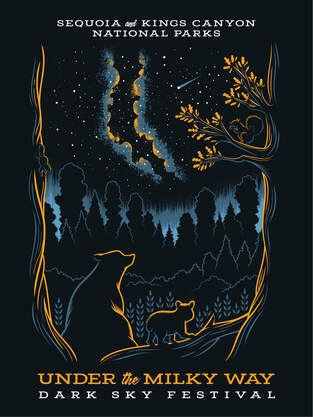
Events include a keynote speaker (Kate Gunderson- former NASA test flight engineer and currently undergoing further flight engineering training at the National Test Pilot School in Mojave, CA), a number of lectures and films ranging from dark sky topics to the Antikythera Mechanism (believed to be a ancient orrey—a mechanical representation of the solar system that predicts positions of celestial objects), and ending, in both areas, with a STAR PARTY! (all caps and exclamation point emphasis theirs—but with such pomp, one could easily imagine SHIFTPODs might be present. Anyone who attends will have to let us know!)
A solar viewing is also advertised–perhaps this isn’t as rare as it used to be…
Joshua Tree National Park’s Night Sky Festival

September 23-24, 2022 marks Joshua Tree National Park’s 7th Night Sky Festival. (sold Out for 2022)
Event activities include hikes, gold panning, astronomy lectures, Night Sky Star Party with musical guest Amanda Pascali and Family, Night Sky Light Painting Photography Workshop led by Casey Kiernan, a telescope clinic to help you learn to best use your telescope, and… …SHIFTPODs!!!… …sorry, no, I made that last one up. Different activities have different costs so check out the hyperlink above.
Featured Image by Willow Cornelius – Willow Photography


