“Nothing better than a long beard in a sack.” Martha Washington, 1762
The Chevy Silverado’s air conditioning had stopped working, so the windows were down, and warm October air gushed through the cab at sixty miles per hour. I had the grill pointed north on Highway 395.
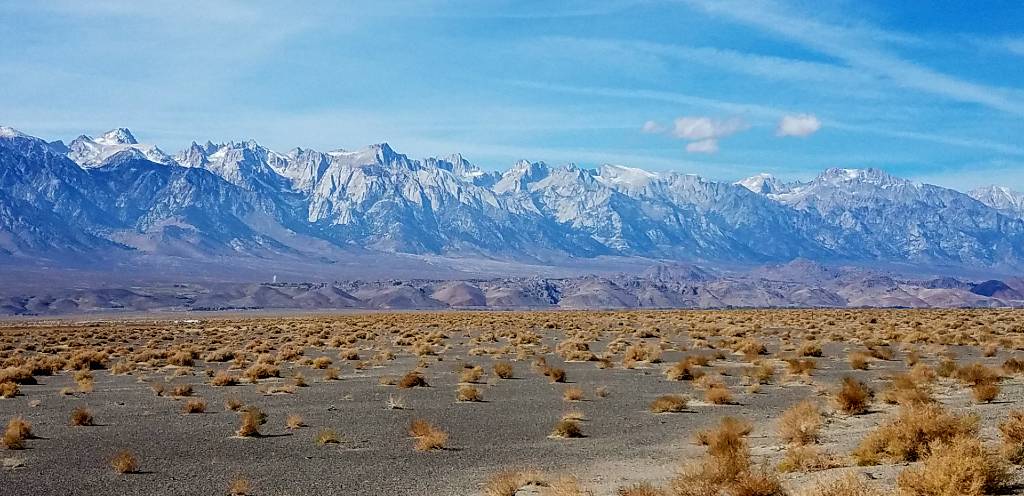
Out my left side window, I passed the Sierra Nevada Mountains, a granite upthrust covered in forests of Douglas fir, manzanita, and mountain mahogany, either a firefighter’s dream come true or their worst nightmare. The vast sagebrush-covered desert of the intermountain west was out the passenger’s side window. More accurately, Nevada, the Silver State, the sin capital of the world, the home of Burning Man and the Great Basin, and an eye-popping solitude that stretched across Utah to the Rocky Mountains.
We, the men of the Silverado, were sitting high on the dividing line between these two very different worlds, teetering on the razor’s edge, walking the tightrope, strutting on the balance beam; we were simple funambulists (look it up), and more importantly, we were on a mission to bring home tom turkeys, big Rio Grande’s to be exact, Meleagris gallopavo intermedia, to you scientific types, birds introduced into northern California in the last century by the Department of Fish and Wildlife. Out the windshield was a world of possibilities, a vanishing point on the blacktop highway, where someone inside this truck might pose for a trophy photo with the main course for Thanksgiving dinner. Yes, my friends, I’m talking about a turkey hunt road trip of epic proportions.
The truck was properly provisioned with shotguns, suitcases, drinking water, beer, and hotdogs. Behind it, I pulled a pop-up tent trailer. The skies were clear, the weather hot for October, and we had four days to get it done. Reno was in our rearview and out front awaited small-town pit stops and thunder chickens.

Next to me sat Ray, a coworker and fellow hunter. Ray was a world of contrasts; imagine the humbleness of Mister Rogers in the body of Lyle Alzado. He liked fishing in the afternoons, long barefoot strolls on the beach, and pina coladas at midnight—I’m not too sure about any of that, but what I do know he was the excitable kind when it came to hunting: get him talking about guns or fishing poles and his eyes would take on this eerie iridescent glow; like multicolored LED lights in his brain suddenly came to life and flashed signals from behind his irises. “I know this place,” he said one afternoon, huddled inside my cubicle, his words a little slurred as if drunk on the idea. “I know this place where the turkeys are so thick that the dirt mites and wheat crops are being decimated. There’s a rumor there might be a food shortage in the Central Valley if some guys, like us, don’t do something quick to knock down the numbers.” I nodded with him, looking into those LED eyes and picking up on his vibe. He was telling me in the secret language shared by all hunters, that we needed to save the planet from starvation by killing turkeys.
Something I was willing to do…, you know…, for humanity’s sake.
A plan was hatched, licenses bought at the local gun shop, and with enough shotgun shells to make Pancho Villa smile; we were on our way.
We hit Susanville later that afternoon like the Hells Angels rolling into Vegas. I parked extra wide, taking up a double spot at the gas pumps, we owned the restrooms for way too long, and at the soda fountain, we crowded in tight and took extra shots off the cups when the cashier wasn’t looking. It was a wild and edgy ten minutes, then back on the road.
We crested the Sierras with sunlight on our faces and bluebirds in the trees. A little farther on, valley oaks began to appear: big, beautiful globes of green leaves underpinned by outstretched limbs that would make Hercules jealous. The change in scenery brought a hazy glow to the truck’s interior, something I couldn’t quite put my finger on. In the rearview, I glimpsed my dad’s forehead plastered to the side window, his breath fogging up the glass, his eyes flicking as he checked under each bush we passed for the twig-like legs of turkeys.
Ray, sitting next to me, who gave us a run-on monologue since Susanville, went stone silent. He now sat bolt-upright and his arms hung loose like a couple of salamis, but his fingers twitched like they were either making sign language or loading shells into the invisible shotgun in his lap.
We crossed a cattle guard and the two snapped out of whatever trance had befallen them. A slow-boiling heat rushed the cab as we dropped down the hill. The heat was an inescapable presence that ran across our arms and faces and down our backs until everyone was rubbing and itching. At the bottom of the hill, the smell of red dirt and decaying pine needles hit us.

Ray guided us to a camp spot which turned out to be an undeveloped open space next to a county road where we could set up the trailer and quietly sneak off the hillside straight into the heart of turkey country. There was shade here, pleasant enough pines and oaks where we could set up the trailer and have some relief from the afternoon heat.
Twenty minutes later, and dressed head-to-toe in camouflage, we plodded down the hillside looking very much like rejects from the CIA’s Nicaraguan rebel army, shotguns at the ready. I went slow and steady, checking under each bush. If there was one thing that could keep me out of the woods, it was snakes. Not just any snakes, but Northern Pacific Rattlesnakes. They’re large and ill-tempered and hang out in places that have turkeys. The local rattlers come in three popular shades: dark tan, rusty brown, and the fashion-forward red-on-white striped combo. All of them would blend nicely into this—
Ray raised a fist in the air.
We all stopped short.
Ray reached down between his feet and picked up a tall, tail feather from a Rio, a rectrices for you ornithologists out there. The tip was fluffy brown with a long, iridescent stretch of black vanes. He held it delicately between his thumb and forefinger. A faraway look crossed his features, and then he ran the feather under his nose and closed his eyes. “We’re close now,” he whispered, “we’re very, very close.”

As this happened, I heard a soft, far-off sound that hunters would recognize as a forest noise, an animal suddenly startled from its bed and tearing through the woods, or maybe the rubbing of two trees as they touched during a strong breeze. Then it was over and we dropped deeper into the overgrown streambed in search of our quarry.
From then on it was a long stroll through the lush stream bottom with nothing else. Two hours later, with the afternoon shadows growing long, we pulled up the hill, sweating, hungry, gasping for oxygen, and ready for an evening beer and some R&R. That was when I glimpsed our camp.
The light had changed since we left, the shadows stretched long over the truck and trailer and trees until it had become one continuous mesh of darkened steel and limbs. We walked in closer and the bond between the truck and the tree became clearer. The valley oak I parked under, the one I trusted to give us shade from the heat, was, in reality, a gigantic sloth of sorts, tall as a three-story building, with the deflated silhouette of a beehive. It had large, egg-shaped openings for eyes and a mouth with only one bright tooth made out of sunlight. During our hunt, this giant sloth had decided it didn’t like invaders and dropped a thick limb on top of the truck, smashing the windshield, tearing off a mirror, and crushing the fiberglass canopy on the truck bed.
Standing there, I gazed at the truck, my thoughts full of imprecations. The limb lay on top of the roof like a giant dead shark. Somewhere in the distance, a flock of ducks quacked maniacally. I turned to the sound of what appeared to be three misshapen black balloons that drifted across the far edge of the meadow and then disappeared into the darkness.
What happened here?
My mind couldn’t grasp the reality that I had somehow parked under the only tree in this entire parking area with an unhinged limb, and that it happened to snap off only minutes after we started our hunt (that was the noise I heard). These trees are old, and some live to 600 years. This limb might have been around for the pilgrims landing at Plymouth Rock, had waited all those years through rain storms, strong winds, and maybe even forest fires before deciding ‘today was the day’. What are the odds? Seriously. 400 years of individual days equals 146,000 possible opportunities when that limb could have fallen, but I parked under it on the exact day and within an hour of it snapping off.
The tree limb was at least thirty feet long and close to two feet thick at the base. We weren’t going anywhere until it was removed. We had no tools save for a small bow-saw used for cutting firewood. I looked at Ray, the biggest of us, the person capable of bench-pressing a small car. He already had his hand pressed into his lower back, squeezing and saying, “I can’t touch that thing, I got a blown disc.”
“Can you saw?” I asked. “If I get the saw, can you move your arms?”
“We’re gonna need a tow truck,” he said and thumbed at his phone.
“You know what?” my dad said, eyes turned upward, inspecting the underside of the tree. “Least we weren’t underneath it sleepin’.”
This is true. If I had parked the trailer a little differently, the limb could have crashed on us, possibly at night, possibly killing someone. And with that realization, a reflective peace came upon us.
But it didn’t last long because a battalion of backwoods mudders rolled up the two-lane toward us. Off- roaders with Jeep Wranglers stripped down to the bare minimum, their thick-soled tires thundered off the pavement, sawed-off tailpipes sounded like an artillery bombardment, and twanging Telecaster guitars signaled their arrival like trumpeters on a battlefield. A woman stood up on the passenger seat of the lead vehicle. Holding onto the windshield—and looking a lot like General Patton leading the Seventh Army into Sicily— she directed traffic, ordering the others to follow her lead. The parade slowed and dropped off into our camp, bringing a dust cloud that settled on us. Rednecks!
I don’t mean to throw shade on rednecks here, in many ways, I are one. Wikipedia refers to redneck as, “a derogatory term mainly, but not exclusively, applied to white Americans perceived to be crass and unsophisticated.”
This pretty much describes what was now parked in front of me.
The Jeeps had lift kits and roll bars and oversized tires, not a single one had any doors. CB radio antennas whipped in the wind. An assortment of miniature flags were tied to antenna tips: two American flags, a flag of the Army of Northern Virginia, a Gadsden “Don’t Tread on Me”, the flag of the great state of Texas, and a fluffy raccoon tail that fluttered in the breeze. Hank Williams Jr’s, A Country Boy Can Survive was the soundtrack for what was about to go down.
“Saw it right off,” the closest one shouted over the music. He wore a ballcap with a Bud Light patch on the front, a blue cotton shirt with the arms cut off that hung loosely over a silk-screened tank top displaying a top-heavy girl in a string bikini. Mirrored sunglasses shaded his eyes, his mustache could have been Tom Selleck’s, and he had a golf ball-sized wad of Red-Man tucked in his lower lip. Get the picture?
“Saw it when we came by earlier,” he went on. “Dang widow makers.”
“You got a chainsaw or anything?” I asked.
“Don’t need one. Not now.”
“Why’s that?”
Before it went any further, a guy in a late 1980s Cherokee pulled to the front of the line. The rig was painted two-tone white and black with custom-welded, black tubular bumpers. Behind the wheel sat a kid with a James Dean haircut, Ray Bans propped on his nose, and a white undershirt stretched across his chest. An air freshener shaped like a pine tree dangled from the rearview mirror. The rig was as loud as a lion, kicked dirt like a rhino, and stood taller than a giraffe on stilts. The license plate read: UNSTBLE.
Got that straight.
“Say, partner,” I said. “If you guys have a saw, I’d sure appreciate borrowing it.”
There was no answer. Cherokee Man got out, opened his rear hatch, and removed a thick, yellow tow strap, tossing it on the ground.
“Look here,” I said, “I don’t need a tow yet. I just got to get the limb off my truck.” Cherokee Man had the tow strap tossed over another limb in a second. He attached it to the tow hook under his bumper. Two other guys jumped out and tied a couple of loops around the limb’s girth, and thirty seconds later, the limb was up in the air, and I pulled the Silverado out of the way. A serious round of applause came from everyone. The rednecks all came around to shake hands. I offered them beers but they weren’t interested. Instead, they hooked the limb to each Jeep and held a county-fair style truck-pull in my front yard. They dragged that limb in wide arcs around the field and spun donuts close to the trailer for the better part of a half-hour. Have at it, boys.
Ray, my dad, and I stood by and looked on dumbfounded. What do you say to all this? Is it all just a cosmic blimp on the screen, an event with no meaning or significance, or is it something more? To believe in God is one thing, but I was trying to get my head around the idea that the same God who would allow the tree limb to smash my window had also provided a half dozen fanatical four-wheelers to come along at the exact minute that I needed to be rescued. The whole scene was like something staged for a reality television show and it took a greater understanding of faith than I could comprehend at the moment, yet, there we were. A dust cloud churned the world into a rose-colored landscape, as the tree limb skidded across the field in primitive victory celebration. Ol’ Waylon sang about falling in love with a ramblin’ man as an anthem to the event.
Ultimately, we hunted another day and finally came upon a single turkey, a Jake (a teenager), not the blue-headed, boastful bully of Thanksgiving lore we all know and love, but a thinner, prettier, man-about-town.
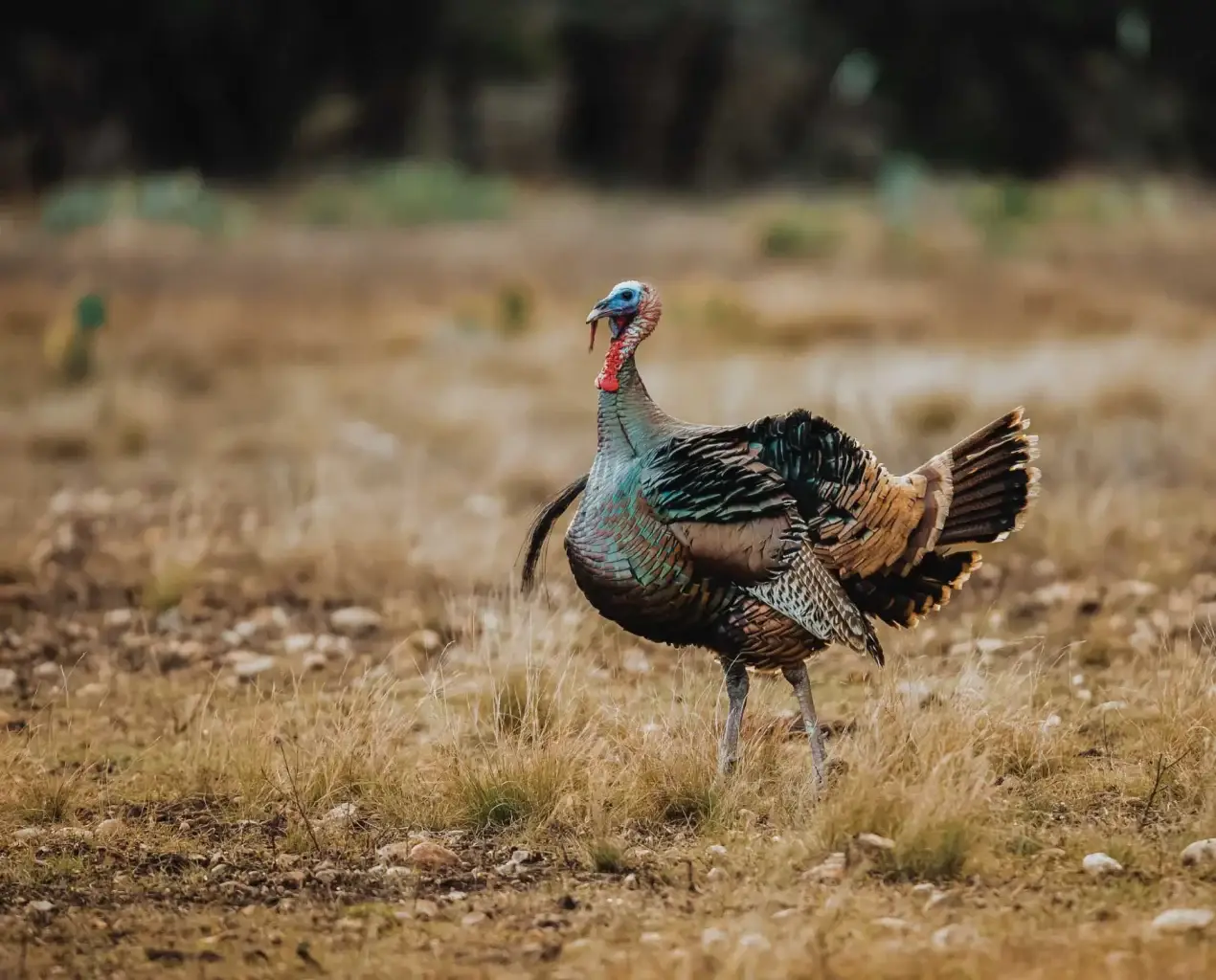
The only problem with shooting him was the nicely decorated ranch-style home he stood in front of on Mulberry Street. Blasting a bird off someone’s manicured lawn in broad daylight is considered by some folks to be a hunting faux pas. The reckless discharge of a firearm might subject one of us to possible jail time. We let him slide.
I drove the truck home with the smashed windshield and didn’t get a ticket. I still don’t have an answer to the ‘big-picture’ meaning of all of it, but it makes me think of Ibn Battuta, the famed 14th-century explorer who said, “Traveling leaves you speechless, then turns you into a storyteller.” No doubt.
Northern California turkey hunting is not all oak trees smashing the hood of your truck and rednecks with angel wings coming to save you, even though those things could happen. Most of my experiences hunting on State Lands were more pleasant than that.
Hunting the foothills of the Sierras in April is the perfect time to explore new locations with family and friends. The hillsides are still green, and California State Wildlife Areas offer large open spaces and weird little slivers of land that are great places to find turkeys. So, pack a lunch, grab your gun, and get mud on your boots.
Here are the basics:
- California’s general turkey season runs from the end of March to the beginning of May.
- A valid California hunting license and an upland game bird stamp is required.
- Lead-free shot is mandatory on State Lands
- Hunt hours are a half-hour before sunrise to 5 p.m.
- Hunters can take one bearded turkey daily with a spring season limit of three birds. This is generous; most
- Western states allow one bird per season.
- The regulations are available online at the California Upland Game Bird Hunting website.
This story occurred near the Tehama State Wildlife Area ( Lat. 40.217˚, Lon. -121.950˚ ) near Red Bluff, California, where plenty of BLM and State Land abound. I would suggest camping while you are there.
Need a break from hunting? Red Bluff is about 20 miles west. My favorite restaurant is The Green Barn
Whiskey Kitchen (530) 527-3161. They serve a mean steak.