By Charlie Pankey | Sierra Rec Magazine
A Four-Day Three-night trip into McCabe, Roosevelt and Young Lakes
The planning for this trip started in January, but the dream of it began years earlier. On this July morning, as I packed the final gear into the truck and headed out to pick up Tom, I felt like a giddy schoolboy going on his first date. This wasn’t just any trip. This was Yosemite—our route would cut through its northern wilderness, across the PCT, into Cold Creek Canyon, up to McCabe Lakes, and finally around to Roosevelt and Upper Young Lakes.
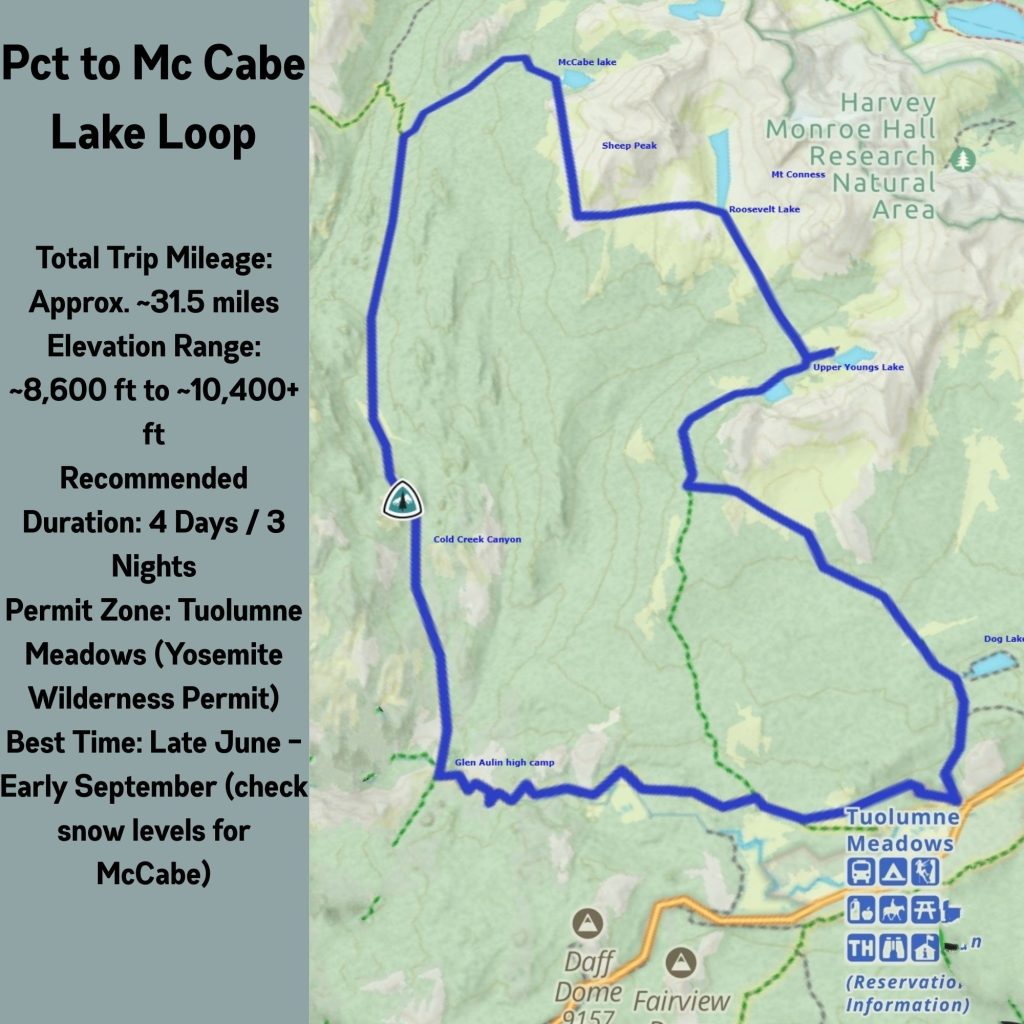
A quick stop to load Tom’s pack, and we were off—two hours south on Highway 395, winding up Tioga Pass to the eastern entrance of Yosemite. To our surprise, there were no lines at the gate and only a handful of people at the wilderness permit station, even on the Saturday after the Fourth of July. Did everyone forget it’s a holiday weekend with perfect weather?

Soon, we were parked below Lembert Dome, heading west past Soda Springs. Cathedral Peak rose in the distance, a buck grazed near the carbonated pools, and the usual summer crowd was milling around the historic site. We had little time to linger. Our original permit had us camping at Glen Aulin High Sierra Camp, which would’ve meant an easy stroll. But when offered a chance to extend into Cold Creek Canyon, we took it. That choice added elevation—but also adventure.
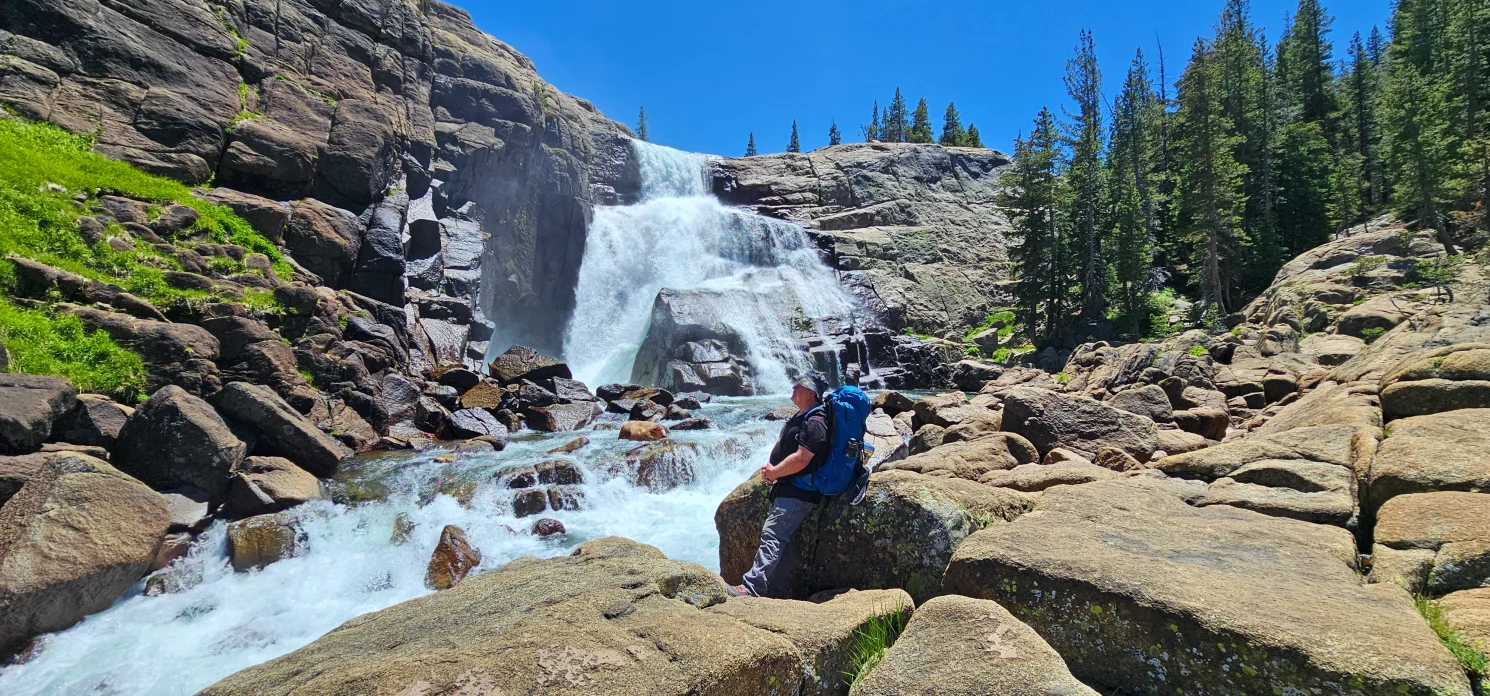
We crossed a few creeks and stopped two miles in for lunch along the Tuolumne River. I’ve walked this trail dozens of times, but this was Tom’s first, and I wanted him to feel the magic. After lunch, we dipped our feet in a quiet pool just above the Grand Canyon of the Tuolumne. Tom swam. I soaked. I listened. Later, we passed Tuolumne Falls and took a long break at White Cascade to refill water and snack. Around 2 p.m., packs were back on, and we began our climb up Cold Creek Canyon.
I’d never hiked this section of the PCT, and the change in terrain and traffic surprised me. The trail steepened, mosquitoes swarmed, and the number of thru-hikers picked up. After another 3.5 miles, we found a dry but breezy ridgeline with views and enough flat ground for camp. We filled water a mile earlier, so we were set for the night.
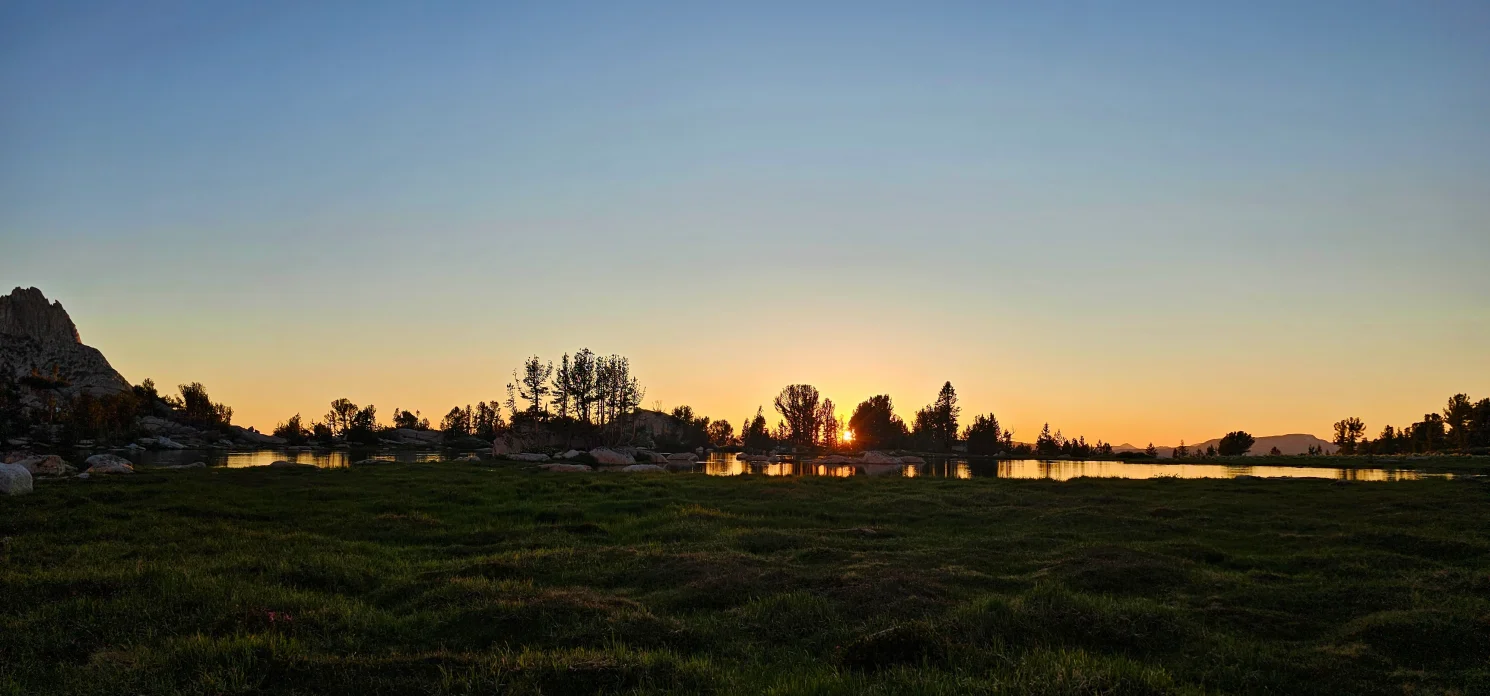
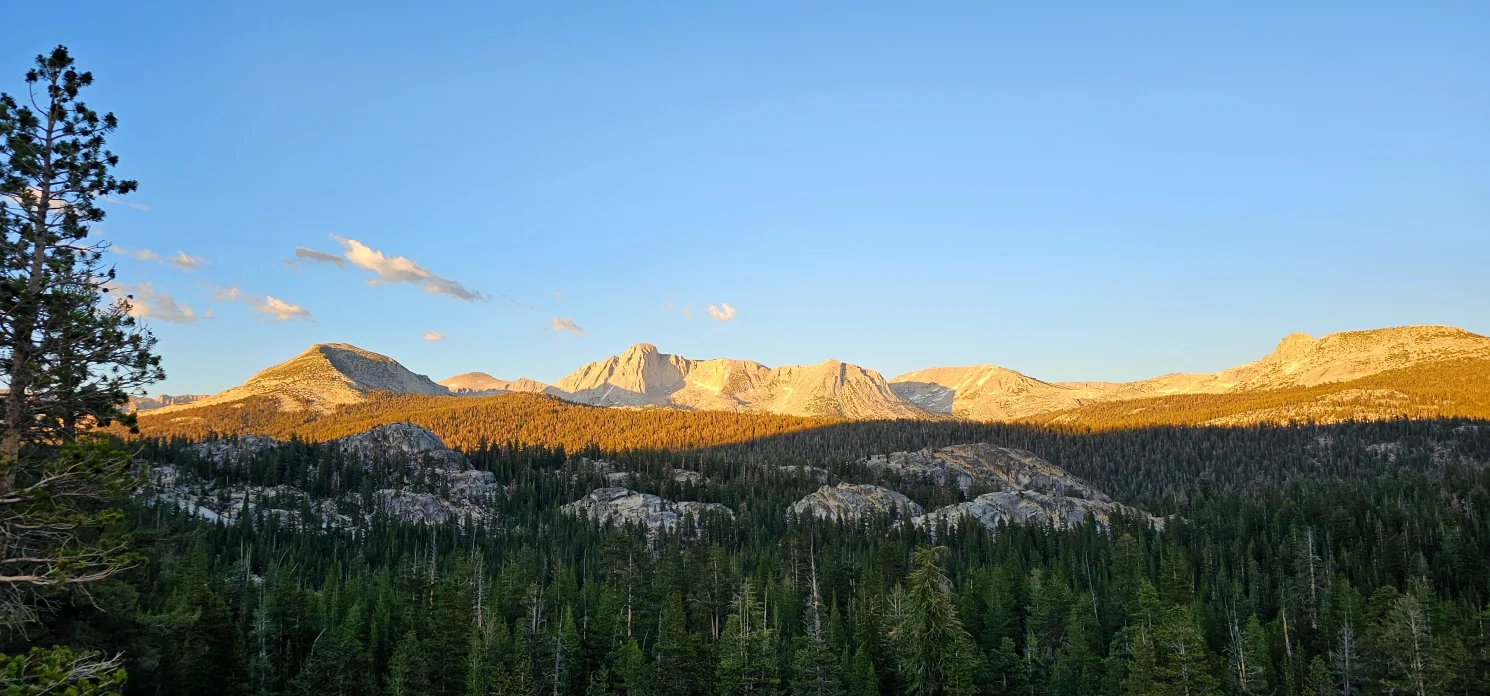
Dinner was followed by a short scramble up the granite behind camp, where we found a hidden shelf with panoramic views of the Cathedral and Conness Ranges. As the alpenglow blazed across the peaks, I showed Tom the route we’d attempt over the next few days. Just as the sun’s final light faded, a chorus of coyotes erupted in the canyons below—a hunting party call, wild and real. Hours later, they returned, howling closer to camp under the moonlight.




Day Two: Into the Granite Heart – McCabe Lakes
We woke early to cool air and soft light. PCT hikers had already packed out. We ate quickly, glad we’d shaved off miles the day before. Today’s goal: McCabe Lake—a place I’d dreamed of visiting for years.
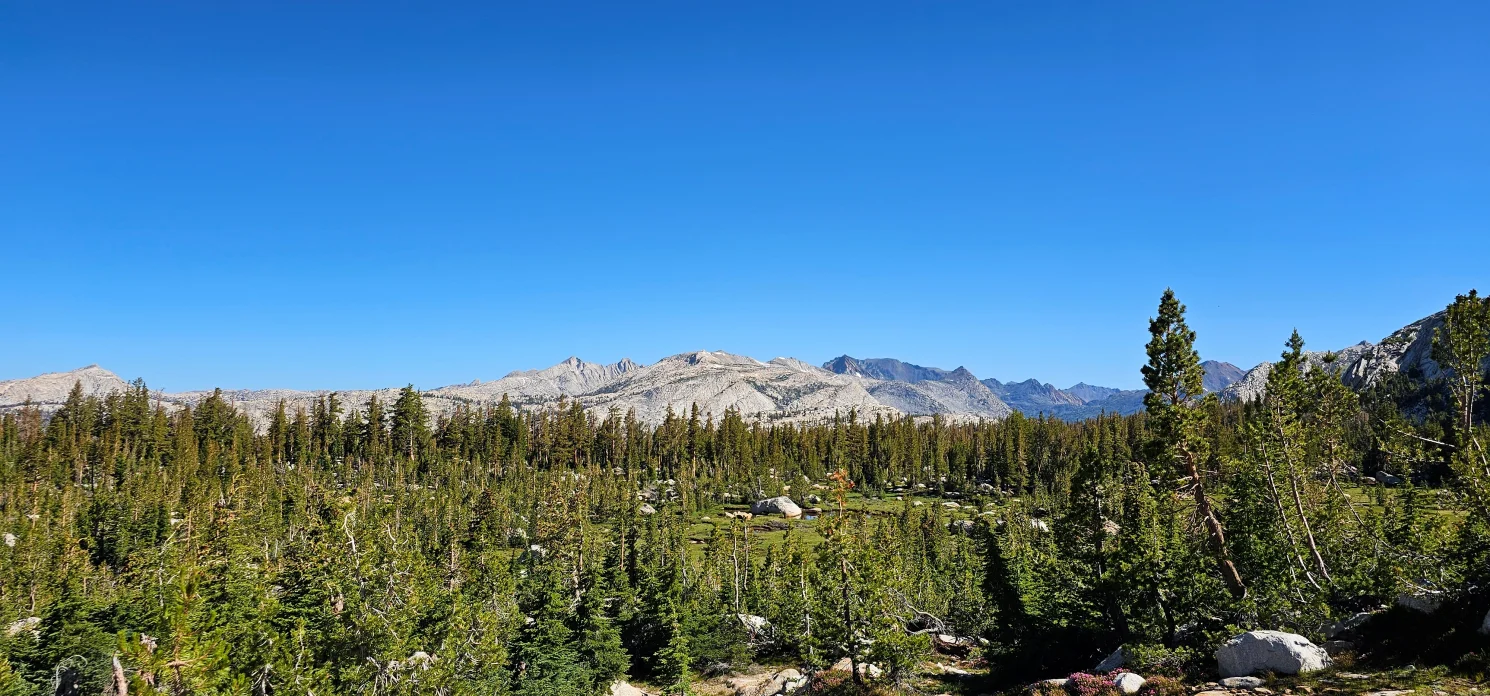
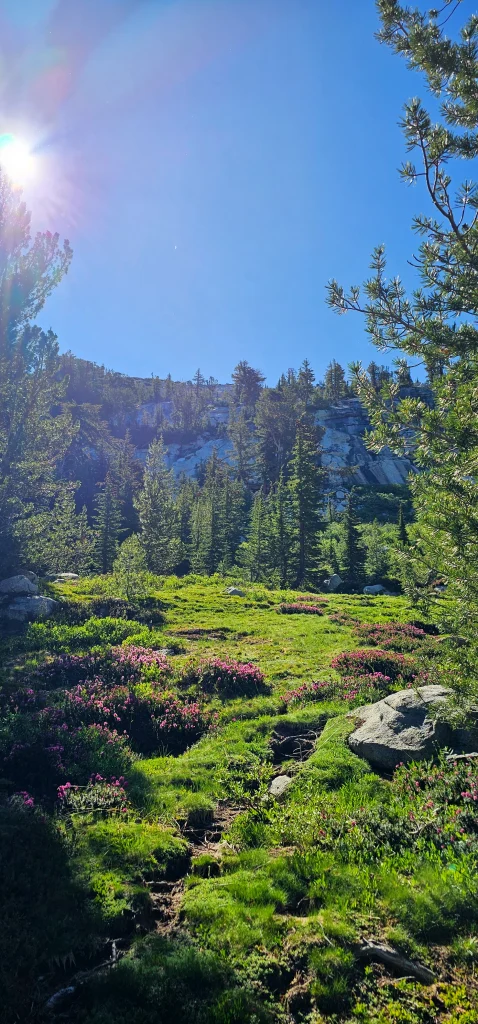
The trail dropped into a wide alpine meadow, bursting with green and framed by granite and sun. We walked in silence through forest few people ever film or photograph, but it’s some of the most peaceful terrain I know.
After a quick break, we reached the trail junction. We waved goodbye to a hiker known as Cinderella, the last of the PCT crew we’d see. He turned toward Virginia Canyon; we headed east toward McCabe.
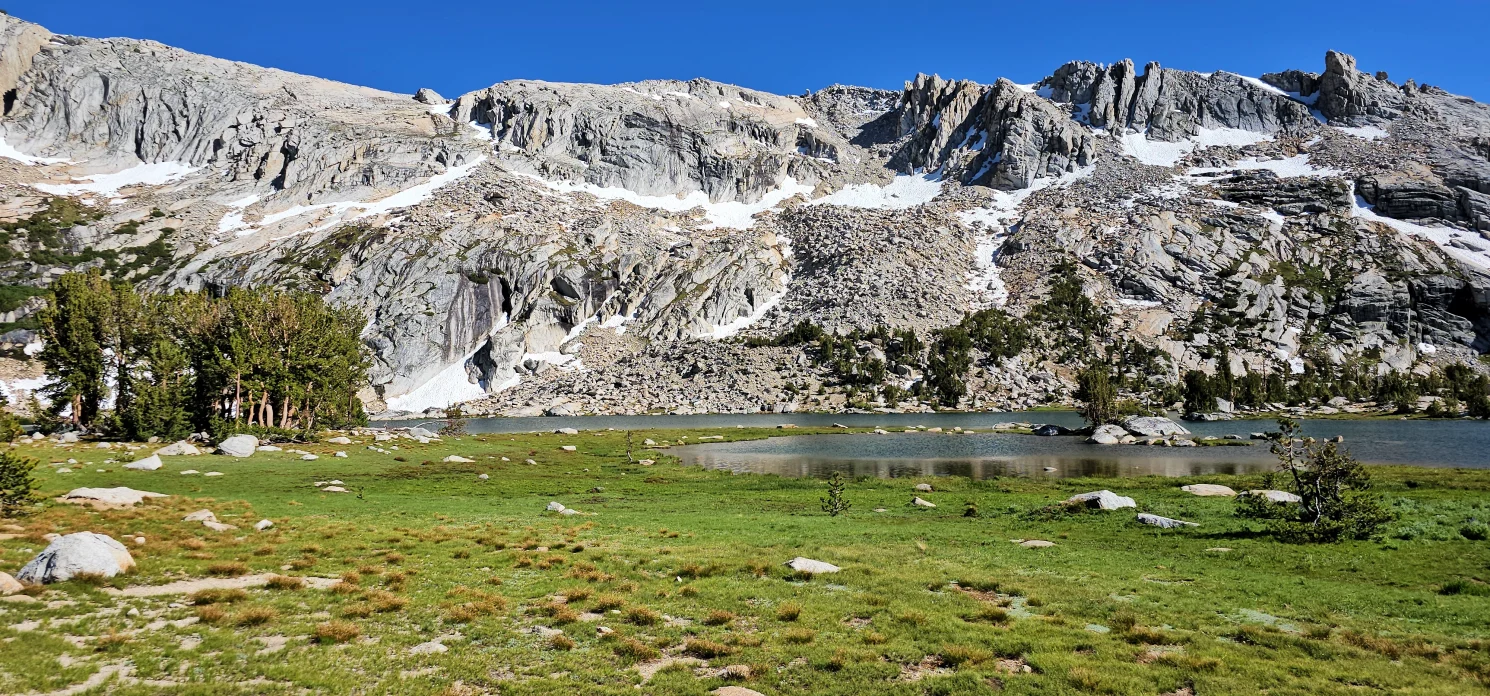
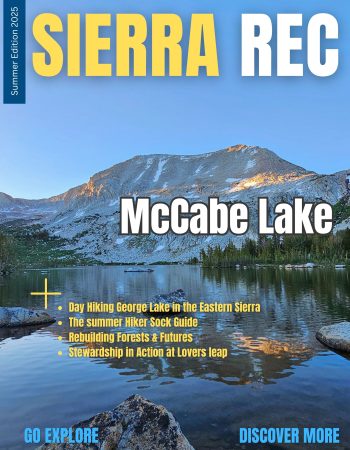
The final push was tough—dry, exposed, and uphill. But the creek below McCabe Lake kept us company, and soon the trees parted, revealing our prize. The first glimpse of McCabe took my breath. A quiet basin surrounded by peaks, cascading water, and trees reaching right to the shoreline.
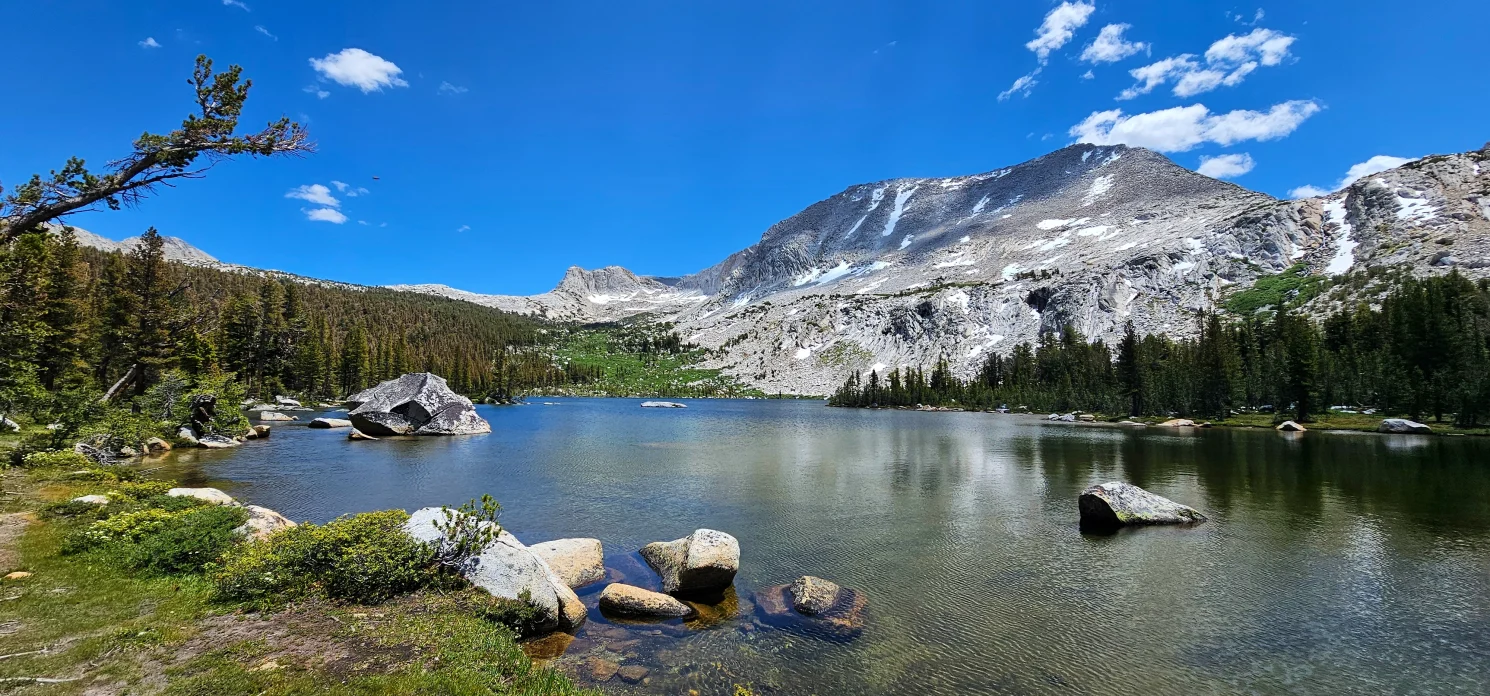
I wasted no time claiming a campsite. The mosquitoes found us immediately, but it was hot and the lake called. The swim was cold and clean. The lake bottom wasn’t mucky, and rock formations beneath the surface made it feel like we were floating in a natural cathedral.
I had planned to climb to Upper McCabe Lake that afternoon, but my body told me otherwise. Instead, I crawled into the hammock and fell into a two-hour nap. Tom swam again and read his book from a granite slab in the sun.
That evening, the lake was ours. The buzz of mosquitoes faded behind dinner, conversation, and the quiet that only comes in a place this remote. We stayed up a little later hoping to catch the stars, but by 10 p.m., I gave in to sleep. The night was silent and deep.
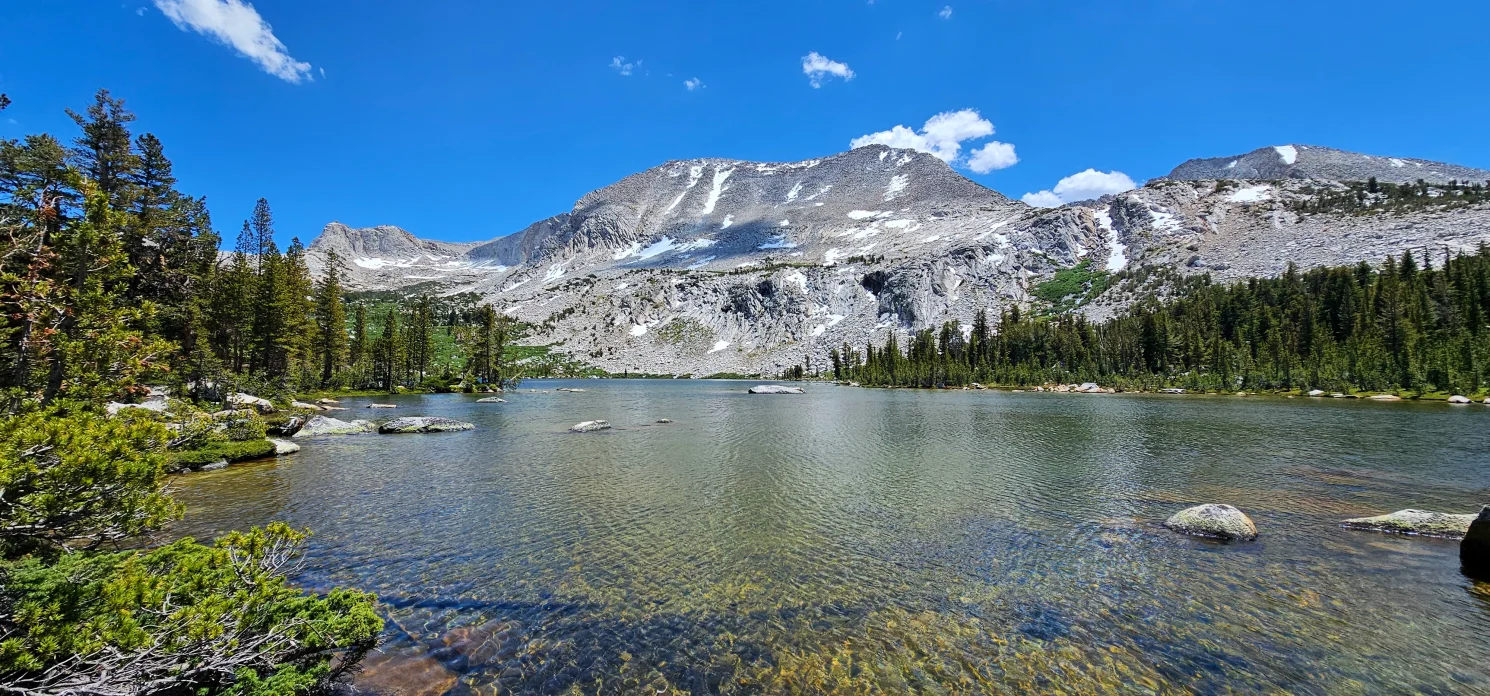


Day Three: Off-Trail Truths – From McCabe to Roosevelt to Upper Young Lakes
I woke knowing my body wasn’t ready for more climbing, so Upper McCabe would wait for another trip. Our plan was to head off-trail around Sheep Mountain, keeping between 9,600 and 10,000 feet, and make our way to Roosevelt Lake.
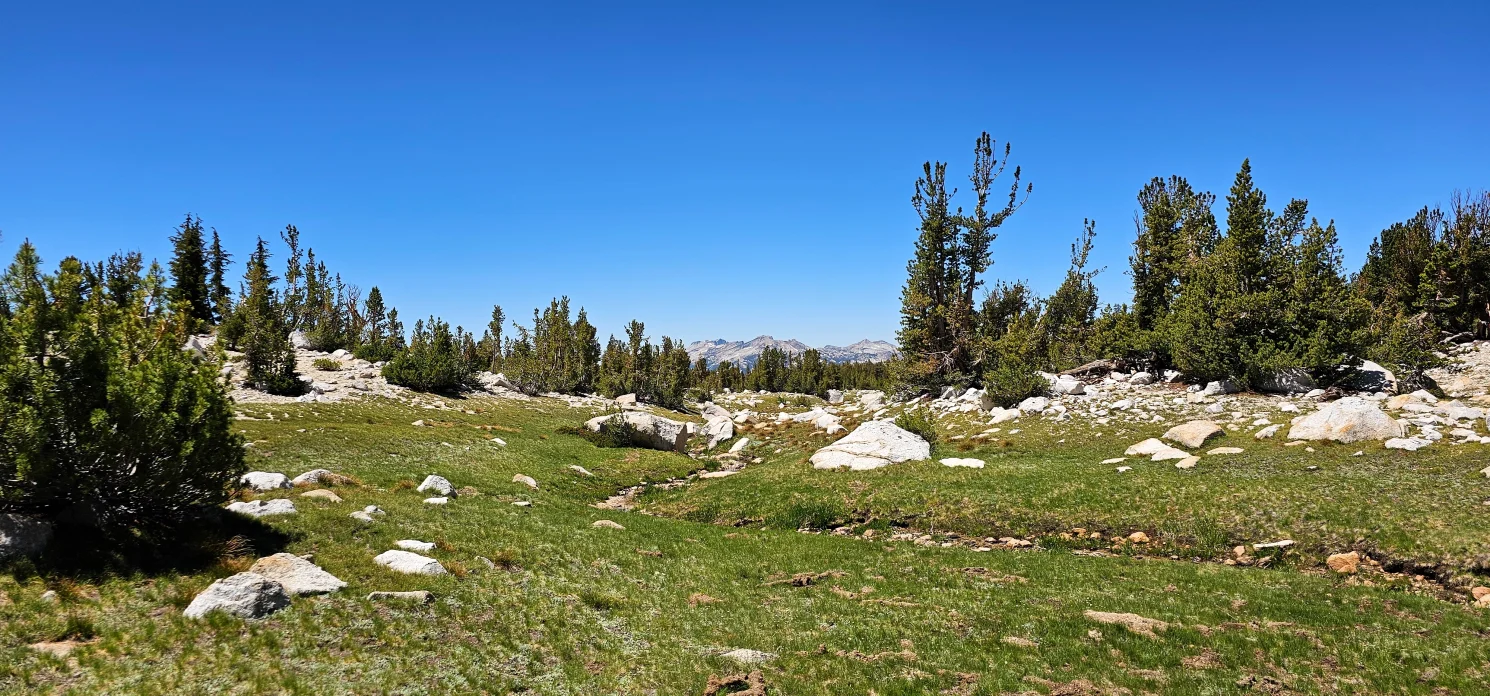
We packed light and started slow. Within 30 minutes, we stumbled into a hidden alpine meadow—a stunning expanse of wildflowers, meltwater streams, and a natural spring gurgling from the hillside. Dwarfed pines bent from winter’s weight, and granite rose on all sides. It was the kind of place you’d miss if you didn’t know to look, and honestly, I didn’t. Now I’ll never forget it.
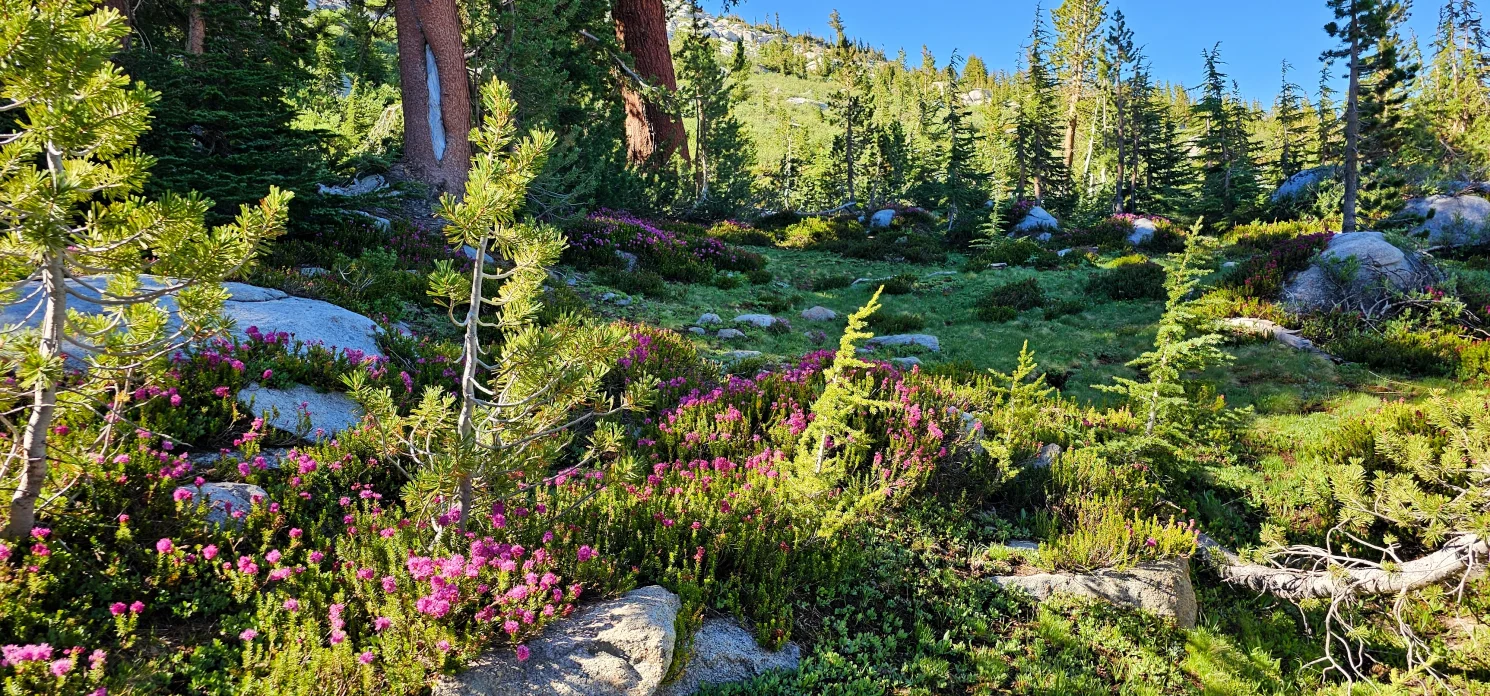
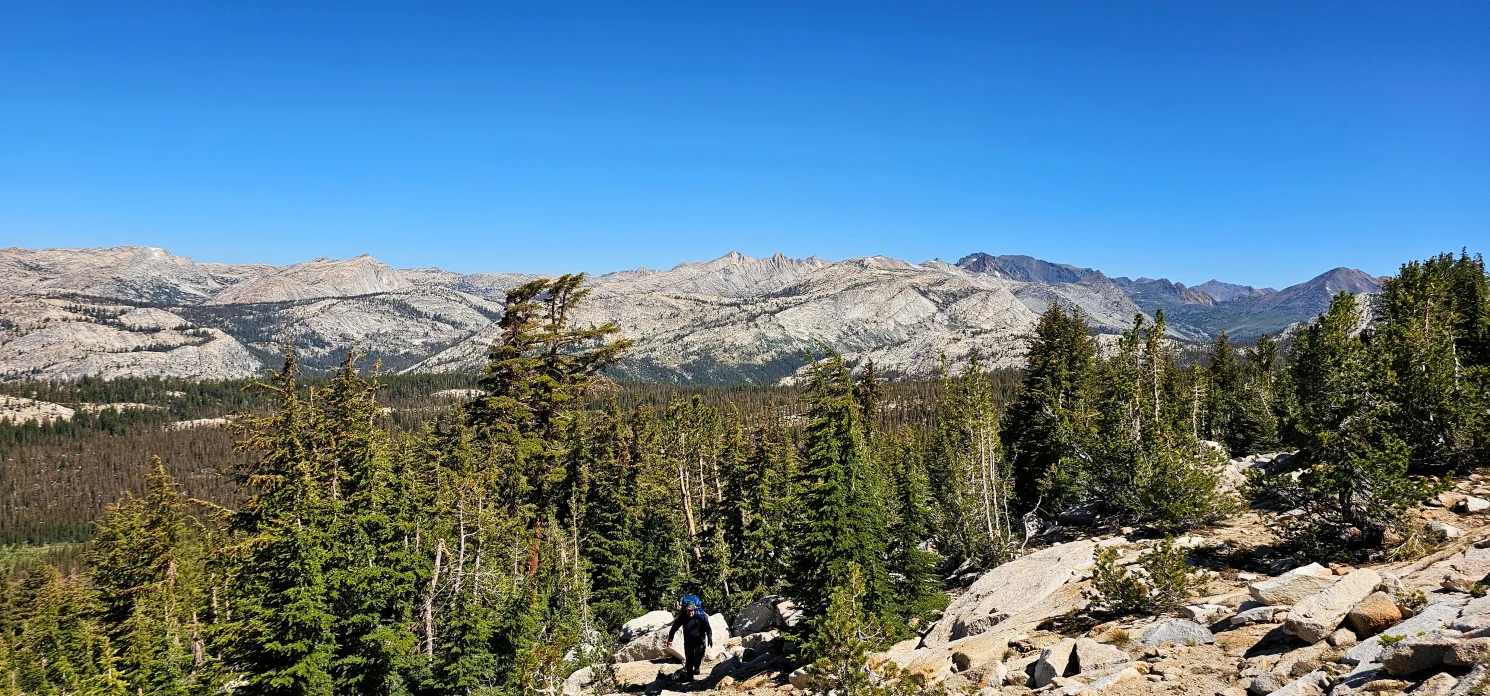
As the slope ahead steepened, we adjusted upward, climbing higher along the granite’s edge. Around 10,250 feet, we crested the ridge and looked down on Roosevelt Lake—still hidden, still quiet.
The descent was short but required focus. We crossed sand domes and grassy patches until Roosevelt finally came into view. It shimmered in the basin beneath Mt. Conness. No trails. No people. Just water, wind, and sun.
We swam. We ate. We laughed. Then, with full hearts and heavy legs, we packed again for the final two miles to Upper Young Lakes.

The descent into the canyon was steep and loose. We startled a doe and two young fawns, then dropped into a valley where snowmelt streams braided into a river. The final climb—our hardest yet—was relentless. But then, the meadow opened. The short, stubby trees of Upper Young Lakes came into view.
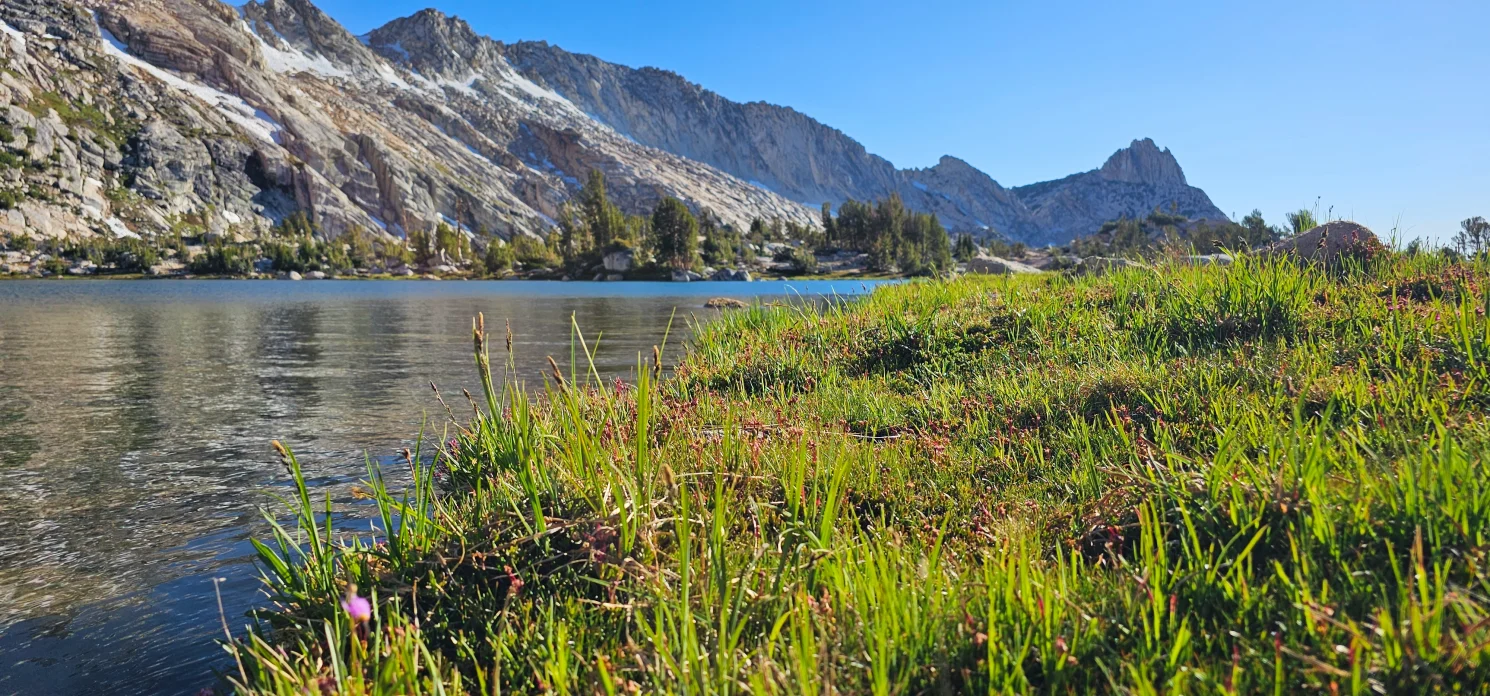
This lake means something to me. Always has. There’s a raw beauty here that doesn’t ask to be tamed. Wildflowers. Granite. Even seagulls—how do seagulls live up here? We’d seen a pair at Roosevelt too.
Two hikers were camped across the lake. Otherwise, it was ours. The mosquitoes were worse than McCabe, but movement helped. Another swim, a slow walk around camp, and a delicious Mountain House Korean Beef dinner with the breeze cutting just enough of the itch to let us relax.
As the sun dipped, the wind picked up, bending trees and hammocks alike. But between gusts, I slept well.
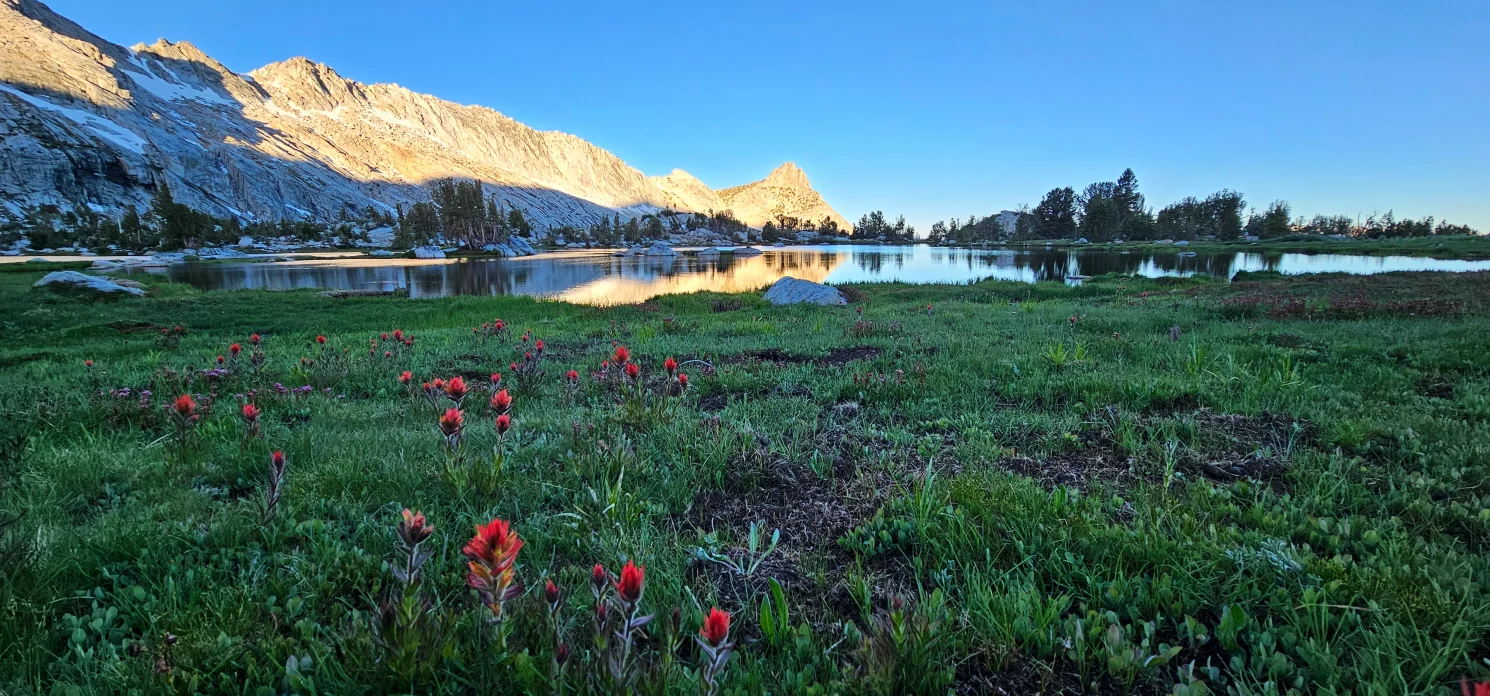




Day Four: Goodbye, Young Lakes – The Descent
Morning was calm. Our neighbors had already left. With the entire basin to ourselves, I took one last long look at Upper Young, remembering the last time I swam here years ago. We walked to a familiar rock island we’d once circled, ate breakfast, and packed to leave.
As we started the 9-mile hike out, I turned for one last wave goodbye. I do hope to see her shores again—but time is a trickster. You never know.
We took the high route out, passing one last granite shelf with views over the Cathedral Range and Vogelsang Peaks. From here, it felt like we were walking above Yosemite—higher than Half Dome, maybe even Clouds Rest.
A few water stops later, we dropped steeply down the Dog Lake Trail. It’s a brutal descent, and we laughed at the thought of anyone choosing to hike up this side. Take the horse route, folks.
Back at the car, sweaty and spent, we beelined to Tioga Lake for a wind-blown swim. After a refreshing dip, I turned to take one last look back into the park—another fulfilling adventure gifted by this stunning landscape.

My thoughts wandered through the quiet moments we’d gathered in the granite cathedral of Yosemite’s eastern edge—a world still untouched, still unbothered by man. As the breeze chilled my skin and the wind rippled across the lake, the warmth of memory burned beneath the surface.
And there I stood in the memories—smiling like a boy chasing fireflies, trying desperately to catch them all.
There are trips you plan. And then there are trips that meet you where you are—and leave you better than they found you. This was both.
Four days. Thirty miles. Countless reminders of why the Sierra Nevada keeps pulling me back.
– Charlie
Additional images