Discover the Best Camping in the Mammoth Lakes Basin
The Mammoth Lakes area offers a diverse range of camping experiences, from lakeside retreats and forest hideaways to high-elevation wilderness campsites. Whether you’re seeking adventure on the trails, tranquil fishing spots, or simply a relaxing getaway, this guide will help you find the perfect campground for your Mammoth Lakes adventure.
Best Camping Regions & Sites

- Mammoth Lakes Basin: Lakeside Luxury & Family Fun
- Best for: Easy access to town, water activities, stunning scenery, family-friendly stays.
- Twin Lakes Campground: Offers beautiful lake views, fishing, and easy access to trails. Reservations highly recommended.
- Lake Mary Campground: Close to the town of Mammoth Lakes, with access to boating, fishing, and hiking trails. Reservations highly recommended.
- Lake George Campground: A smaller, more secluded option near Lake George, perfect for those seeking tranquility. Reservations highly recommended.
- Sherwin Creek Campground: Located near Mammoth Lakes, offers a more secluded setting with access to hiking and mountain biking trails. Reservations highly recommended.
- Local Tip: Book your reservations well in advance, especially during peak season (summer and holidays). Weekends fill up quickly.
- Additional Camping options
- Coldwater Campground
- Convict Lake Campground
- New Shady Rest Campground
- Old Shady Rest Campground
- Pine City Campground
- Twin Lakes Campground
- Reds Meadow Road
- Agnew Meadows Campground
- Minaret Falls Campground
- Pumice Flat Campground
- Reds Meadow Campground
- Upper Soda Springs Campground
- June Lake Loop: Scenic Alpine Beauty
- Best for: Picturesque lakes, fishing, family-friendly atmosphere. (See Mono Basin Guide for specific campgrounds on the June Lake Loop)
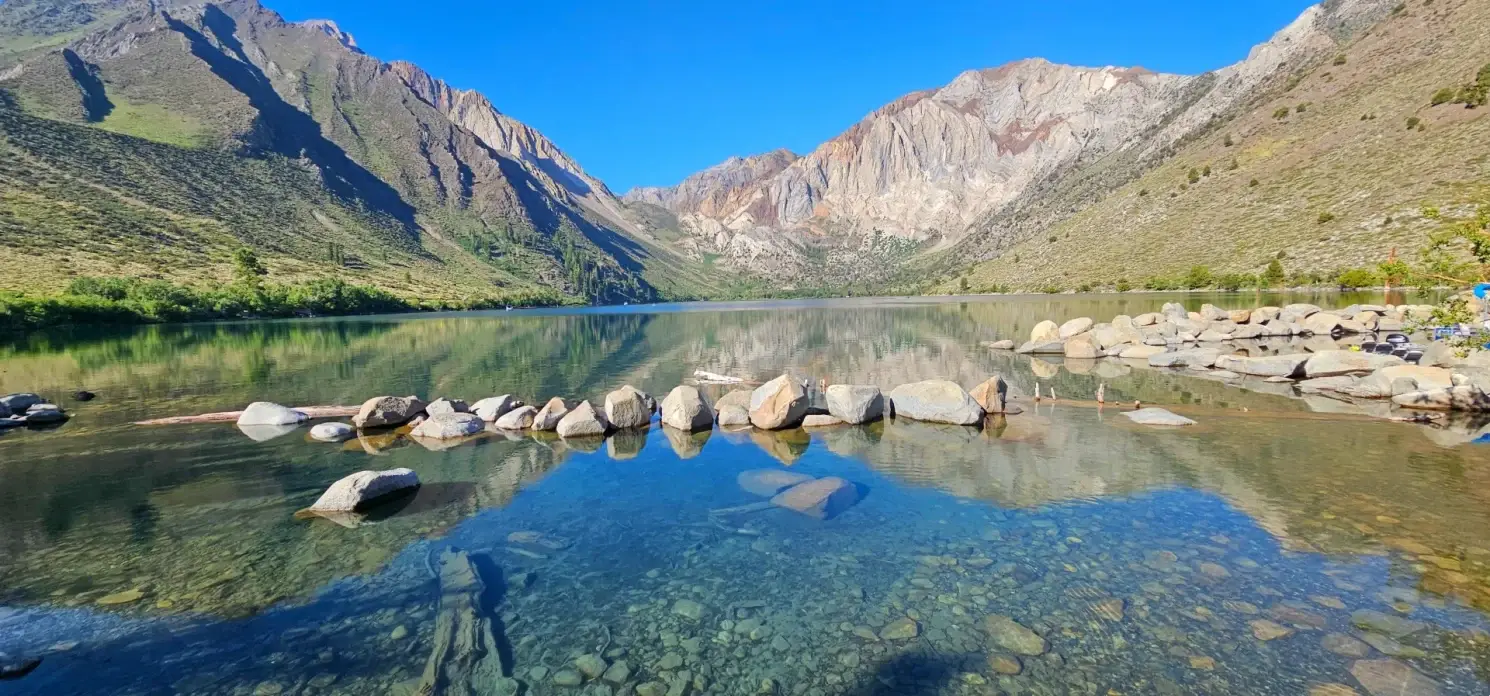
- Convict Lake: Dramatic Scenery & Fishing
- Best for: Stunning mountain views, excellent fishing, a more secluded experience.
- Convict Lake Campground: Offers incredible views of the surrounding peaks and excellent fishing opportunities. Reservations highly recommended.
- Local Tip: The hike around Convict Lake is a must-do, offering breathtaking views from all angles.
- Rock Creek Canyon: High-Altitude Wilderness
- Best for: Backpacking access, remote camping, stunning alpine scenery.
- Rock Creek Lake Campground: Offers access to the John Muir Wilderness and numerous hiking trails. Reservations highly recommended.
- McGee Creek Canyon- an excellent “close-to-the-trailhead” location to camp as a jumping off point for adventures in the McGee Canyon
- Mosquito Flat Campground: The trailhead for many backpacking trips into the high country. First-come, first-served.
- Local Tip: Be prepared for rapidly changing weather conditions at high elevations.
- Dispersed Camping: Exploring the Backcountry
- Best for: Adventurous campers seeking solitude and a true wilderness experience.
- Dispersed camping is permitted in some areas of the Inyo National Forest surrounding Mammoth Lakes. Research designated areas and regulations before your trip. Always practice Leave No Trace principles.
- Local Tip: Obtain a map from the Inyo National Forest Visitor Center to identify areas where dispersed camping is allowed. Be aware of elevation and potential hazards.
Top Hikes & Fishing Spots in the Mammoth Lakes Area
Top Hikes:
- Mammoth Lakes Basin Trail System: Explore the interconnected trails around the lakes, offering options for all skill levels.
- Rainbow Falls Trail: A moderate hike leading to a beautiful waterfall.
- Minaret Vista: A short drive or hike to a stunning viewpoint overlooking the Ritter Range.
- John Muir Trail: Access to this iconic trail can be found near Mammoth Lakes, offering opportunities for day hikes or longer backpacking trips.
- Convict Lake Loop: A relatively easy and scenic hike around Convict Lake.
Best Fishing Spots:
- Mammoth Lakes Basin: Twin Lakes, Lake Mary, Lake George, and Lake Mamie are all stocked with trout.
- Convict Lake: Known for its large trout.
- Rock Creek: Offers excellent stream fishing.
- June Lake Loop: (See Mono Basin Guide)
Essential Gear for Your Mammoth Lakes Camping Trip
To make the most of your camping experience, ensure you have the right gear.
- Camping Must-Haves:
- Tent (consider a four-season tent for higher elevations)
- Sleeping bag (rated for cold temperatures)
- Camping stove and fuel
- Bear canister (required in many areas)
- Headlamp or flashlight
- First-aid kit
- Sunscreen, hat, and sunglasses
- Insect repellent
- Hiking Gear:
- Hiking boots
- Backpack
- Trekking poles (optional)
- Water bottles or hydration reservoir
- Fishing Gear:
- Fishing rod and reel
- Tackle and bait
- Fishing license
Key Tips for Camping in the Mammoth Lakes Area
- Reservations: Many campgrounds require reservations, especially during peak season. Book well in advance on Recreation.gov.
- Bear Safety: Store food properly in bear-resistant containers.
- High-Altitude Camping: Be prepared for cold nights, potential altitude sickness, and rapidly changing weather conditions. Drink plenty of water and take it easy on your first day.
- Permits: Wilderness permits are required for overnight trips in the John Muir Wilderness and other designated areas.
- Leave No Trace: Pack out everything you pack in and minimize your impact on the environment.
- Weather: Check the weather forecast before your trip and be prepared for changing conditions.
For more Sierra camping tips, subscribe to Sierra Rec Magazine and explore our latest guides!


