
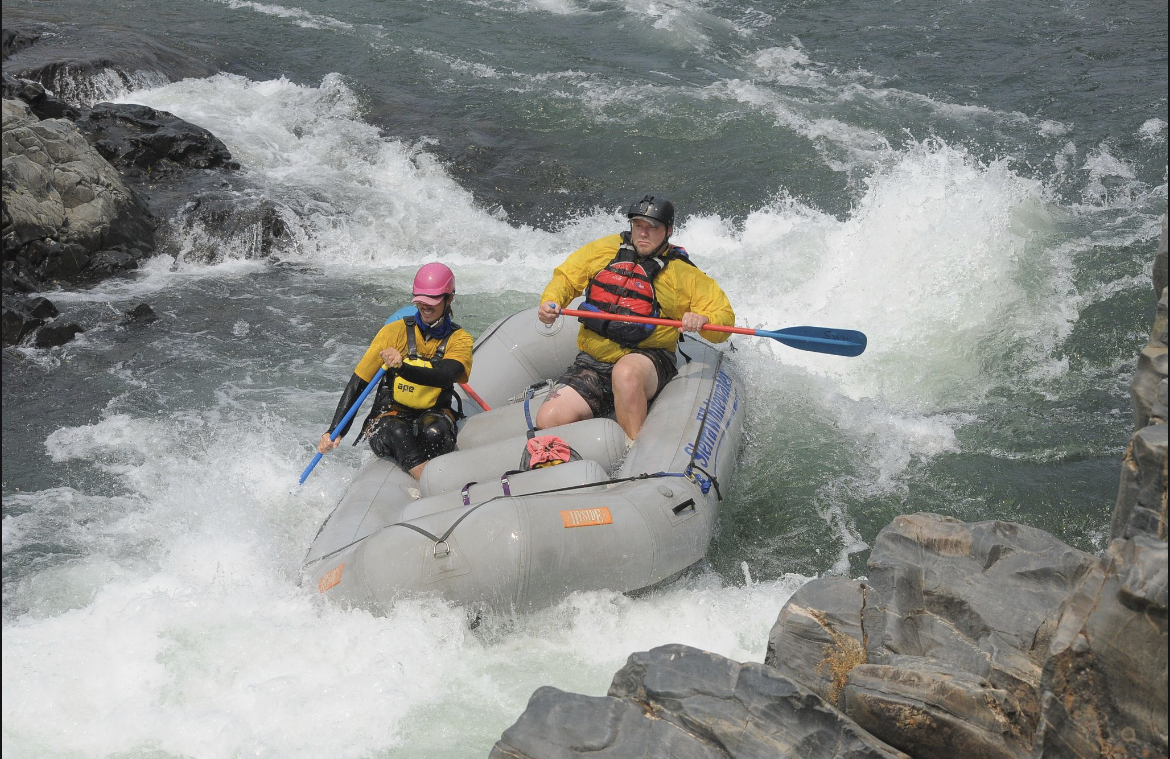
Think of a river, and chances are you’ve got your own daydream. No worries—The Sierra Nevada has got it all when it comes to river rafting, from gentle half-day float trips for first-timers and mellow family adventures, to adrenaline-pumping multi-day thrillers. These Nine best Rafting experiences in the Sierra Nevada will fill most peoples bucket list for river thrills: Spring Run off like that of 2023, will make Whitewater Rafting extreme early in the season ride. Check with a local raft guide to verify water safety in your area of choice. some rivers that are typically class three could be class 5 this year etc…
Nine Epic Water Rafting experiences in the Sierra
1. South Fork American River
The South Fork of the American is the people’s river. Rafting this waterway is perfect for anyone age 7 to 77 (or more), ideal for first-timers, yet still fun for repeaters. This Class II-III paddle provides a thrill or two—like the infamous Troublemaker rapid—but there’s little chance of bouncing out of your raft. A slew of companies guides half- and full-day trips on the South Fork, with trips offered April into September. (More: South Fork American River)
2. North Yuba River
Whitewater rafting on the North Yuba River offers crystal clear waters, big rapids, no crowds, and a feeling that you are exactly where you are meant to be. The North Fork Yuba River offers both veterans and active first-timers a variety of whitewater rafting thrills on over 28 miles of river. Raft trips from 1 – 3 days can be combined for varying levels of difficulty. At higher flows previous paddling experience is recommended. However people who are competent swimmers, athletic and adventurous can enjoy some of these runs when the peak snow melt is over. Even at lower flows, the North Fork Yuba River offers exciting rafting in smaller boats. (More: North Yuba White Water )

Cameron Lawson/Getty Images
3. Cherry Creek
Cherry Creek is often called the most difficult commercial rafting trip in California—and some say in the entire U.S. This is California’s gnarliest whitewater, rated Class V+ all the way, with fast-flowing rapids, whitewater plunges, and waterfalls galore. Technically the upper stretch of the Tuolumne River, Cherry Creek’s waters are so wild that the rafting season may not start until July, when rate of snowmelt slows, and the flow of water drops to a safe enough level. Even then, it’s still at the upper end of the thrill threshold—and for very experienced paddlers only. (More: Cherry Creek)
4. Merced River
If you’re searching for shoot-the-rapids thrills and chills on a family-friendly river rafting trip, the Merced River is your ticket. Plus it’s an incredibly scenic float, on the western border of Yosemite National Park. All that, plus plenty of good splashing fun make this stretch of a designated Wild and Scenic River a popular trip. In addition to rafting, the more mellow stretches of the Merced within Yosemite make it a favorite destination for fishing, camping, and swimming. (More: Merced River)

Scott McKiernan/Zuma Wire/Zumapress.com
5. Lower Kern And Kaweah Rivers
For a kickback day on a river—all within driving distance from downtown Los Angeles—you can’t beat the Kern and Kaweah Rivers. Leave the city behind and head for the Kern through the oak- and sycamore-dotted foothills north of Bakersfield. Adventure seekers can head to the Upper Kern, with a whitewater season running April to June. If you’re an experienced paddler yearning for a full-on adrenaline rush, sign up for a spring trip on the Kaweah River. Beginning in Sequoia National Park, the mostly free-flowing Kaweah tumbles 10,000 feet in 20 miles, creating plenty of Class IV action—crashing waves, big holes, and steep drops over smooth granite slabs. (More: Lower Kern and Kaweah Rivers)

6. Tuolumne River
Known simply as “the T,” this designated Wild and Scenic section of the Tuolumne (too-ALL-uh-me) River often gets the nod as having some of the best whitewater in California. Class IV rapids are the rule, not the exception. Once the shuttle bus of the rafting outfitter of your choice drives you down the dirt road to the put-in site in the Stanislaus National Forest, you and your fellow rafters are pretty much outnumbered by birds, beasts, and big trout along an 18-mile stretch of Class IV rapids. If you’d like to camp while in the area as well, there are several options. (More: Tuolumne River)

7. Truckee River
Drive into Tahoe City on a warm summer day and you can’t miss them—the big tents set up alongside the sparkling Truckee River, where operators rent out inflatable rafts and inner tubes for a do-it-yourself day on the water. Perfectly suited for lazy-day floaters, the Truckee River is the ideal place to spend a July afternoon trailing your fingers in the water, catching some serious rays (bring the sunscreen!), and just going with the lazy flow. If you want more excitement from the Truckee, head for the Lower Truckee, which serves up Class II and III rapids all summer long. (More: Truckee River)
8. Feather River
Experienced kayakers and rafters can find plenty of excitement on the white water found along the Feather River in Plumas County.
Beginner-level canoeing or float-tubing is possible along the more gentle eastern stretches, or along some of its tributaries such as Indian Creek.
The rafting season runs approximately from January to April or May, depending on the flow. By early July, flows are low enough that inner tubes and air mattresses are the usual mode for short float trips on the upper stretches only. (More: Feather River)

9. East Fork of the Carson River
The East Fork of the Carson River flows from scenic Markleeville, CA, winding its way through Leviathan Canyon, and passing several camps on its journey to Gardnerville, NV. The 10 miles of the East Fork Carson River from Markleeville to the Nevada border, were added to the California Wild & Scenic Rivers System in 1988. It’s one of the best ways to cross into Nevada from California. The rapids are approachable to most boaters, with one Class III known as Sidewinder about halfway through the 18-mile run. There is excellent fishing along this river as well as hot springs, making for a great single day or multi-day trip. (More: East Fork Carson River)
Feature Image: Courtesy of Kevin Tucker
If you’re planning a white water rafting trip on cold water, it’s important to dress appropriately to stay warm and comfortable. Here are some tips on what to wear:
- Wetsuit: Wearing a wetsuit is recommended for cold water rafting, as it will keep you warm and protect you from the cold water. A full wetsuit is best, as it covers your entire body.
- Layered clothing: In addition to a wetsuit, it’s a good idea to wear layers of clothing to help trap in warmth. Wear a base layer of moisture-wicking fabric, such as polypropylene or wool, to keep sweat away from your skin. Add a mid-layer of fleece or synthetic insulation for warmth, and a waterproof outer layer to protect you from wind and water.
- Neoprene boots: Neoprene boots will keep your feet warm and protect them from rocks and other hazards in the water.
- Gloves: Wearing gloves will help keep your hands warm and protect them from blisters and other injuries.
- Helmet and life jacket: It’s important to wear a helmet and a properly-fitted life jacket on any rafting trip, regardless of the water temperature.
- Other accessories: Consider wearing a neoprene hood or hat to keep your head warm, and sunglasses to protect your eyes from the sun and glare off the water.
Remember, the water temperature and conditions can vary depending on the time of year, so be sure to check with your rafting company or guide for specific recommendations on what to wear for your trip. And always prioritize safety, following the guidance and instructions of experienced professionals.


