

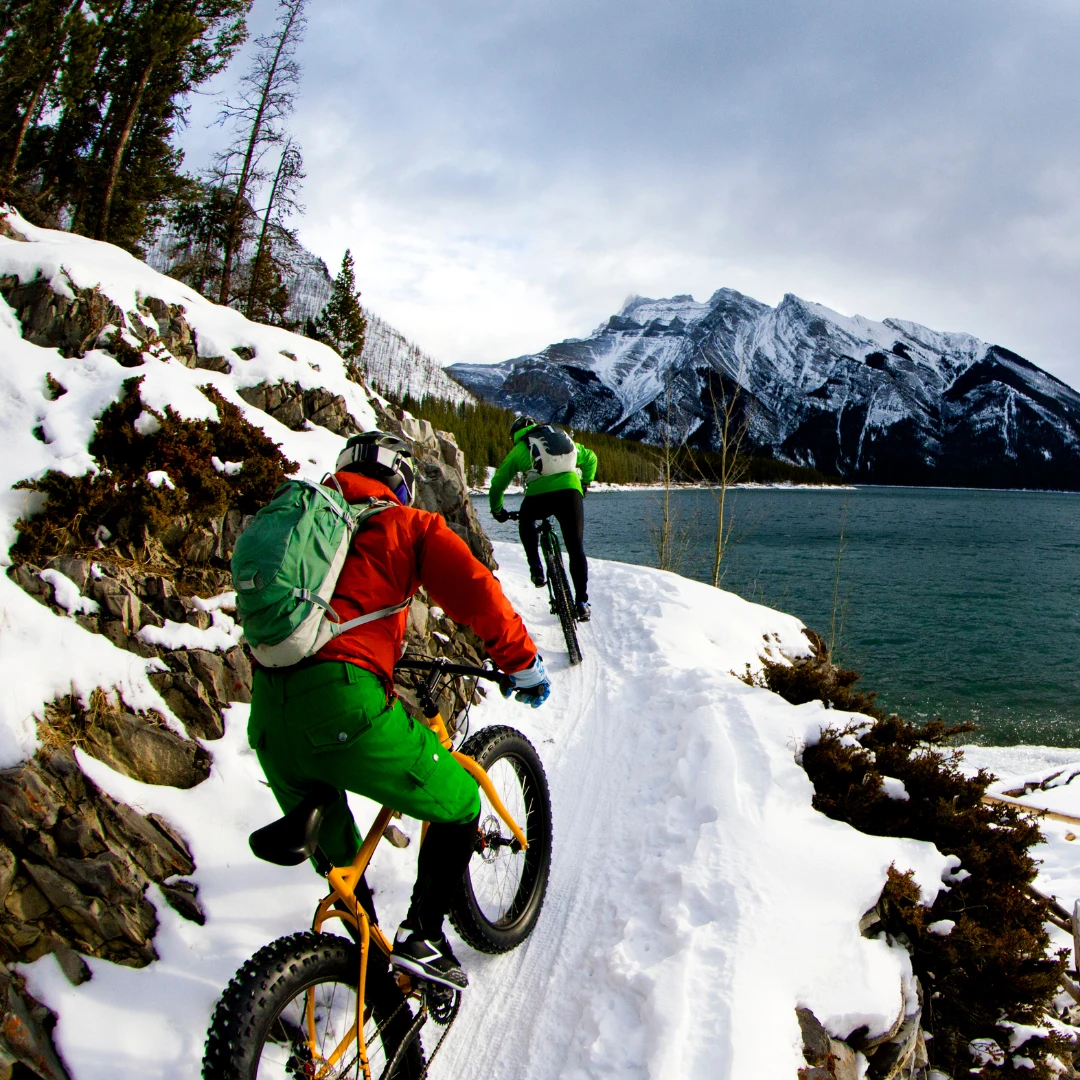
Winter biking is not for the faint of heart, but for those who seek a challenge and a reward in a frozen wonderland like Sierra. It is a way of experiencing nature in its most beautiful and serene state, away from the crowds and the noise.
But, to make the most out of it, you need careful planning and preparation for your winter bike packing. You need to have the right gear, clothing, and equipment to survive and thrive in the cold and harsh conditions, and also stay safe and navigate in the winter wilderness.

Curious about the essentials for your winter bike-packing adventure?
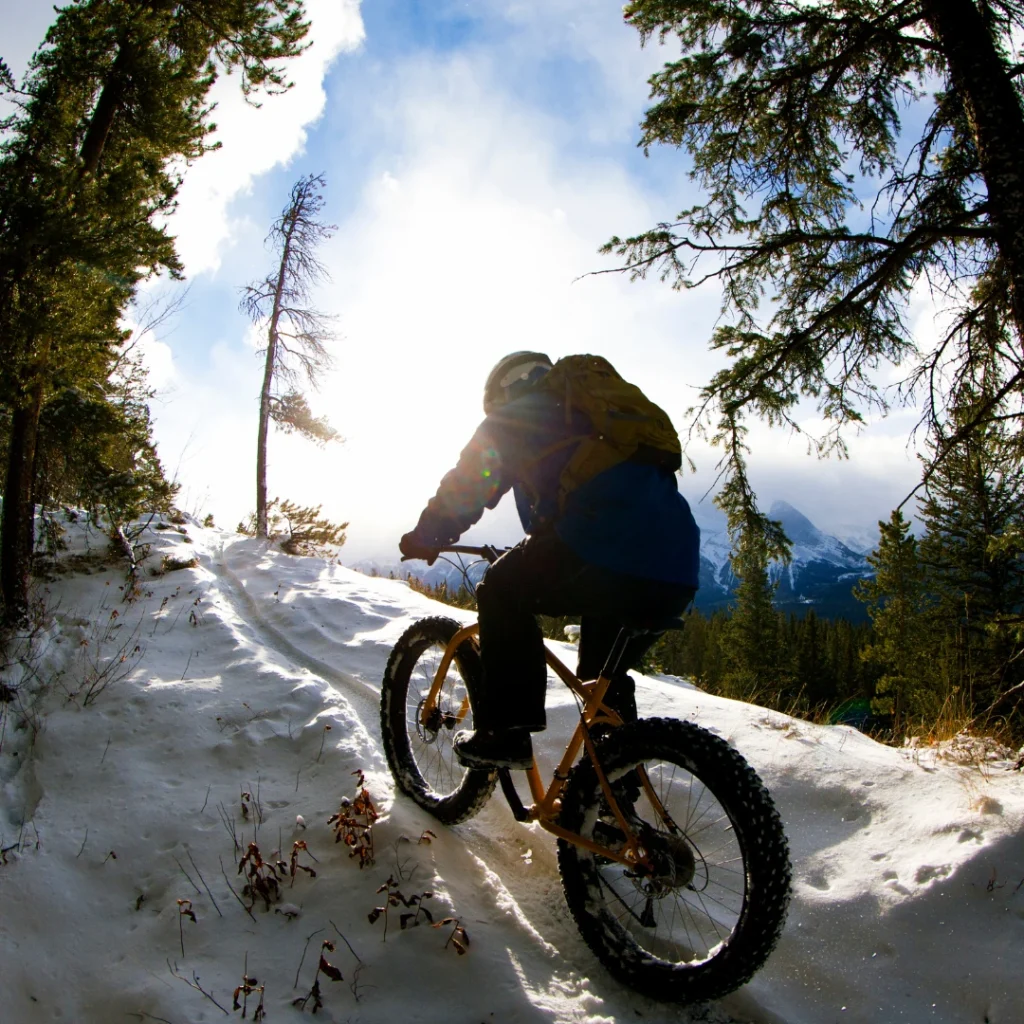
Dive into our gear guide tailored for a frozen fantasy, ensuring you’re well-prepared for the cold-weather challenge.
- Clothing and Layering
The key to staying comfortable and warm in winter bike packing is layering. You need to have different layers of clothing that can be adjusted according to the temperature, the wind, and your activity level. Start with a thin and moisture-wicking base layer, add an insulating mid-layer, and top it off with a waterproof outer layer.
Here are the main clothing layers you need to have for winter riding:
- Base layer: This is the layer that goes next to your skin, and you need to have a base layer for your upper and lower body; preferably one that is made of thermal design. For winter riding, a good base layer would be bib shorts, Men’s Long Sleeve Cycling Jerseys, cycling tights, shorts with 3D padding, and 2 pairs of synthetic hiking socks. Avoid cotton, as it absorbs moisture and loses its insulating properties when wet.
- Mid-layer: This is the layer that provides insulation and warmth, and its main function is to trap air and retain heat. In that case, consider lightweight and waterproof Cycling Jackets & Coats and pants as mid-layer, as long as it is not too bulky or restrictive.
- Outer layer: This is the layer that protects you from the wind, rain, and snow, and its main function is to be waterproof, windproof, and breathable. Therefore, make sure to pack a cycling rain jacket or pants as an outer layer, as long as they are durable and have good ventilation. Also, invest in quality cycling shoes that are ready for any challenge.

In addition to the three main layers, you also need to have some accessories to keep your extremities warm and protected. Don’t forget to carry a durable helmet, glasses, gloves, hats, leg warmers, and face masks, and make sure they are warm and comfortable.
- Shelter
For camping, prioritize having a shelter that can withstand the low temperatures, the strong winds, and the snow accumulation. Make sure the shelter is easy to set up and take down and does not take too much space or weight in your bike packing bags.
For shelter, consider your options like:
- Sturdy tent for base camp comfort that has good ventilation and condensation management,
- Lightweight bivy sack for minimalist adventures that is spacious enough for your sleeping bag and pad, has a good zipper and hood, and has a bug net and a vent for airflow.
- Cozy hammock suspended between snow-laden trees that is durable and comfortable has a suspension system and a tarp and has an under-the-quilt and a top quilt for warmth.

Sleeping Bag and Pads
One of the most important aspects of winter bike packing is having a good night’s sleep. Thus, invest in a sleeping bag with a temperature rating below the expected lows. Paired with insulated pads, you’ll create a barrier against the cold ground, ensuring a restful night despite the winter chill.
Speaking of pads, there are two primary types: air pads and foam pads. Air pads offer greater comfort and adjustability, but they are susceptible to punctures and leaks. On the other hand, foam pads are more durable and reliable, although they tend to be bulkier and less flexible. For added insulation and protection, a combination of both types can be used by placing a foam pad under an air pad.
Nutrition and Cooking System
Another important aspect of winter bike packing is having a good nutrition and cooking system. You need to have enough food and water to fuel your body and mind, and to prevent dehydration and hypothermia.
Staying hydrated in cold weather is surprisingly easy to forget. Thus, invest in an insulated bottle or hydration pack to keep your water from turning into an icy slush. Pack nutrient-rich foods that are high in calories and fat for sustained energy. You also need to have a portable and efficient stove and cookware to prepare your meals and drinks.

Navigation and Safety
A GPS device, maps, and a compass are your navigational lifeline. Pack emergency kits like first aid, repair, and a survival kit tailored for winter riding, and don’t forget reflective gear for low-light conditions. If you’re venturing into remote areas, a communication device like a satellite communicator can be a lifesaver.
Whether you’re conquering snowy peaks in the Sierra or exploring frozen trails elsewhere, prioritizing navigation and safety empowers you to confidently navigate winter wonderlands and transform your frozen fantasy into an unforgettable bike-packing adventure.
Conclusion
Winter bike packing is a wonderful way of enjoying the beauty and the challenge of nature in its coldest and most serene state. It’s a chance to push your boundaries, test your limits, and forge memories that will last a lifetime.
So, are you ready to embark on a frozen fantasy?
Then, gear up, embrace the cold, and write your chapter in the epic tale of winter adventure.


