By Charlie Pankey
After 18 years of exploring the Sierra Nevada, I’ve come to see winter not as a limitation—but as the season that teaches the clearest lessons. Snow strips away shortcuts. Weather dictates decisions. Familiar landscapes demand new respect.
As an active snowshoer, I don’t let winter shorten my adventure calendar—but I’ve learned to approach it with humility. Winter rewards preparation, restraint, and awareness. These are the principles I return to every season, and the same ones I share with people new to winter recreation.

Q: Why do you describe winter as the Sierra’s “most honest” season?
Winter removes the margin for casual decision-making. In summer, it’s often possible to push through discomfort or recover from small mistakes. In winter, the Sierra doesn’t allow that. Snow hides familiar routes, terrain behaves differently, and conditions can shift quickly. Every choice matters.
I remember my first real “snow thud”—that eerie, hollow sound when the snowbank beneath me collapsed and settled under its own weight. The slope wasn’t steep enough to avalanche, but that sound triggered a deep, instinctive fear. It was the moment I understood that winter terrain moves in ways you can’t always see.
Since then, especially as someone who often breaks trail in snowshoes, I’ve learned that reading slopes and conditions is a constant learning curve. Winter taught me that the ultimate goal is always coming home safely—no view or story is worth unnecessary risk.
Q: What’s the biggest mistake people make when heading into the Sierra in winter?
Trying to recreate a summer experience. People often underestimate how much time snow travel takes, how quickly sweat turns dangerous in cold wind, or how exhausting winter conditions can be.
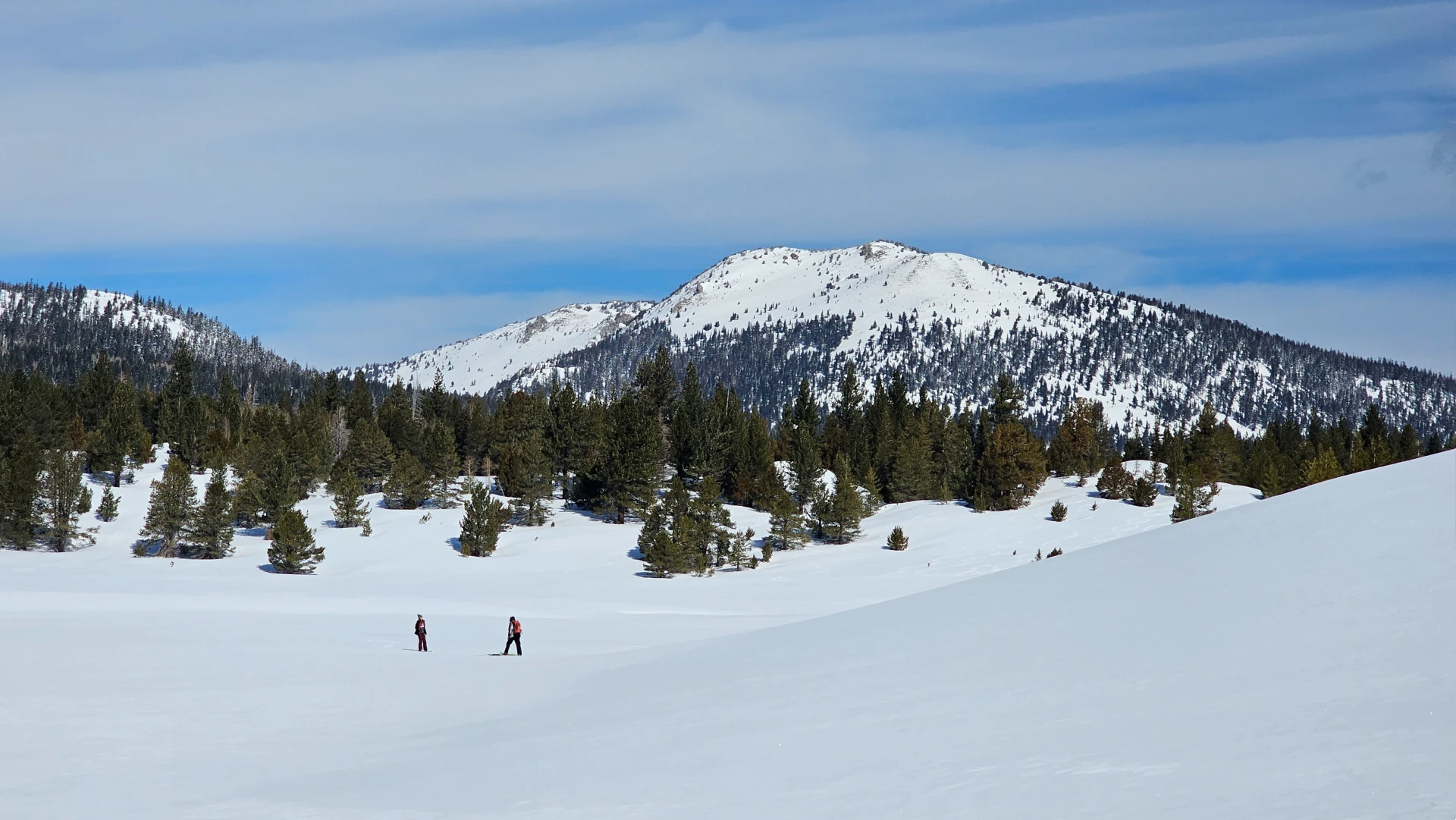
Even in seemingly simple terrain like Hope Valley, an all-day snowshoe toward Blue Lakes can become dangerous quickly. On my first attempt, I was only a few miles in when I realized my early effort had soaked my layers, and the wind was rapidly cooling me down. My plan was sound—but my layering wasn’t.
Turning back was frustrating, but it was also the smartest decision I made that day. Winter doesn’t reward stubbornness. It rewards judgment.
Q: Do you need to be a skier or snowshoer to enjoy the Sierra in winter?
Not at all. Some of the most rewarding winter experiences happen close to trailheads, plowed roads, and familiar places transformed by snow. Winter enjoyment doesn’t require distance—it requires awareness.
One of my favorite examples is Tahoe Meadows below Mount Rose. You can step out of the car, climb a snowbank in whatever footwear you’re wearing, walk ten feet into the trees with a little bird seed—and suddenly winter chickadees bring the forest to life like a fairy tale.
The Sierra offers countless close-to-trail winter experiences if people are willing to slow down and notice them.
Q: How should beginners think about safety in winter conditions?
Safety starts with judgment, not gear. Beginners should choose environments with natural limits, avoid avalanche terrain entirely, and plan trips that leave plenty of daylight and energy in reserve.
One of the biggest challenges today is social media pressure. Too many people attempt things beyond their capabilities for the sake of a post. Winter is not forgiving of ego. When in doubt, turning around is always the right call.
Q: What role does preparation play compared to experience?
Preparation bridges the gap when experience is limited—and it remains essential no matter how long you’ve been out there. I still rely heavily on checking weather, road conditions, daylight windows, and backup plans.
From experience, I can say this: footwear matters, layers matter, and some layers are simply wrong for certain conditions. You don’t need the most expensive gear to enjoy winter safely, but you do need to stay warm and dry. Preparation isn’t about perfection—it’s about giving yourself margin.
Q: How does winter change decision-making compared to other seasons?
Winter demands constant reassessment. A plan that works at 9 a.m. may be unsafe by noon as wind, temperature, or visibility changes.
I once snowshoed in near-blizzard conditions at Lassen Volcanic National Park and made the mistake of heading out without proper eye protection. After walking straight into a snowbank, I experienced temporary snow blindness. Once my vision returned, the decision was obvious—get out.
It turned into a very long drive for a two-mile hike, but I came home safely and captured some of my favorite winter photos that day. Winter doesn’t waste experiences—it reframes them.
Q: What does “traveling conservatively” actually look like in winter?
For me, conservative winter travel means shorter distances, simpler objectives, and built-in exit options. Despite how storytelling sometimes makes it sound, most of my snowshoe trips are only an hour or two long—even when breaking trail.
I plan easy loops, choose routes with flexibility, and stay aware of changing conditions. Conservative travel isn’t timid—it’s what allows me to keep exploring year after year.
Q: Can winter actually be more peaceful than summer in the Sierra?
Absolutely. While volunteering in Desolation Wilderness during the summer, we often talked about measuring the “noise” of wilderness—because busy places aren’t always quiet. In winter, quiet is easy to find.
Snow absorbs sound. Crowds disappear. Reflection comes naturally. Those quiet moments are one of winter’s greatest gifts.
Q: What advice would you give someone experiencing their first Sierra winter?
Start small. Keep your plans flexible. Pay attention to how your body, your layers, and the environment respond. Measure success by how prepared and present you felt—not by distance.
Winter will teach you if you’re willing to listen. And the Sierra will always be there for the next trip.