

Sierra Nevada – July 2023 – If you enjoy mountain hiking in summer than undoubtedly you have seen Watermelon snow this July. The watermelon snow phenomenon has fascinated scientist for years, and it is back in force on top of our 2023 snow pack this July. Is it harmful? Well it definitely is helping the snow melt faster which has scientist worried about the Pink blooms on glacier fields and its role in speeding up any of the polar ice melt. They even now have a study called the Living Snow Project, asking hikers to report Watermelon blooms in their mountain regions. you can find their Instagram community at @living_snow_project
If you live near the Cascades of Washington or the Sierras in California, you could even volunteer with the project and help scientists better understand the algae spread.
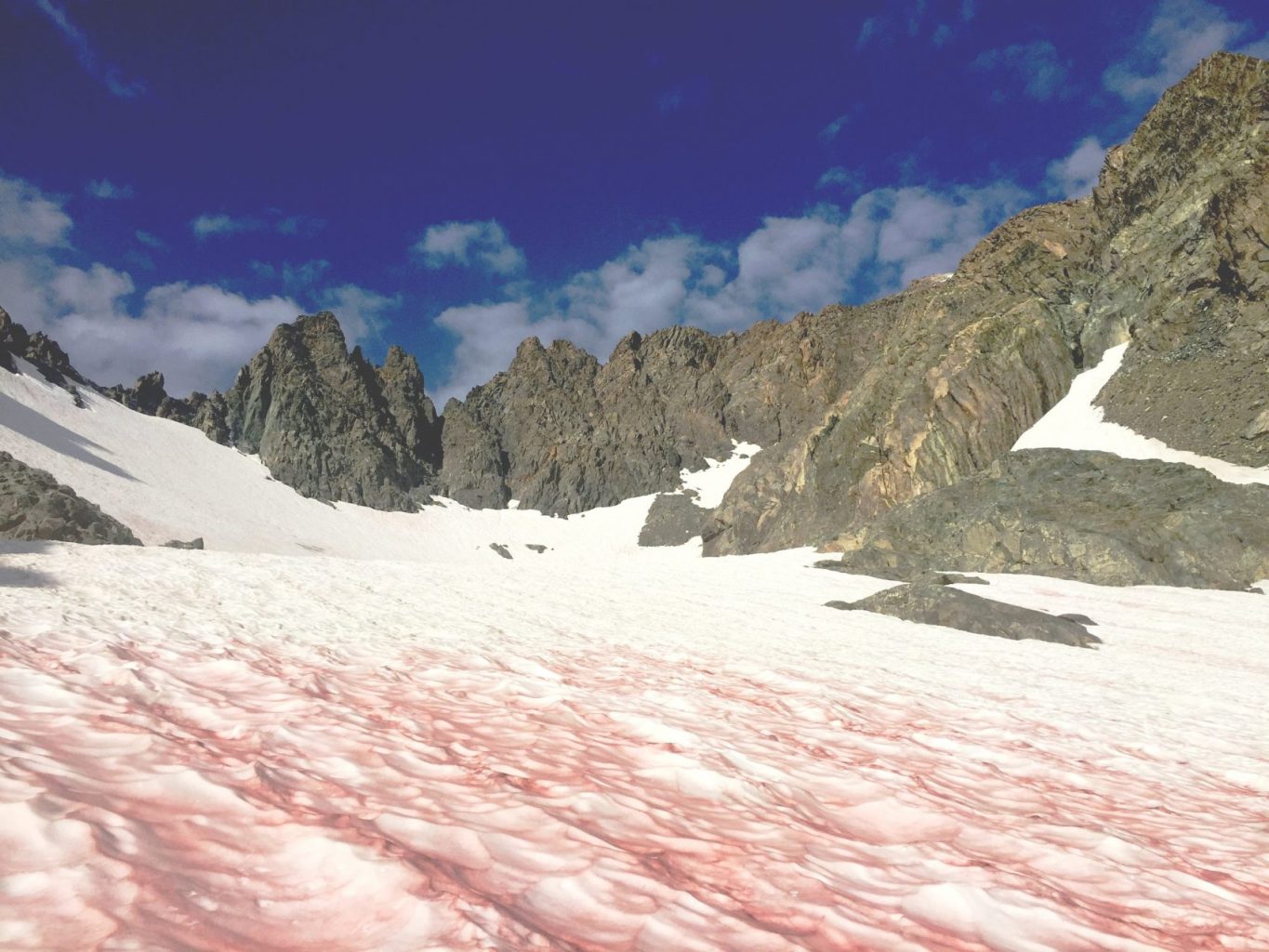
What is Watermelon Snow
Watermelon snow, also known as “pink snow” or “blood snow,” is a natural phenomenon that occurs in certain alpine and polar regions. It is characterized by pink or reddish-colored snow, often resembling the color of watermelon flesh, hence the name.
The pink coloration of the snow is caused by a type of unicellular algae called Chlamydomonas nivalis. These algae thrive in cold environments and are able to photosynthesize even in low temperatures. During the summer months, when the snow begins to melt, the algae become exposed and multiply rapidly, forming dense blooms or patches.
The pink or red pigments produced by the algae serve as a protective mechanism. They help to absorb sunlight and provide the algae with energy for photosynthesis, while also shielding them from harmful ultraviolet (UV) radiation. The pigments also create a darker surface, which can enhance heat absorption and contribute to further melting of the snow.
Watermelon snow is most commonly found in high-altitude regions and mountainous areas. It is often seen in the late spring or summer when the snow starts to melt, revealing the colorful blooms. The intensity of the pink color can vary depending on the concentration and density of the algae in a particular area.
While watermelon snow may be visually appealing, it is important to note that it can have ecological implications. The algae can alter the albedo, or reflectivity, of the snow, potentially accelerating melting and contributing to climate change effects. Additionally, the presence of these algae can affect the local ecosystems by altering the nutrient composition of the snowpack and influencing other microbial communities.
Watermelon snow has fascinated scientists and researchers for many years, and its study contributes to our understanding of the diverse and unique adaptations of organisms in extreme environments.
Is Hiking in watermelon snow safe?
At this time there is no research suggesting that trekking through Watermelon snow creates any type of spread. Nor is there any research suggesting that Watermelon snow is dangerous to touch or to have your pets near, similar to the green Algal Blooms that happen in Lakes. There are recommendations about not eating Pink snow, but I would have through that was a no brainer? Watermelon snow is natural and it is just another sign of a complex world that is constantly at battle with the world around it. “Bacteria sunscreen” if you will comes in the Color Pink.
For summer hiking in the Sierra Pink snow is nothing more than a photo opp possibly, but also another sign that mother nature is working hard to regulate itself,
This weekend when it is scorching hot on the trail and you see the snow fields, we suggest a roll in the white snow!
References: Snowbrains – the-science-behind-problematic-pink-snow June 23, 2023; CBSnews Mysterious pink Watermellown snow – July 9, 2020
