
By Charlie Pankey, Sierra Rec Magazine
A funny thing happens somewhere in your late 30s and early 40s: you realize you don’t just want a strong season — you want strong decades.

The Sierra has a way of making that lesson crystal clear. It’s not the uphill that gets most of us. It’s the long granite descents that rattle knees and hips. It’s the uneven trail tread that quietly tests ankles and stabilizers. It’s the reality that a “moderate” day hike can still mean a few thousand feet of gain, altitude that messes with sleep, and a pack that feels heavier at mile eight than it did at the trailhead.
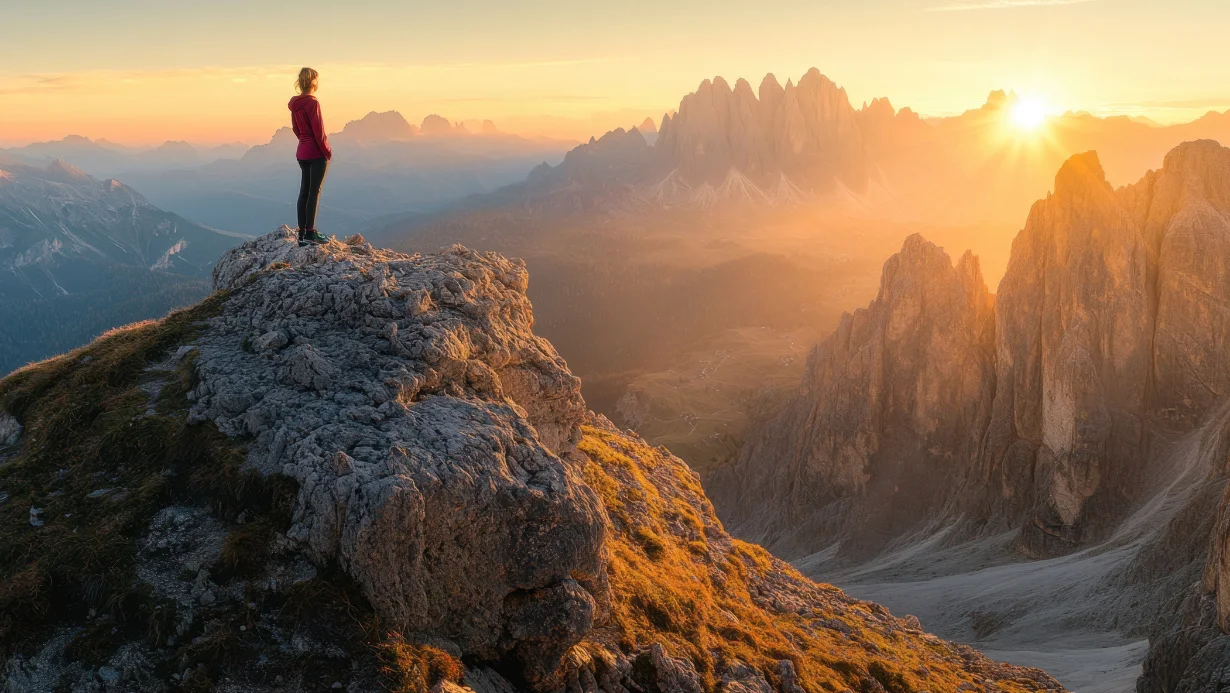
And if you’re anything like me, you’ve probably noticed this too: the outdoors still calls just as loudly as it always did — but the training approach has to evolve if you want to keep answering that call without paying for it for days afterward.
I’m not writing this as a coach or a clinician. I’m writing it as a Sierra traveler who still wants big days, big views, and the kind of tired that feels earned — not the kind that feels like damage.

After 40, the goal shifts from performance to durability
The biggest change isn’t that you stop pushing. It’s that you start choosing why and how you push.
For me, the shift has been simple and humbling: less weight, more repetition. I still lift, but I train for resilient joints and durable muscles — the kind that hold up on steep descents and long, uneven miles. I’ve worked harder on flexibility and muscular endurance too. I try to stretch more, although I’ll be honest: with as much sitting as I do, consistency is still a struggle.
I’ve also changed how I fuel. I think about trail food differently now — cleaner, simpler, less ingredient-heavy, and more whole-food options whenever possible. And sleep? I crave the sleep I get outdoors. I wish I could sleep those same hours at home that I do backpacking… I said with a smile.
That’s the theme of training after 40 in one sentence: you don’t stop — you get smarter.
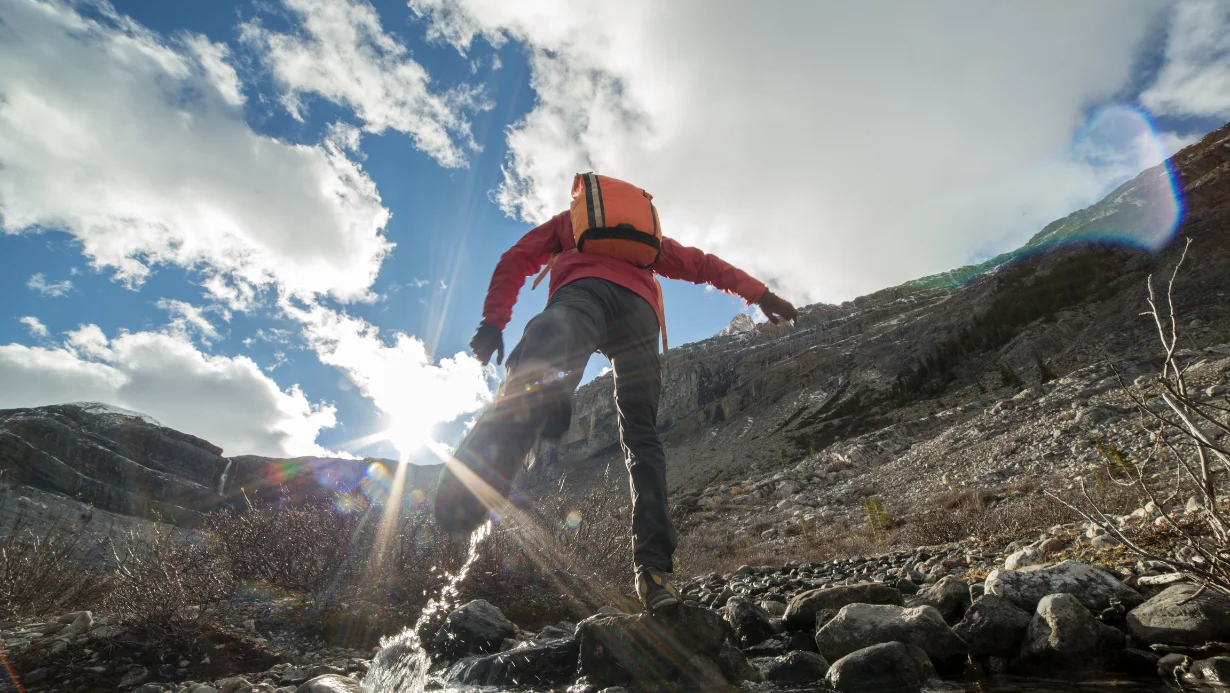
The Sierra Rec approach: train for climbs, descents, and recovery
If you’re planning Sierra adventures this year — whether it’s a spring shoulder-season hike, a summer backpacking trip, or just regular weekend miles — here’s the “Sierra Rec” way to think about training after 40:
1) Choose longevity over ego
There’s a quiet freedom in letting go of the need to prove something every time you train. The Sierra doesn’t reward ego for long — but it absolutely rewards consistency.
As outdoor lifestyle expert Tana Hoffman Cook puts it, training after 40 becomes less about performance and more about sustainability: building “a body that can keep doing what you love for the next 30+ years.” Her point hits home: you can’t treat recovery like an optional add-on anymore. You train with more intentionality — not chasing someone else’s metrics, but building what you need to still be out there later in life.
“My goal isn’t to be the fastest anymore. It’s to still be out there at 70.”
—Tana Hoffman Cook, Outdoor Lifestyle Expert & 3x Founder, Tana Hoffman Cook

2) Make recovery part of the plan, not the reward for surviving it
A lot of us grew up training with the mindset that recovery is what happens when you’re forced into it. After 40, recovery becomes the system that keeps the whole machine running.
Jennifer Rapchak, Fitness Director at Results Fitness Gym, explains it in a way that feels especially true for hikers and backpackers: you don’t necessarily need to do less — you need to do smarter. The difference often shows up in how long it takes to bounce back and what you do between your bigger efforts.
“Recovery becomes your secret weapon instead of an afterthought.”
— Jennifer Rapchak, Fitness Director, Results Fitness Gym
Rapchak’s practical recommendation is one I’ve seen work for a lot of Sierra hikers: active recovery days with intentional movement — the kind that keeps you building capacity without pounding your joints.
3) Train the stabilizers: unilateral work and downhill strength
If you only train the big movers, the Sierra will eventually expose the gaps — often on the way down.
Rapchak also highlights unilateral exercises (single-leg movements) because they reveal imbalances that show up when you’re tired, stepping down off rocks, and hiking uneven trails for hours. That’s not gym talk — that’s real trail talk.
“We also emphasize unilateral exercises…because they expose and fix the imbalances that lead to trail injuries when you’re tired on mile eight.”
— Jennifer Rapchak, Fitness Director, Results Fitness Gym
This is where the “less weight, more repetition” approach really shines. The goal is not to win a powerlifting meet. The goal is to keep your knees, hips, ankles, and feet cooperating in the back half of a long day.

4) Track sleep and adjust effort before you get injured
A lot of outdoor people are stubborn — and I mean that with love. We’re used to pushing through. But after 40, the cost of ignoring fatigue creeps up fast.
Max Marchione, Co-Founder at Superpower, frames it simply: pay attention to sleep and morning feel. If those are trending the wrong direction, it’s time to ease up before your body forces you to stop.

“If your sleep score is down for three days straight, it’s time to ease up.”
— Max Marchione, Co-Founder, Superpower
This is also where the Sierra adds its own twist: altitude, early trailhead wake-ups, and long drives can all quietly erode recovery. If your sleep is off and your legs feel heavy, that’s not weakness — that’s data.
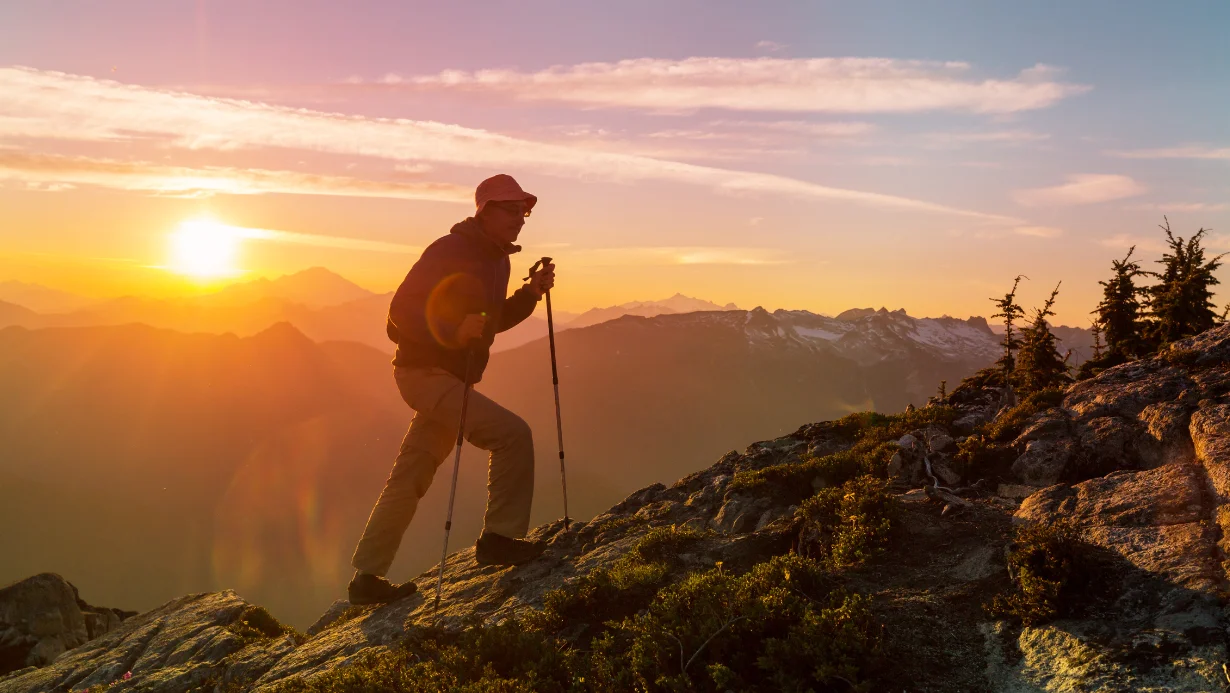
5) Protect joints, embrace rest, and stay consistent
One of the most overlooked truths about training after 40 is that “hard” isn’t always the best signal that you’re improving. Sometimes consistency wins — especially with joints.
Tomer Avraham describes making a shift toward more rest and basic stretching to reduce nagging soreness that kept him from hiking — and it’s a reminder that “less intensity” doesn’t mean “less capable.”
“Adding more rest days and basic stretching made that nagging soreness…disappear.”
— Tomer Avraham, Board-Certified Plastic Surgeon, Avraham Plastic Surgery
The takeaway here isn’t that you need a perfect routine. It’s that the baseline matters: a little stretching, a little strength, a little recovery — repeated week after week — adds up to more trail time.
6) Build bone strength with weights
This one matters, especially as we age: strength training supports bones, joints, and muscle retention. And it doesn’t have to be complicated.
Pavel Khaykin makes a direct case for lifting at least twice per week and pairing it with active recovery like yoga or swimming.
“You must be lifting weights at least twice a week. This is how you keep your bones strong and joints safe.”
— Pavel Khaykin, Founder & SEO Consultant, Pasha Digital Solutions

Even if you don’t love the gym, this can look like simple movements done consistently — and it’s one of the best ways to keep backpacking, skiing, and hiking sustainable.
A practical Sierra Rec weekly training template (40+)
This is not a strict program — it’s a rhythm. Adjust based on your schedule and recovery.
- 2 days strength training (lower body + core + balance; prioritize form and control)
- 1 day uphill conditioning (stairs, steep walking, treadmill incline, hill repeats)
- 1 day low-impact aerobic work (bike, swim, brisk walk)
- 1 long hike day (build gradually; practice descents)
- 2 recovery days (true rest or active recovery + mobility)
If you’re only going to add one thing: add a real recovery day. That’s often the missing piece for 40+ hikers trying to train like they did at 28.
Fuel, mobility, and the “sleep you only get outside”
Training isn’t just workouts — it’s everything that supports the next good day outside.
For me, that’s meant thinking more seriously about trail food and daily nutrition. I’ve tried to eat cleaner and reduce overly processed, ingredient-heavy foods. I want fuel that helps recovery, not food that leaves me sluggish.
Mobility is the other constant project. I keep trying to stretch more — and I keep learning that a little done consistently is better than a big routine I never maintain.
And then there’s the truth every backpacker understands: some of the best sleep you’ll ever get is under a tent.
I wish I could sleep the hours at home that I do backpacking… I said with a smile.
The Sierra takeaway: train to keep saying yes
After 40, the goal isn’t to chase every hard effort. It’s to build a body that keeps saying yes to the things you love: early trailheads, long climbs, high-country miles, and the kind of adventures that make you feel like yourself again.
Train for durability. Treat recovery like training. Lift a little. Move often. Fuel better. And if your body tells you to adjust — listen early, not late.
Because the Sierra isn’t going anywhere. And with the right approach, you won’t have to either.
Sourcing note: Several quotes in this article were provided by professionals and outdoor enthusiasts in response to a query distributed through Featured (a platform that connects publishers with subject-matter sources). Quotes have been lightly edited for clarity and length.
Disclaimer: This article is for general informational purposes and is not medical advice. Consult a qualified professional for personal guidance, especially if you have injuries or medical conditions.
