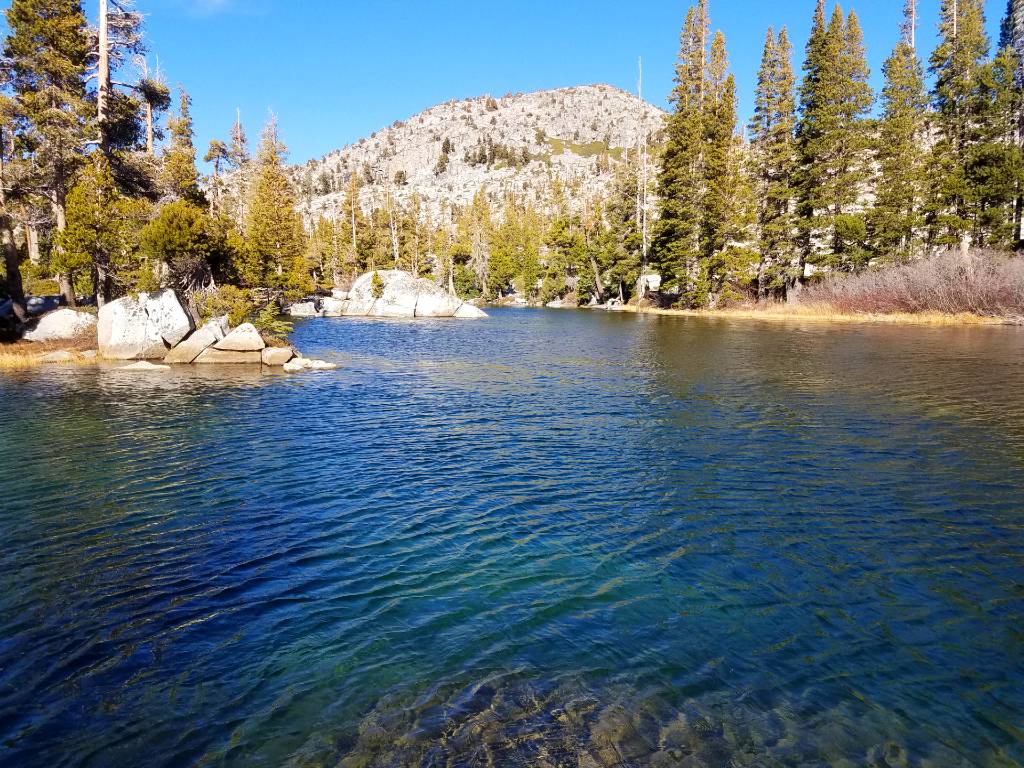

Mother Nature tests our resolve on a hot August trip into the Emigrant.
Some outings are more calculated than free-flowing.
This trip into the Emigrant Wilderness began as one of those deliberate adventures — part work assignment, part personal challenge. My goal was straightforward on paper but ambitious in reality: explore the southern section of the Emigrant and visit as many lakes as four days would allow.
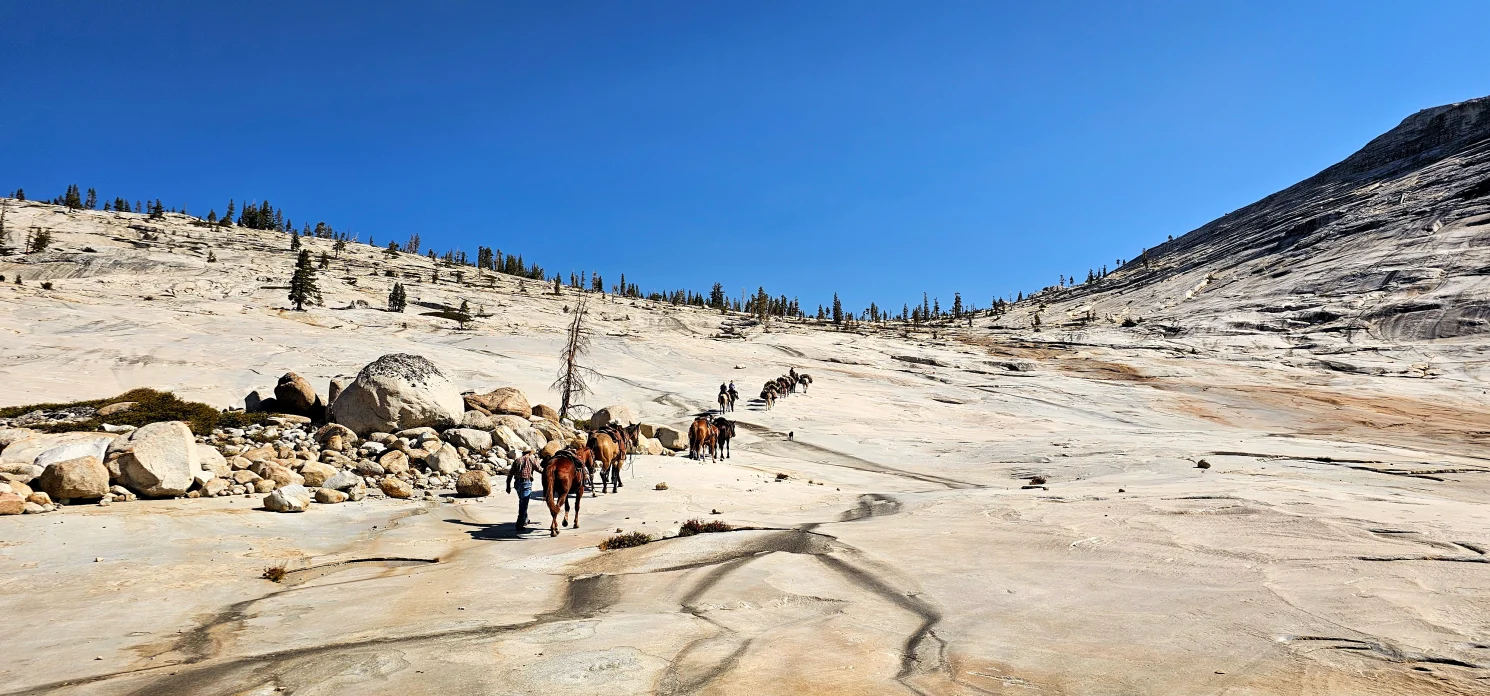
To maximize my reach, I teamed up with Aspen Meadow Pack Station for their Backpacker’s Assist program. A stock horse and mule team would carry my gear 14 miles in to Upper Bucks Lake, freeing me to start light, travel faster, and save energy for off-trail exploring.
It looked like the perfect plan — until Mother Nature reminded me that the Emigrant is not a place you “conquer.” Out here, heat, granite, and distance all fight back, and the wilderness will quickly humble anyone who forgets it.
Over the next four days, we covered more than 35 rugged miles, swam in alpine waters, refilled our bottles countless times, and visited 15 unique lakes — each one its own reward for the work it took to reach it.
Day One – Crabtree Trailhead to Upper Bucks Lake
Tom and I crossed Sonora Pass on Thursday evening, swung by the Forest Service office in Pinecrest to self-register our permit and then dropped our backpacks with Seth and the Aspen Meadow crew. We found a quiet ridge near the pack station for the night, enjoying an epic sunset and slept well under the stars.
By 8:30 a.m. Friday, we were at the Crabtree Trailhead, lucky to find one of the last parking spots in the large but crowded lot. A reminder of how popular this wilderness experience can be in early August once the mosquitos disappear. The air was still cool, the sky a flawless Sierra blue, and with our packs feather-light, we set out with that early-day optimism every hiker knows.
We chose the high route past Camp Lake over the lower alternative, which locals warned was hot, dusty, and short on water. The first mile climbed steadily to the junction, where we met a couple just back from seven days in the wilderness. They spoke with such joy about their trip that it added fuel to our own anticipation.
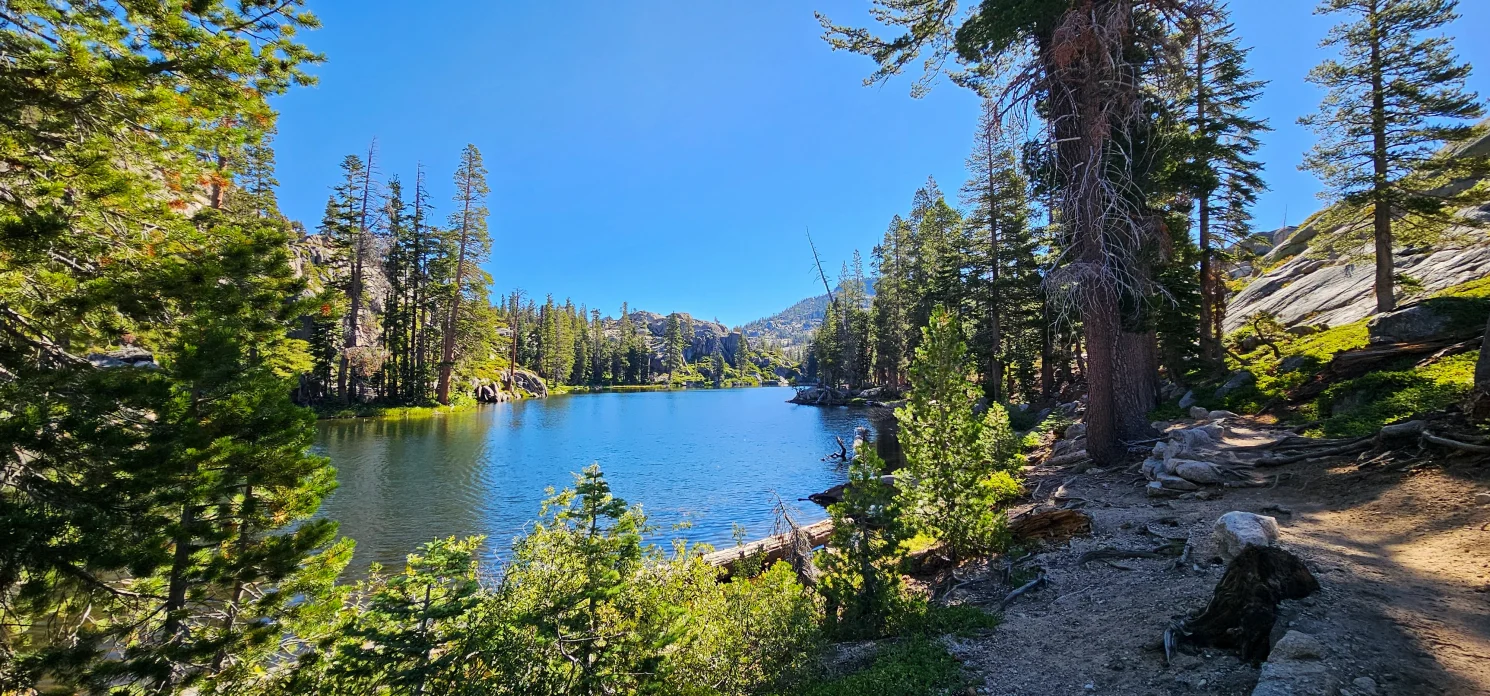
Camp Lake soon appeared — green-hued and ringed by forest, typical of many western Sierra lakes. I noted it for a possible swim on the return. A minute later we passed the Bear Lake trail cutoff, then descended into a creek basin I believe to be Lily Creek, where wildflowers bloomed along flowing water. We made note of the decent that in the heat of day on our return this section might present unpleasant feeling in the heat. The maze of user trails at the creek required a quick map check before we found the right line out of the canyon.
Climbing out brought us to a small, unnamed pond thick with lily pads — which we would simply call Lily Pad Lake for the rest of the trip — before we began the long descent into Piute Meadow. Again noting that this climb int he brutal heat would be a challenge on our return trip. With its broad grassy expanse and seasonal water flow, I could see why packers might choose it as a camp, but for us that day felt like it was just beginning.
Leaving Piute Meadow, the granite began to take over. We climbed toward Piute Lake, whose murky water didn’t invite swimming but a nice shady rest stop. From there, the trail pitched upward again toward Gem Lake — the 250-foot climb felt twice that in the growing heat.
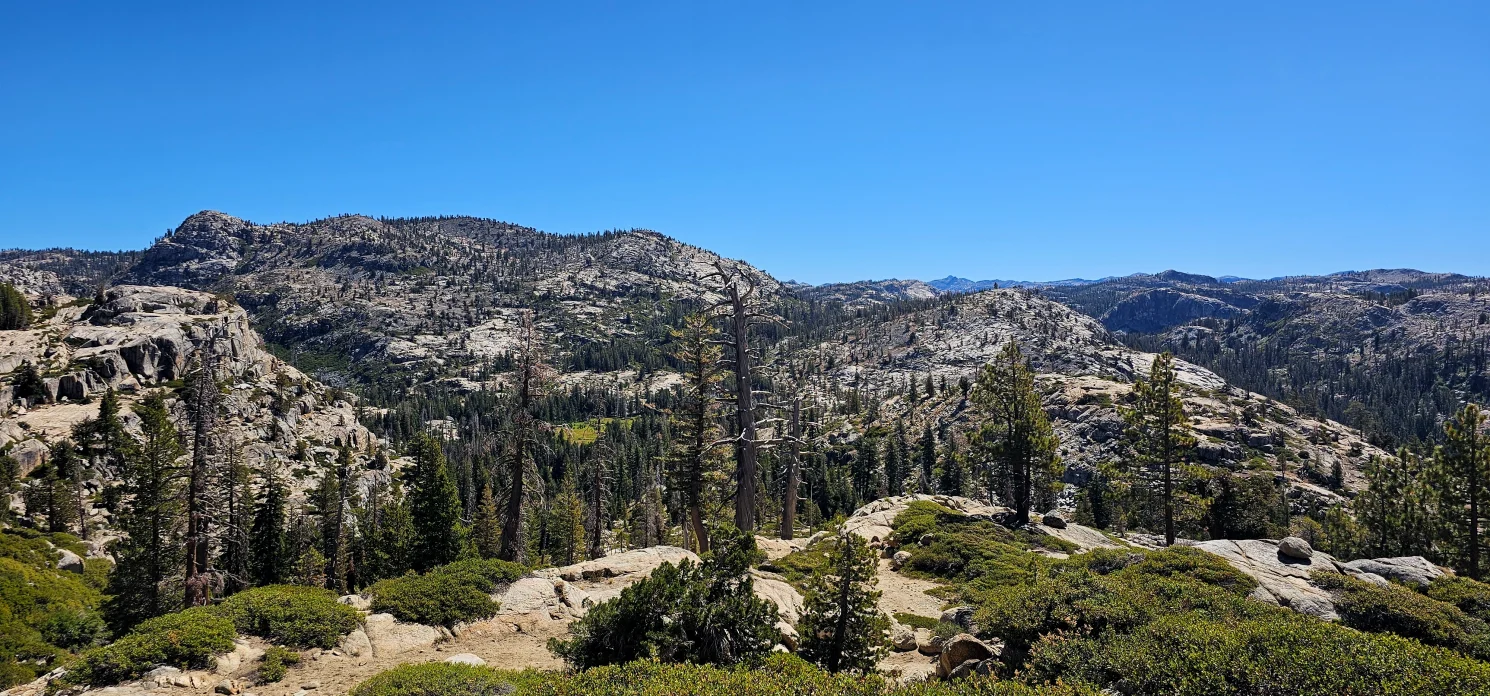


Gem Lake, with its deep, clearer water and grassy West shores, was a welcome sight. We stopped for lunch, a short nap, and our first swim of the trip. Rested, we pushed on through Jewelry Lake and then Deer Lake, noting that each seemed prettier than the last — with the exception of Piute, which held its own kind of quiet charm.
The final approach to Upper Bucks was a mental game. After nearly nine hours on the trail, we crested the last rise and glimpsed the lake through the trees. The horse camp sat on the northeastern shore; our gear was waiting with Cole, one of Aspen Meadow’s cowboys, who pointed us to a perfect hammock spot along the shaded eastern shoreline just past base camp. The team of horses playing in the meadow and cowboys fishing from the granite wall said just about everything about this cozy little wilderness camp.
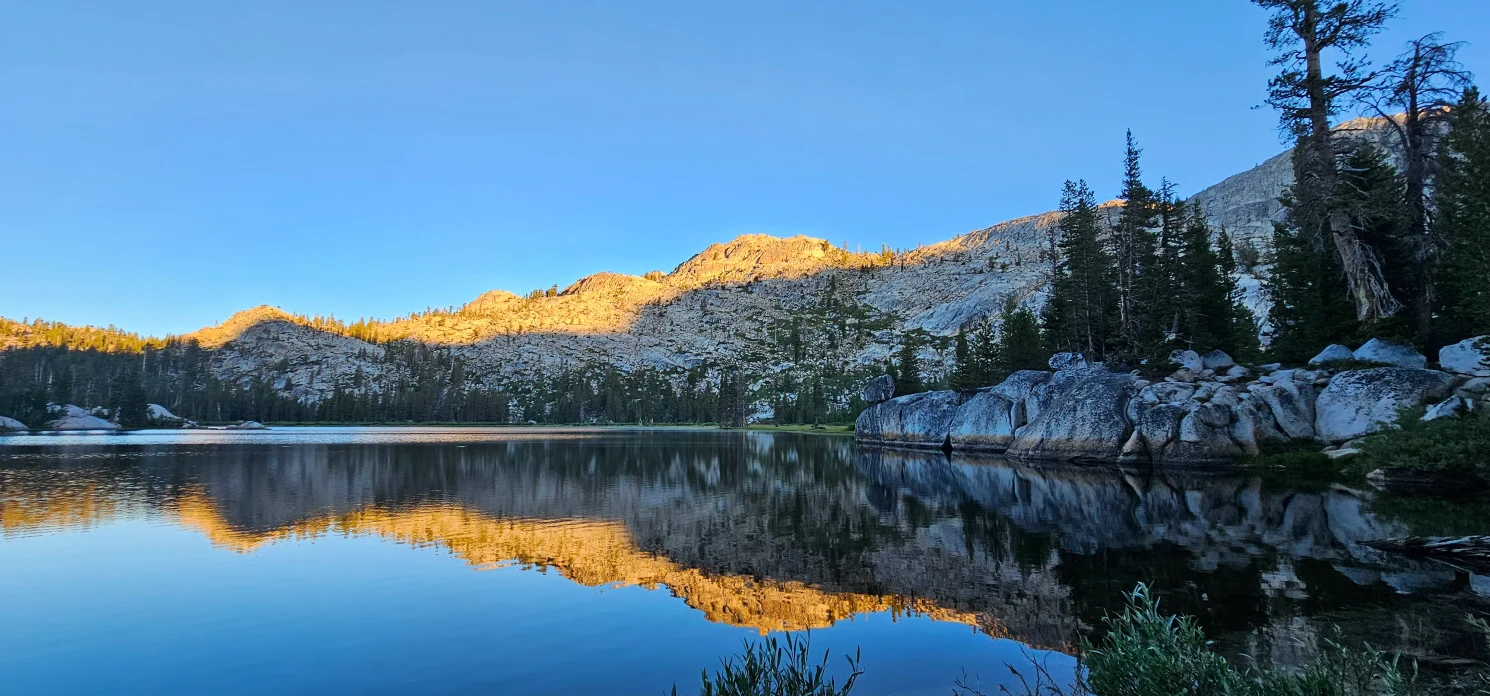


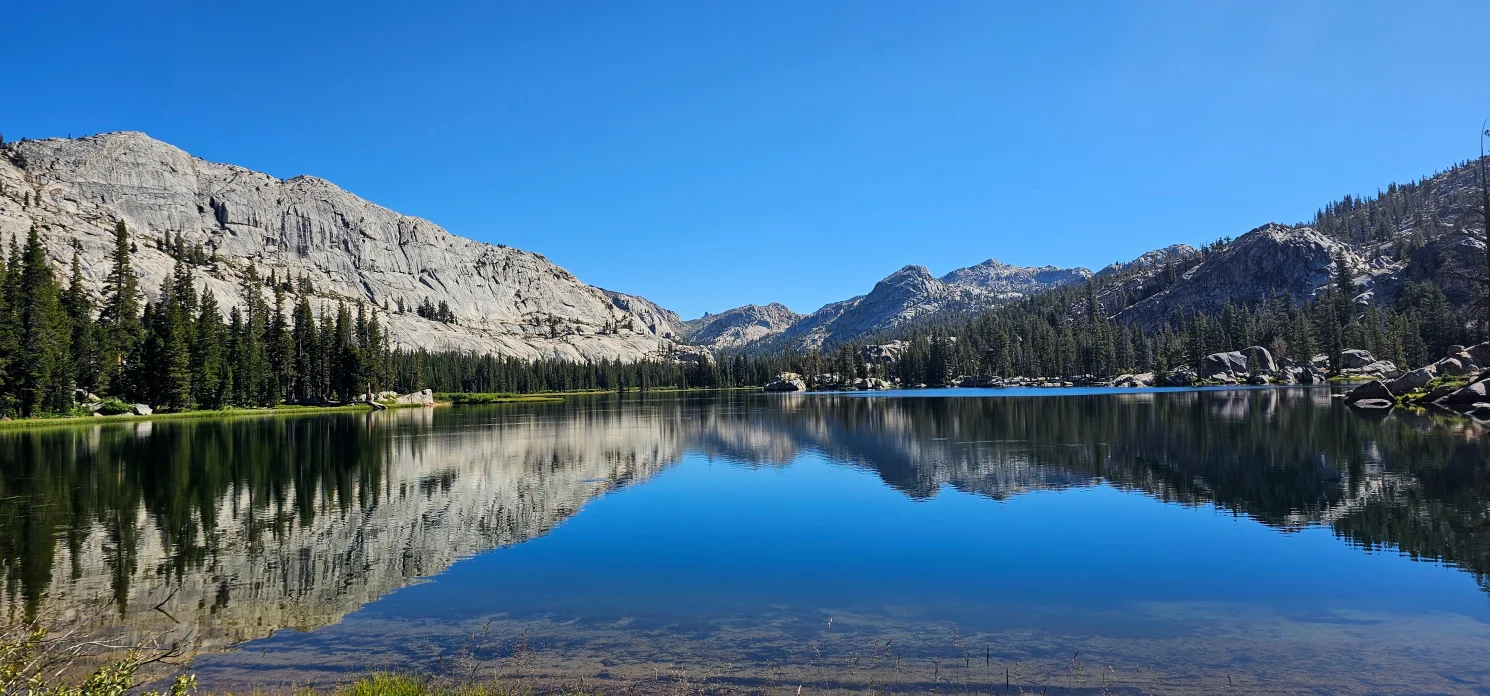
We strung hammocks, made dinner, and waded into the cool water as the day’s last light faded. A full moon rose over the granite, casting silver light across the lake — the first of several nights where the Emigrant would reward us for every hard-earned mile.
Day Two – Off-Trail to Karls, Leighton, Five Acre, and Yellowhammer Lakes
I woke at 6 a.m., the lake glassy and still. My new Coulee pour-over coffee filters produced a perfect cup as I watched the sunrise from shore. Tom joined me for oatmeal as a string of horses headed out with Aspen Meadow’s crew — a nice reminder that some people get to spend their whole summer roaming this country.

We packed up now with the full pack weight on our backs and followed the trail along Upper Bucks’ shoreline toward Lower Bucks Lake. This one instantly became a favorite — clear blue water over granite, the first we’d seen with that Eastern Sierra look. Definitely a place i would return to in the future. At Woods Lake, fish were rising even mid-morning; I could see why anglers love it.
Here we left the main trail and began our off-trail loop through the southern Emigrant. A short ridge climb brought us to Karls Lake, tucked in a granite bowl with forested north shore and a fern-covered understory. We startled a deer, found a smooth granite slab, and took our time with lunch and a swim. This was the wilderness solitude I’d been looking for. Maybe with a little less aggressive wilderness travel designs, I would have enjoyed a night here.


From Karls, we angled southeast to Leighton Lake, pausing for photos before finding a pass eastward toward Five Acre Lake. The view from the crest stopped us in our tracks — the granite gardens of Emigrant spread out toward the far northern boundary of Yosemite, raw and wild, the granite seemed to go on for miles.
Getting to Five Acre was trickier than the map suggested; bluff after bluff forced reroutes. Eventually, we reached the lake, dropped packs in the shade, and refilled water. The final push toward Yellowhammer Lake was a hot, exposed slog, and my energy flagged until the cabins came into view across the creek.


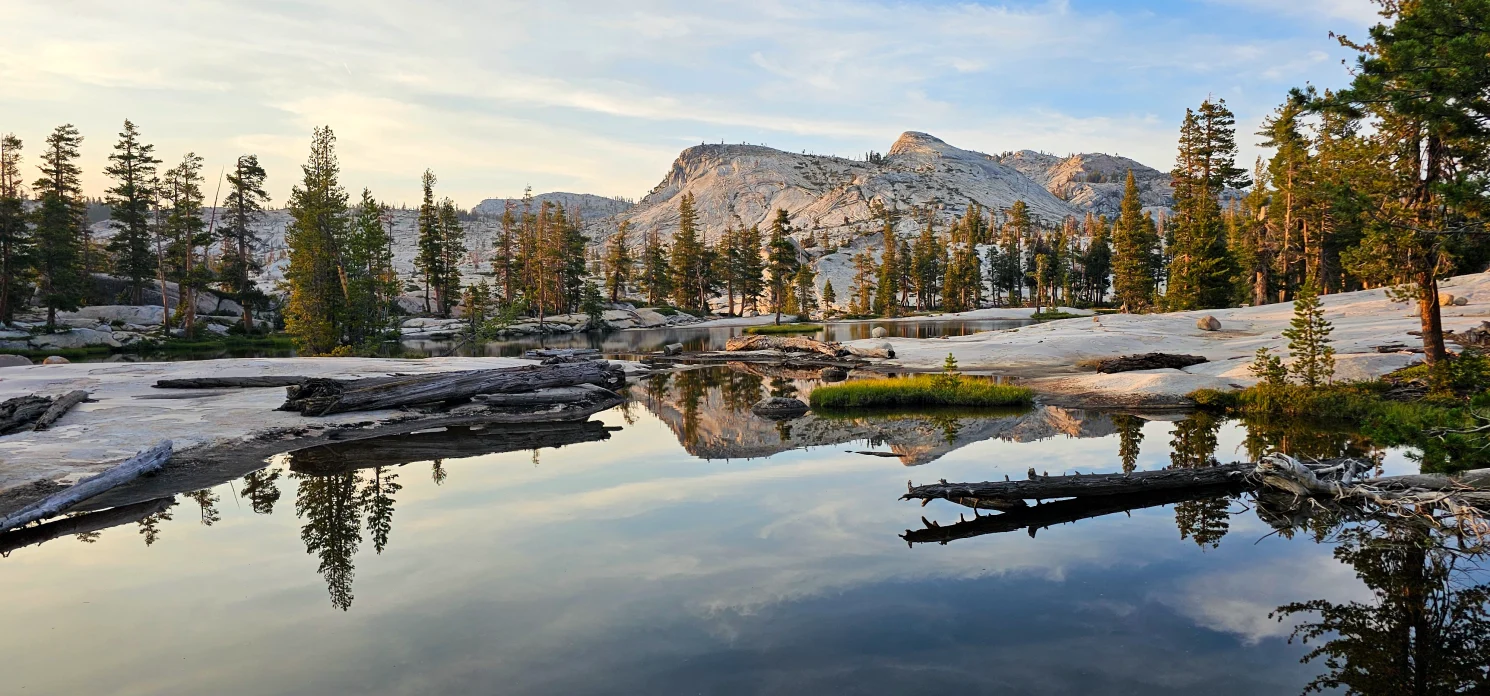
We waded over to meet guests staying with Aspen Meadow’s pack team. They shared swim-hole tips and stories of lazy afternoons floating the lake with wine in hand. Following their lead, we made our way to the south end, found the perfect swimming hole, and let the day’s heat drain away. Yellowhammer is a great deep lake surrounded by Granite walls, its width shockingly skinny but its character in this obscure granite base below Gillett Mountain is distinctive and enjoyable. I once again feel like I’m in the wilderness.

I had planned to continue to Big Lake, but stopping early felt right. Yellowhammer offered a relaxed evening — stars, conversation, and the easy camaraderie that comes after shared miles in the mountains.
Day Three – Big Lake, Pingree, and Back to Gem Lake
Morning on Yellowhammer was calm, the granite walls mirrored in a small pond at the outflow. Over Coulee coffee and Mountain House eggs, I took in the scene, already feeling the warmth building on the Sierra Granite.

A short hike brought us to Big Lake, and it was everything I’d hoped — large, deep blue, and stunningly clear. We crashed a early morning swim party by a group of campers near by. Some things should just be left in the wilderness. Originally, I’d planned to continue to Hyatt Lake today, but concerns about water on our final day led us to pivot toward Pingree Lake instead for an easier exit of the southern route.
We chose to climb the granite bowl on Big Lake’s north side — a route shared, as it turned out, by Aspen Meadow’s horse team leading Yellowhammer guests up to Pingree. The climb was steady, the polished granite beautiful, and carrying a full pack made every step count. Looking back down towards Big Lake and the basin of Yellow Hammer, I know that I have now seen one of the distinctly memorable places in the Sierra.

Pingree Lake was worth the climb — ringed by granite, inviting for a swim. We lingered for lunch before facing the reality of a long, hot hike back toward the main trail. Still it felt good to be cooled down and to have a solid plan for our trips conclusion.
The afternoon heat was punishing, and by the time we reached the lower trail creek and soaked hats and shirts in cold water, our temperament towards each other was thin. Before making the short climb back to Gem Lake the morning swim party from Big Lake passed us and headed in the same direction. Our camp on a ridge offered space from other hikers, however another swim, a nice dice game on the granite slab shared by the local population of ants and a star-filled night to close out our last full day made this a great decision.
Day Four – Back Through Piute Meadow and Camp Lake
We woke with determination in our veins. The packs were heavier now, the heat promised to be relentless, and the route ahead would take us up and down valleys that had been far kinder on Day One when we were 30 pounds lighter. But there’s a certain magic in earning your miles in the Emigrant — a satisfaction that comes only after the work is done.
Not far from camp, we met Don and Mark, two hikers moving with the steady pace of men who know the trail well. They had been hiking together for more than 60 years, and this year’s trip through the Emigrant was just the latest in a tradition that started in their youth. They no longer live in the same part of the country, but they reunite each year to share a week in the backcountry — picking a route, shouldering their packs, and falling back into the easy rhythm of old friends.
It was inspiring to hear their story. They’d just completed the same loop we were on, but in reverse, and they spoke of it with the kind of quiet pride that comes from a lifetime of shared miles. I couldn’t help but hope that Tom and I might still be doing this decades from now. Ten years in, we’re off to a good start.

The day was hot, and we took plenty of breaks in the shade. My final swim of the trip came at Camp Lake — a quick, cooling plunge that marked the end of our big climbs in the sun. From there, the trail mostly wound through shaded forest, and we settled into a steady pace toward the trailhead.
By early afternoon, the parking lot came into view. We swung by Aspen Meadow Pack Station for cold drinks and ice cream, swapping trail reports with Seth’s crew, then pointed the truck toward Walker Burger over Sonora Pass for a well-earned burger and shake — the perfect punctuation mark for any Sierra trip.


This journey was harder than I expected, but it showed me an extraordinary stretch of country. One thing that stood out was how many people we met who return to the Emigrant year after year. Some have been coming for decades, bringing friends who in turn bring their own. For many — especially the Aspen Meadow guests who ride in and base camp — this is more than just a wilderness area. It’s a home away from home, a place that feeds the soul, and a tradition worth protecting.