
I’ve never chased winter camping.
I don’t sleep well cold. I never have. And no amount of romantic language about “embracing the elements” changes the reality of a long night when the temperature drops and sleep comes in short, restless stretches.
But winter still holds something I keep returning to.
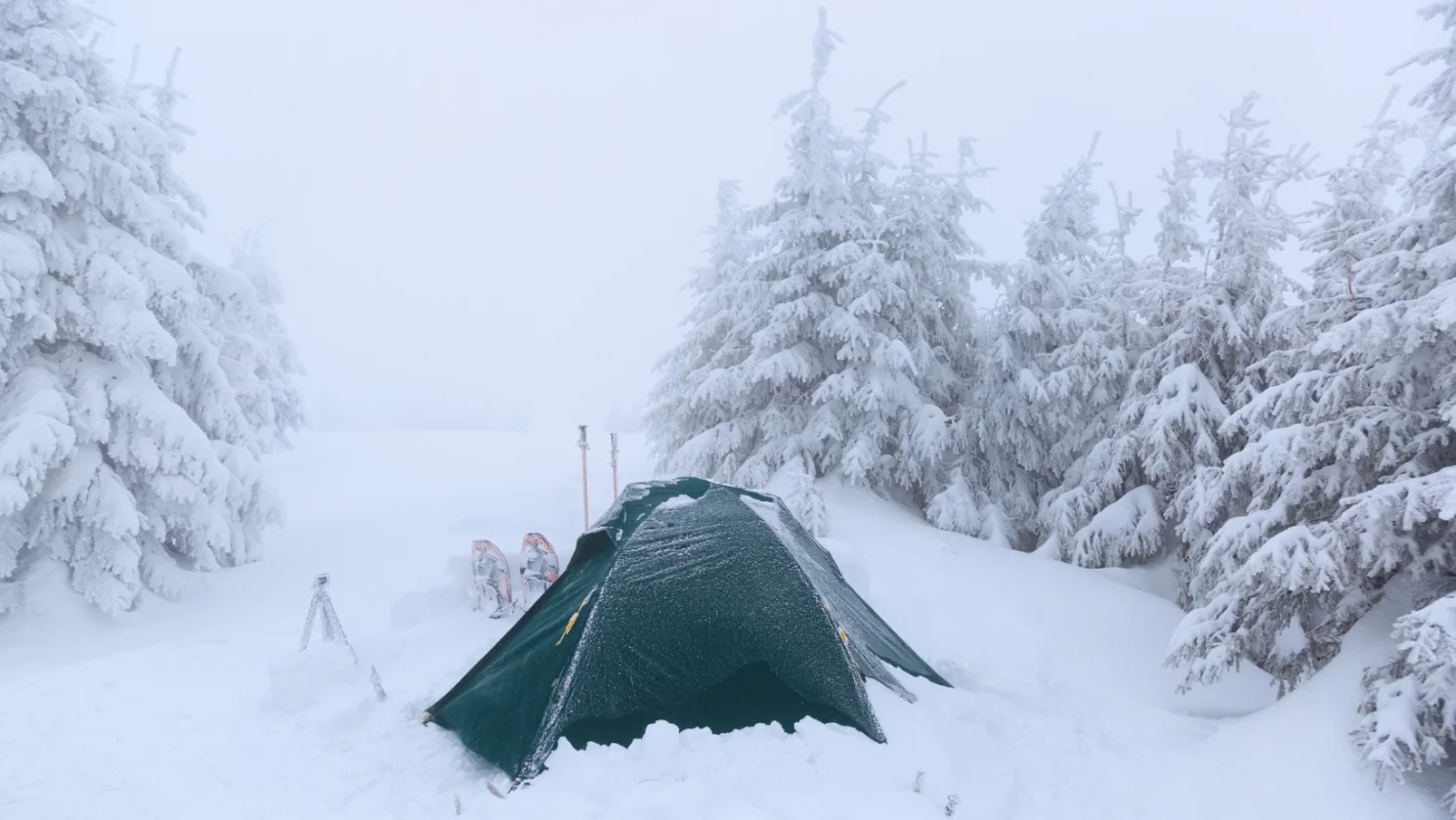
Some of my earliest outdoor memories come from winter camping in Oregon with my dad. We didn’t have great gear—I’m sure of that now—but at the time, it was just what we had. Nights felt like a quiet endurance test. Cold crept in no matter how well we layered. Yet when snow fell, the world changed. Sound disappeared. The forest softened. Everything slowed down.
That quiet is hard to forget.
Winter camping, for me, isn’t about loving winter. It’s about choosing the right version of it.
Style One: Deep Quiet in the Sierra Snow
Scott’s Lake & the Highway 88 Corridor
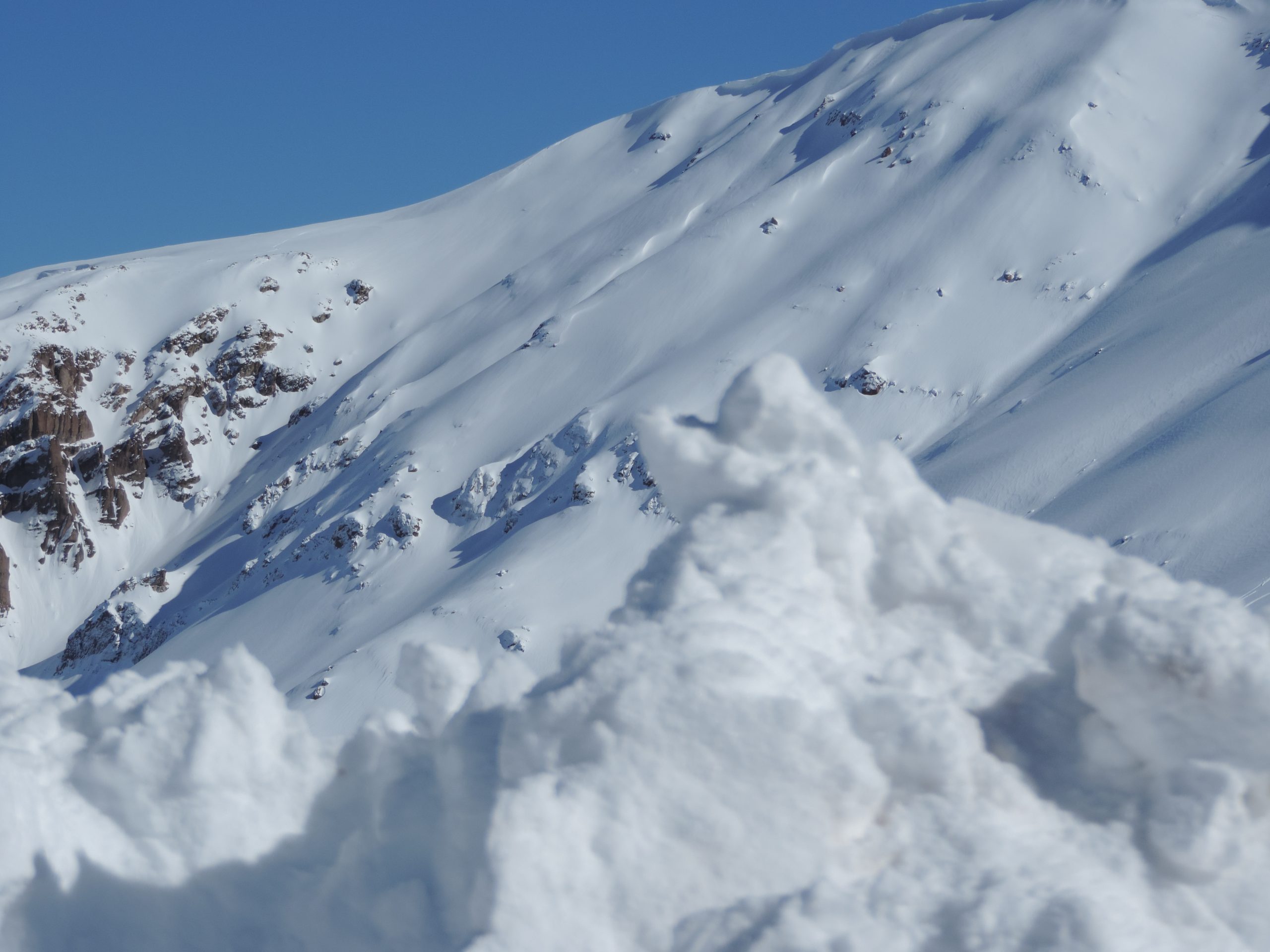
There are places in the Sierra that feel like they were meant to be experienced in winter. Scott’s Lake is one of them.
In summer, it’s a popular, easygoing destination. In winter, it becomes something else entirely. Snow smooths the landscape. Foot traffic vanishes. The lake, frozen and still, feels contained in a way it never does during peak season.
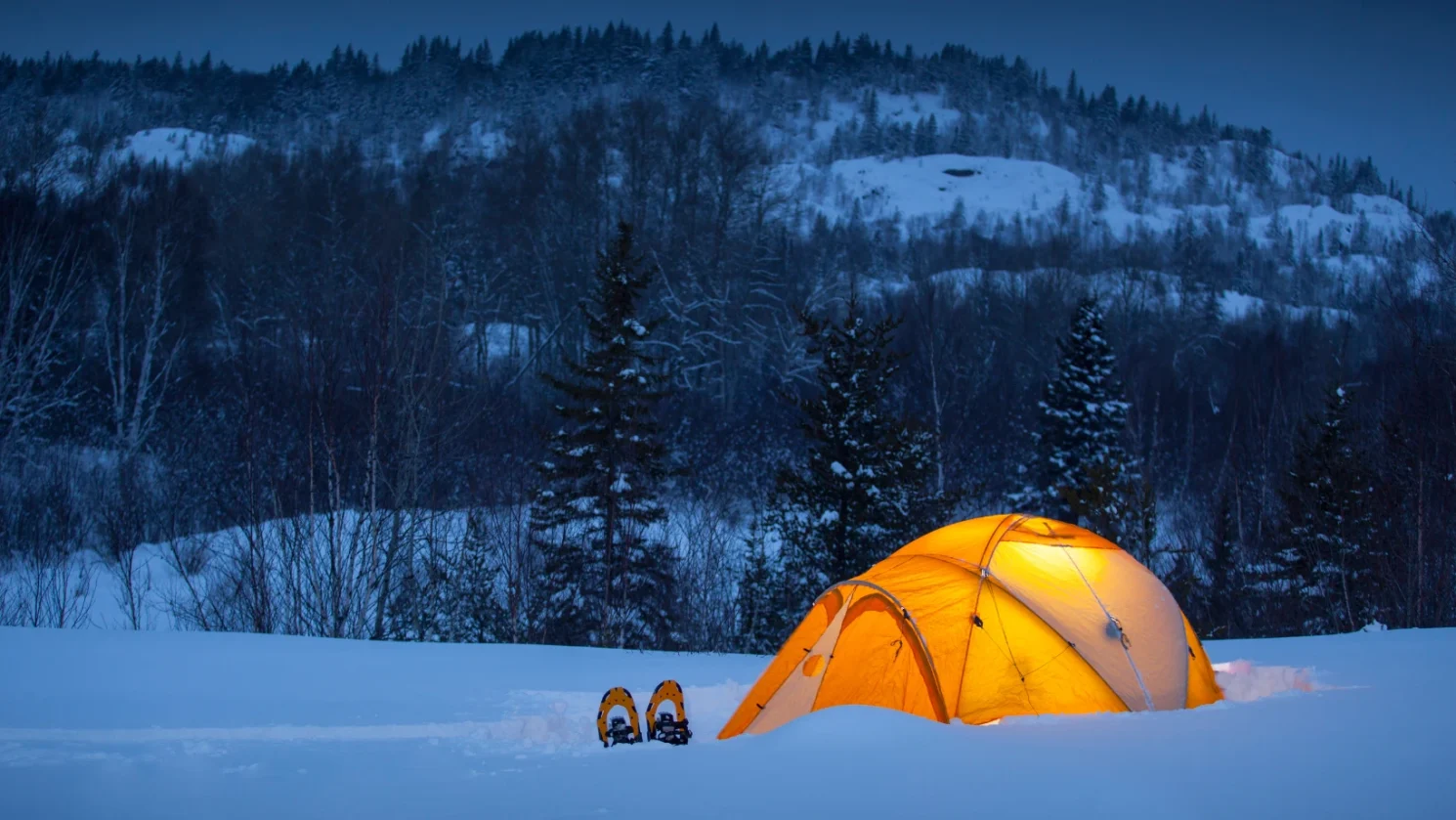
This kind of winter camping isn’t about pushing mileage or chasing summits. It’s about restraint.
- Short approaches
- Conservative terrain
- Early camp setup
- Willingness to turn back without debate
You don’t need to go far to feel far away. Even a mile from the road, winter strips the place down to its essentials—light, shadow, silence.
For me, this style works best as a limited experience. One night. A good weather window. A clear exit plan. Enough to feel winter’s quiet without turning the night into something to endure rather than appreciate.
Style Two: Winter Without the Weight
Alabama Hills & the Eastern Sierra Low Country
If snow camping feels like too much, the Eastern Sierra offers a different answer.
Winter camping near the Alabama Hills isn’t about deep snow or technical travel. It’s about space. Open ground. Cold, clear air. Big skies that feel even bigger in winter.
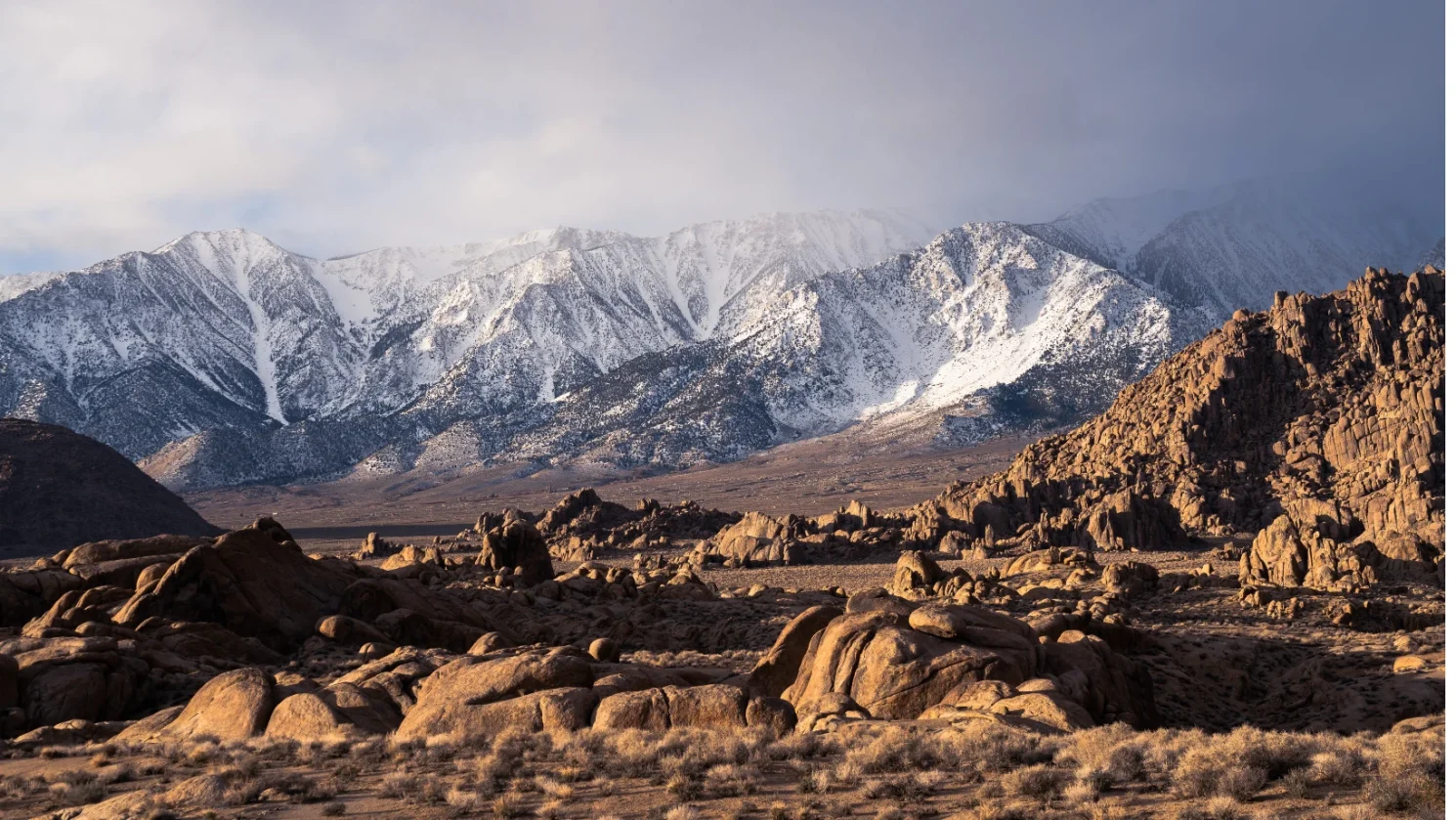
This is winter that’s honest but manageable:
- Cold nights, but often dry ground
- Minimal avalanche exposure
- Easy access and easy retreat
- Camps chosen for wind, not snow depth
You still get the winter benefits—quiet mornings, alpenglow on granite, long shadows—but without committing to deep snow systems or complex travel.
For many Sierra Rec readers, this is the most realistic winter camping option. It’s where winter becomes inviting instead of intimidating.
Style Three: The Best Winter Camping (If We’re Being Honest)
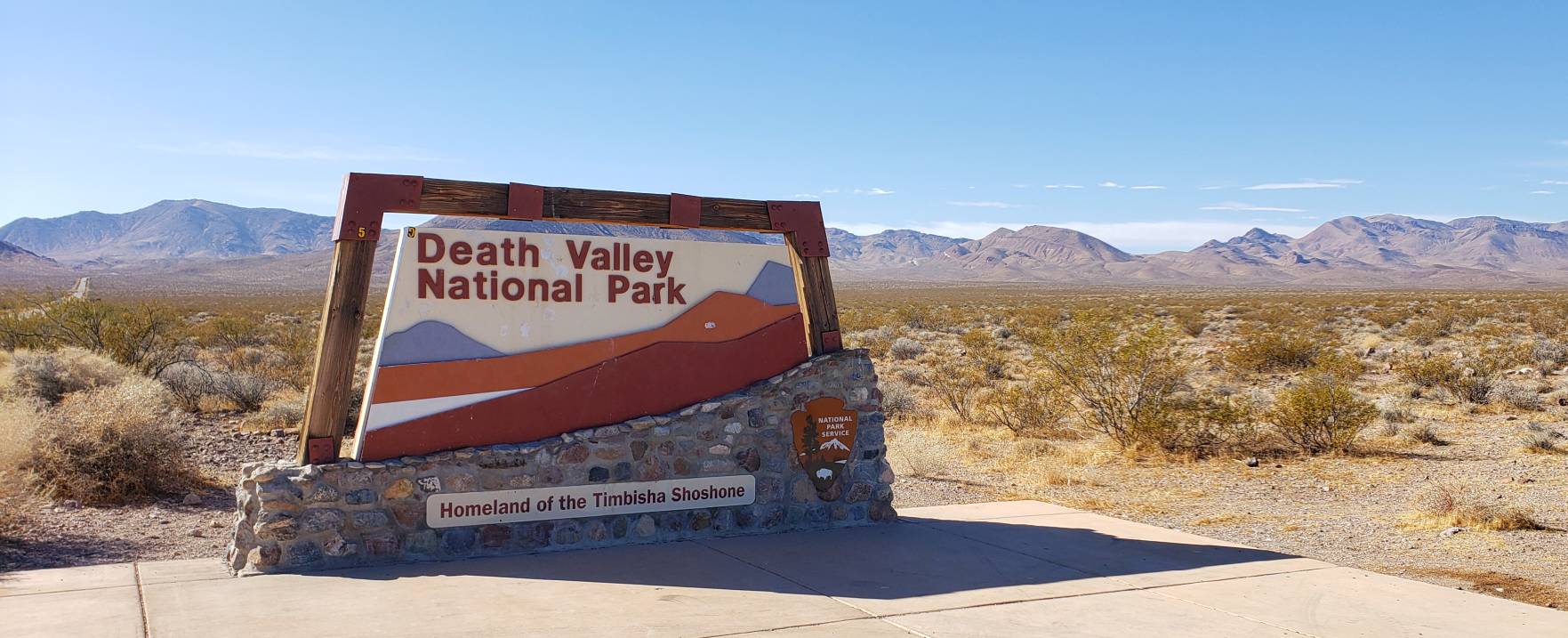
Death Valley
If the goal is peace—not proving something—Death Valley is hard to argue against.
Winter is when this landscape finally opens itself up. Cool days replace brutal heat. Nights invite conversation instead of survival. Vast terrain encourages wandering without urgency.

This is winter camping without the battle:
- Comfortable sleeping temperatures
- Long hiking days
- Immense solitude
- A sense of scale that resets perspective
For those of us who don’t sleep well in the cold, Death Valley isn’t avoiding winter—it’s choosing the version of winter that actually works.
The Common Thread
Winter camping doesn’t need to look one way.
It can be:
- A quiet lake buried in snow
- A cold but open valley below the Sierra crest
- Or a desert basin glowing under winter stars
What matters is honesty—about your comfort, your skills, and your reasons for going.
Winter removes the noise. The crowds. The rush. What’s left can be deeply peaceful—if you plan for it.
Winter Gear & Planning: What Actually Matters
This is where winter trips are made or broken.
Sleep System (Non-Negotiable)
- High R-value insulation: R-6+ sleeping pad, or a two-pad system
- Temperature buffer: Sleeping bag rated well below expected lows
- Dry management: Moisture is the real enemy—manage condensation carefully
If you sleep cold, plan for it. Hope is not insulation.
Shelter & Site Selection
- Choose camps for wind protection first, views second
- Use proper anchors—snow doesn’t hold standard stakes
- Set camp earlier than you think you need to
A good site can mean a 20-degree difference by morning.
Clothing & Layers
- Fewer layers, higher quality
- One dedicated dry sleep layer—no exceptions
- Insulation sized for standing still, not hiking
Planning & Mindset
- Shorter days mean earlier decisions
- Turnaround times matter more than destinations
- Coming home Safe is always the priority
Winter doesn’t reward ego. It rewards patience.
Winter Camping FAQ: Tents & Sleeping Bag Ratings
Do I really need a four-season tent for winter camping?
Not always.
A true four-season tent is designed for wind loading and snow accumulation, not warmth. If you expect strong winds, heavy snowfall, or exposed camps, a four-season shelter makes sense. For calmer weather, sheltered locations, or low-snow environments (like Alabama Hills or Death Valley), a well-designed three-season tent can work—if you choose your site carefully and manage condensation.
In winter, site selection matters more than tent labels.
What does a sleeping bag “rating” actually mean?
Most sleeping bag ratings reflect a survival or lower comfort limit, not guaranteed warmth.
As a general rule:
- If nighttime lows are expected around 20°F, a 0°F bag is a safer choice
- If you sleep cold, add another 10–15 degrees of margin
- Ratings assume a quality sleeping pad—without insulation underneath, the rating is meaningless
Think of sleeping bag ratings as minimums, not promises.
Is layering sleeping bags a good idea?
It can be—but only if done intentionally.
Layering works best when:
- The outer bag is large enough to avoid compressing insulation
- Moisture is managed carefully
- You’re extending an existing system, not improvising
For many campers, a warmer single bag paired with a high R-value pad is simpler and more reliable.
Are quilts a good option for winter?
They can be—for experienced users.
Quilts demand:
- Excellent pad insulation
- Good draft control
- Honest awareness of personal cold tolerance
For shoulder-season winter trips or desert camping, quilts can work well. In deep Sierra winter conditions, many campers prefer the margin of a full bag.
A Final Thought for Sierra Rec Readers
You don’t have to love winter camping to respect what winter offers.
Sometimes it’s a frozen lake.
Sometimes it’s open desert.
Sometimes it’s just one quiet night that reminds you why you go outside at all.
Winter, when approached thoughtfully, doesn’t demand toughness—it asks for intention.
And that’s a trade worth making.