
Snowshoeing beneath the giant sequoias is one of those Sierra experiences that stays with you long after your boots dry out. There’s something grounding about standing in deep snow at the base of these cinnamon-colored giants, where winter doesn’t diminish their presence—it amplifies it. On a cold, quiet day in Sequoia National Park, ice crystals drift down from the high canopy as you move slowly along the Congress Trail, catching the light and floating through the air. I remember the moment the sun broke through the clouds while we were standing at the base of the Chief Sequoyah and McKinley Trees—suddenly the forest felt suspended in motion, like we’d stepped inside a living snow globe. That’s the kind of winter magic Sequoia offers when conditions line up and you’re willing to meet the park on its terms.
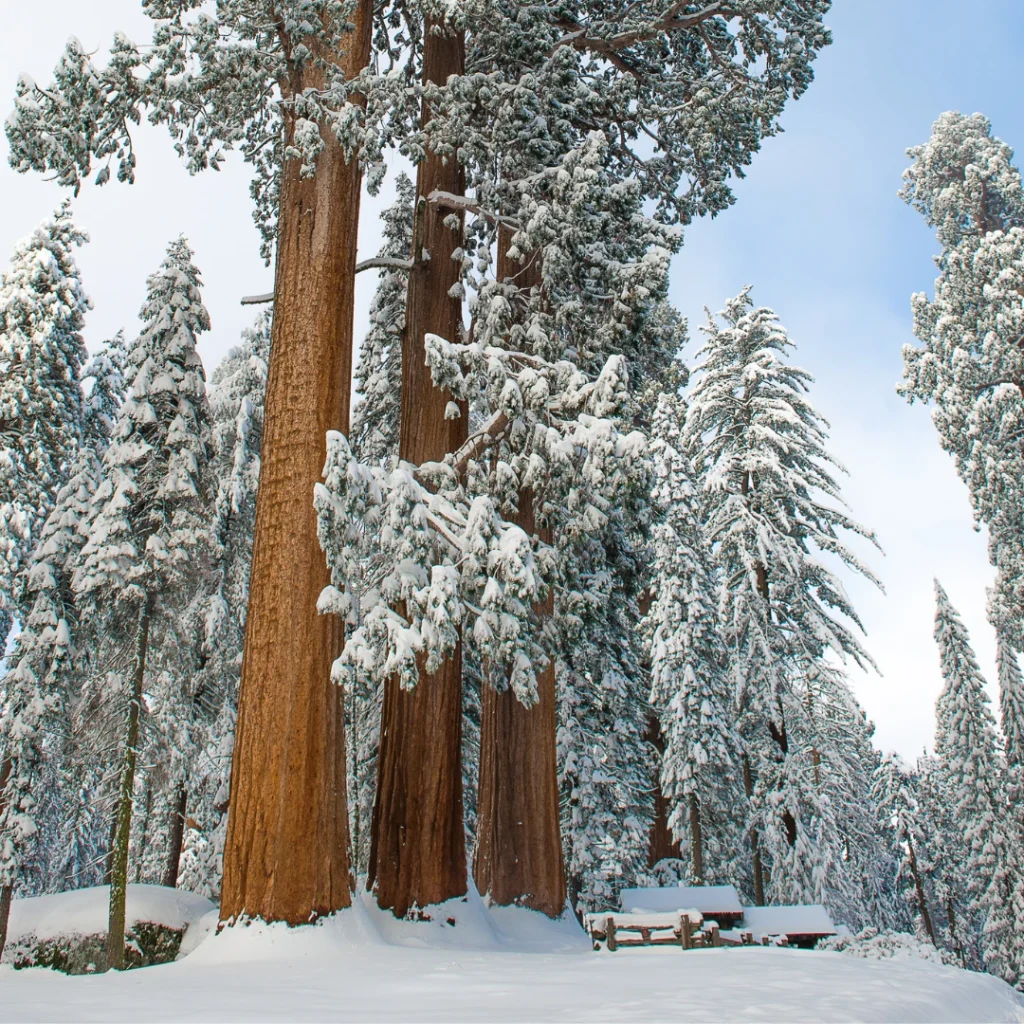
As winter blankets the towering giants of Sequoia National Park, a magical transformation takes place, turning the already stunning landscape into a winter wonderland. If you’re planning a visit to witness this enchanting spectacle, here’s everything you need to know for an unforgettable winter adventure.
Dress in Layers and Embrace the Chill
Winter in Sequoia National Park brings chilly temperatures and the possibility of fresh snow, especially in the Grant Grove and Giant Forest areas. Embrace the beauty of winter by packing layers of warm clothing, including long pants, a jacket, a hat, and gloves. The sequoia groves, though awe-inspiring in any season, take on an ethereal quality when dusted with a layer of pristine snow.
Navigate with Caution: Tire Chains and Road Closures
Before hitting the road, be aware of tire chain restrictions that may be in effect due to snow or icy conditions. Some roads, like Panoramic Point Road in Grant Grove, close when snow accumulates. Construction delays are possible on Generals Highway, as crews work to repair roads damaged during the winter of 2023-24. Stay informed about road closures and plan your routes accordingly.
- Highway 245 is Closed for Construction and Cannot Be Used to Reach or Leave the Grant Grove AreaHighway 245 outside the parks is under construction by CalTrans. It is scheduled to be closed through February 2, 2024. It is not possible to reach or leave the Grant Grove area using Highway 245. Alternate routes are available.more
- Seasonal road closures in effectSeasonal closures in effect include Highway 180 to Cedar Grove, which is closed at the Hume gate, and Mineral King Road, which is closed at the park boundary. See Driving and Road Information in the drop-down menu below for a list of more closures.
Seasonal Road Closures
- Moro Rock/Crescent Meadow Road (Giant Forest, Sequoia National Park) is closed to public vehicle traffic when the shuttle service is running during holidays, and also once snow accumulates on the road.
- Highway 180 to Cedar Grove (Kings Canyon National Park) is closed for the season at the Hume Lake Road gate.
- Mineral King Road (Sequoia National Park) is closed for the season near the national park boundary.
- Middle Fork Road (Foothills, Sequoia National Park) is closed to vehicles due to damage from winter storms in early 2023.
- Crystal Cave Road (Giant Forest, Sequoia National Park) is closed for the season.
- Redwood Mountain Road (Kings Canyon National Park) remains closed due to hazardous conditions from the 2021 KNP Complex Fire and damage from winter storms in early 2023.
Choosing Where to Explore in Winter: Plan Your Entrance, Plan Your Day
Winter travel in Sequoia National Park isn’t about moving through the park—it’s about choosing a zone and settling into it. You can’t drive end to end in winter, and that’s actually a gift. A successful winter visit starts with picking the right entrance and focusing on one primary area of exploration rather than trying to see everything.
Giant Forest & Congress Trail: The Heart of Winter Sequoia
If your goal is to experience giant sequoias in snow, the Giant Forest is the crown jewel—and the Congress Trail is the best place to do it.
This area holds one of the highest concentrations of massive sequoias anywhere in the world, and in winter it becomes quieter, slower, and more intimate. Snow softens the terrain and dampens sound, making even short walks feel immersive.
The Congress Trail works especially well in winter because:
- It’s relatively level compared to surrounding routes
- It loops through dense groves, limiting exposure
- It allows you to experience multiple iconic trees without committing to long mileage
Along the loop, you’ll pass several of the forest’s most recognizable giants, including the General Sherman Tree, the Chief Sequoyah Tree, and the McKinley Tree. Standing at the base of these trees in winter—snow piled against their flared trunks—gives you a true sense of scale that summer crowds often dilute.
On cold, still days, ice crystals drift down from the canopy as sunlight filters through the branches. It’s one of the few places in the Sierra where winter doesn’t feel harsh—it feels reverent.
Wolverton Area: Open Space, Snowshoe-Friendly, and Family-Focused
Just west of the Giant Forest, the Wolverton area offers a very different winter experience. Where the Giant Forest feels enclosed and cathedral-like, Wolverton feels open and expansive.
This area is popular in winter because:
- Snow accumulates evenly across broad meadows
- Terrain is ideal for beginner-friendly snowshoeing
- It’s well-suited for families and first-time winter visitors
Wolverton often serves as a staging area for snow play and casual exploration. It’s a great place to strap on snowshoes for the first time, let kids roam safely, or enjoy wide views framed by snow-covered forest edges.
It’s also a good option when conditions deeper in the Giant Forest feel crowded or compacted. Wolverton gives you room to spread out and move at your own pace.
Grant Grove: A Quieter Northern Option
For visitors entering from the north, Grant Grove offers a compelling alternative to the Giant Forest.
Grant Grove is home to the General Grant Tree, one of the largest sequoias on Earth, and the surrounding grove feels more compact and less trafficked in winter. Snowshoeing here often feels more solitary, especially on weekdays or during calm weather windows.
Grant Grove works well if:
- You’re approaching from the north side of the parks
- You want a quieter experience with fewer people
- You prefer shorter walks concentrated around a central grove
Like the Giant Forest, winter access is weather-dependent, and road conditions should always be checked before committing. But when accessible, Grant Grove delivers a deep sequoia experience without the scale or crowds of the southern end.
Discover the Winter Wonderland by Shuttle
While some roads may be closed, the free Giant Forest Shuttle offers a convenient and picturesque way to explore during the holidays. The shuttle operates from December 23 to January 1, extending its service to Lodgepole and Wuksachi areas. Parking at Sherman Tree Main Parking or Wolverton is recommended, especially on busy weekends and holidays.
Trails, Camping, and Lodging
Trails within the Giant Forest and Lodgepole areas remain open, but be prepared for winter conditions. Camping enthusiasts should note that all campgrounds are closed for the winter season, with Lodgepole Campground reservations opening in January. For those seeking a cozy retreat, Wuksachi Lodge and Restaurant are open for lodging and food service. The Winter NPS newspaper for Sequoia has plenty of tips and suggestions for visitors.
Ranger-led Adventures and Snowshoe Walks
Winter brings a host of ranger-led programs, including snowshoe walks starting mid-January. These walks, lasting about 1.5 hours, offer a unique perspective on the park’s winter beauty. Reservations are required, and snowshoes are provided for a limited group size.
Exploration on Your Terms: Snowshoeing and Cross-Country Skiing
For those wanting a more independent adventure, Sequoia National Park offers opportunities for snowshoeing and cross-country skiing. Rent snowshoes at Grant Grove Market or bring your own, and explore marked ski trails. Exercise caution and respect designated snowplay areas to ensure a safe and enjoyable experience.
Wheelchair-Accessible and Winter Sherman Tree Trail from the Generals Highway
Before snow begins to accumulate, parking here is only for those with disability placards. If you don’t have a placard, but can’t walk the hill on the main trail, ask at a visitor center for a temporary permit.
When snow begins to accumulate, this parking area is open to all. Check signs at the parking area before parking here if you don’t have an accessibility placard. Do not park in the roadway.

Congress Trail
From the Sherman Tree, continue along this fairly level 2-mile (3.2 km) loop through the heart of the Giant Forest sequoia grove. Follow the yellow triangle markers posted on trees. Park only in designated spots in parking areas or in paved pullouts. Vehicles parked in unpaved areas along the highway pose a danger to traffic and may be ticketed.
If parking areas for the Sherman Tree trails are full, consider coming back later in the day, or visiting sequoias in a quieter area. Options for seeing the Giant Forest sequoia grove include Big Trees Trail, Hazelwood Nature Loop, and hikes beginning at Giant Forest Museum. For those with the stamina the Alta trail from the Museum to the Congress Trail may be a facinatiing option.
Once snow accumulates, the Sherman Tree Main Trailhead and Parking Area may close.
Big Trees Trail
This level, paved loop has trailside exhibits about sequoias. Start your walk at Giant Forest Museum for a 1-mile (1.6 km) round-trip walk. Ski or snowshoe once snow gets deep. There are no yellow ski-trail markers along this trail. If you have a disability placard, park at the trailhead for a 0.75-mile (1 km) loop. Check signs at the parking area before parking here if you don’t have a placard.

Overnight Expeditions: Pear Lake Winter Hut
For the adventurous spirits, consider an overnight journey to Pear Lake Winter Hut. Managed by the Sequoia Parks Conservancy, this hut offers a unique winter wilderness experience. Reservations open in November, with detailed information available on the Sequoia Parks Conservancy website.
Designated Snowplay Areas and Scenic Drives
For family-friendly fun, three designated snowplay areas beckon, including Wolverton and Grant Grove. Scenic drives from Ash Mountain Entrance to Lodgepole and from Lodgepole to Grant Grove offer breathtaking views and the chance to discover historic sites like Hospital Rock and Amphitheater Point.
Plan Your Winter Escape
Sequoia National Park in winter is a mesmerizing landscape waiting to be explored. Whether you choose ranger-led adventures, independent snowshoeing, or a scenic drive, winter in Sequoia promises an experience like no other. Bundle up, plan ahead, and immerse yourself in the tranquility and splendor of this winter wonderland.
How to Travel to Sequoia National Park in Winter
Winter access is the single biggest point of confusion for first-time visitors, so this section does a lot of heavy lifting.
Key points to cover (written in plain language):
Getting There
- The Ash Mountain (Highway 198) entrance is the most reliable winter access point.
- Expect chain controls after storms—carry chains even if conditions look clear at lower elevations.
- Travel times increase significantly once snow is present; short distances can take much longer than expected.
Road Conditions & Closures
- Winter travel often includes partial park access, not full access.
- Roads to high-elevation areas and side routes may close with little notice after storms.
- Always check the NPS road conditions page the morning of travel, not the night before.
Parking & Shuttles
- Parking near popular winter areas like the Giant Forest can fill quickly on weekends.
- When operating, the Giant Forest Shuttle is often the easiest way to move through snowy areas without stressing about parking or road conditions.
Bottom line: Winter travel here rewards early starts, flexible plans, and realistic expectations.
Winter FAQ: Sequoia National Park
Is Sequoia National Park open in winter?
Yes, but access is limited by snow and road conditions. Not all areas are reachable, and closures are common after storms.
Do I need snow chains to visit Sequoia in winter?
Yes. Carrying chains is required during winter conditions, even for AWD or 4WD vehicles.
Can you see the giant sequoias in winter?
Absolutely. The Giant Forest remains one of the most accessible and rewarding winter areas in the park.
Is snowshoeing allowed in Sequoia National Park?
Yes. Snowshoeing is one of the best ways to experience the park in winter, especially after fresh snowfall.
Is winter a good time to visit Sequoia with kids?
It can be—if plans are flexible, expectations are realistic, and conditions are checked carefully before travel.
Are restrooms and services open in winter?
Some facilities remain open, but services are limited. Always plan as if amenities may be unavailable.
Winter in Sequoia isn’t about convenience or certainty. It’s about slowing down, working with conditions, and finding beauty in smaller moments—snow settling on massive trunks, quiet trails, and light filtering through the canopy. When you approach it with patience and preparation, winter among the giant sequoias becomes one of the most memorable ways to experience the Sierra.