
Tent or Hammock? It has become one of the most asked questions for backcountry backpackers and national park visitors over the past 6-7 years. About four years ago, I switched from tent camping to hammock camping and had never looked back. My sleep comfort level is unmatched, and adding a mosquito net to my setup eliminated most troubles I have found in open-air camping.
Hammock or Tents? We had two tents and three hammocks on a recent national park trip with six friends while we enjoyed this mountain vista site. As a group, we would not be settled this debate, but more tent capers look at me with envy when they see how easy it is to set up and take down, and I enjoy a stary night sky sleep in the open air.

National Park Regulations
One of the variables I first had to learn when I started hammock camping is that National Parks have some requirements for hammock campers. Some parks (California Redwoods National Park, for example) don’t allow hammock campers. Other parks like Joshua Tree National Park require you to bring a hammock stand ( no tree hangs). In places like Yosemite, Lassen, and Sequoia/Kings Canyon National Parks, hammock camping is allowed, but all straps must be set up to protect the trees. Generally, a wider strap (2″) or a tree protective sleeve and the hammock needs to be placed over hard ground. Other general rules I have seen in parks include trees over 8″diameter.
The biggest issue I have when hammock packing is I have to hike where I know there are trees. That can make me skip some lake destinations because suitable trees were unavailable. Of Course, in parks like Yosemite, you also need to beware of the camping boundaries in places like Tuolumne meadows.
In Yosemite National Park, the variety of locations you can hang a hammock is tremendous. In addition, many of the high Alpine lakes are tree-lined.
And Many Trail sections past the boundaries offer suitable trees and ground for hanging a hammock away from any crowds.
However, there are also sections of Yosemite where the granite dominance of the area may cause you to sleep on the ground if you don’t plan your trip very closely.
I have seen many a video of hikers getting to camp late at night and unable to find suitable trees at their destination and deciding to cowboy camp or to move on until they find a place in the dark.
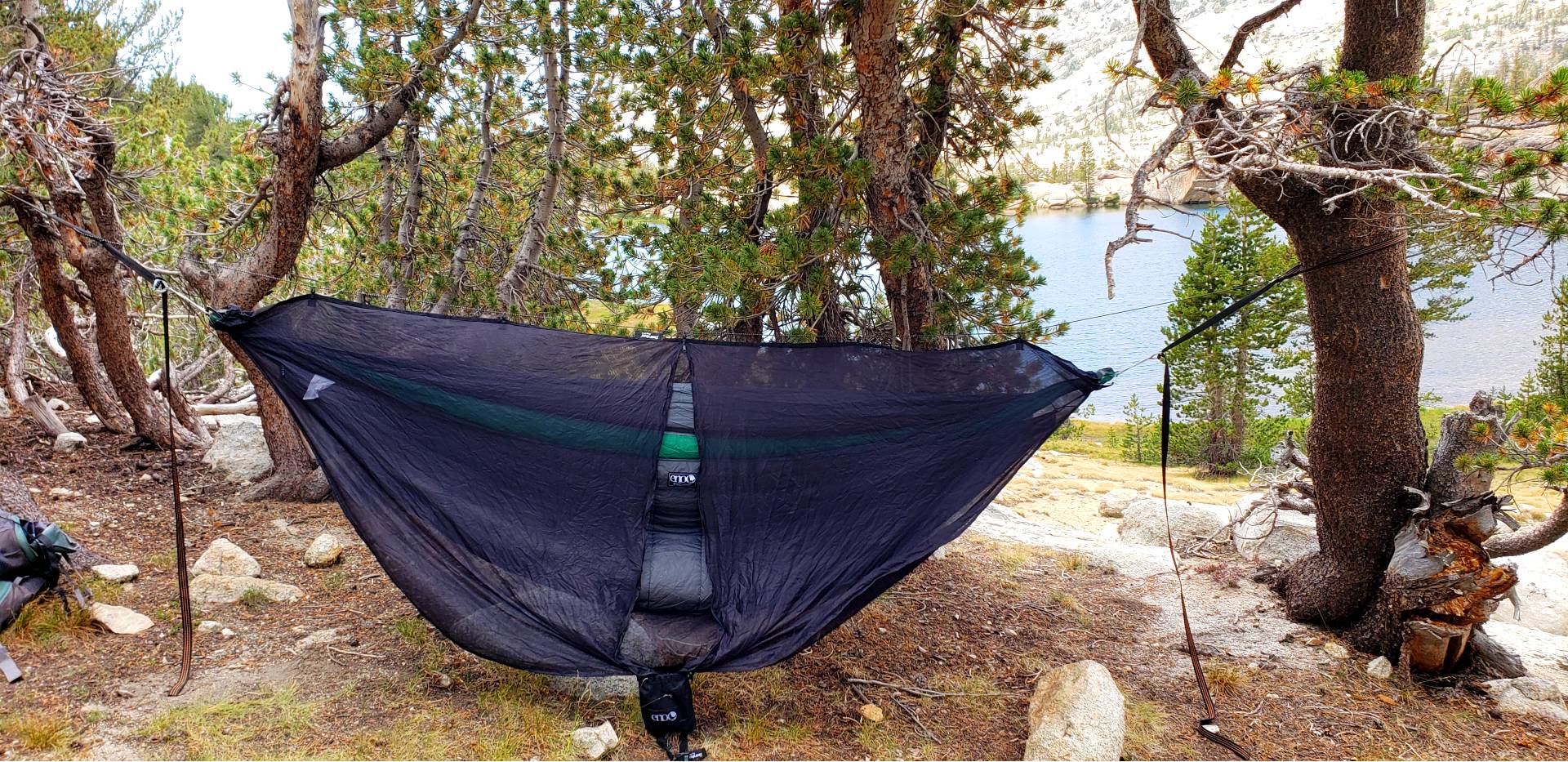
Always hang your hammock 100 feet away from the lake shore and over solid ground. Leave no trace.
Hammock packing or camping has provided my family and me with great experiences in our national parks. We have hammock-packed the past three summers at such locations as Young Lakes, Nelson Lake, Boothe Lake, and random mountainside vistas above Lyell Canyon.
However, leaving the tent for a hammock had its challenges. On my first night in a hammock, I am confident I never slept more than 30 minutes at a time, as I struggled with the irrational fears of a bear peaking over the hammock wall at me sleeping. That year I did not have a tarp or a bug net, so it was indeed an open-air campout.
The funny thing is that the following day there were bear tracks along the lake shore 100 ft. away. I also had to learn that there is no privacy for changing clothes. Having no privacy for changing was not a big deal to me, but my fellow campers who all had tents, I am confident, were a bit alarmed to see me go commando as I changed clothes.
During my second season in my hammock, I added a bug net and tarp to my setup, so most of the fears and inconveniences disappeared. However, now my pack is the exact weight of a tent pack. For me, it was always less about the weight and more about an enjoyable sleeping experience. Not only do I sleep more soundly, but hammock hanging takes the stress off my shoulders and back, and I wake up so much more refreshed.
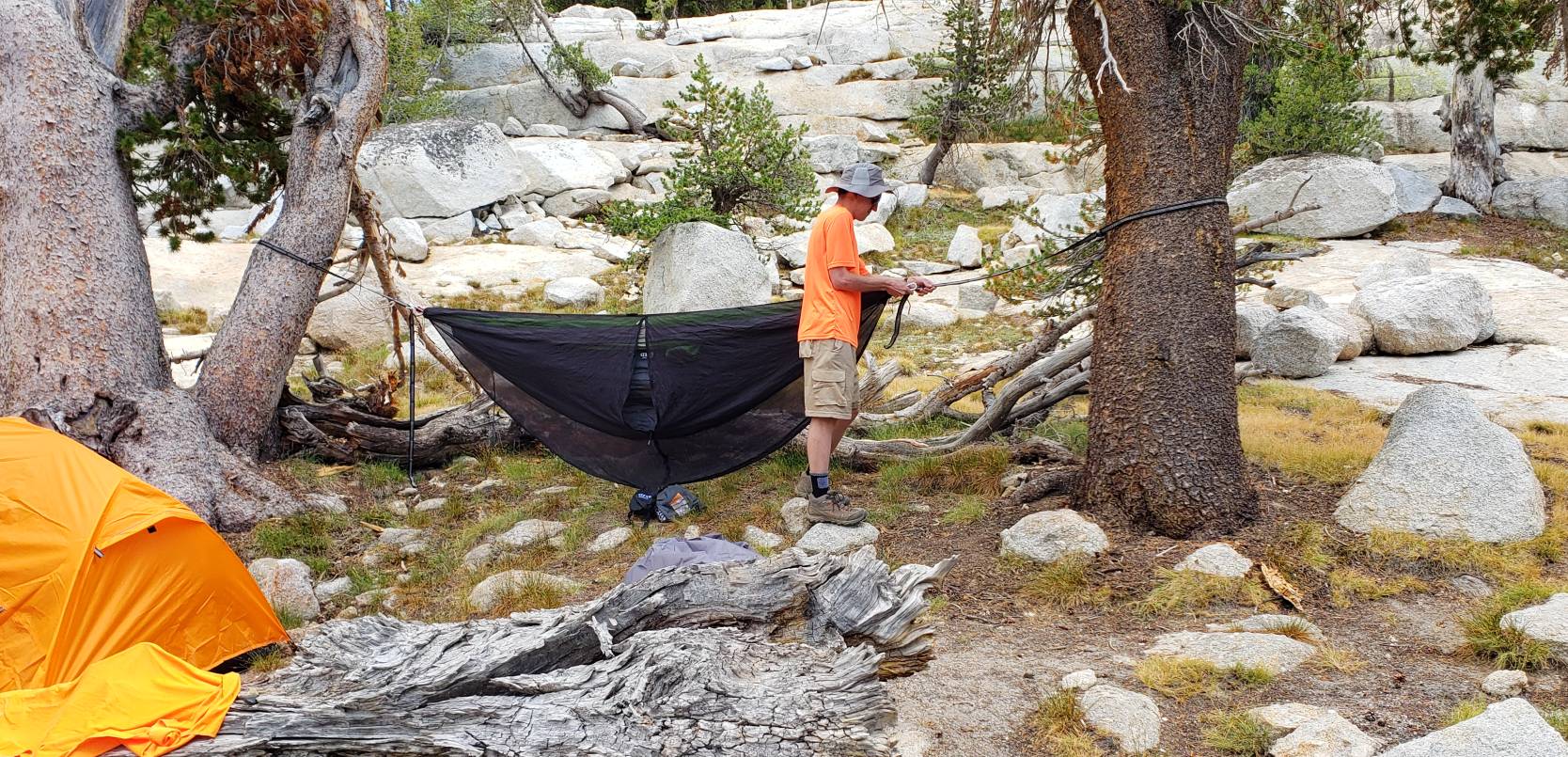
If you are considering hammock camping here is an essential list of items I recommend:
- Hammock – I have tried multiple brands and have no complaints about them. I now use a double hammock from enos that I really enjoy. I have hammocks from fox outfitters, Kammock, and little river co. all have given me great night’s sleep.
- Tree Straps – you can find all kinds of opinions here for tree straps. I prefer The fox outfitters premium hammock straps. They seem the most consistent for allowing me to set up the hammock right. The little river company also has an excellent strap system that my pack buddy prefers.
- An Under quilt or sleeping pad – I prefer the under quilt myself. Hammock camping in the sierra is where we have cool evenings all year round, and the unprotected underside of a hammock is just as cold as the ground. An under quilt keeps the wind and cold air from ruining your good night’s sleep.
- Sleeping bag or Quilt – I prefer the quilt because it naturally gives me the freedom to move in the hammock, and just like my favorite blanket at home, I can tuck it where I want it for comfort and warmth. Or, in my case, the one-leg-out sleeping style. I have the 25-degree down quilt from Zinbivy, and I stay plenty warm in the High Sierra lakes.
- Bug net – so many to choose from. I am currently reviewing options myself here. The biggest thing I would examine is how do you enter and exit. Where is the zipper? Now, mine is a vertical zipper in the middle, which works, but I have seen a few others that are horizontal or combined with the tarp that looks appealing.
- Tarp – In the Sierra, you want lightweight and wind-resistant. I recommend checking the grommets to ensure they can handle the winds.
- Footprint – Floor – not a requirement but getting out of your hammock to dirt is not always enjoyable. I like to have a place for my shoes and pack either inside my net or on a floor footprint just outside the zipper.
Hammock Camping Yosemite

Four great locations to hammock camp in Yosemite National Park
- Young Lakes – a 7-mile moderate backpack trail that gives you access to Mt Conness, Ragged Peaks climbs, and three lakes ( two surrounded by trees great for hammock hangs).
- Echo Lake – Located off-trail south of Upper Cathedral Lake – Echo Lake is in a meadow basin below Echo Peak. Perfect location for exploring and hanging a hammock in a tree-lined meadow location.
- Boothe Lake – Located just below the Vogelsang High camp, Boothe lake has plenty of space to spread out around the lake.
- May Lake – The easiest of the lakes to get to, May Lake has some significant hang areas and the morning views to the East are spectacular. Not May Lake would be what I considered a mandatory bug net Lake. Mosquitos here are ruthless in the mornings.


Trackbacks/Pingbacks